Cultural Context
The Cultural Roots of Indian Cooking
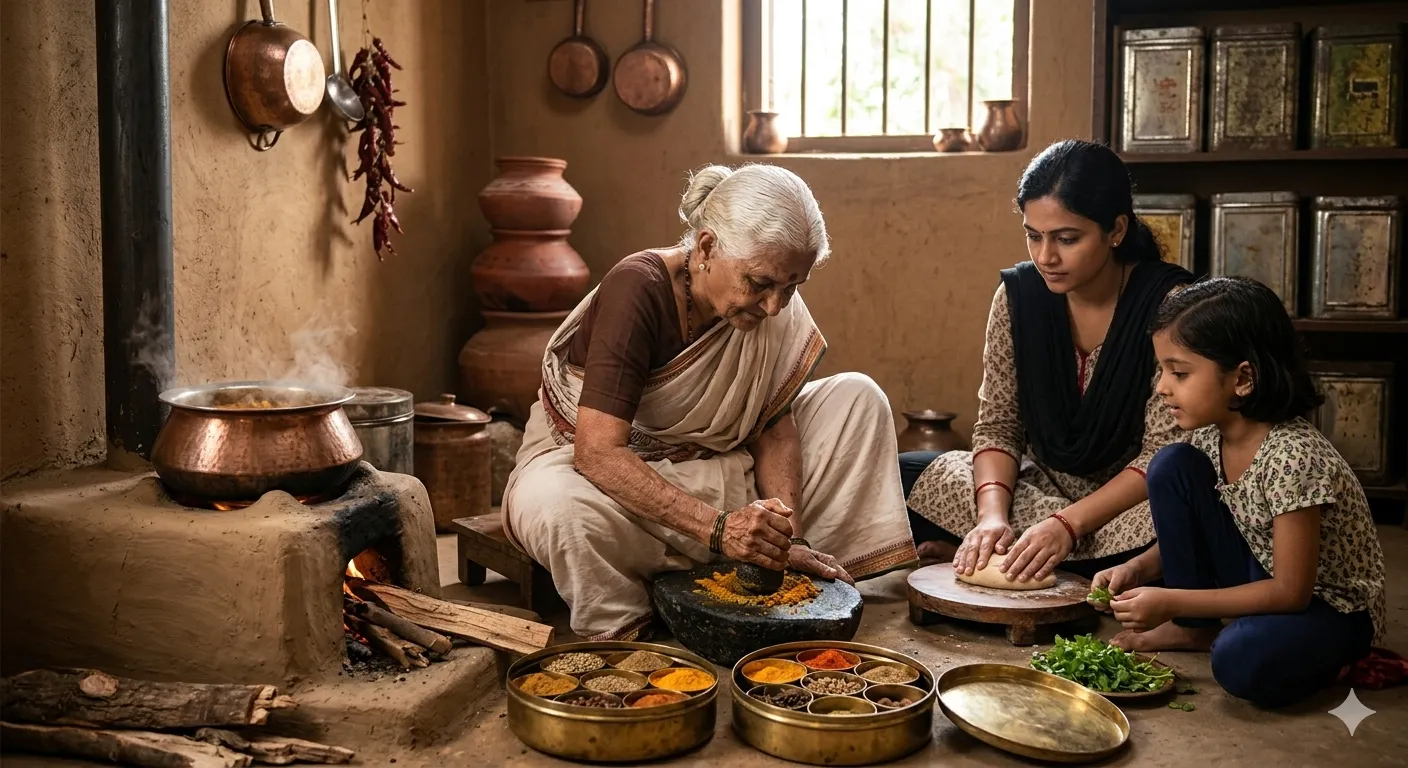
Indian cuisine is one of the world’s oldest and most complex culinary traditions, with roots stretching back over 5,000 years. To understand Indian food is to understand the history, geography, and spirituality of the Indian subcontinent.
The foundation of Indian cooking was laid by the Indus Valley Civilization, where evidence suggests that people were already using spices and cooking with sophisticated techniques. When the Aryans migrated to India around 1500 BCE, they brought with them dairy farming and the tradition of using ghee (clarified butter), which became central to Indian cuisine.
The spice trade played a crucial role in shaping Indian cuisine. For centuries, Indian spices were so valuable that they attracted traders from across the world. The Portuguese, Dutch, and British all came to India seeking spices, and this exchange of cultures influenced Indian cooking in profound ways.
Regional diversity is a hallmark of Indian cuisine. The cuisine of Kerala in the south, with its coconut-based curries and seafood, is vastly different from the wheat-based breads and meat dishes of Punjab in the north. The monsoon patterns, local crops, and cultural traditions of each region created distinct culinary identities.
Religion has deeply influenced Indian cooking. Hinduism’s reverence for the cow led to the development of vegetarian cuisine, making India home to some of the world’s most sophisticated vegetarian cooking. Buddhism and Jainism further contributed to the development of plant-based dishes. Islam brought the tradition of biryani and kebabs, while Christianity influenced the cuisine of Goa with its use of pork and coconut.
Ayurveda, the ancient Indian system of medicine, profoundly shaped how Indians think about food. Rather than viewing food simply as sustenance, Ayurveda sees food as medicine. Each spice, ingredient, and cooking method is chosen based on its effect on the body’s balance of doshas (energies).
Today, Indian cuisine continues to evolve while honoring its deep roots. Whether you’re eating a simple dal at home or enjoying a complex biryani at a restaurant, you’re participating in a culinary tradition that spans millennia and reflects the wisdom, creativity, and diversity of Indian culture.