
Culture
Is Indian Food Healthy? The Honest Answer
· Updated
Quick answer
Indian food is not one thing, so the question does not have one answer.
The honest version is that home Indian food and restaurant Indian food point in nearly opposite directions.
- Everyday home cooking across most of the subcontinent is pulses, vegetables, a grain and yoghurt — largely plant-based, high in fibre, and modest in fat. That is a dietary pattern most guidance would call a good one.
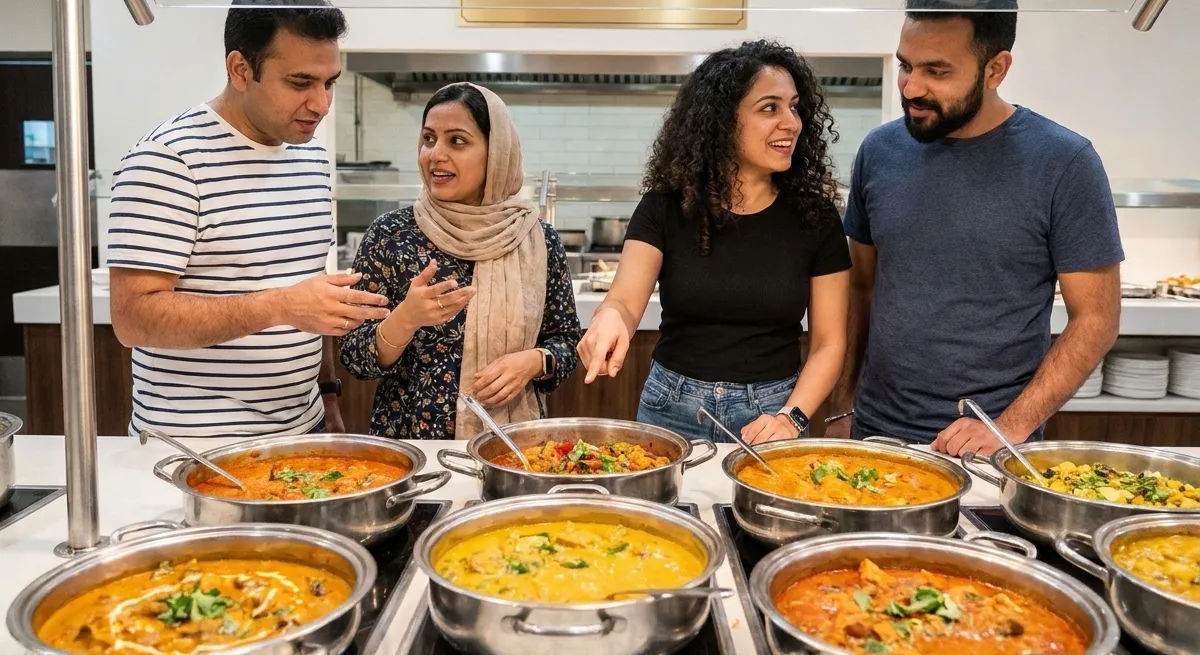
- Restaurant and takeaway Indian food in the West is a narrow slice of the repertoire: the richest, most impressive dishes, with more cream and butter, bigger portions, and rice and naan on the same table.
Both are genuinely Indian. One of them is what people actually eat on a Tuesday.
And about the spices: they are used in teaspoons, spread across a dish that feeds four. That is not a dose of anything. What they genuinely do is let food taste of something without leaning on salt, sugar and fat — which is a real advantage and needs no medical claim attached to it.
Why there is no single “Indian food”
Before answering whether it is healthy, it is worth seeing how wide the question is. The subcontinent’s cooking was shaped by four forces, and they pulled in different directions.
Geography decided the staples. The northern plains grow wheat, so the north eats roti, paratha and naan. The east and south grow rice, so they eat rice. Kerala’s coast has coconut and fish; Rajasthan’s desert has neither, and built a cuisine on lentils, millet and things that keep. There was never a national diet, because there was never a national larder.
Religion shaped what was on the plate. Hindu, Jain and Buddhist traditions between them produced one of the most developed vegetarian cuisines in the world — a repertoire where meatless food is the sophisticated default rather than a substitution. Alongside it, Mughal cooking brought biryani, kebabs and rich meat gravies, and Portuguese influence gave Goa its pork and vinegar dishes.
Trade rewrote the ingredients. This surprises people: chillies, potatoes and tomatoes are not originally Indian. They arrived from the Americas via Portuguese traders only a few centuries ago. The cuisine absorbed them so completely that it is now impossible to imagine it without them — which tells you something about how readily it adapts.
Ayurveda shaped how food was thought about. It treats food as central to wellbeing rather than as fuel, and it thinks in terms of balance — which is why a traditional thali is not one big dish but several small ones covering different tastes and textures on one plate. That structure is worth noticing on its own terms, whatever you make of the theory behind it.
A thali is a balanced plate by design: a pulse, a vegetable, a grain, some yoghurt, something sour, something crunchy, in small portions. That is close to what a modern nutritionist would draw if asked to sketch a meal.
What an everyday Indian plate actually contains
Here is the food the question is usually not about, and it is what most of the subcontinent eats most days:
- Dal. Lentils or split pulses, most days, in most households.
- A sabzi. A dry or lightly sauced vegetable dish, cooked with a tempering rather than a rich gravy.
- A grain. Roti made from wholemeal atta, or rice.
- Yoghurt, plain or as raita.
- A small amount of something sour or sharp — pickle, chutney, a slice of onion, lemon.
Four things about that pattern are genuinely strong:
- Pulses appear daily rather than occasionally, which is unusual, and they are habitually eaten with a grain. Pulses and grains together is a pairing many traditional cuisines arrived at independently.
- It is vegetable-forward by default, not as a health decision but because that is what the cooking is.
- Wholemeal atta is a whole grain, and roti made from it is not the same food as white bread.
- Fermented dairy is routine rather than occasional.
That is not a claim that Indian food is medicine. It is a description of a dietary pattern, and it is a good one.
Where the takeaway version parts company
Nothing here is a criticism of restaurants. It is a matter of which dishes travelled.
Menus abroad were built from the richest and most impressive end of the repertoire, because that is what sells and what makes an occasion feel like one. Korma, butter chicken and pasanda are celebration food in India too. The plain dal and the dry sabzi that people actually eat most nights are rarely on the menu at all.
Layer on a few practical differences and the same cuisine reads very differently:
- Cream and butter used generously, where a home kitchen might use a spoonful or none.
- More oil, because it holds and reheats better.
- Larger portions.
- Rice and naan together, which is two grain servings where a home meal has one.
- Fried starters as standard, where samosas and pakoras at home are a snack or a festival food.
The fix is not avoiding Indian restaurants. It is knowing that the menu is a highlight reel, and that the everyday version exists and is easy to cook.
The parts that deserve honesty
A page that only listed the good things would not be worth reading.
- Deep-fried snacks are deep-fried snacks. Samosa, pakora, puri, vada. They are delicious and they are occasion food in India as well.
- Indian sweets are very sweet, often built on sugar syrup, condensed milk and ghee together. Barfi is not a health food and was never presented as one.
- Ghee and oil quantities vary enormously. A restaurant biryani and a home dal use wildly different amounts of fat. Ghee is a fat like any other — the amount is the variable, not the provenance.
- White rice and naan in the same meal is a lot of refined carbohydrate.
- Salt turns up in the accompaniments. Pickles and papad are salty by design, in small quantities on purpose.
About the spices, carefully
This site is built on spices, so it would be easy to overclaim here. Instead, here is the line we hold.
What is fair to say:
Spices are used in culinary amounts — often a teaspoon or two spread across a dish serving four people. That is not a therapeutic dose of anything, and a study on an isolated compound in a laboratory does not transfer directly onto a plate of food.
What is genuinely valuable, and needs no medical claim at all:
Spices let you make food taste of something without salt, sugar or fat doing the work. A dal seasoned with a proper tempering needs far less salt to taste complete than the same dal without one. That is a real, everyday, practical benefit, and it is the one that actually changes how people eat.
There is also good chemistry worth knowing — that much of what spices taste of is fat-soluble, which is why blooming them in hot fat spreads their flavour through a whole dish. That is cooking, and it is why the technique exists.
What this site will not tell you: that a spice cures, treats or manages any condition, how much of one to take, or what to do about a diagnosis. Where a spice has a genuine, documented interaction worth knowing about — turmeric with certain medications, for instance — that gets its own careful page, and it points you at your doctor rather than replacing them.
Ayurveda has taken food seriously for a very long time and deserves respect on its own terms. Respecting it does not mean borrowing its authority to make claims a cooking page has no business making.
Eight shifts that change the balance
None of these makes the food worse. Most make it taste more like home cooking and less like a menu.
- Order or cook one dal. It is the single biggest change, and it is the most-eaten dish in the cuisine.
- Pick a tandoori or tikka dish when you want meat. Dry heat, not a fat-based gravy.
- Choose one grain, not two. Rice or bread.
- Roti over naan where there is a choice — wholemeal atta against white refined flour and often butter.
- Ask for a dry sabzi. Bhindi, aloo gobi, cabbage thoran. Vegetables cooked with a tempering rather than a gravy.
- Yoghurt instead of cream to finish a gravy at home. It thickens as well, and it will not split if you temper it.
- Cook the base properly and you need less fat overall, because the flavour comes from the onions and spices rather than from richness. That is the whole technique.
- Treat the fried things as what they are — snacks and festival food, not a side order with every meal.
So: is it healthy?
Everyday Indian home cooking is a pulse-heavy, vegetable-forward, wholegrain-friendly way of eating, and it has fed a great many people well for a very long time. That part of the answer is a comfortable yes.
The Western restaurant version is a selection of the richest dishes in that repertoire, in large portions, and it was never meant to be daily food in India either.
The useful move is not to eat less Indian food. It is to learn the everyday half, which almost nobody outside the culture is ever shown — and which is quicker, cheaper and easier than the restaurant half.
That is what the rest of this section is for: how a gravy is actually built, what the words in the recipes mean, and what each spice is doing once it is in the pan. The Spice Pharmacopeia volumes go further into the evidence, spice by spice, and are careful about the difference between what is established and what is merely popular.
Cook the dal. Everything else is detail.
Common questions
Is Indian food healthy?+
The question does not have one answer, because Indian food is not one thing. Everyday home cooking across most of the subcontinent is legume-heavy, vegetable-forward and largely plant-based, which is a pattern most dietary guidance would recognise as a good one. Restaurant and takeaway Indian food in the West is a much narrower selection built around richer celebration dishes, with more cream, more oil and larger portions. Both are genuinely Indian food. They give close to opposite answers.
Which Indian dishes are the healthiest?+
Dal of any kind, dry vegetable dishes cooked with a tempering rather than a rich gravy, chana and rajma, plain yoghurt or raita, roti made from wholemeal atta, and tandoori or tikka dishes, which are cooked with dry heat rather than fat. The heavier end is the cream and butter gravies — korma, butter chicken, pasanda — along with deep-fried snacks and biryani made with a lot of ghee. None of those are bad food. In India most of them are occasion food rather than Tuesday food.
Is Indian restaurant food less healthy than home cooking?+
Usually, and the reason is selection rather than dishonesty. Restaurants abroad built their menus from the richest and most impressive dishes in the repertoire, because that is what travels and what sells. The everyday food — a simple dal, a dry sabzi, a yoghurt, a roti — is rarely on the menu at all. Add larger portions, rice and naan served together, and a generous hand with cream and butter, and the same cuisine reads very differently.
Is ghee bad for you?+
Ghee is a fat, and the amount is what matters. It is almost pure butterfat, so spoon for spoon it carries slightly more calories and saturated fat than butter, not less. What is genuinely true is that it contains virtually no lactose or casein and that it does not break down at cooking temperatures where butter would. Traditional Indian home cooking uses it in fairly modest quantities and the celebratory dishes use much more. If you are managing cholesterol or heart health, that is a question for your doctor rather than a cooking site.
Are Indian spices good for you?+
The honest version is narrower than most of what is written about this. Spices are used in culinary amounts — a teaspoon spread across a dish serving four — which is not a therapeutic dose of anything, and research on isolated compounds in a laboratory does not transfer straight onto a plate of food. What is straightforwardly true and genuinely useful is that spices let you make food taste of something without leaning on salt, sugar or fat to do it. That is a real advantage and it does not require any medical claim to be worth having.
Is Indian food good for weight loss?+
No cuisine causes weight loss on its own, and any page telling you otherwise is selling something. What is fair to say is that the everyday Indian pattern — pulses, vegetables, yoghurt, a grain — is filling for its calories because it is high in fibre and protein, which is a helpful property. The same cuisine also contains deep-fried snacks, very sweet sweets and rich gravies. What you cook and how much of it you eat matters far more than which country the recipe came from.
Is vegetarian Indian food high in protein?+
It can be, and the tradition is unusually good at it. Lentils and beans appear daily rather than occasionally, and they are habitually eaten with a grain — dal with rice or roti — which is a long-standing pattern in many cuisines that pair pulses and grains. Paneer, yoghurt and milk add more. A vegetarian Indian plate built around dal, a vegetable and a wholegrain bread is not a low-protein meal, though a plate that is mostly white rice and one rich gravy can be.
Why is Indian food so different from one region to another?+
Because geography and history made it that way. What grows and what keeps differs enormously between a wheat-growing northern plain, a coconut and seafood coast, and a rice-growing delta, and the cooking followed the crops. Religion shaped it too, producing one of the world's most developed vegetarian traditions alongside the biryanis and kebabs of Mughal cooking and the pork and vinegar dishes of Goa. Centuries of spice trade added chillies, potatoes and tomatoes, none of which are originally Indian at all.
New: Google now lets you choose which sites it shows you first. One tap lifts our spice guides in your results — nobody else's — and you can undo it any time.