Kindle eBook · Available on Amazon
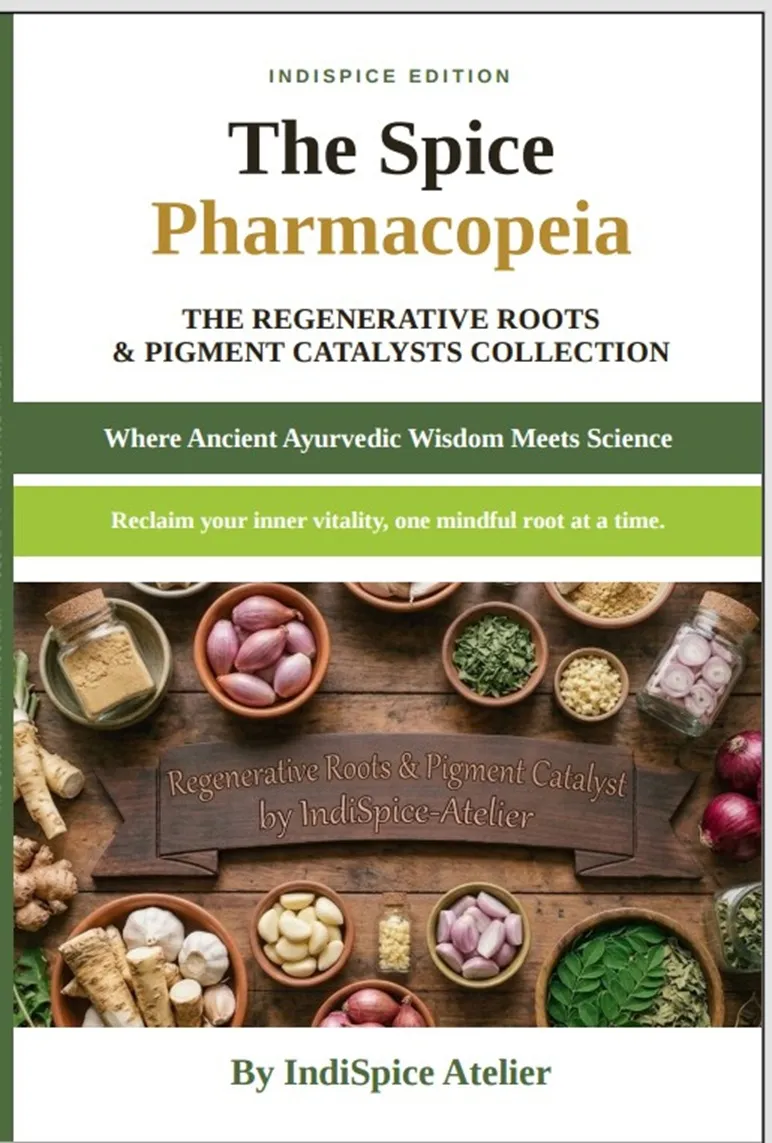
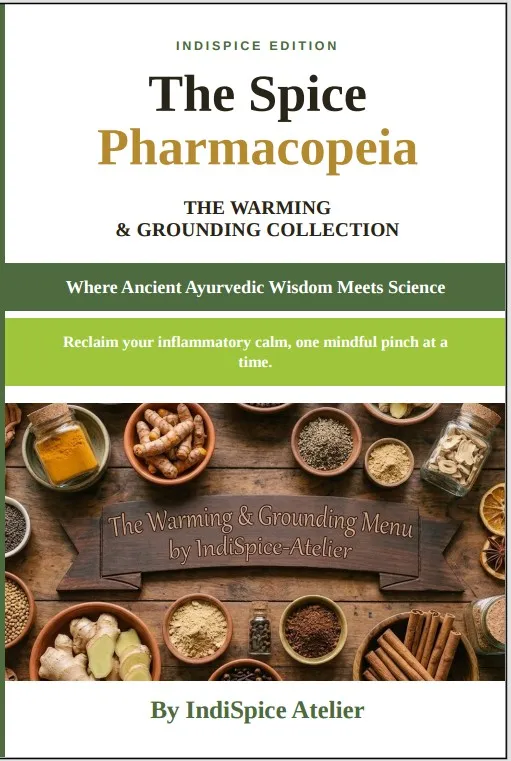
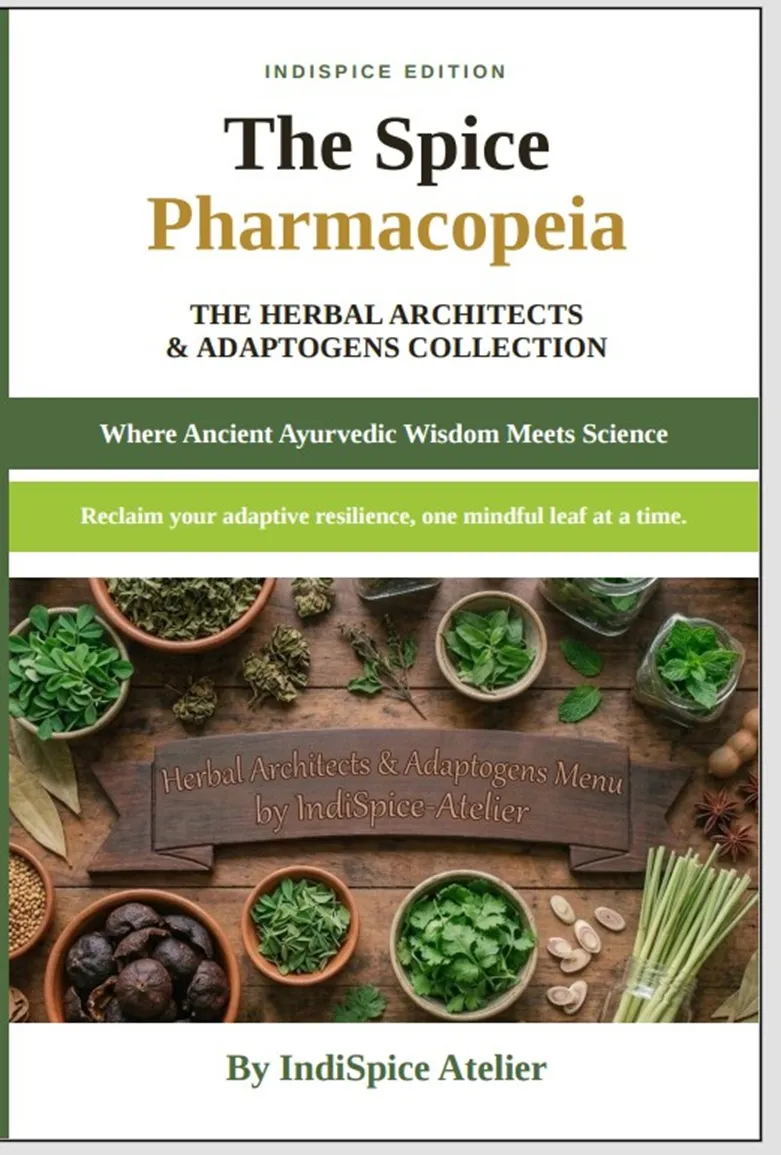
Volume V · The Spice Pharmacopeia
The Herbal Architects & Adaptogens Collection
Where ancestral wisdom meets modern science
Tulsi, mint, coriander leaf, fenugreek leaf and lemongrass — green-tissue adaptogens for stress resilience and cellular steadiness.
Kindle eBook · Available on Amazon
By IndiSpice Atelier. Researched against peer-reviewed pharmacology.
As an Amazon Associate, IndiSpice Atelier earns from qualifying purchases.
What you'll learn
- Use Holy Basil (Tulsi) — the collection's premier adaptogen — to modulate the HPA stress axis, backed by standardized-extract trials (Saxena 2012; Lopresti 2022).
- Release fenugreek-leaf sotolon with an 8-second 'Thermal Awakening' — and stop exactly there, before it turns bitter.
- Apply honest calibration: why fenugreek's diabetes evidence belongs to the seed, not the leaf, and why IBS relief belongs to enteric-coated peppermint oil, not culinary mint.
- Use mint's menthol to calm intestinal smooth muscle, and coriander leaf and lemongrass for their antimicrobial, biofilm-disrupting compounds.
- Preserve delicate green-tissue oils with the 'Volatile Vapour Lock' steeping technique.
- Understand the 'modern adaptogenic crisis' and how green-tissue finishers restore the body's capacity to down-regulate stress.
Inside this volume
Volume V of The Spice Pharmacopeia, by IndiSpice Atelier, covers five green-tissue botanicals — holy basil/tulsi (Ocimum sanctum), mint (Mentha spp.), coriander leaf (Coriandrum sativum), fenugreek leaf/kasuri methi (Trigonella foenum-graecum) and lemongrass (Cymbopogon citratus) — the leaves and shoots that act as an 'adaptive scaffolding' for stress resilience and cellular steadiness.
Tulsi carries the cleanest clinical evidence in the series for adaptogenic action: standardized extracts reduced perceived stress and salivary cortisol in trials by Saxena (2012) and Lopresti (2022), at documented doses of 300–1,200 mg per day. Mint's menthol and menthone block intestinal smooth-muscle calcium channels — a 2019 analysis (Alammar) reported a relative risk of 2.39 for global symptom improvement in IBS — while coriander leaf (dodecenal) and lemongrass (citral) exert selective antimicrobial and biofilm-disrupting pressure on the microbiome.
The volume is unusually candid about its own limits — a 'critical reality check' that separates wellness claims from evidence: the diabetes data belongs to fenugreek seeds, not the dried leaves; significant IBS relief applies to enteric-coated peppermint-oil capsules, not culinary mint; and there is no human evidence that dietary cilantro chelates heavy metals. The culinary value is real and grounding; the book simply refuses to overstate it.
A taste of the kitchen
A few recipes from the book
Ingredients shown without quantities — the full, optimised recipes are in Volume V.
The Liquid Oxygen Tulsi Infusion
A sealed-steep infusion that preserves tulsi's delicate eugenol and rosmarinic acid.
Ingredients
- Fresh tulsi (holy basil) leaves
- Filtered water
Method
- Heat water to about 90°C — not boiling.
- Pour over the tulsi leaves and seal immediately with a tight lid (the 'Volatile Vapour Lock').
- Steep, then strain and sip warm.
The Maple-Musk Kasuri Methi Finish
An 8-second technique that releases fenugreek-leaf sotolon at the last second.
Ingredients
- Dried fenugreek leaves (kasuri methi)
Method
- Toast the leaves on a dry, hot skillet for exactly 8 seconds.
- Rub them between your palms to release the woodsy, maple-musk aroma.
- Scatter over a finished dish — never longer, or the aroma turns bitter.
The Raw Cilantro-Lime Cooling Emulsion
A fresh, raw finisher leveraging coriander leaf's aliphatic aldehydes.
Ingredients
- Fresh coriander (cilantro) leaves
- Lime juice
- A little oil
- Salt
Method
- Blend fresh coriander with lime juice, oil and salt.
- Keep it raw — the citrus stabilises the delicate aldehydes against oxidation.
- Spoon over bowls and grains as a bright, cooling finish.
Why this volume matters
The 'fifth quiet crisis' is the loss of adaptive resilience — the body's capacity to absorb stress and recover. Where seeds and roots are metabolic fires, these green-tissue finishers are nervous-system grounders, added late in cooking to weave a protective, calming chemistry through the dish.
For the diaspora, this is also reconnection: the windowsill tulsi pot, the 8-second methi toast. The volume restores both the ritual and the molecular reasoning behind it — while staying honest about where culinary use ends and clinical dosing begins.
Bring the apothecary back to your kitchen.
As an Amazon Associate, IndiSpice Atelier earns from qualifying purchases.
Frequently asked
Questions about Volume V
What is The Spice Pharmacopeia Volume V about?+
Volume V — The Herbal Architects & Adaptogens Collection — profiles five green-tissue botanicals (tulsi, mint, coriander leaf, fenugreek leaf and lemongrass) that act as an 'adaptive scaffolding' for stress resilience, pairing Ayurvedic tradition with modern pharmacology.
Which herbs does Volume V cover?+
Holy Basil (Tulsi), Mint (Pudina), Coriander Leaves (Dhania Patta), Fenugreek Leaves (Kasuri Methi) and Lemongrass (Gavati Chaha).
Does culinary tulsi reduce stress like the studies say?+
The clinical trials used standardized extracts at 300–1,200 mg/day; a culinary infusion gives sensory and psychological grounding but does not reproduce that concentrated dose. The volume is explicit about this distinction.
Is cilantro good for detoxing heavy metals?+
No — the book's 'critical reality check' notes there is no human clinical evidence that dietary cilantro chelates heavy metals. It is a refreshing, cooling herb, and the volume keeps the claims honest.
Is Volume V suitable for beginners?+
Yes. These are everyday leaves and shoots; the volume focuses on simple finishing techniques and infusions, with clear notes on what the evidence does and does not support.
From the kitchen
Cook and read alongside this volume
New: Google now lets you choose which sites it shows you first. One tap lifts our spice guides in your results — nobody else's — and you can undo it any time.
Continue the series