
Black Pepper
Black Pepper & Your Medications: When Piperine Isn't Harmless
Quick answer
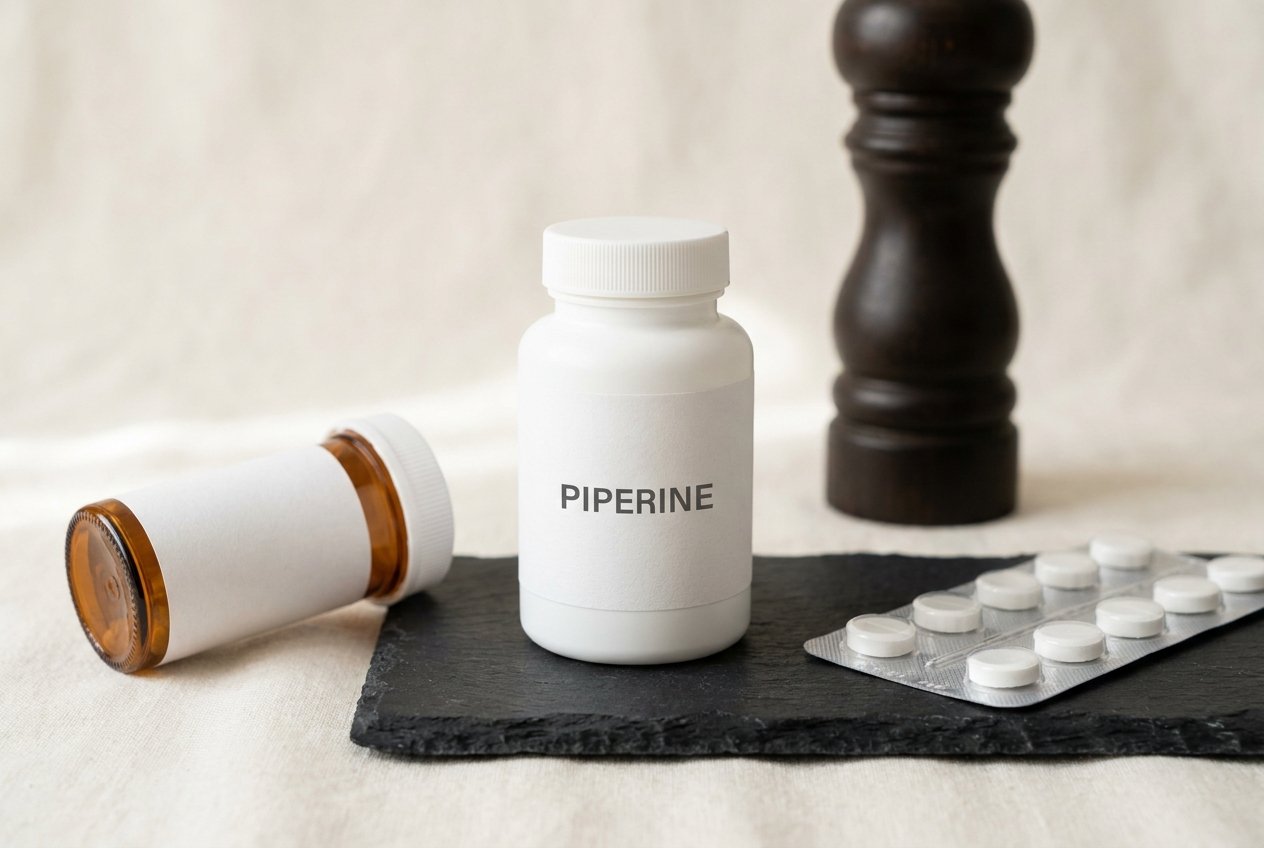
Culinary black pepper is safe for most people. The real caution is concentrated piperine — the kind in supplements and “turmeric + black pepper” capsules. Because piperine slows the enzymes and transporters that clear many drugs, it can raise their blood levels, which for some medicines means an unintended, potentially unsafe higher dose. This has been shown in human studies for drugs like carbamazepine and predicted for others such as certain statins. If you take prescription medication — especially a narrow-margin drug — talk to your pharmacist before using piperine supplements. Your pepper grinder isn’t the problem; daily concentrated piperine plus medication is.
The same “superpower,” seen from the other side
Everyone loves the story that black pepper “unlocks” turmeric. Almost nobody tells you the flip side, even though it’s the same fact. Piperine — black pepper’s active compound — works by slowing down some of the body’s drug-clearing machinery so more of a co-consumed compound stays in circulation.
When that compound is a nutrient you want, like curcumin, that’s a feature. When it’s a medicine dosed on the assumption your body clears it at the normal rate, “more absorption” is an accidental overdose risk. You can’t understand pepper’s benefit without understanding this.
What piperine actually does inside you
Two systems handle much of how your gut and liver break down and eject drugs: the enzyme family CYP3A4 and the transporter P-glycoprotein. Piperine can inhibit both — this was shown directly using human cells and human liver enzymes. Slow those systems, and a drug that relies on them clears more slowly, so more of it builds up than the prescribed dose intends.
If that mechanism sounds familiar, it should: it’s the same reason grapefruit juice is a famous drug interaction. “Natural” has never meant “no interactions.”
This isn’t just theory — the human evidence
In people (and in careful pharmacological models), piperine at roughly the dose found in supplements (~20 mg/day) has been shown or predicted to raise the levels of specific drugs:
- Carbamazepine (an epilepsy medication): piperine increased its blood exposure in healthy volunteers and in epilepsy patients.
- Phenytoin (epilepsy) and fexofenadine (an antihistamine and P-glycoprotein substrate): raised levels in human studies.
- Statins and other CYP3A4-handled drugs: pharmacological modelling predicts meaningful increases at 20 mg/day piperine — for example simvastatin.
Each study has limits (small numbers, single doses, or modelling rather than large trials), but together they point the same way: concentrated piperine can clinically matter for people on certain medicines.
Medication categories to be careful with
This is a “talk to your pharmacist” list, not a complete or personalised one. If your medication is here, treat it as your cue to ask before adding any piperine supplement:
| Category | Why piperine matters |
|---|---|
| Anti-seizure (carbamazepine, phenytoin) | Human data show raised levels; narrow safety margin |
| Cholesterol statins (e.g. simvastatin) | CYP3A4-handled; modelling predicts higher exposure |
| Immunosuppressants (e.g. cyclosporine) | Narrow margin; CYP3A4 / P-gp substrate |
| Some sedatives, heart & allergy drugs | CYP3A4 / P-gp substrates (e.g. midazolam, fexofenadine) |
| Blood thinners, diabetes, blood-pressure meds | Narrow-margin or absorption-sensitive — check individually |
Who should be especially careful
- Anyone on a narrow therapeutic index drug (a small gap between the right dose and a harmful one).
- People taking multiple medications.
- Pregnant or breastfeeding people and children — supplement safety data is limited; stick to normal culinary amounts and ask a clinician about anything concentrated.
- Anyone with reflux, gastritis, or stomach sensitivity — pepper can irritate.
The one question to ask your pharmacist
You don’t need to be an expert — you need to ask one specific question. Pharmacists are the ideal free, walk-in resource for exactly this. Bring the product label (so they can see the piperine amount) and your full medication list, and say:
“I’m thinking of taking a supplement with black-pepper extract — piperine or BioPerine, about [X] mg a day. Here’s my medication list. Could piperine raise the level of any of these by slowing how I clear them?”
That’s all it takes to get a personalised answer this article can’t give you.
Keeping it in proportion
Fear isn’t the goal — informed choice is. Your dinner is not the problem: occasional culinary pepper is a small, intermittent exposure. The scenario to think about is daily concentrated piperine, especially alongside a narrow-margin medicine. Season your food freely; be deliberate about supplements.
Frequently asked questions
Is black pepper bad for you?+
For most people, culinary black pepper is a healthy, low-calorie way to add flavour. The caution is concentrated piperine supplements combined with certain medications, not pepper on food.
Can black pepper really affect my medication?+
Concentrated piperine can raise the blood levels of some drugs by slowing how you clear them. Culinary amounts are low-risk; supplements deserve a pharmacist conversation.
How much piperine is a concern?+
Human interaction studies commonly used around 20 mg per day. Many supplements contain 5 to 20 mg of piperine per serving, so a daily capsule can reach that range.
Does cooking destroy piperine so it is safe?+
Cooking does not reliably remove piperine. The key difference is dose and frequency: a sprinkle on a meal is far less than a concentrated daily capsule.
New: Google now lets you choose which sites it shows you first. One tap lifts our spice guides in your results — nobody else's — and you can undo it any time.
More on Black Pepper
Does Black Pepper Really Make Turmeric Work? The 2,000% Claim, Checked
The famous 2,000% turmeric-absorption figure comes from one small study. Here's what black pepper genuinely does for curcumin — and how much you actually need.

Lemon Black Pepper Chicken (+ How to Actually Cook with Pepper)
An easy weeknight lemon black pepper chicken, plus the simple method for making black pepper earn its place — big flavour, far less salt.
Piperine Supplements & BioPerine: What You're Actually Buying
Piperine, BioPerine, 'turmeric + black pepper' — a plain-English buyer's guide to what the labels mean, how much you need, and how to choose one safely.