
Spice guide
Black Pepper Benefits
Black pepper sits on every table in the world and is almost never thought about. Its real benefit is stranger than the usual list: it changes how other compounds behave in the body. That same property is why a piperine supplement is not the same thing as seasoning your dinner.
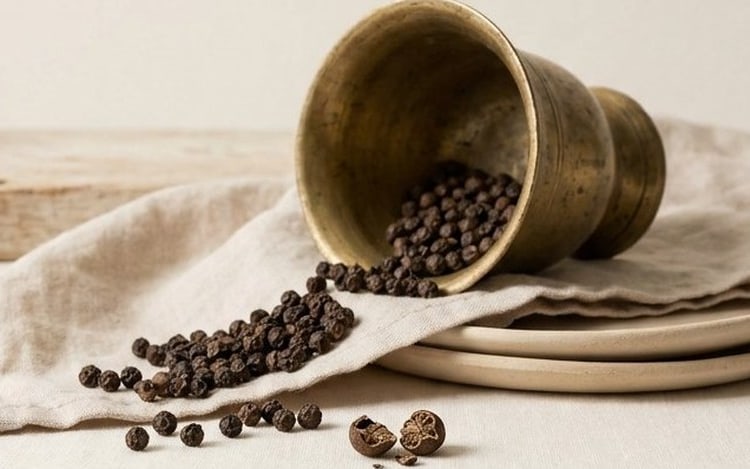
Piperine is the compound that makes pepper hot, and it is also the reason pepper keeps appearing beside turmeric on supplement labels. It slows the body’s clearance of certain compounds, so more of them stay in circulation for longer.
That is a genuine effect. It is also the exact mechanism by which a concentrated piperine capsule can raise the level of a prescription medicine — the same property, read from the other side. Cooking with pepper and taking piperine as a supplement are two different activities, and the guides below keep them apart.
The honest summary
- The 2,000% absorption figure comes from one small study and is repeated far past what it can support.
- A pinch of pepper with turmeric is worth doing. It costs nothing and the direction of effect is real.
- A piperine supplement is a different decision, and worth a question to your pharmacist if you take any regular medication.
- Premium peppercorns are real, but the difference is aroma, not power — and it depends entirely on grinding fresh.
Going deeper
The complete account — the pharmacology, the sourcing, the interactions in detail, and how to actually cook with pepper — is in our ebook Black Pepper: Nature’s Bioavailability Booster.
Guides
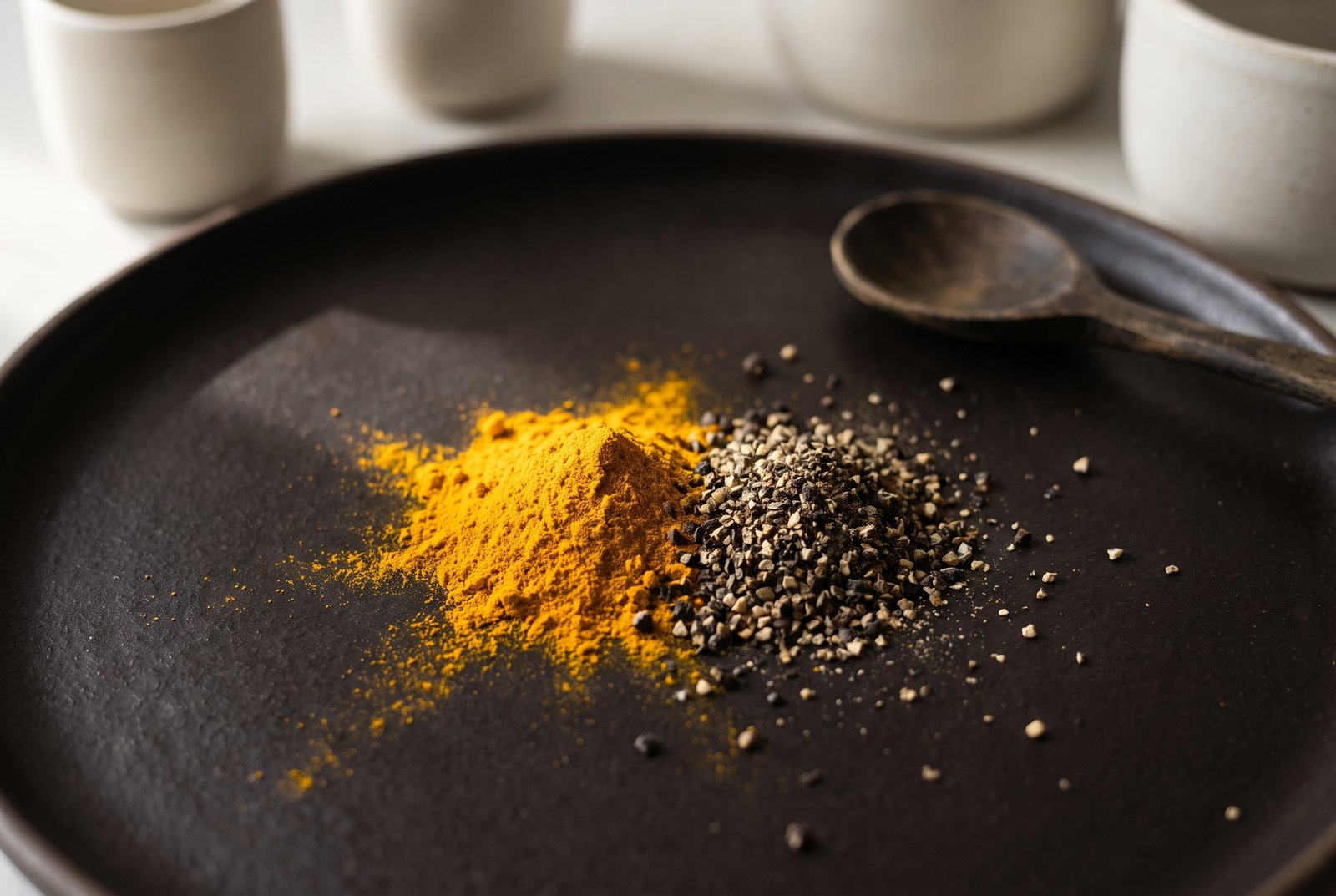
Does Black Pepper Really Make Turmeric Work? The 2,000% Claim, Checked
The famous 2,000% turmeric-absorption figure comes from one small study. Here's what black pepper genuinely does for curcumin — and how much you actually need.
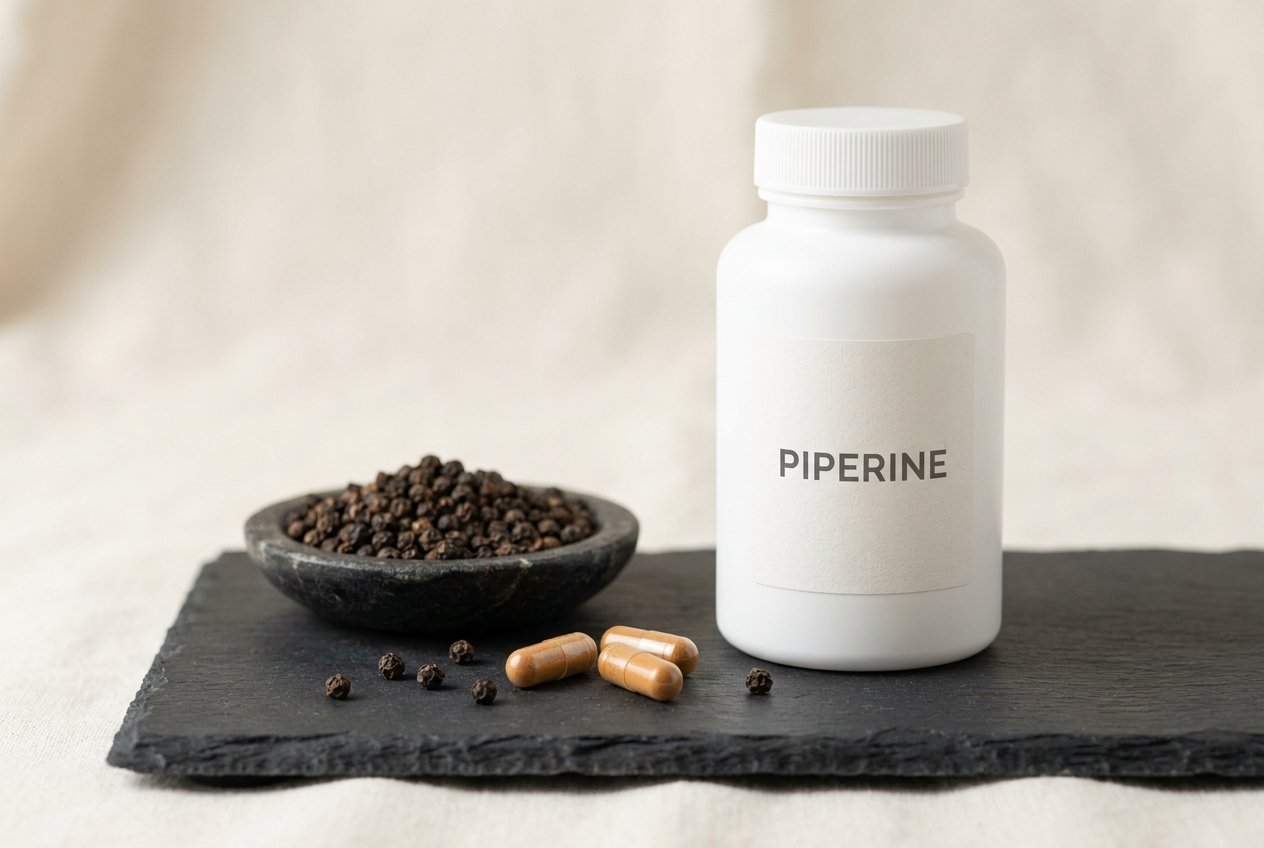
Piperine Supplements & BioPerine: What You're Actually Buying
Piperine, BioPerine, 'turmeric + black pepper' — a plain-English buyer's guide to what the labels mean, how much you need, and how to choose one safely.
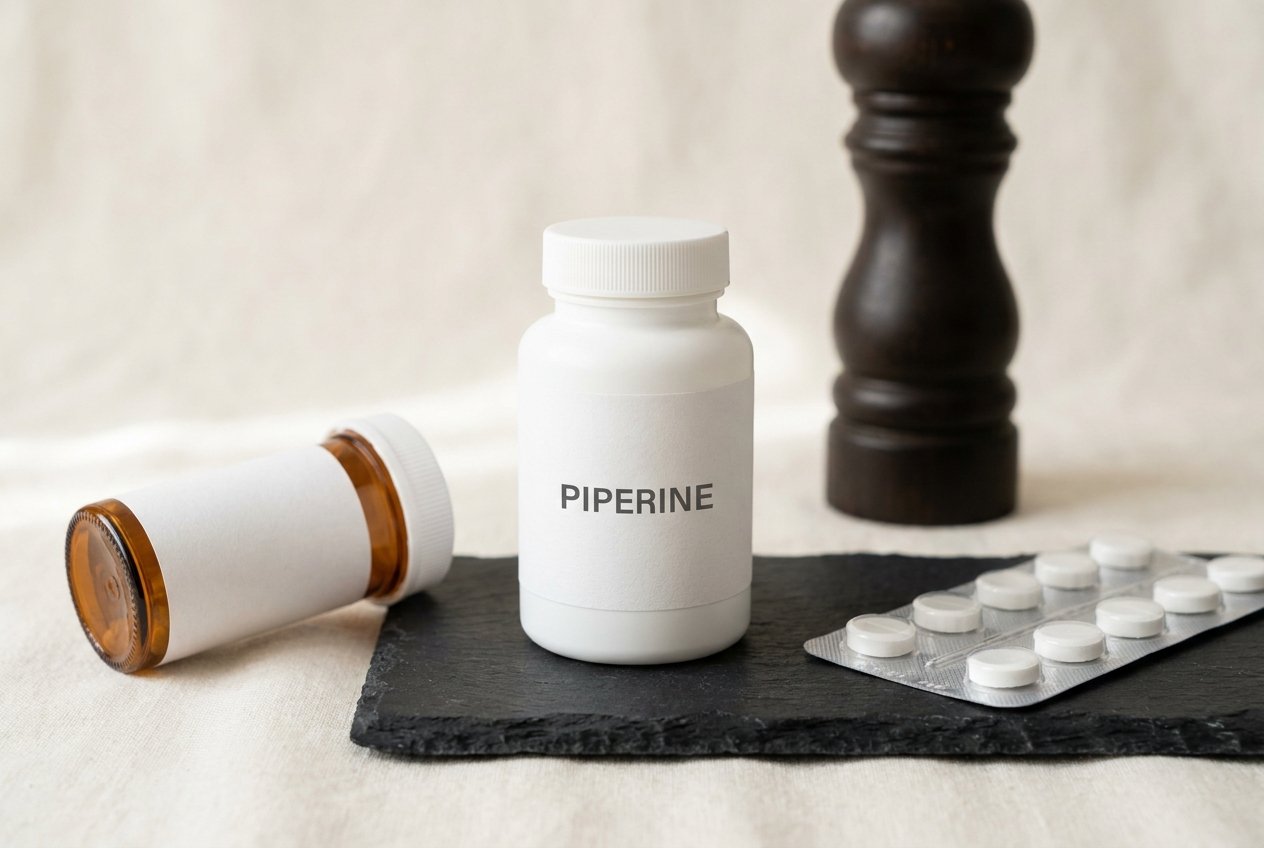
Black Pepper & Your Medications: When Piperine Isn't Harmless
Black pepper's absorption 'superpower' has a flip side. Here's how concentrated piperine can raise the levels of some drugs — and the one question to ask your pharmacist.
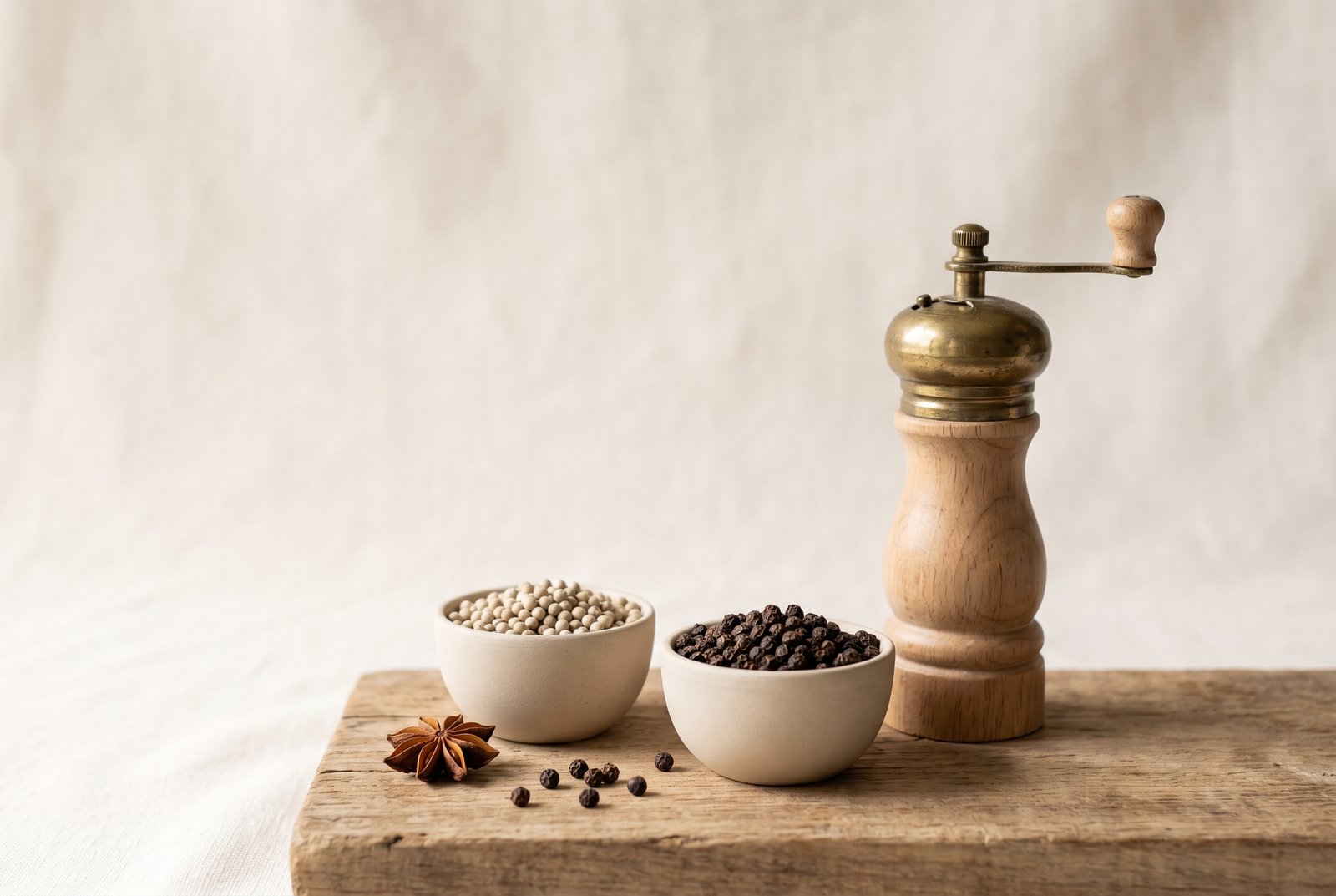
White vs Black Pepper (and Is Tellicherry Worth It?)
White, black, green, Tellicherry, Malabar — a clear guide to what's actually different, when to use each, and whether premium peppercorns are worth the money.

Lemon Black Pepper Chicken (+ How to Actually Cook with Pepper)
An easy weeknight lemon black pepper chicken, plus the simple method for making black pepper earn its place — big flavour, far less salt.
Common questions
What are the health benefits of black pepper?+
The distinctive one is absorption: piperine slows the body's clearance of certain compounds, so more of them stay in circulation. That is a genuine, measurable effect and it is why pepper appears beside turmeric on supplement labels. Pepper's other claimed benefits — digestion, antioxidants, metabolism — are the ordinary spice list, real in the laboratory and unremarkable at the amounts anyone eats.
Does black pepper really increase turmeric absorption by 2,000%?+
That figure comes from a single small study and is repeated far past what it can support. The direction of the effect is real; the number is not a reliable one. A pinch of pepper with turmeric costs nothing and is worth doing. Treating the 2,000% as fact — as most supplement marketing does — is not.
Is a piperine supplement safe?+
It is a different decision from seasoning your food, and should be treated as one. The same mechanism that raises curcumin levels can raise the level of a prescription medicine, which turns a helpful effect into a dosing problem. If you take anything regularly, ask a pharmacist before starting concentrated piperine or BioPerine.
Are expensive peppercorns worth it?+
The difference is real, but it is aroma rather than heat, and it disappears entirely if you buy it pre-ground. Tellicherry berries are simply left on the vine longer and grow larger and more aromatic. Freshly grinding ordinary peppercorns will do more for your food than buying premium pepper already ground.
What is the difference between white and black pepper?+
Same berry, different processing. Black pepper is the whole fruit dried with its skin on; white pepper is the same berry soaked and stripped of that skin. That removes much of the fruity aroma and leaves a cleaner, more direct heat with a faintly fermented note. They are not interchangeable in a dish where pepper is meant to be tasted.