
Technique
The Plate Method for Diabetes, the Indian Way
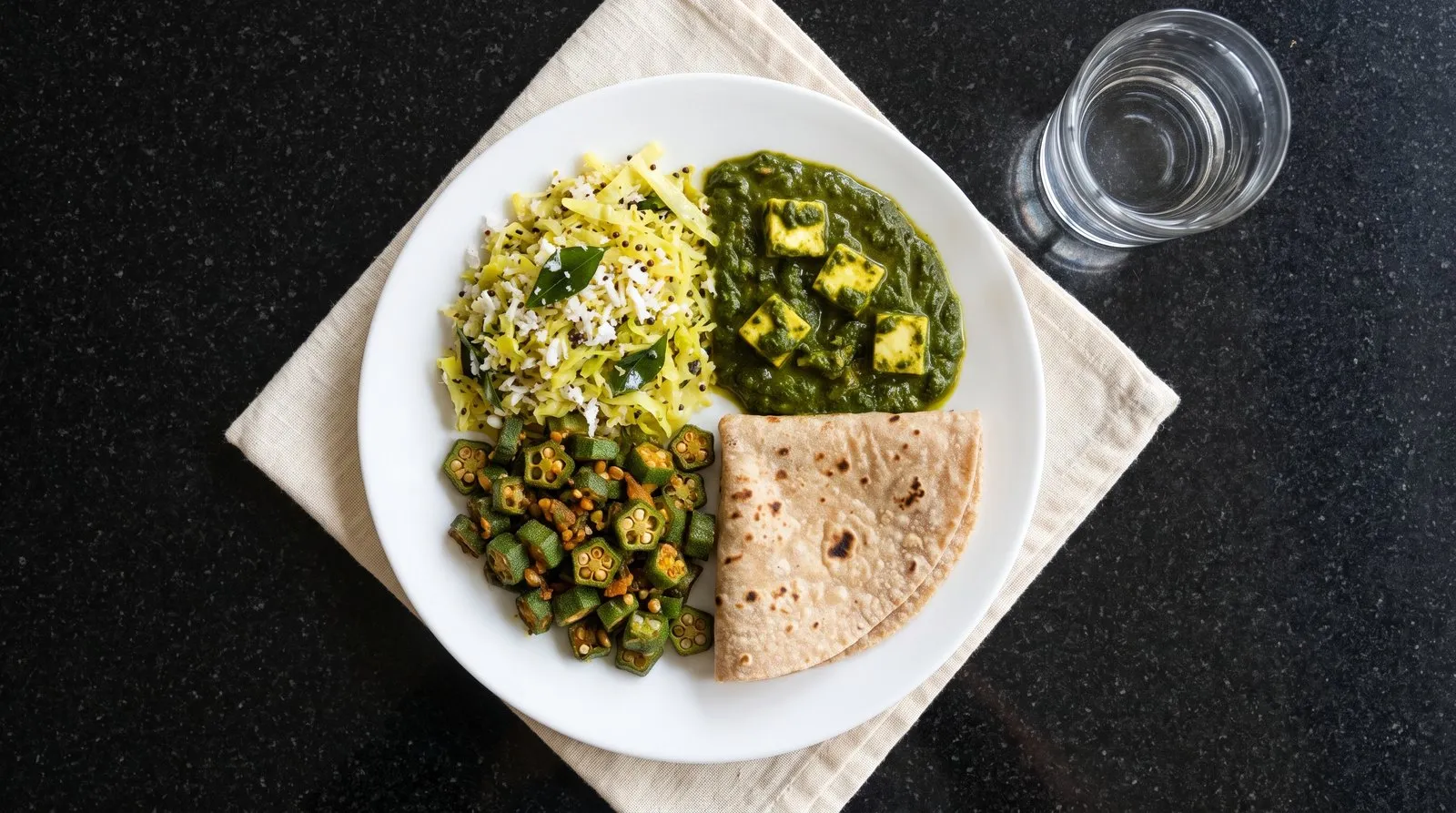
Quick answer
The diabetes plate method is the simplest meal plan there is. Take a 9-inch (23 cm) plate, then:
- Fill half with non-starchy vegetables: a sabzi, a salad, or both.
- Fill a quarter with protein: dal, chana, rajma, paneer, tofu, eggs, chicken or fish.
- Fill a quarter with carbohydrate: about ¾ cup of cooked rice or millet, or one medium roti.
- Drink water, chaas or tea with no sugar.
Indian food fits this plate well. What usually changes is proportion: the rice shrinks and the sabzi grows.
Where the plate comes from
The plate method is taught by the American Diabetes Association and by most dietitians. It needs no counting and no scales. It works because it keeps the part of the meal that raises blood sugar most, the carbohydrate, to one measured quarter, while the plate still looks full.
The Indian plate, part by part
Half the plate: vegetables that are not starchy
These bring fibre, volume and very little sugar.
Good choices: cabbage, cauliflower, spinach and other greens, green beans, okra (bhindi), eggplant (baingan), bottle gourd, bitter gourd, courgette, peppers, mushrooms, tomato and cucumber salad.
Not in this half: potato, sweet potato, corn and peas. They are starchy, so they belong in the carbohydrate quarter.
The Indian advantage: a half-plate of plain steamed broccoli is hard to love. A half-plate of cabbage tempered with mustard seeds and curry leaves is not. Spices are what make this half of the plate something you look forward to.
A quarter: protein
Protein slows how fast the meal leaves your stomach, so the sugar arrives more slowly.
Good choices: dal, chana masala, rajma, lobia, paneer, tofu, eggs, chicken tikka, fish curry, Greek yogurt or hung curd.
About dal: lentils and beans carry protein and carbohydrate, with lots of fibre. Count a bowl of dal as your protein quarter, and still keep the rice or roti quarter measured.
A quarter: carbohydrate
This is the part that raises blood sugar most, so it is the part you measure.
| Food | One quarter of the plate |
|---|---|
| Cooked rice or millet | about ¾ cup |
| Roti or chapati | one medium (6 to 7 inches) |
| Jowar or bajra roti | one medium |
| Dosa | one medium, with sambar as the protein |
| Potato or sweet potato | one small, or ½ cup |
Pick the slower grain. Basmati and parboiled rice, and millets such as foxtail and barnyard, usually raise blood sugar more slowly than sticky short-grain rice. The numbers are in millet vs rice vs quinoa: glycemic index compared.
How to plate a thali
A thali is already a plate method with small bowls. Adjust it like this:
- Two vegetable katoris (small bowls), or one sabzi and a big salad. That is your half.
- One katori of dal or a protein curry, plus raita. That is your protein quarter.
- Rice or roti in the open space, measured: ¾ cup of rice or one roti, not both. If you want both, have half of each.
- Skip the sweet on most days, or take two spoons and stop.
The habit that makes the plate work better
Eat the carbohydrate last. In a small study in Diabetes Care, adults with type 2 diabetes ate the same meal twice. When the vegetables and protein came first and the bread 15 minutes later, their blood sugar after the meal was significantly lower (Shukla et al., 2015).
On an Indian plate that means: start with the sabzi and the dal, and bring in the rice or roti for the last third of the meal.
Then walk. Light walking of even a few minutes after eating lowers blood sugar after meals more than sitting does (Buffey et al., 2022).
Three plates to copy
| Plate | Half | Protein quarter | Carbohydrate quarter |
|---|---|---|---|
| North Indian dinner | Cabbage sabzi, kachumber salad | Palak paneer | 1 whole-wheat roti |
| South Indian lunch | Beans poriyal, cucumber | Sambar with lots of vegetables | ¾ cup foxtail millet or rice |
| Weeknight quick plate | Air-fryer bhindi | Chana masala | ¾ cup basmati rice |
Want every meal built this way?
Every recipe in Spice Against the Sugar Spike is designed for this plate: 57 Indian recipes sorted into vegetables, proteins and slow grains, with a portion size on each, a millet chapter, and a 28-day plan so you never have to plan a plate from scratch. For the bigger picture, read our prediabetes diet guide, or, if you have PCOS, our PCOS diet plan, which puts this plate into a 7-day meal plan.
This page is general information, not medical advice. If you have diabetes or prediabetes, or take medicine for blood sugar, ask your doctor or a registered dietitian how the plate method fits your plan.
Common questions
What is the diabetes plate method?+
It is a simple way to build a meal without counting anything. Use a plate about 9 inches across. Fill half with non-starchy vegetables, a quarter with protein, and a quarter with carbohydrate foods such as rice, roti, millet or potatoes. Add water or a drink with no sugar. The American Diabetes Association teaches it because it keeps the carbohydrate portion in check while the plate still looks full.
How do I use the plate method with Indian food?+
Treat the sabzi as the half-plate of vegetables, the dal, chana, paneer, eggs or chicken as the protein quarter, and the rice or roti as the carbohydrate quarter. The usual change is proportion: an Indian plate is often half rice, so the rice shrinks to a quarter and the vegetables grow to half.
Is dal a protein or a carbohydrate on the plate method?+
Both. Lentils and beans carry protein and a fair amount of carbohydrate, with plenty of fibre, so they raise blood sugar slowly. Count a bowl of dal or chana as your protein quarter. If you also eat rice or roti, keep that quarter measured rather than adding extra because the dal is healthy.
How much rice can a diabetic eat on the plate method?+
About three quarters of a cup of cooked rice, which fills a quarter of a 9-inch plate. Basmati or parboiled rice, or a millet such as foxtail, raises blood sugar more slowly than sticky short-grain rice. Eat it with or after the vegetables and dal, not first.
What size plate should I use for the plate method?+
About 9 inches (23 cm) across. Many dinner plates today are 11 or 12 inches, and the same half-and-quarters split on a bigger plate is simply a bigger meal.
New: Google now lets you choose which sites it shows you first. One tap lifts our spice guides in your results — nobody else's — and you can undo it any time.