
Black Pepper
White vs Black Pepper (and Is Tellicherry Worth It?)
Quick answer
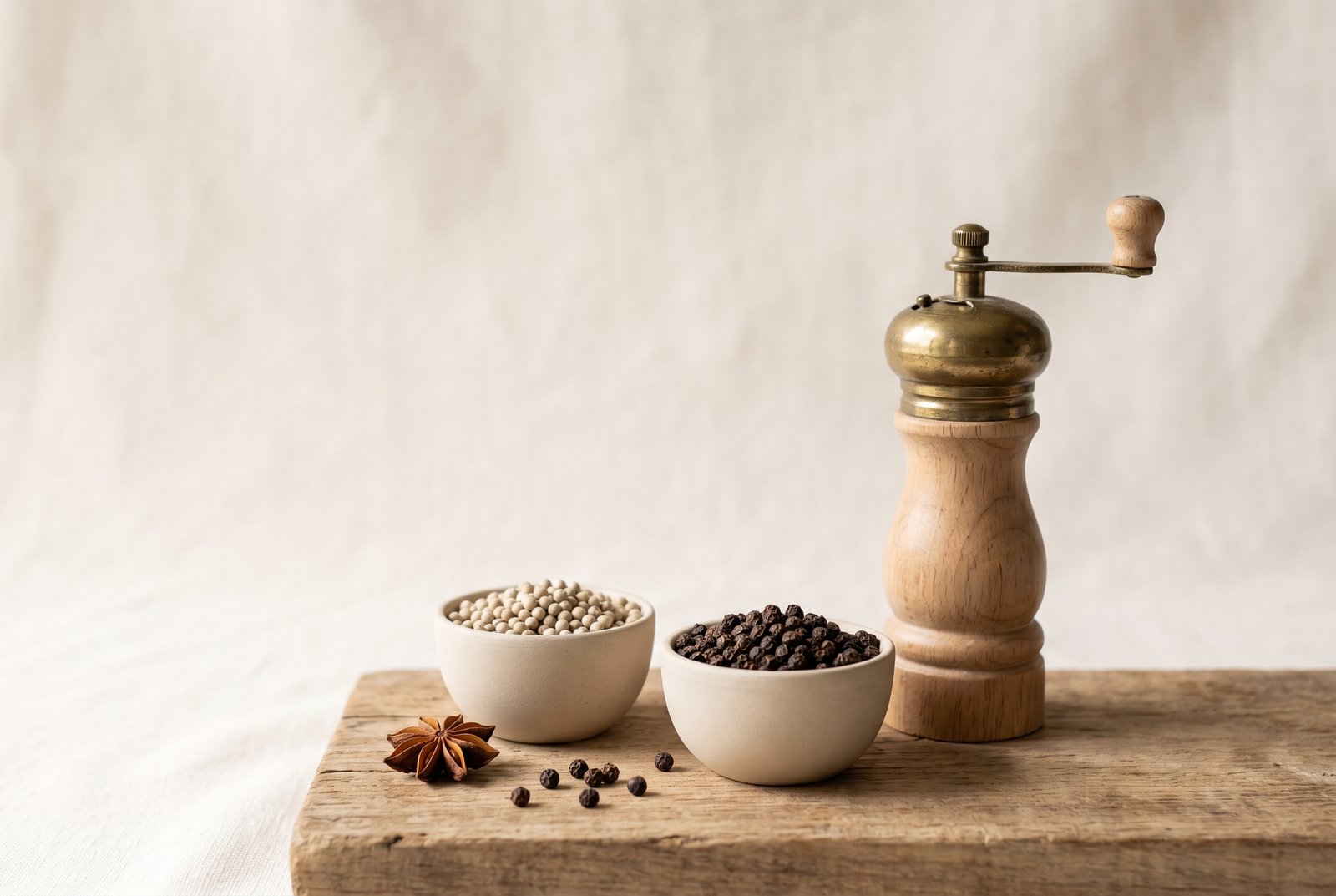
White and black pepper come from the same plant (Piper nigrum) — the difference is ripeness and processing. Black is picked slightly under-ripe and dried whole (fuller aroma, more bite, more piperine). White is ripened and has its skin removed (milder, earthier, no dark specks). Use black for almost everything; reach for white in pale dishes where black flecks look off. Tellicherry isn’t a different species — it’s a grade of larger, later-picked black peppercorns with a fuller flavour, worth it as a finishing pepper if you love pepper, unnecessary for a pot of stock.
Same vine, different peppercorns
The confusing part is that black, white, and green peppercorns are all the same fruit — what changes is when it’s picked and how it’s dried:
- Black — picked slightly under-ripe, then dried whole; the skin darkens and wrinkles. The most piperine and the fullest aroma.
- White — left to ripen, then soaked so the outer skin is removed, leaving the pale inner seed. Milder and earthier, without the bright top notes.
- Green — picked young and preserved before they can darken. Fresh and less pungent.
(For the record, chilli, bell, and cayenne “peppers” are unrelated plants — a different story entirely.)
White vs black: which should you use?
| Use white when | Use black when |
|---|---|
| The dish is pale (cream sauces, mashed potato, light soups, white fish) and black specks would look off | Almost everything else |
| You want a subtler, more earthy, slightly fermented heat | You want full aroma, a sharper bite, and more piperine |
| You’re cooking a cuisine that traditionally uses it (some Chinese, French, and Scandinavian dishes) | You’re finishing a dish and want that fresh-cracked lift |
For most home cooking, black pepper is the default and white is the occasional specialist. Neither is “healthier” in any meaningful way — black simply has more piperine because it keeps its skin.
Is Tellicherry black pepper worth it?
Tellicherry is a grade, not a species. These are larger black peppercorns left to mature longer on the vine before drying, which gives a fuller, more complex, slightly fruity flavour. Malabar is the classic, reliable all-rounder from the same region.
Honest verdict:
- Worth it as a finishing pepper if you genuinely love pepper — cracked fresh over steak, eggs, pasta, or a cheese board, the difference is noticeable.
- Not necessary for cooking into stocks, stews, and long-simmered dishes, where the nuance cooks away and a good everyday Malabar is perfect.
The upgrade that matters more than grade: grind fresh
Here’s the thing most “best pepper” articles bury: whether you buy Tellicherry or ordinary, pre-ground pepper goes flat fast. Pepper’s aroma lives in volatile oils that start evaporating the moment it’s ground. Whole peppercorns keep their aroma for years; ground pepper fades in weeks.
So the single biggest quality lever isn’t the grade — it’s buying whole peppercorns and grinding fresh. Do that first; upgrade to Tellicherry second.
A good setup is smaller than you’d think: one jar of whole Tellicherry peppercorns — good enough to finish with, and no hardship in a stew — and one adjustable pepper grinder that goes coarse to fine. Keeping two grades on the shelf is a refinement, not a requirement. As an Amazon Associate we may earn from qualifying purchases.
Grind size: match the pepper to the job
| Grind | Best for |
|---|---|
| Coarse / cracked | Steaks, rubs, cacio e pepe, finishing — texture and bursts of heat |
| Medium | Everyday seasoning, dressings, marinades |
| Fine | Even seasoning through batters, sauces, spice blends |
What’s a good black pepper substitute?
If you’re out of black pepper, the closest swaps are white pepper (milder, use a bit less) or a small amount of ground long pepper if you have it. For heat without pepper’s specific flavour, a pinch of cayenne or a splash of hot sauce works in savoury dishes — but they’re chilli, not pepper, so the character is different.
Frequently asked questions
Is white pepper hotter than black pepper?+
Not really. White pepper is generally milder and earthier, though its heat can feel more penetrating. Black pepper has more aroma and bite.
Is Tellicherry pepper actually different?+
Yes, but it is a grade of black pepper (larger, later-picked), not a different plant. It has a fuller, fruitier flavour, best appreciated freshly cracked as a finishing pepper.
Which pepper is healthiest?+
Black pepper has the most piperine because it keeps its skin, but the differences are minor at culinary amounts. Choose by flavour rather than health claims.
What can I substitute for black pepper?+
White pepper is the closest, using slightly less. Long pepper works if you have it. Cayenne adds heat but a different, chilli-based flavour.
New: Google now lets you choose which sites it shows you first. One tap lifts our spice guides in your results — nobody else's — and you can undo it any time.
More on Black Pepper
Black Pepper & Your Medications: When Piperine Isn't Harmless
Black pepper's absorption 'superpower' has a flip side. Here's how concentrated piperine can raise the levels of some drugs — and the one question to ask your pharmacist.
Does Black Pepper Really Make Turmeric Work? The 2,000% Claim, Checked
The famous 2,000% turmeric-absorption figure comes from one small study. Here's what black pepper genuinely does for curcumin — and how much you actually need.
Lemon Black Pepper Chicken (+ How to Actually Cook with Pepper)
An easy weeknight lemon black pepper chicken, plus the simple method for making black pepper earn its place — big flavour, far less salt.