
Cardamom
Cardamom for Digestion: Does It Actually Work?
Quick answer
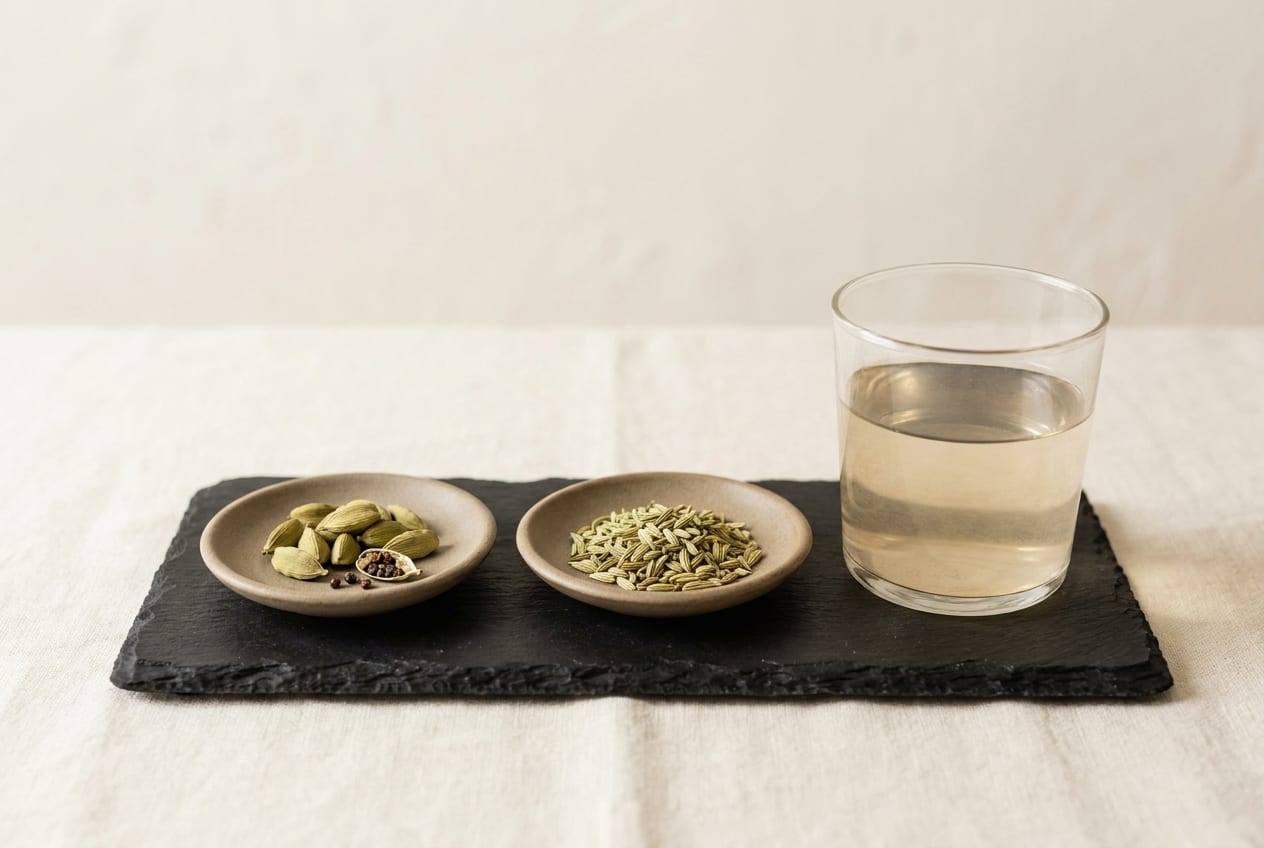
For the tight, over-full, windy feeling after a big meal — yes, reasonably. Cardamom is a carminative: its aromatic oils relax the smooth muscle of the gut and help trapped wind move, which is why the seeds are chewed after eating across South Asia and the Gulf. Chew the seeds of one or two crushed green pods, or drink a tea of three or four. Expect relief in 15–30 minutes or not at all. What cardamom will not do is treat reflux, IBS, an intolerance or an infection — and persistent bloating is a symptom to take to a doctor, not to a spice rack.
Of all cardamom’s claimed benefits, this is the one with the most behind it — which is faint praise, given the company. It is worth separating carefully, because “cardamom aids digestion” is doing a lot of work in a lot of marketing.
What a carminative actually is
A carminative is something that helps trapped gas pass. That is the whole definition — it is not a metabolism claim, an enzyme claim, or a gut-health claim.
Aromatic seeds of this family — cardamom, fennel, caraway, anise, cumin — share volatile oils that relax intestinal smooth muscle. Relaxed muscle lets trapped wind move rather than stretching the gut wall, and that stretching is what you feel as bloating and cramping. The relief is mechanical, not metabolic.
This is why every one of these cultures ends a meal with an aromatic seed, and why they arrived at it independently.
The evidence, graded
Bloating and post-meal fullness — reasonable
The best-supported use. Mechanism, tradition and small human data all point the same way. Cardamom appears in studies of functional dyspepsia — the medical name for persistent indigestion with no structural cause — usually as part of a herbal combination rather than alone, with modest benefit.
Modest is the operative word. It is a real, small effect on comfort.
Nausea — preliminary
Some support, mostly for aromatic inhalation rather than for eating cardamom, and largely in specific settings such as post-operative nausea. Interesting, thin, and not really what a pod in your tea is doing.
Appetite, gastric emptying, gut motility — lab only
Cardamom extracts change these in animal and cell studies. Whether pods in tea change them in a person has not been shown. Treat every confident claim in this territory as a laboratory finding wearing a kitchen apron.
Gut health, microbiome, “detox”, stomach ulcers — insufficient
No good human evidence. Ulcers in particular have a known cause — usually H. pylori or anti-inflammatory drugs — with a real treatment, and using cardamom instead of that treatment is how a fixable problem becomes a serious one.
The honest summary: cardamom is good at making a heavy meal feel less heavy. Everything past that is either laboratory work or marketing.
How to take it
After a meal, chewed — the traditional method and the fastest. Crush one or two green pods, take out the sticky black seeds, chew them, discard the husk. Strong, and it clears your breath at the same time.
As tea — three or four crushed green pods, water just off the boil, five to seven minutes, covered. Slower, gentler, more pleasant. Full method in cardamom tea.
In the cooking itself — a pod or two in rice, dal or a braise. This is the least medicinal and most sensible way to live with it.
Any whole green cardamom works; freshness matters far more than brand. → whole green cardamom pods. As an Amazon Associate we may earn from qualifying purchases.
Give it 15–30 minutes. Wind moving is a quick process. If an hour passes with no change, cardamom was not the answer this time, and taking more will not help.
Cardamom against the alternatives
| Evidence | Cost | Notes | |
|---|---|---|---|
| Fennel seed | Best of the group | Cheap | The one to pick on evidence alone. Also the mildest tasting |
| Peppermint oil | Strong, for IBS specifically | Cheap | Enteric-coated capsules have real trial support. Can worsen reflux |
| Ginger | Good, mainly for nausea | Cheap | Better for nausea than for bloating |
| Cardamom | Modest | Expensive | Tastes best. Same principle as fennel, less evidence |
| Caraway / ajwain | Modest, often combined | Cheap | Frequently paired with peppermint in trials |
Cardamom is the most expensive item on that list and not the best evidenced. It is on the list because people keep using the remedy they enjoy, and abandon the one they do not. Fennel is the rational choice; cardamom is the one that gets drunk.
When it is not a digestion problem
Stop reaching for remedies and see a doctor if bloating or indigestion comes with any of these:
- Weight loss you did not intend
- Blood in your stool, or black stools
- Persistent vomiting, or difficulty swallowing
- A change in bowel habit lasting more than a few weeks
- Pain that wakes you at night
- Bloating that is persistent rather than occasional — in women this also warrants a specific conversation about ovarian symptoms, because persistent bloating is one of the few early signs there is
Occasional fullness after a large meal is normal and cardamom is a reasonable comfort for it. Bloating most days is a symptom, and a pleasant tea is a good way to spend six months not investigating it.
The bottom line
Cardamom genuinely helps a heavy meal sit better, by a modest and mechanical route, within half an hour or not at all. It is the nicest tasting carminative and not the best evidenced — fennel is cheaper and better studied, and there is no shame in using both. Just do not let a comfort remedy stand in for a diagnosis.
Related reading:
Frequently asked questions
Does cardamom really help digestion?+
For the trapped, over-full feeling after a heavy meal — reasonably, yes. Cardamom is a carminative, its aromatic oils relax gut smooth muscle and help wind pass, and that use is consistent across centuries and across cultures. The human evidence is small rather than absent. It is comfort, not treatment, and it does nothing for the underlying cause.
How do you take cardamom for bloating?+
The easiest way is to chew the seeds of one or two crushed green pods after eating, which is exactly how it is used across South Asia and the Gulf. A tea of three or four crushed pods steeped five to seven minutes does the same job more slowly and more pleasantly. Both are food amounts.
Is cardamom or fennel better for digestion?+
Fennel has more human evidence behind it, particularly for infant colic and adult bloating, and it is cheaper. Cardamom tastes better to most people and works on the same carminative principle. If you want the better-evidenced option, take fennel; if you will actually keep using it, take the one you like.
How long does cardamom take to work for indigestion?+
If it helps at all, it helps within about fifteen to thirty minutes, which is the timescale for wind moving rather than anything being treated. If nothing has changed within an hour, cardamom is not the answer for that episode.
When should I see a doctor about bloating?+
If bloating is persistent rather than occasional, or comes with weight loss you did not intend, blood in your stool, vomiting, difficulty swallowing, a change in bowel habit lasting more than a few weeks, or pain that wakes you at night. Persistent bloating in women also warrants a conversation about ovarian symptoms. None of that is a spice question.
New: Google now lets you choose which sites it shows you first. One tap lifts our spice guides in your results — nobody else's — and you can undo it any time.
More on Cardamom
Cardamom in Coffee: The Tradition, and How to Do It Properly
Cardamom coffee explained — how Gulf qahwa and Scandinavian cardamom coffee differ, exactly how much to use in a filter, moka pot or espresso, and the mistakes that make it bitter.
Cardamom Substitute: What to Use When You Have None
The best cardamom substitutes by dish — exact swap ratios for baking, curry, biryani, chai and coffee, what to use for black cardamom, and when to simply leave it out.
Cardamom Tea: What It Actually Does, and How to Brew It
Cardamom tea benefits graded honestly — what the evidence supports, what it doesn't, how to brew pods properly, and who should be careful with concentrated cardamom.