
Spice guide
Cardamom Benefits
Cardamom is the spice people own without ever quite learning. It sits in the back of the cupboard because one recipe asked for it, costs more per gram than almost anything else on the shelf, and gets thrown away stale. These guides cover what cardamom is good for — graded honestly — and how to actually use the tin you already paid for.
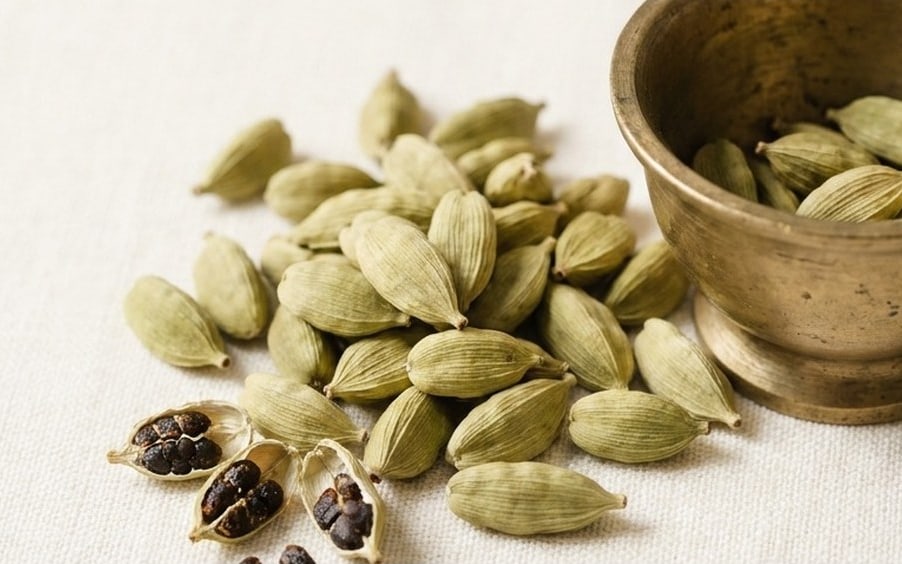
Only saffron and vanilla cost more by weight. Cardamom is hand-picked pod by pod, over several passes, because the pods on one plant ripen at different times — and a pod picked early has no aroma to lose. That is the whole reason for the price, and it is also why the difference between good cardamom and cheap cardamom is so obvious the moment you open the tin.
Most people meet it in one of three ways: a recipe demands it and they have none, they inherit a jar and do not know what to do with it, or they drink it in coffee or chai and want to know whether it is doing anything. The guides below answer those in that order.
What the evidence actually supports
Cardamom’s traditional reputation is digestive, and that is also where the best — though still modest — human evidence sits. Its reputation for blood pressure, blood sugar, weight and oral bacteria rests almost entirely on small studies, animal work and laboratory extracts at doses no cup of tea contains.
We grade every claim inline so you can see the strength of the support without leaving the sentence. On this spice that matters more than usual, because cardamom is expensive enough that people buy it because of the health claims.
- Digestion — best supported, still modest. The traditional use and the one small human trials keep pointing at.
- Fresh breath — supported, mechanically. Chewing a pod works, and has worked for centuries, for the same antibacterial reason clove does.
- Blood pressure and blood sugar — promising, unproven. A handful of small trials, mostly using powdered doses well beyond culinary amounts.
- Weight and metabolism — laboratory only. Cells and rodents, not people.
- Aroma and flavour — the reason to buy it. Not a health claim, and the only benefit that survives contact with a stale tin.
Read this first
Cardamom in food is a food, and safe as one. Nothing on these pages is a treatment, and cardamom supplements — concentrated extracts and oils — are a different proposition from the pods, in the same way a caffeine tablet is a different proposition from a cup of tea.
Going deeper
The complete account — the chemistry, the evidence in full, buying and grading, and every culinary use — is Cardamom: The Aromatic Digestive, a 74-page book that grades every health claim by the strength of the evidence behind it, including the ones it says you should ignore. The guides here are free and stay free.
Guides
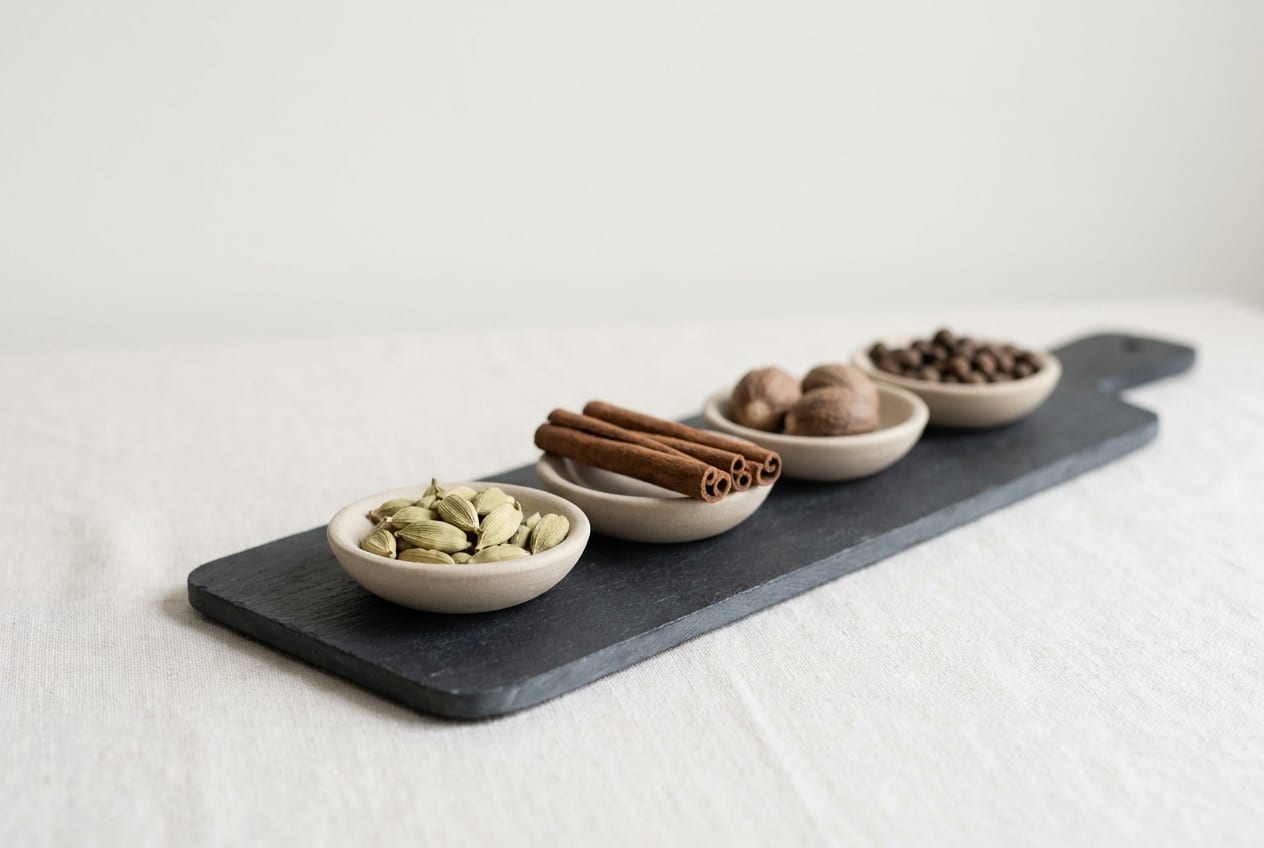
Cardamom Substitute: What to Use When You Have None
The best cardamom substitutes by dish — exact swap ratios for baking, curry, biryani, chai and coffee, what to use for black cardamom, and when to simply leave it out.
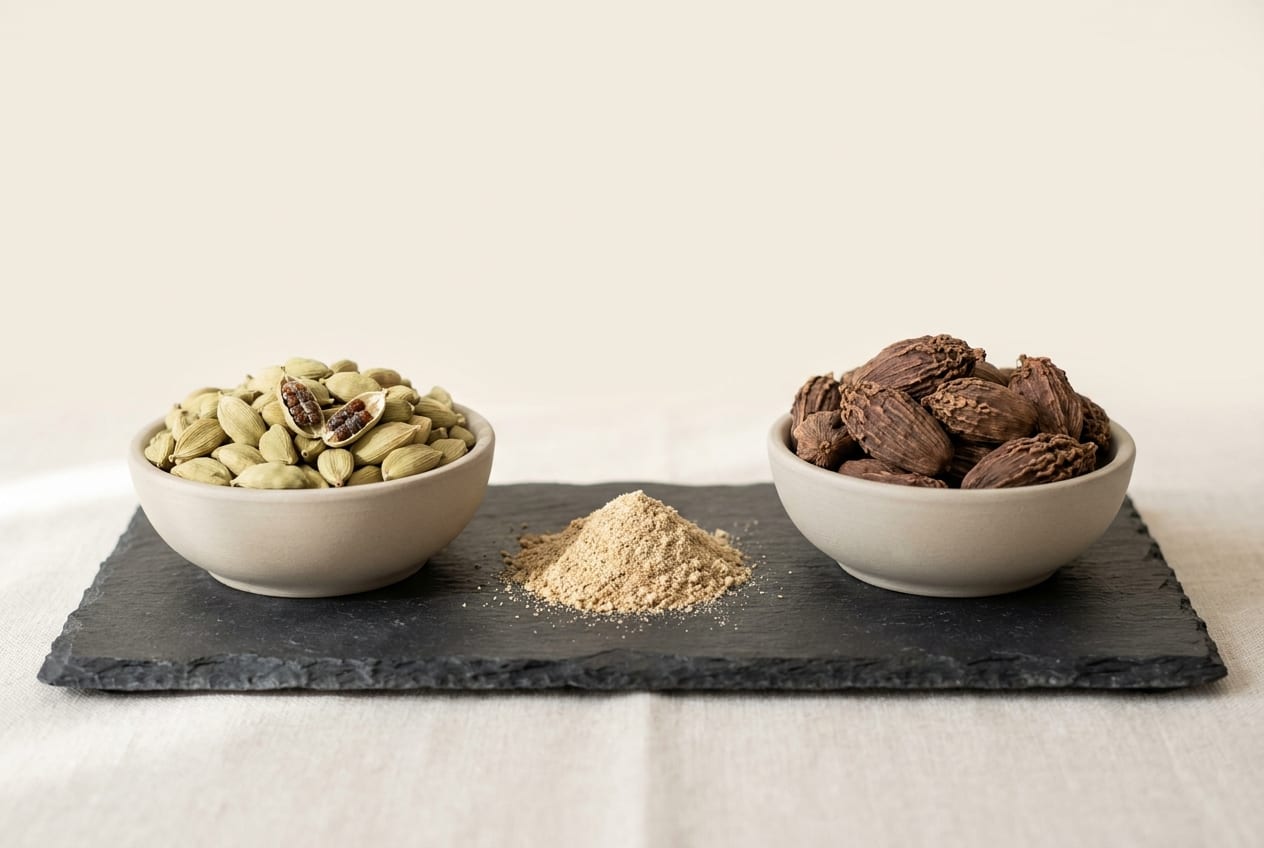
Which Cardamom to Buy: Green or Black, Pods or Ground
A buyer's guide to cardamom — green versus black, whole pods versus ground, what the grades mean, why it costs what it does, and how to tell fresh from stale before you pay.
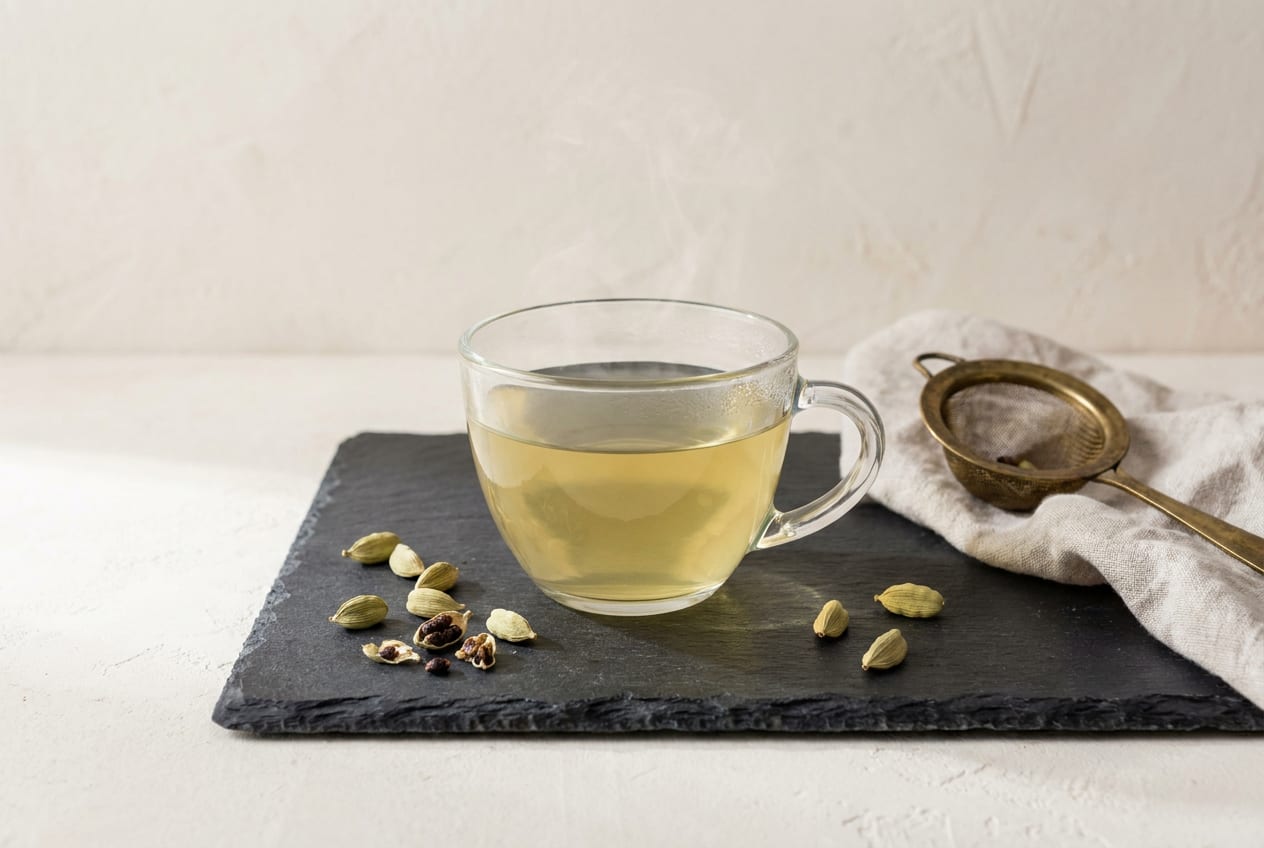
Cardamom Tea: What It Actually Does, and How to Brew It
Cardamom tea benefits graded honestly — what the evidence supports, what it doesn't, how to brew pods properly, and who should be careful with concentrated cardamom.
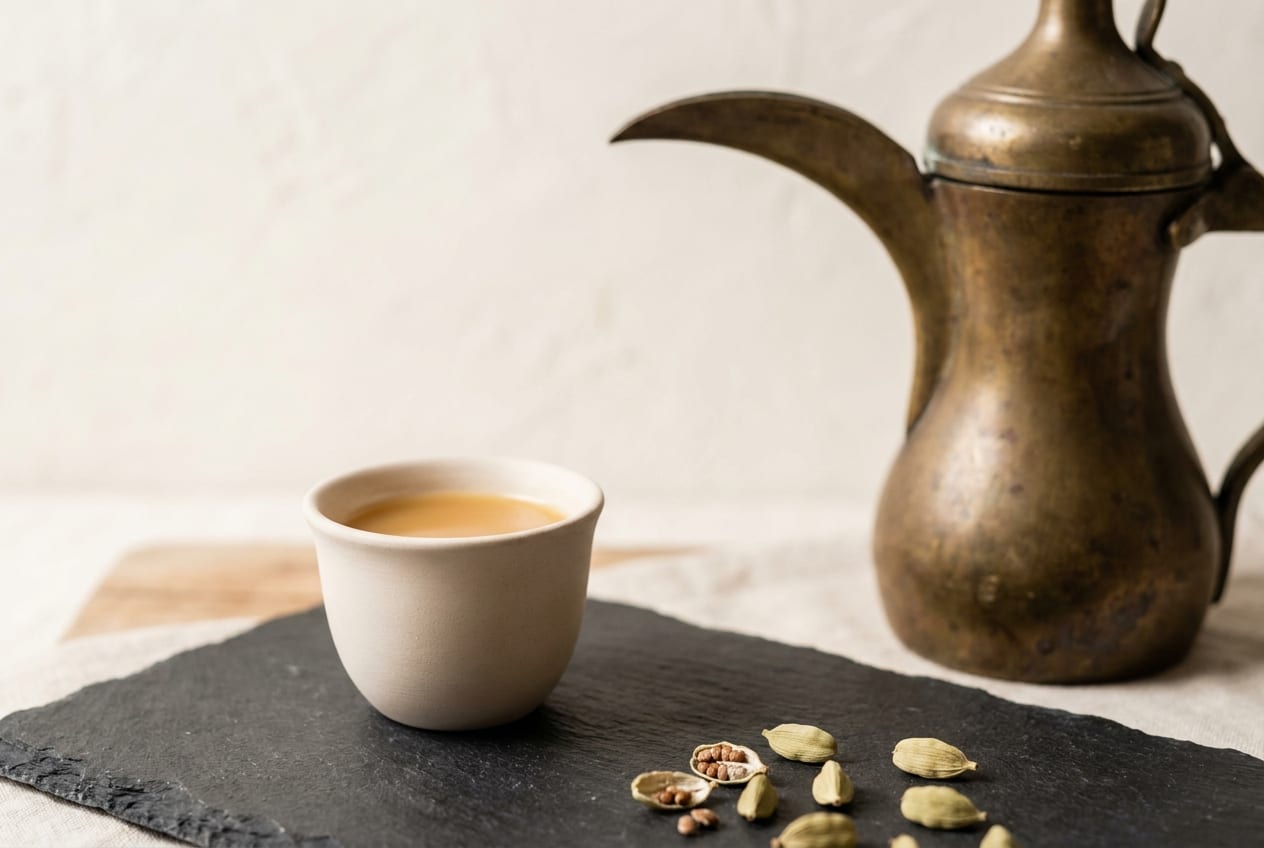
Cardamom in Coffee: The Tradition, and How to Do It Properly
Cardamom coffee explained — how Gulf qahwa and Scandinavian cardamom coffee differ, exactly how much to use in a filter, moka pot or espresso, and the mistakes that make it bitter.
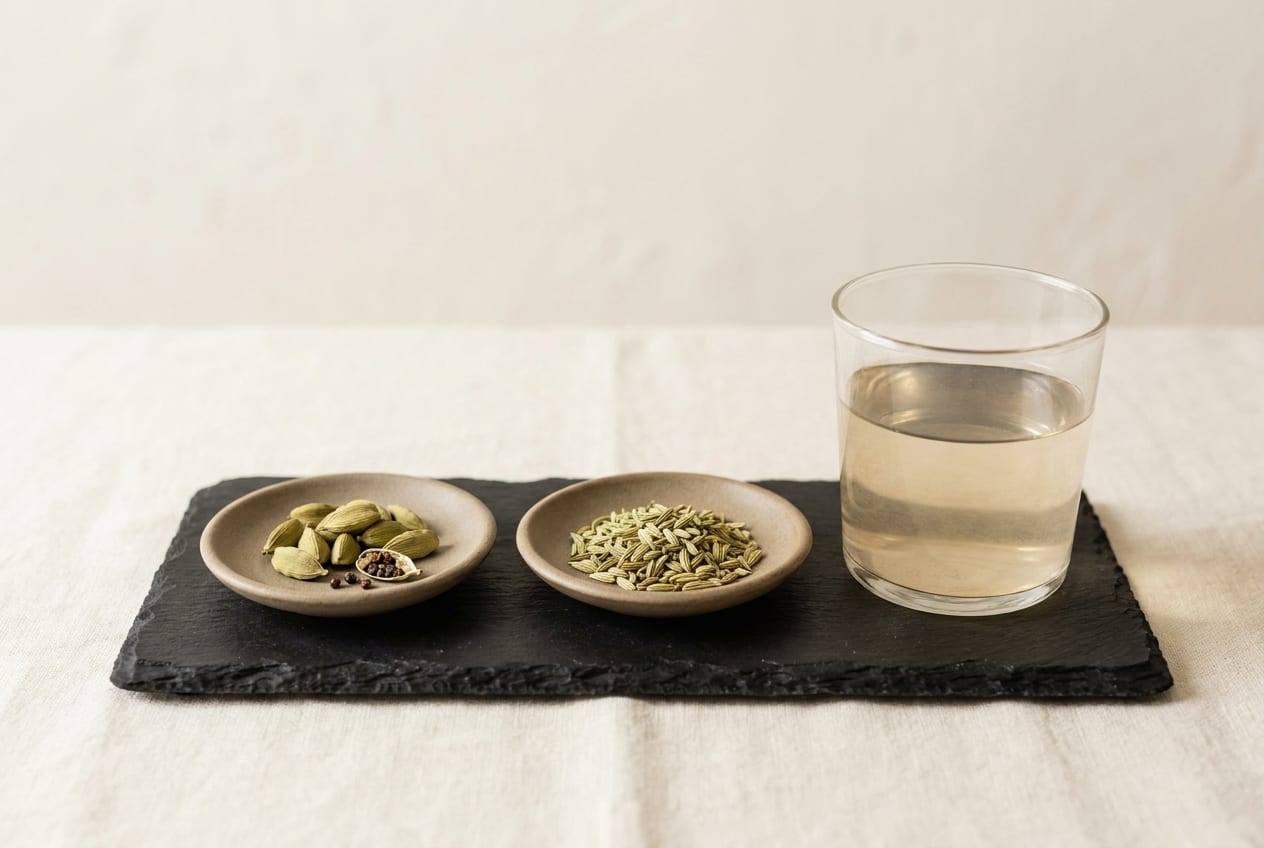
Cardamom for Digestion: Does It Actually Work?
Cardamom for bloating, indigestion and trapped wind — what the evidence really shows, how it compares with fennel, ginger and peppermint, how to take it, and when the symptom needs a doctor.
Common questions
What are the health benefits of cardamom?+
The digestive claim is the one with the best human support, and even that is modest — cardamom has been used to settle the stomach across many cuisines for a very long time, and small trials point the same way. Its reputation for blood pressure, blood sugar, weight and oral bacteria comes almost entirely from small studies, animal work and laboratory extracts at concentrations no cup of chai contains.
Is cardamom good for digestion?+
It is the traditional use and the best-evidenced one, which is a rare combination. The likely mechanism is unremarkable and real: aromatic compounds that relax the gut and stimulate saliva and digestive secretions. Expect mild help with bloating and heaviness after a meal, not a treatment for a diagnosed condition.
What is the difference between green and black cardamom?+
They are different species used for different jobs, not grades of the same thing. Green cardamom is floral and sweet and is what almost every recipe means by cardamom. Black cardamom is smoke-dried, resinous and savoury, and will overwhelm a dessert. Swapping one for the other is the single most common cardamom mistake.
Why is cardamom so expensive?+
Only saffron and vanilla cost more by weight. The pods on one plant ripen at different times, so the crop is hand-picked pod by pod over several passes, and a pod picked early never develops its aroma. The price is labour, not scarcity — and it is also why good cardamom and cheap cardamom smell nothing alike.
Are cardamom supplements worth taking?+
A concentrated extract is a different proposition from the pods, in the same way a caffeine tablet is a different proposition from a cup of tea. The human evidence for cardamom is not strong enough to justify a supplement, and we do not recommend one. If you want cardamom, buy pods, keep them whole, and grind them when you use them.