
Cardamom
Cardamom in Coffee: The Tradition, and How to Do It Properly
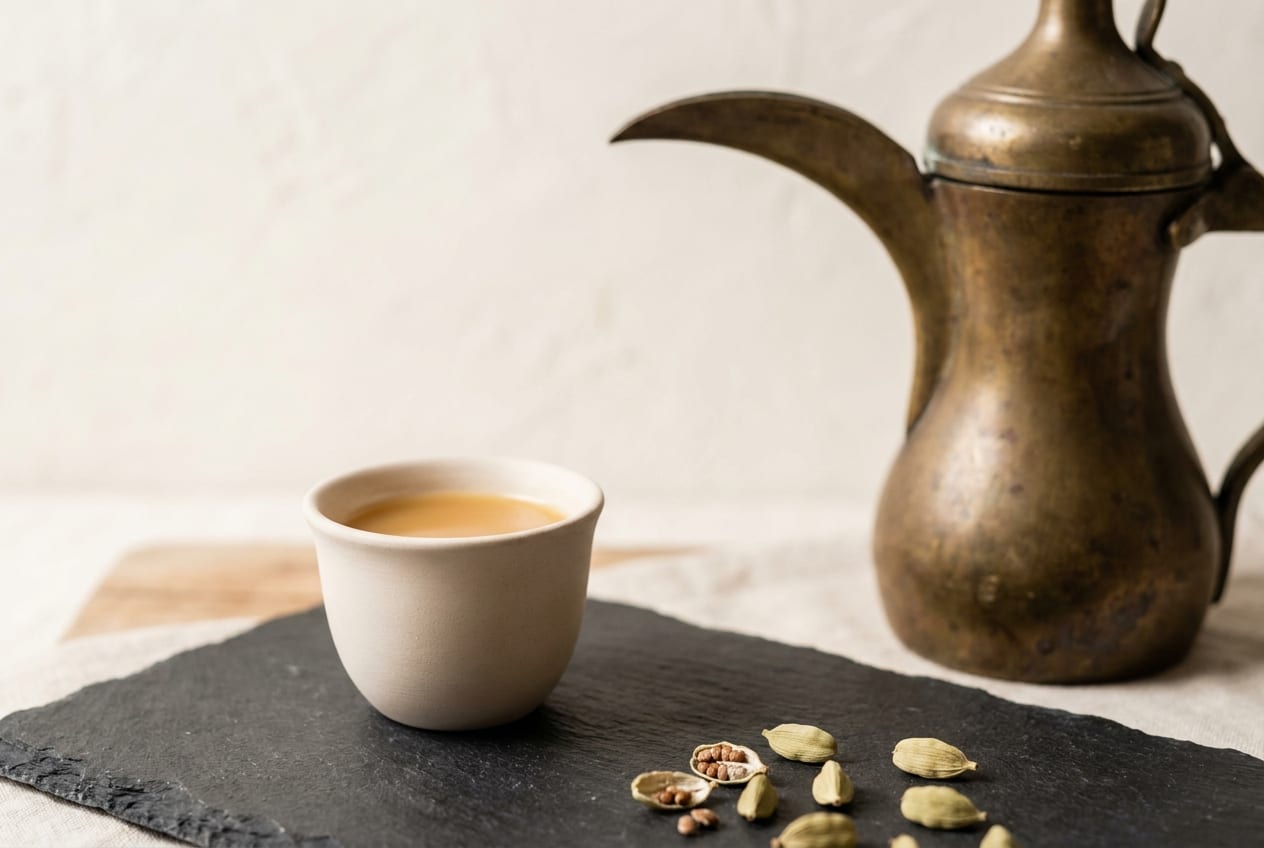
Quick answer
One crushed green pod per cup, added to the grounds, not the cup. That is the whole technique. Use green cardamom — black is fire-dried and tastes of smoke in coffee — crush it just before brewing so the pod actually opens, and put it in with the coffee so the two extract together. Gulf qahwa uses much more than this, but it is a different drink: a pale, lightly roasted brew built around cardamom rather than flavoured with it. In a normal dark roast, one pod is plenty and two is usually one too many.
Cardamom coffee is not a café invention. It is two old traditions at opposite ends of a trade route, and knowing which one you are making saves a lot of disappointing cups.
Two traditions, not one
Gulf qahwa
In Saudi Arabia, the UAE, Kuwait, Qatar and Yemen, coffee and cardamom are effectively one word. Qahwa is brewed from very lightly roasted beans — pale gold rather than brown — with cardamom in quantity, sometimes saffron or cloves, and served without sugar in small handleless cups from a long-spouted brass dallah. Dates sit alongside.
It is thin, aromatic, and almost tea-like. Someone expecting espresso finds it strange. It is also inseparable from hospitality: the pouring, the refusing, the small tilt of the cup that means “no more” is a whole social grammar, and UNESCO lists Arabic coffee as intangible cultural heritage for exactly that reason.
The cardamom here is not a flavouring. It is a principal ingredient, and the coffee is roasted pale precisely so it does not bury it.
Scandinavian cardamom coffee
Cardamom reached the Nordic countries by trade and stayed, and it turns up in coffee alongside the buns it is more famous for. This is closer to what most people mean when they add cardamom to coffee: a normal dark roast, warmed by a small amount of spice.
If you are using a filter machine, a cafetière or a moka pot, this is the tradition you are actually joining.
How much, and where to put it
Amount: one crushed green pod per cup, or roughly ⅛ teaspoon of freshly ground cardamom. Scale up cautiously. Cardamom is assertive and the line between aromatic and soapy is closer than people expect.
Where: with the grounds, every time.
| Method | What to do |
|---|---|
| Filter / drip | Crushed pod or ground cardamom into the basket with the coffee |
| Cafetière | Crushed pods in with the grounds before the water |
| Moka pot | Ground cardamom stirred into the coffee in the basket |
| Espresso | Grind a pod’s seeds with the beans. Do not add loose powder to the basket |
| Boiled / qahwa style | Pods into the pot with the water and coffee, simmered together |
Adding cardamom to the finished cup floats it on the surface and tastes thin and dusty. The point is co-extraction: cardamom’s oils and coffee’s solubles coming out together.
The mistakes that ruin it
Black cardamom. The single most common error. Black pods are dried over open fire, and that smoke, which is wonderful in a biryani, tastes like an ashtray in coffee. Green only.
Uncrushed pods. A whole pod is a sealed container. Dropped into a cafetière it gives up almost nothing and you conclude cardamom is subtle. Crush until it splits.
Stale ground cardamom. Ground cardamom is noticeably flat after three to six months. Most disappointing cardamom coffee is a freshness problem, not a technique problem.
Too much. Two pods per cup crosses from aromatic into perfumed. Start at one.
Sugar to fix it. If it tastes harsh, use less cardamom, not more sugar. Qahwa is traditionally unsweetened for good reason — the spice is doing the softening.
Why the pairing works
There is a sensory answer and a practical one.
Cardamom’s cineole gives a cooling, almost menthol lift that sits directly against coffee’s bitterness and rounds it off — the same reason it works in a very sweet dessert. It genuinely makes a harsh brew easier to drink.
The practical reading, offered across the region, is that cardamom is a carminative — it settles the gut — and strong coffee on an empty stomach is not always kind. That is a sensible pairing rather than a proven remedy, and it is worth keeping in that category. If you want the evidence on cardamom and digestion, it is here, and it is more modest than the tradition implies.
A simple cup to start with
For one mug, in a cafetière:
- Crush one green pod until it splits. Drop it in, husk and all.
- Add your usual coffee, ground as normal.
- Pour water just off the boil. Stir once.
- Steep four minutes, plunge, pour.
Whole pods, not ground — this is the one use where the difference is unmistakable. → whole green cardamom pods. As an Amazon Associate we may earn from qualifying purchases.
Drink it black the first time. Cardamom is easier to judge without milk in the way, and you may find you do not want the milk afterwards.
Related reading:
Frequently asked questions
How much cardamom do you put in coffee?+
Start with one crushed green pod per cup, or about an eighth of a teaspoon of freshly ground cardamom. Gulf qahwa uses far more — often a pod per cup and sometimes more — but that is a pale, lightly roasted brew built around the spice. In a normal dark-roast coffee, one pod is plenty and two is usually too many.
Do you add cardamom to the grounds or the water?+
To the grounds, in almost every method. Crushed pod or freshly ground seed goes in with the coffee so the two extract together — in the filter basket, the moka pot basket, or the pot itself for a boiled coffee. Adding it to the cup afterwards floats it on top and tastes thin.
What kind of cardamom do you use in coffee?+
Green cardamom, always. Black cardamom is fire-dried and smoky, and in coffee it tastes like an ashtray rather than a spice. Whole pods crushed just before brewing are best; ground cardamom works but fades within months.
Why is cardamom used in coffee?+
In the Arabian peninsula it is inseparable from hospitality, and qahwa is built around it rather than merely flavoured with it. There is also a practical reading: cardamom softens the bitterness of a strong brew and is a carminative, which pairs sensibly with coffee's effect on the gut. The tradition long predates the explanation.
Does cardamom coffee have health benefits?+
Nothing you should drink coffee for. Cardamom is a modest digestive aid and it will freshen your breath, and that is the honest extent of it in a cup. Anyone promising blood pressure or weight benefits from cardamom coffee is describing capsule studies of concentrated cardamom powder, not a drink.
New: Google now lets you choose which sites it shows you first. One tap lifts our spice guides in your results — nobody else's — and you can undo it any time.
More on Cardamom
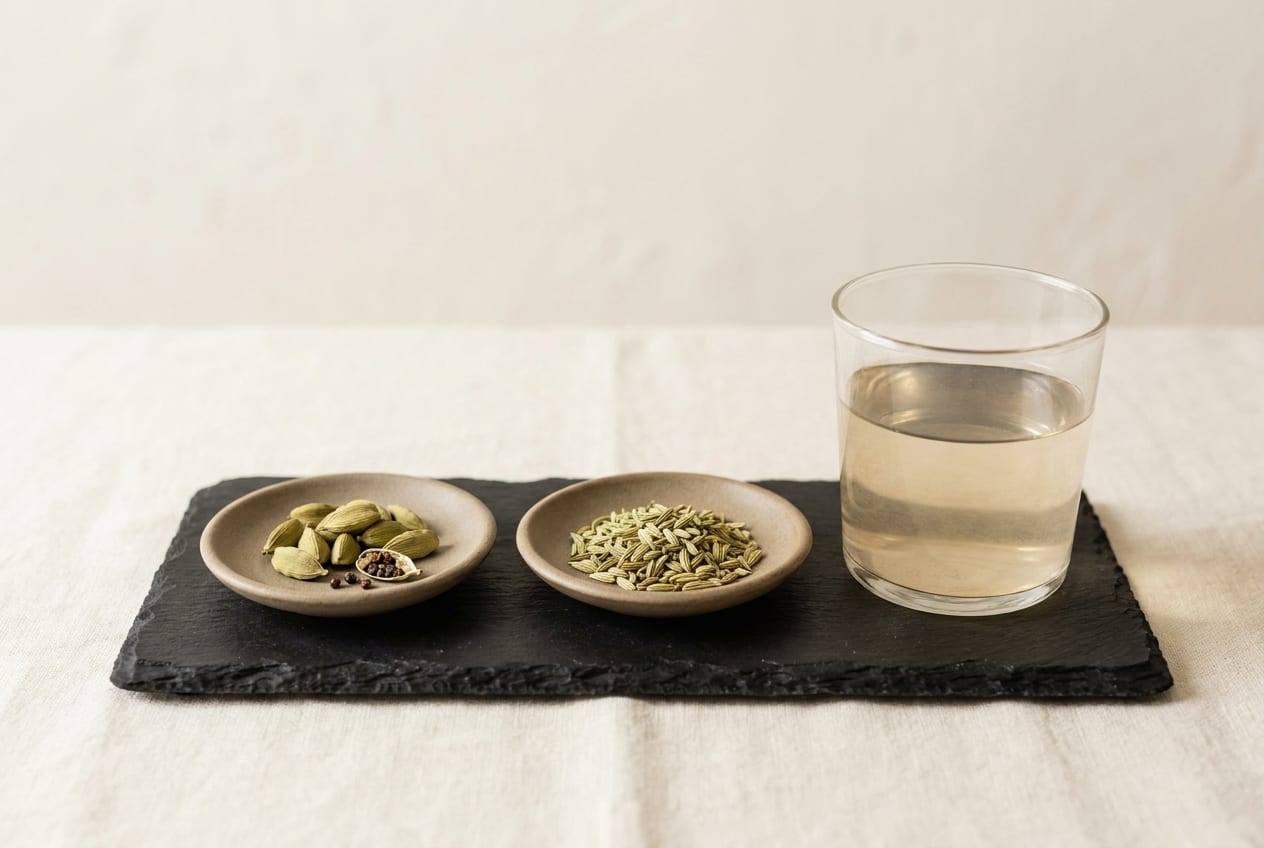
Cardamom for Digestion: Does It Actually Work?
Cardamom for bloating, indigestion and trapped wind — what the evidence really shows, how it compares with fennel, ginger and peppermint, how to take it, and when the symptom needs a doctor.
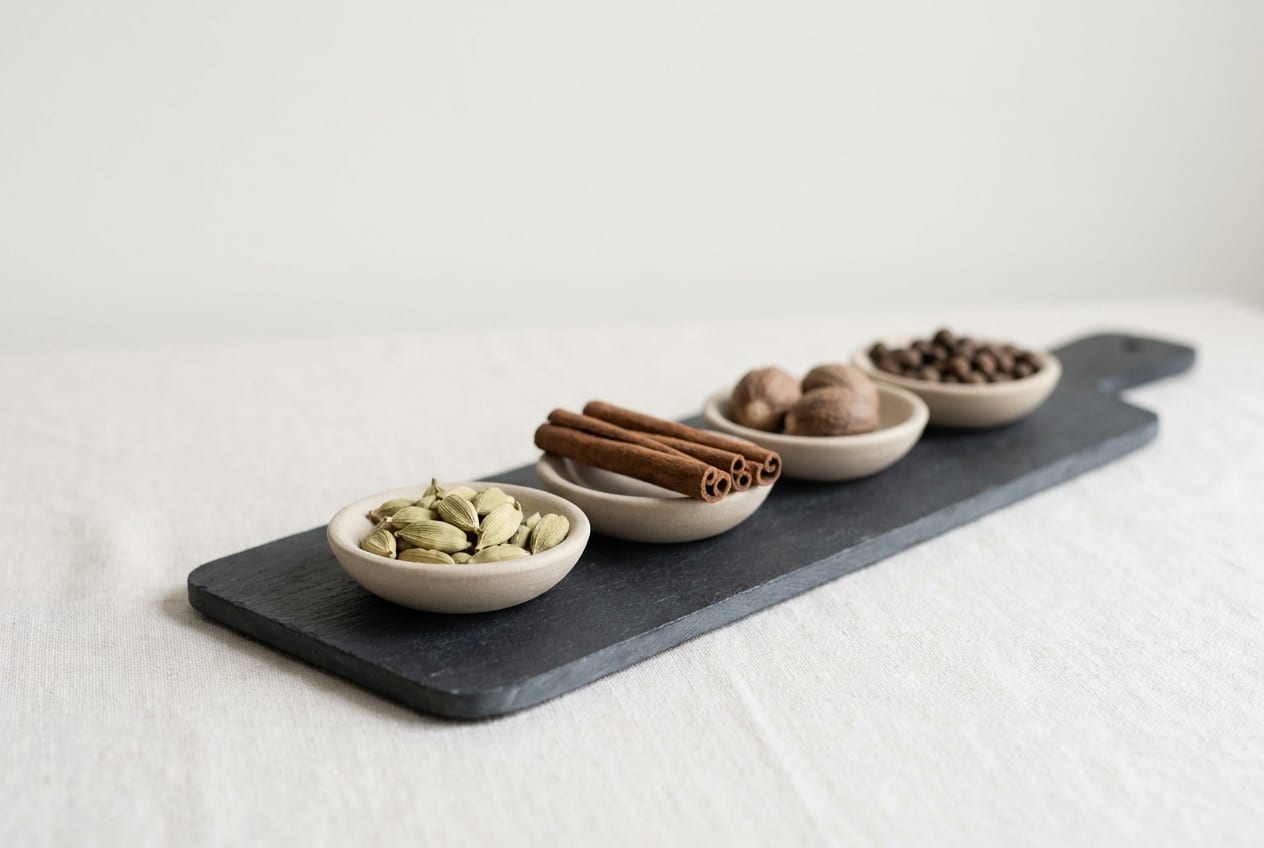
Cardamom Substitute: What to Use When You Have None
The best cardamom substitutes by dish — exact swap ratios for baking, curry, biryani, chai and coffee, what to use for black cardamom, and when to simply leave it out.
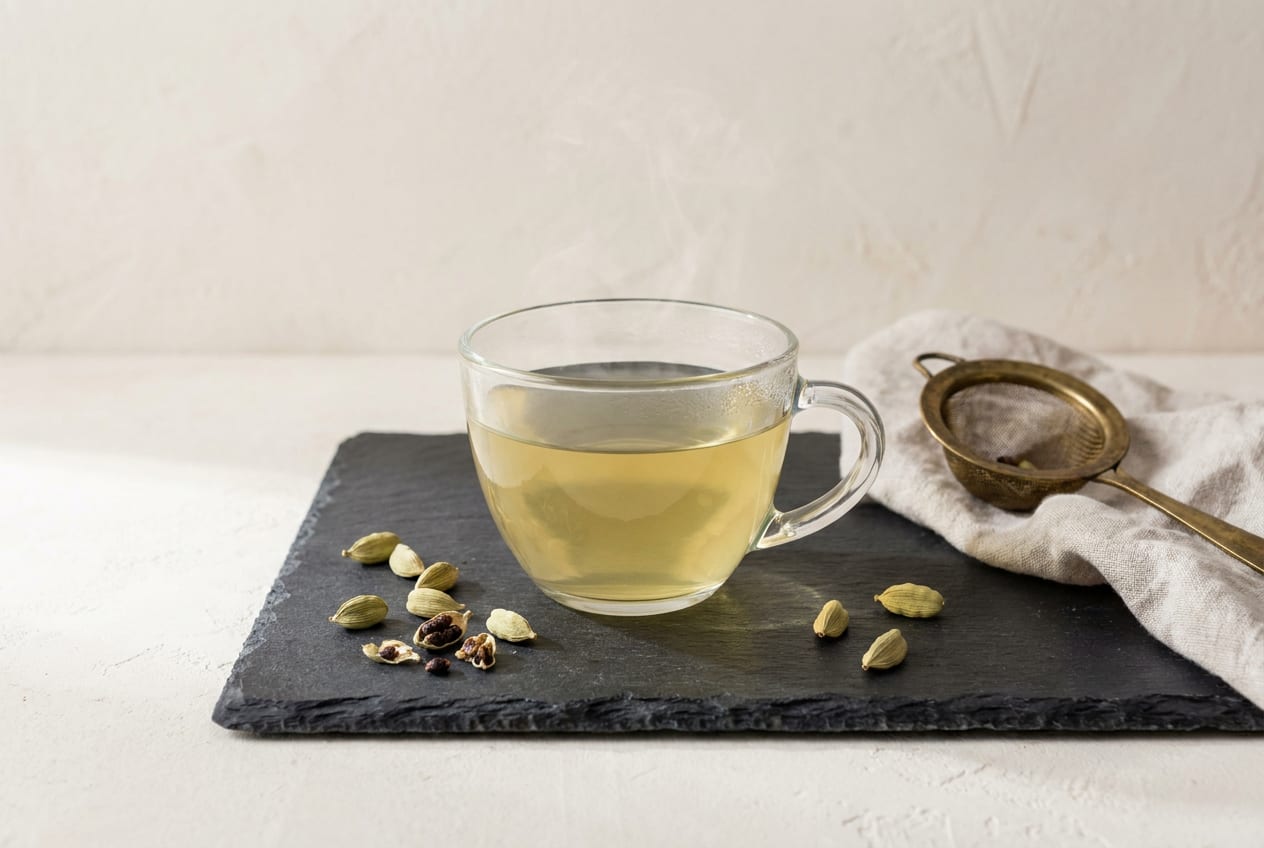
Cardamom Tea: What It Actually Does, and How to Brew It
Cardamom tea benefits graded honestly — what the evidence supports, what it doesn't, how to brew pods properly, and who should be careful with concentrated cardamom.