
Turmeric
Turmeric Benefits for Men: What Holds Up, and What Is Being Sold to You
Quick answer
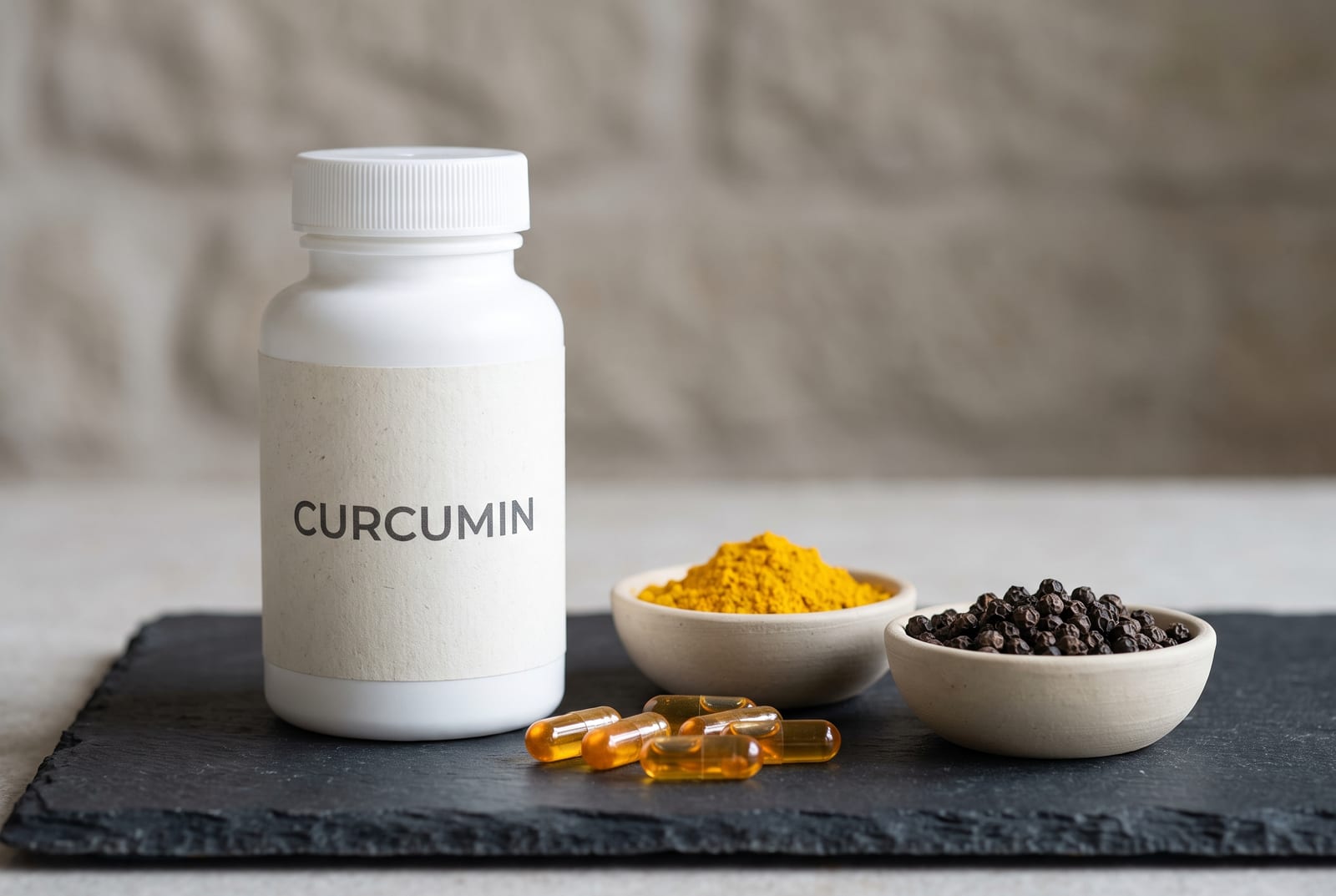
Turmeric’s real benefits for men are joints and exercise recovery. The ones in the advertising are testosterone, prostate and fertility, and those are the weakest three. The honest position: concentrated curcumin has reasonable human evidence for reduced muscle soreness after hard training and for joint discomfort, some for heart-health markers, and very little for anything hormonal. Every one of those results used a supplement, not the spice jar. And a bottle marketed to men is the same curcumin as everything else, usually at a higher price.
The turmeric aisle has learned to segment. There is a bottle for joints, a bottle for immunity, and a bottle with a dark label and a word like “vitality” on it, aimed squarely at men.
Inside, it is the same compound. What differs is which claim is printed on the front — and the claims aimed at men happen to be the ones with the thinnest evidence behind them. Here is the sorted version.
What holds up
Exercise recovery and muscle soreness — reasonable
Turmeric’s strongest men-relevant case, and the least advertised. Several human trials of curcumin supplementation have found reduced delayed-onset muscle soreness and smaller rises in muscle damage markers after hard eccentric exercise.
Three honest caveats. The effect is modest, not transformative. It builds over days of consistent use rather than working like a painkiller taken after a session. And every one of those trials used a concentrated, absorption-enhanced supplement — nobody has shown that a golden latte does this.
Joint discomfort — reasonable, and the best-studied use overall
The most-tested curcumin application in humans, with several trials finding improvement in knee osteoarthritis symptoms. Worth two qualifications: the comparison was usually against placebo rather than against the treatment you might otherwise take, and study quality varies considerably. Real, modest, and the most defensible reason to buy the product.
Heart-health markers — mixed
Trials have found movement in endothelial function, some lipid measures and inflammatory markers. What has not been shown is that any of it changes cardiac events. A moved marker is a hypothesis, not an outcome, and turmeric is nobody’s cardiovascular plan.
Metabolic markers — early
Some small trials show effects on blood sugar and insulin sensitivity. Early, small, and not a reason to change any diabetes management. If you take diabetes medication, note this the other way round — added blood-sugar lowering is an interaction to raise with your doctor, not a bonus.
What does not hold up
Testosterone — no good human evidence
The claim doing the most commercial work, and the one with the least behind it. It originates in rodent studies using concentrated extract, and rodent hormone results have a poor record of transferring to people. No convincing human trial shows turmeric raising testosterone.
If you actually suspect low testosterone — fatigue, low libido, mood changes, loss of muscle — it is measurable with a blood test. Getting the number is a better first move than buying a supplement sold on an unmeasured claim.
Prostate health — laboratory-stage
Curcumin does genuinely interesting things to prostate cancer cells in a dish, and that is where nearly every headline comes from. Human trials are small, early and nowhere near sufficient to support taking turmeric for prostate protection. It is not a substitute for screening and must never delay one.
Fertility and sperm quality — no good human evidence
Animal work again, small and inconsistent even there.
Hair loss — no evidence
Occasionally attached to turmeric in the same breath as testosterone. Nothing supports it.
Choosing a supplement, if you decide to
If you are buying for joints or recovery — the two defensible reasons — the label matters far more than the marketing.
- Buy on curcuminoid content, not on “turmeric mg”. A bottle saying “turmeric 1,000 mg” with no curcuminoid figure tells you almost nothing.
- Insist on an absorption system. Plain curcumin is poorly absorbed to the point of near-uselessness. Piperine (black pepper extract) is the cheap route; phytosome and lipid formulations are steadier and avoid piperine’s interaction problems. Our absorption guide compares them properly.
- Reject proprietary blends. If the label hides the amounts, you cannot evaluate the product at all.
- Ignore the gendered packaging. There is no male-specific curcumin. A “men’s” formula is the same compound, and frequently the same factory, at a markup.
A widely available example of the honest kind of label — a stated curcuminoid amount and a named absorption system rather than a proprietary blend: → NatureWise Curcumin with BioPerine. It contains piperine, so read the interaction note below before buying it. As an Amazon Associate we may earn from qualifying purchases.
Before you start one
Turmeric in cooking needs no permission from anybody. A supplement is a different decision, and two checks are worth the five minutes.
Your medications. Curcumin, and piperine more so, can change how the liver clears a range of drugs. Blood thinners, antiplatelet drugs, diabetes medication and anything with a narrow safety margin are the usual flags. Ask a pharmacist about your actual list rather than matching yourself against a general one.
The liver point. Rare but documented cases of liver injury have been linked to turmeric supplements, with piperine-containing formulations over-represented. It is uncommon relative to how many people take them, and it is worth knowing the warning signs: dark urine, pale stools, yellowing eyes, persistent itching or unusual fatigue. Our turmeric side effects guide covers the whole list.
The bottom line
If you train hard or your knees complain, curcumin has a modest, genuine case and is worth considering — bought on curcuminoid content and an absorption system, and cleared with a pharmacist if you take anything regularly. If you are being sold turmeric for testosterone, prostate protection or fertility, you are being sold the three claims with the least evidence behind them, on the strength of studies done in rodents and dishes.
The complete account — the chemistry, the evidence in full, the interactions in detail and what turmeric is genuinely good for — is in our ebook, Turmeric: Nature’s Anti-Inflammatory.
Related reading:
Frequently asked questions
What are the benefits of turmeric for men?+
The two with the best human support are joint discomfort and exercise recovery — both from concentrated curcumin rather than from the spice jar, and both modest rather than dramatic. Heart-health markers show some movement in trials. Testosterone, prostate protection and fertility are the three claims used hardest in marketing and the three with the least human evidence.
Does turmeric increase testosterone?+
There is no good human evidence that it does. The claim traces to rodent studies using concentrated extracts, and rodent hormone results transfer to people poorly. If low testosterone is a genuine concern, it is measurable with a blood test, and that is the sensible first step rather than a supplement bought on a claim.
Is turmeric good for muscle recovery?+
This is one of turmeric's better-supported uses. Several trials of curcumin supplementation found reduced muscle soreness and smaller rises in damage markers after hard exercise. The effect is real but modest, it takes days rather than one dose, and every trial used a concentrated supplement rather than cooking.
Is turmeric good for the prostate?+
Curcumin does interesting things to prostate cancer cells in the laboratory, which is where nearly every headline on this comes from. Human trials are small, early and not sufficient to support taking turmeric for prostate protection. It is not a substitute for screening, and it should never delay one.
Should men take a turmeric supplement?+
Only if you have a specific reason — joint discomfort or training recovery are the defensible ones — and only after checking your medications with a pharmacist. Buy on curcuminoid content and a stated absorption system, not on packaging aimed at men. The word 'men' on a bottle usually costs more and changes nothing inside it.
New: Google now lets you choose which sites it shows you first. One tap lifts our spice guides in your results — nobody else's — and you can undo it any time.
More on Turmeric
Turmeric Side Effects: The Ones That Are Real, and Who They Apply To
Most turmeric side-effect lists blur the spice and the supplement together. Here is the honest split — what culinary turmeric can do, what concentrated curcumin can do, which medications interact, and the warning signs worth acting on.
Is Turmeric Bad for Your Liver? What the Recent Warnings Actually Mean
Doctors have linked some trendy turmeric supplements to rare liver injury — and the black-pepper combo everyone recommends may be part of the problem. Here's the honest, evidence-based picture: who's at risk, the warning signs, and how to use turmeric safely.
Turmeric Supplements with Black Pepper: Are You Absorbing Any of It?
Most curcumin never reaches your bloodstream. Here's why turmeric supplements pair with black pepper, how piperine compares with phytosome forms, and how to tell a good turmeric supplement from an inert one.