
Turmeric
Turmeric Supplements with Black Pepper: Are You Absorbing Any of It?
· Updated
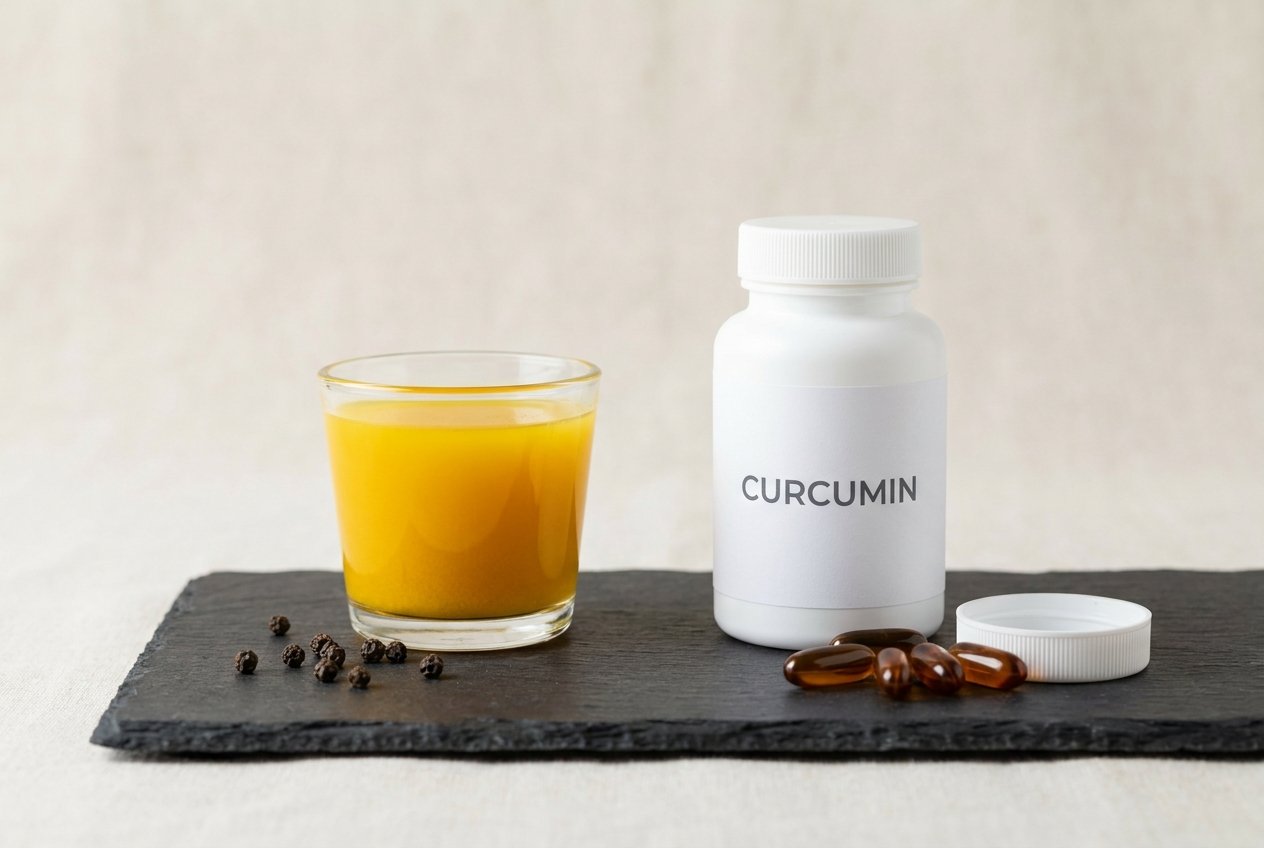
Quick answer
You’ve seen the viral turmeric shots and supplements — but here’s the catch: plain curcumin is barely absorbed, so much of what you’re taking (or drinking) never reaches your bloodstream. Two things fix it: piperine (black pepper), which can dramatically raise absorption but carries interaction cautions, and phytosome/lipid formulations, which absorb steadily and are usually the safer, better-studied choice. If a product doesn’t state a curcuminoid amount and name a real absorption system, you’re likely paying for something your body can’t use. Match the form to your goal — and if you take medication, read the safety note before you buy.
Turmeric shots line the chiller at every juice bar. Curcumin capsules fill the supplement aisle. Wellness TikTok asks the right question in passing — “you’ve seen the viral shots, but are you actually absorbing the benefits?” — and then sells you something anyway. Let’s answer that question properly, because it’s the one that decides whether your money is well spent.
The absorption problem nobody mentions on the label
Curcumin, turmeric’s active compound, has a frustrating property: swallow it plain and your body absorbs very little. It’s poorly soluble, and your gut and liver break down most of it before it can do anything. This is the single biggest reason people take turmeric for months and feel nothing — not because curcumin is useless, but because almost none of it got in.
So the entire game with turmeric supplements is absorption (bioavailability). A cheap bottle of “turmeric 1,000 mg” with no absorption system is, for most people, close to inert. What you’re actually shopping for isn’t turmeric — it’s a delivery system.
Piperine vs phytosome: the two ways to fix it
There are two proven routes to getting curcumin into your bloodstream, and the difference matters.
Piperine (black pepper extract). The famous one. A well-known human study found that adding piperine raised curcumin absorption enormously — the widely-quoted figure is around 2,000%. It works by slowing the enzymes that would otherwise dismantle curcumin. It’s cheap and genuinely effective. The catch: that same enzyme-slowing effect can also change how your body handles other medications, and turmeric-plus-piperine products have been specifically flagged in reports of rare liver injury. Effective — but treat it with respect.
Phytosome and lipid formulations. Here, curcumin is bound to a phospholipid or fat carrier that the gut can transport. These absorb well and, importantly, steadily — and they don’t rely on the enzyme-blocking mechanism that makes piperine tricky. They cost more, and they’re the form used in much of the recent clinical research. For most people wanting a daily curcumin supplement, a phytosome/lipid form is the better default.
Here’s the trade-off at a glance:
| Form | Absorption | Best for | Watch-outs |
|---|---|---|---|
| Plain curcumin extract | Low | Not much on its own | Often “inert” without help |
| Curcumin + piperine | Much higher | Budget, occasional use | Drug interactions; liver-injury reports |
| Phytosome / lipid / micellar | High & steady | Daily use, best-studied | Costs more |
The absorption paradox: the better a product absorbs, the more it behaves like a drug — more effect, but also more interaction and side-effect potential. Higher absorption isn’t automatically “healthier”; it’s more active. Don’t stack multiple high-absorption products.
What about turmeric shots?
Those bright little bottles are basically a concentrated turmeric-ginger drink — usually with black pepper, sometimes citrus. As a tasty, warming ritual, they’re fine. But be clear-eyed: a shot is closer to food than medicine. Most deliver a modest, food-level dose of curcuminoids, and unless there’s fat and pepper in the mix, absorption is limited. If you love them, enjoy them — but don’t expect a juice-bar shot to match a standardised supplement, and watch the added sugar in the sweeter ones.
How to choose a turmeric supplement that isn’t a waste of money
Ignore the marketing on the front. Turn the bottle over and check five things:
- A stated curcuminoid amount. Look for “standardised to 95% curcuminoids” and a milligram figure — not just “turmeric 1,500 mg,” which tells you the weight of powder, not the active dose.
- A named absorption system. Phytosome, lipid/micellar, or added piperine. No system = probably won’t work.
- Third-party testing. Independent verification of potency and contaminants (some cheap turmeric has been found tainted with lead-based colourants). A recognised quality seal is worth more than any buzzword.
- A transparent label. If doses hide inside a “proprietary blend,” walk away — you can’t know what you’re getting.
- The right form for your goal. Daily, long-term, or you take medication? Lean phytosome. Budget and occasional? Curcumin-plus-piperine, with the cautions in mind.
Our current picks
We keep an up-to-date, independently-checked shortlist so you’re not guessing on the shelf:
- Best overall (daily use): a phytosome/lipid curcumin with a stated curcuminoid dose and third-party testing → THORNE Curcumin Phytosome
- Best budget: a standardised 95% curcumin + piperine with a transparent label → NatureWise Turmeric Curcumin with BioPerine
- For cooking-first folks: a well-tested organic turmeric powder + whole black pepper → HQOExpress organic ground turmeric
As an Amazon Associate we may earn from qualifying purchases. We only list products that meet the label checks above.
Before you buy — the safety line that matters
High-absorption curcumin is where the real interactions live. Talk to your clinician first if you take a blood thinner, antiplatelet, or diabetes medication, have gallbladder or liver disease, are pregnant or breastfeeding, or have surgery coming up. This isn’t fine print — it’s the difference between a helpful supplement and an avoidable problem. Full detail here: Turmeric side effects & who shouldn’t take it →.
The bottom line
The question wellness TikTok asks is the right one: are you actually absorbing any of it? With plain turmeric, mostly no. With black pepper, a lot — but mind the interactions. With a phytosome or lipid formulation, steadily and reliably — usually the smartest default. Buy the delivery system, not the milligrams on the front of the jar, and you’ll stop wasting money on capsules your body can’t use.
Want the full buyer’s framework, the absorption science in plain English, and every safety interaction in one place? It’s in our ebook, Turmeric: Nature’s Anti-Inflammatory, Chapters 2 and 8.
Related reading:
Frequently asked questions
Is turmeric with black pepper better than turmeric alone?+
For absorption, yes — and it is the reason nearly every turmeric supplement on the shelf lists black pepper extract on the label. Piperine slows the enzymes that clear curcumin, so more of it stays in circulation. The catch is that the same enzymes clear many prescription medicines, so a piperine product is a real decision rather than a free upgrade.
Why do I need black pepper with turmeric?+
Piperine in black pepper slows the enzymes that break curcumin down, dramatically increasing how much reaches your bloodstream. It's effective, but it can also affect how your body processes some medications, so use piperine products with care if you take prescriptions.
Is phytosome curcumin better than curcumin with piperine?+
For most people taking it daily, yes. Phytosome and lipid forms absorb well and steadily without piperine's interaction issues, and they're the forms used in much recent research. Curcumin-plus-piperine is a cheaper, effective option for occasional use if you're mindful of the cautions.
Do turmeric shots actually work?+
They're a pleasant, warming turmeric-ginger drink, but they deliver a food-level dose, closer to food than medicine. Without fat and black pepper, absorption is limited, and sweeter versions can be high in sugar. Enjoy them as a ritual, not a treatment.
How many milligrams of curcumin should I take?+
Trials for joint pain commonly used around 1,000 mg of curcuminoids per day, but the right amount depends on the formulation, your health, and your medications, which is why there's no universal number. Start low, use one product at a time, and check with your clinician.
How do I know if a turmeric supplement is good quality?+
Look for a stated curcuminoid amount, a named absorption system such as phytosome, lipid, or piperine, third-party testing for potency and contaminants, and a transparent label with no hidden proprietary blend.
New: Google now lets you choose which sites it shows you first. One tap lifts our spice guides in your results — nobody else's — and you can undo it any time.
More on Turmeric
Turmeric Benefits for Men: What Holds Up, and What Is Being Sold to You
Turmeric is marketed to men for testosterone, muscle recovery and prostate health. Here is what the human evidence actually supports, what it does not, and how to tell a useful turmeric supplement from an inert one.
Turmeric Side Effects: The Ones That Are Real, and Who They Apply To
Most turmeric side-effect lists blur the spice and the supplement together. Here is the honest split — what culinary turmeric can do, what concentrated curcumin can do, which medications interact, and the warning signs worth acting on.
Is Turmeric Bad for Your Liver? What the Recent Warnings Actually Mean
Doctors have linked some trendy turmeric supplements to rare liver injury — and the black-pepper combo everyone recommends may be part of the problem. Here's the honest, evidence-based picture: who's at risk, the warning signs, and how to use turmeric safely.