
Cayenne
Cayenne vs Chili Powder vs Paprika: Which Red Powder Do You Need?
Quick answer
| What it is | Heat (SHU) | What it is for | |
|---|---|---|---|
| Cayenne | One chilli, ground | 30,000–50,000 | Heat, precisely controlled |
| Indian red chilli powder | One chilli, ground | 5,000–100,000 | Heat and colour in Indian cooking |
| American chili powder | A blend, with cumin and oregano | 500–1,000 | Tex-Mex flavour, not heat |
| Hot paprika | Milder chilli, ground | 500–2,000 | Colour with a warm edge |
| Sweet / smoked paprika | Sweet pepper, ground | 0–500 | Colour and flavour, no heat |
Cayenne is about forty times hotter than American chili powder. That single fact explains almost every recipe that has gone wrong at this shelf.
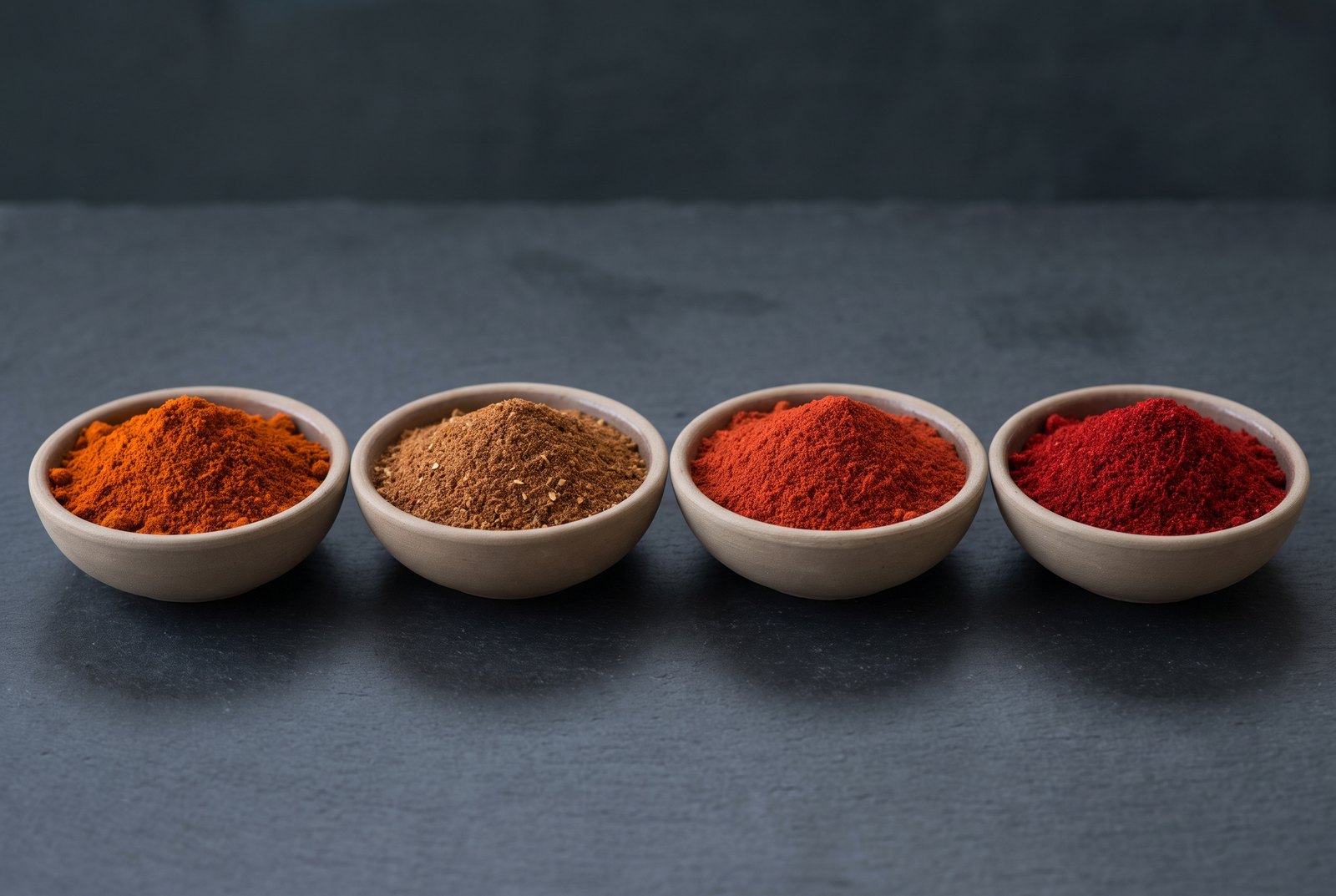
Four red powders, sold under names that overlap, doing three different jobs. Here is the difference that makes sense of all of them.
The one distinction that matters
Some of these are a spice. One of them is a recipe.
Cayenne, paprika and Indian chilli powder are all one dried chilli, ground up. Nothing else is in the jar. They differ only in which variety was dried and how much heat that variety carries.
American chili powder is a blend. It contains ground mild chillies, but also cumin, oregano, garlic powder and usually salt. It was put together in Texas in the 1890s so that chilli con carne could be made the same way twice, and it has been a seasoning mix ever since.
That is why the substitution advice runs in only one direction. You can build chili powder out of cayenne and paprika and a few other things you own. You cannot get cayenne back out of chili powder.
Cayenne
A single chilli variety, dried and ground, sitting at 30,000 to 50,000 Scoville units — hot enough that a normal recipe asks for a quarter of a teaspoon.
Its flavour is thin. That is not a criticism: it is the point. Cayenne is how you add heat to a finished dish without changing anything else about it. A pinch into a soup, a curry or a chocolate cake adds warmth and nothing that argues with what is already there.
Colour: orange-red, and it fades within a year even though the heat lasts longer. A pale, dusty jar is old.
Paprika
The same species as cayenne, from varieties bred to be sweet, mild and intensely coloured. There are three you will meet:
- Sweet paprika — the default. Effectively no heat. This is what makes goulash red, and what is dusted over hummus and deviled eggs.
- Smoked paprika (pimentón) — the peppers are dried over oak smoke. Powerful flavour, still no real heat. Spanish rather than Hungarian.
- Hot paprika — the same peppers with the hot varieties included, at 500 to 2,000 SHU. Warm, not fierce.
Paprika is bought for colour and cayenne is bought for heat. If you have added three spoonfuls of paprika chasing spiciness, this is why it tasted dusty rather than hot.
American chili powder
Mild ground chillies — usually ancho, sometimes New Mexico or guajillo — plus cumin, oregano, garlic, onion and salt. Around 500 to 1,000 SHU, so the heat is a background note.
Used correctly it is excellent, and it is genuinely convenient: one spoonful seasons a pot of chilli completely. Used as though it were a chilli powder, it disappoints twice — not hot enough, and it drags cumin and oregano into dishes that did not ask for them.
The salt matters too. Most jars contain it, and taco seasoning contains more, so a recipe seasoned around a shop blend can taste flat when you switch to a homemade one that has none.
Indian red chilli powder — the fourth jar
Pure ground chilli, like cayenne, but from Indian varieties, and this is where the “chilli powder” name causes real trouble in a recipe.
- Kashmiri chilli — mild, roughly a tenth of cayenne’s heat, and a deep red used for the colour of tandoori chicken, rogan josh and butter chicken. Bought for what it looks like. There is a whole guide to it and its substitutes.
- Guntur, Byadgi and the rest — everyday Indian chilli powder, and often hotter than cayenne, not milder.
An Indian recipe that says “1 teaspoon red chilli powder” means one of these. A teaspoon of American chili powder there is under-heated and wrongly flavoured; a teaspoon of cayenne is closer, if a little fierce.
Swapping between them
Amounts replace 1 teaspoon of the powder named in the left column.
| You need | You have | Use |
|---|---|---|
| Cayenne | Hot paprika | 4 tsp, and accept less heat |
| Cayenne | Chili powder | 4 tsp, savoury dishes only, cut the salt |
| Cayenne | Sweet paprika | Not a swap. Colour only |
| Chili powder | Paprika + cumin | 2 tsp + 1 tsp |
| Chili powder | Cayenne | 1/4 tsp, plus paprika and cumin for the body |
| Paprika | Cayenne | Not a swap. You will make it inedible |
| Kashmiri chilli | Paprika + cayenne | 1 tsp sweet paprika + a pinch of cayenne |
Notice the pattern: the mild ones can stand in for each other, and heat can always be added. It is the reverse that cannot be done.
Which jars are worth owning
Two, for most kitchens:
Sweet or smoked paprika, because colour and mild flavour are needed far more often than fire, and paprika is the base of anything you might later want to build.
Cayenne, because it is the volume control. A quarter teaspoon of cayenne turns mild paprika into hot paprika, turns a homemade blend into chili powder, and adds heat to a finished pot without changing its flavour.
Buy a third only if you cook that cuisine regularly — chili powder if chilli con carne and tacos are a habit, Kashmiri chilli if Indian food is.
The two jars, if you are starting from nothing: a sweet Hungarian paprika for colour and body, and Frontier Co-op organic ground cayenne for the heat you add a pinch at a time. Between them they cover most of what this page describes, including a homemade chili powder. As an Amazon Associate we may earn from qualifying purchases.
The bottom line
One of these is a blend and three are a single ground chilli, and that is the whole story. Cayenne is heat, paprika is colour, American chili powder is Tex-Mex flavour with barely any heat at all, and Indian red chilli powder is a different jar again that ranges from mild to fiercer than cayenne. Buy paprika and cayenne, and you can build almost anything else on this shelf.
Related reading:
Frequently asked questions
Is cayenne pepper the same as chili powder?+
No. Cayenne is one chilli, ground, with nothing added. American chili powder is a seasoning blend — mild ground chillies plus cumin, oregano, garlic and usually salt. Cayenne is roughly forty times hotter, so swapping them measure for measure ruins the dish in one direction or the other.
Is cayenne pepper the same as paprika?+
They come from the same species, Capsicum annuum, but from different varieties grown for opposite reasons. Paprika comes from mild, sweet, deeply coloured peppers and is used for colour. Cayenne comes from a hot variety and is used for heat. Hot paprika sits between them and is the closest common stand-in for cayenne.
Which is hotter, chili powder or cayenne?+
Cayenne, by a very long way. Cayenne is 30,000 to 50,000 Scoville units; American chili powder is usually 500 to 1,000, because most of what is in the jar is not chilli at all. A tablespoon of chili powder and a tablespoon of cayenne are not the same dish.
Can I use paprika instead of chili powder?+
Yes, in a crowded pot. You get the colour and the mild sweetness but none of the cumin, oregano or garlic. Add half as much ground cumin as paprika and the swap becomes convincing rather than merely acceptable.
What is Indian red chilli powder?+
Pure ground chilli, nothing added, made from Indian varieties — so it is the same kind of product as cayenne rather than the same kind as American chili powder. Heat varies a lot by variety: Kashmiri chilli is mild and used for colour, while Guntur and similar varieties are hotter than cayenne.
Which one should I buy if I only buy one?+
Paprika, if you cook mostly European or Middle Eastern food, because colour and mild sweetness are used more often than raw heat. Cayenne, if you cook Indian or want to control heat separately from flavour — a tiny amount of cayenne can be added to anything, including paprika, but you cannot take heat back out of a blend.
New: Google now lets you choose which sites it shows you first. One tap lifts our spice guides in your results — nobody else's — and you can undo it any time.
More on Cayenne
Cayenne Pepper Substitute: What to Use, and How Much
The best cayenne pepper substitutes with exact swap amounts — red pepper flakes, hot paprika, chili powder, gochugaru and hot sauce — by dish, plus the two swaps that quietly ruin a recipe.
Chili Flakes vs Red Pepper Flakes: Are They the Same Thing?
In an American kitchen they are the same jar. In a British one they are often not. What the two labels mean, why gochugaru and Aleppo are also sold as chilli flakes, and when swapping them actually matters.
Chili Powder Substitute: Make It, or Swap It
Chili powder is a blend, not a single spice — so the best substitute is two minutes of mixing. The exact ratio, the single-jar swaps that work, and why taco seasoning needs the salt taken out.