
Cayenne
Cayenne Pepper Substitute: What to Use, and How Much
Quick answer
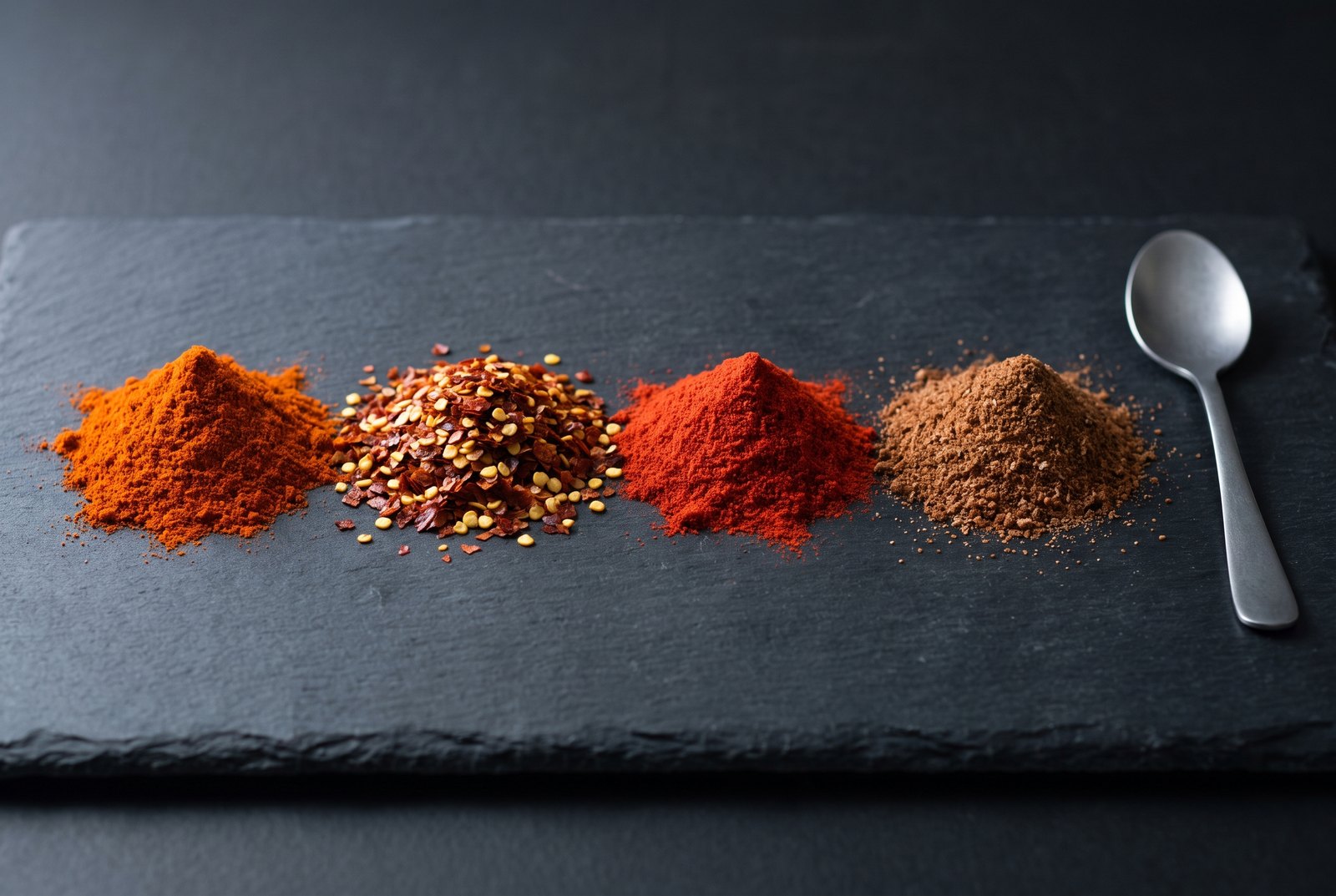
Use crushed red pepper flakes at double the amount. For 1/4 teaspoon of cayenne, use 1/2 teaspoon of flakes, and grind them for a few seconds if the dish needs a smooth powder. Flakes are usually made from cayenne in the first place, so this is barely a substitution at all.
No flakes? Hot paprika at four times the amount is the next best dry powder, and ground chipotle at roughly equal amounts works when a little smoke is welcome. In a savoury pot, American chili powder at four times the amount does the job — but it carries salt, so take some out of the recipe. In baking, use a dry powder only.
Cayenne is the easiest spice in the cupboard to replace, because it is doing the simplest job. It is not a flavour the way cardamom or clove is a flavour. It is heat, with a mild dried-fruit note behind it and a little red colour.
That means almost any other ground chilli will stand in. What goes wrong is never the flavour. It is the amount.
What you are actually replacing
Ground cayenne sits at roughly 30,000 to 50,000 Scoville heat units. Almost everything people reach for instead is far milder:
| Stand-in | Roughly | Compared to cayenne |
|---|---|---|
| Cayenne | 30,000–50,000 SHU | — |
| Crushed red pepper flakes | 15,000–30,000 SHU | about half |
| Ground chipotle | 5,000–10,000 SHU | a fifth |
| Gochugaru | 1,500–10,000 SHU | a fifth or less |
| Hot paprika | 500–2,000 SHU | a twentieth |
| American chili powder | 500–1,000 SHU | a fortieth |
| Sweet or smoked paprika | 0–500 SHU | colour only |
The rule of thumb: match the heat first, then fix whatever the swap added. Most of these bring something extra — smoke, salt, cumin, sweetness — and that is the part you adjust for.
The swaps, by amount
All amounts replace 1/4 teaspoon of ground cayenne, which is what a normal recipe asks for.
| Substitute | Amount | Best for | Notes |
|---|---|---|---|
| Crushed red pepper flakes | 1/2 tsp | Almost anything | The best answer. Grind briefly for a powder |
| Hot paprika | 1 tsp | Stews, rubs, sauces | Right flavour family, far less heat. Read the label |
| Ground chipotle | 1/4 tsp | Rubs, chilli, beans | Adds smoke. Often an improvement |
| Gochugaru | 1 tsp | Braises, noodles, kimchi-ish dishes | Fruity and mild. Korean, not Indian |
| American chili powder | 1 tsp | Savoury only | A blend. Brings salt, cumin and oregano with it |
| Indian red chilli powder | 1/4 tsp | Curry, dal, marinades | The closest like-for-like. Heat varies by brand |
| Hot sauce | 1/2–1 tsp | Soups, stews, wet marinades | Adds vinegar and liquid. Never in a bake |
| Fresh hot chilli, minced | 1/2 a small one | Anything cooked wet | Fresher, greener, less even |
A note on ground chilli by brand. Unlike cardamom or cinnamon, chilli heat is not fixed by the species alone — it depends on the variety, the harvest and how much seed and pith went into the grinder. Two jars of “cayenne” can differ by half. Add two thirds of what you planned, taste, and finish from there.
By dish, which is what actually matters
Rubs, BBQ and roast potatoes
Dry, forgiving, and the place smoke is most welcome. Ground chipotle or hot paprika both work, and hot paprika brings back the red colour that a rub visibly loses without cayenne. This is the one case where the substitute is often better than the original.
Chilli, stews and beans
Use chili powder if that is what you have, at about four times the cayenne — and then cut the salt in the recipe, because the blend is salted. Cumin and oregano are already welcome in this pot, so the extra flavours cost nothing.
Curry, dal and Indian marinades
Use Indian red chilli powder at 1:1 if you have it, since it is the same kind of product. Do not reach for American chili powder here: its cumin and oregano are a Tex-Mex signature that reads as wrong in a South Indian pot, and the salt fights the seasoning you have already balanced.
If colour matters more than heat — tandoori, rogan josh, butter chicken — the answer is Kashmiri chilli, which is a different tool altogether.
Soups and anything wet
Hot sauce is legitimate here and nowhere else. Half a teaspoon at a time, stirred in and tasted, and remember it brings vinegar and salt. In a thin soup that is a seasoning; in a thick sauce it can turn sharp.
Baking — chocolate cake, brownies, spiced biscuits
Dry powders only. Ground chipotle or hot paprika, sifted in with the flour. Flakes do not disperse and leave a fierce mouthful somewhere in the middle of the tray. Hot sauce and fresh chilli change the wet-to-dry balance and can stop a bake setting.
The two swaps that quietly ruin things
Sweet or smoked paprika used as though it were hot. It is the same species and it looks identical in the jar, but the heat is not there. The dish comes out looking right and tasting flat, and the usual reaction is to add more paprika, which makes it taste dusty rather than hot.
Black pepper. It is not a chilli and it is not even a relative — different plant, different family, different compound. Black pepper’s heat comes from piperine and behaves nothing like capsaicin: it arrives fast, sits at the front of the mouth and disappears. It has its own good reasons to be in your food, but standing in for cayenne is not one of them.
When to leave it out
Count what cayenne is doing. If the recipe is already carrying chilli in another form — a chipotle in adobo, a spoon of harissa, a hot curry paste — the extra 1/4 teaspoon of cayenne is a top-up and can simply go.
If the dish is named for its heat, or the cayenne is one of only two or three seasonings, leaving it out produces a noticeably duller version. Buy the jar. Ground cayenne is one of the cheapest spices on the shelf and it keeps its heat for about a year, even as its colour fades.
And if you decided to buy it: Frontier Co-op organic ground cayenne is one ingredient, non-irradiated, and comes in a resealable bag rather than a shaker jar — which matters more than it sounds, because air is what takes the colour. It is a 6 oz bag, so buy it if heat is a habit; if it is twice a year, buy the smallest jar in the shop instead. As an Amazon Associate we may earn from qualifying purchases.
The bottom line
Red pepper flakes at double, and grind them if you need a powder. After that, match the heat by the table above and correct for whatever the substitute brought with it — salt from chili powder, vinegar from hot sauce, smoke from chipotle. Keep American chili powder out of Indian food, keep anything wet out of a bake, and never assume the paprika in your cupboard is the hot one.
Related reading:
Frequently asked questions
What is the best substitute for cayenne pepper?+
Crushed red pepper flakes, at about twice the amount. Flakes are usually made from cayenne itself, so the flavour is right and only the texture is wrong — grind them for a few seconds if the dish needs a powder. For 1/4 teaspoon of cayenne, use 1/2 teaspoon of flakes.
Can I use paprika instead of cayenne pepper?+
Only if the label says hot paprika, and even then expect much less heat — hot paprika is roughly a twentieth of cayenne's strength. Use four times as much and taste as you go. Sweet or smoked paprika brings colour and flavour but almost no heat at all, so it is a substitute for cayenne's look, not its bite.
Can I use chili powder instead of cayenne pepper?+
In savoury cooking, yes, with two warnings. American chili powder is a blend, so you are also adding cumin, oregano, garlic and usually salt. And it is many times milder than cayenne, so you need roughly four times as much — which means four times the salt. Reduce the salt in the recipe to match, and never use it in baking.
How much red pepper flakes equals cayenne pepper?+
Use about double. Flakes are milder than ground cayenne by volume because the pieces are coarse and include seeds and pith, so 1/2 teaspoon of flakes stands in for 1/4 teaspoon of cayenne. Grinding them briefly makes the swap closer still.
What can I use instead of cayenne in baking?+
Ground chipotle or hot paprika, because both are dry powders that disperse evenly through a batter. Do not use flakes, hot sauce or fresh chilli in a bake — flakes leave hot spots, and anything wet changes the liquid balance of the mix.
New: Google now lets you choose which sites it shows you first. One tap lifts our spice guides in your results — nobody else's — and you can undo it any time.
More on Cayenne
Cayenne vs Chili Powder vs Paprika: Which Red Powder Do You Need?
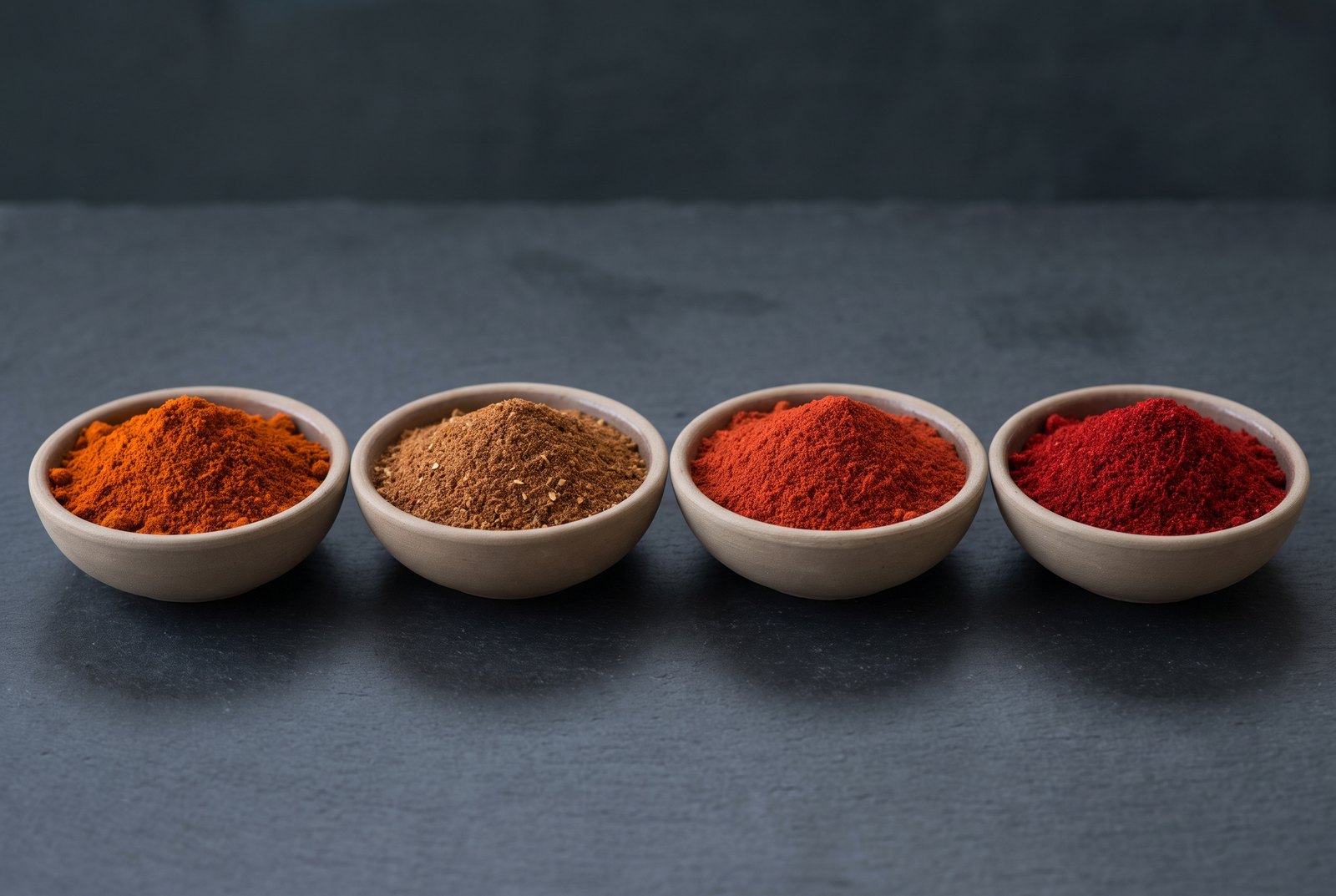
Three red powders, one constant mix-up. What cayenne, chili powder, paprika and Indian red chilli powder each are, how much hotter one is than the next, and which two jars are worth owning.
Chili Flakes vs Red Pepper Flakes: Are They the Same Thing?
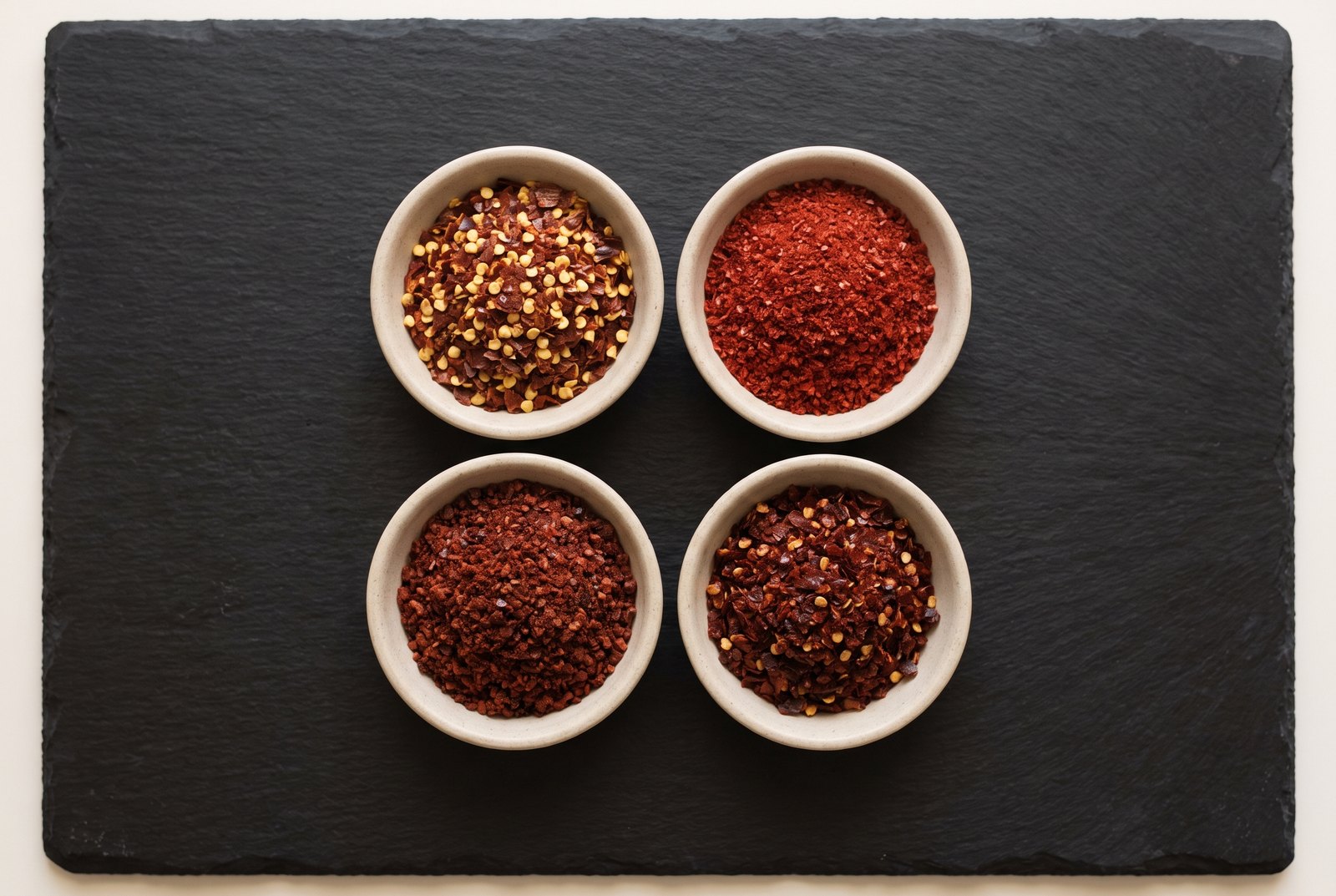
In an American kitchen they are the same jar. In a British one they are often not. What the two labels mean, why gochugaru and Aleppo are also sold as chilli flakes, and when swapping them actually matters.
Chili Powder Substitute: Make It, or Swap It
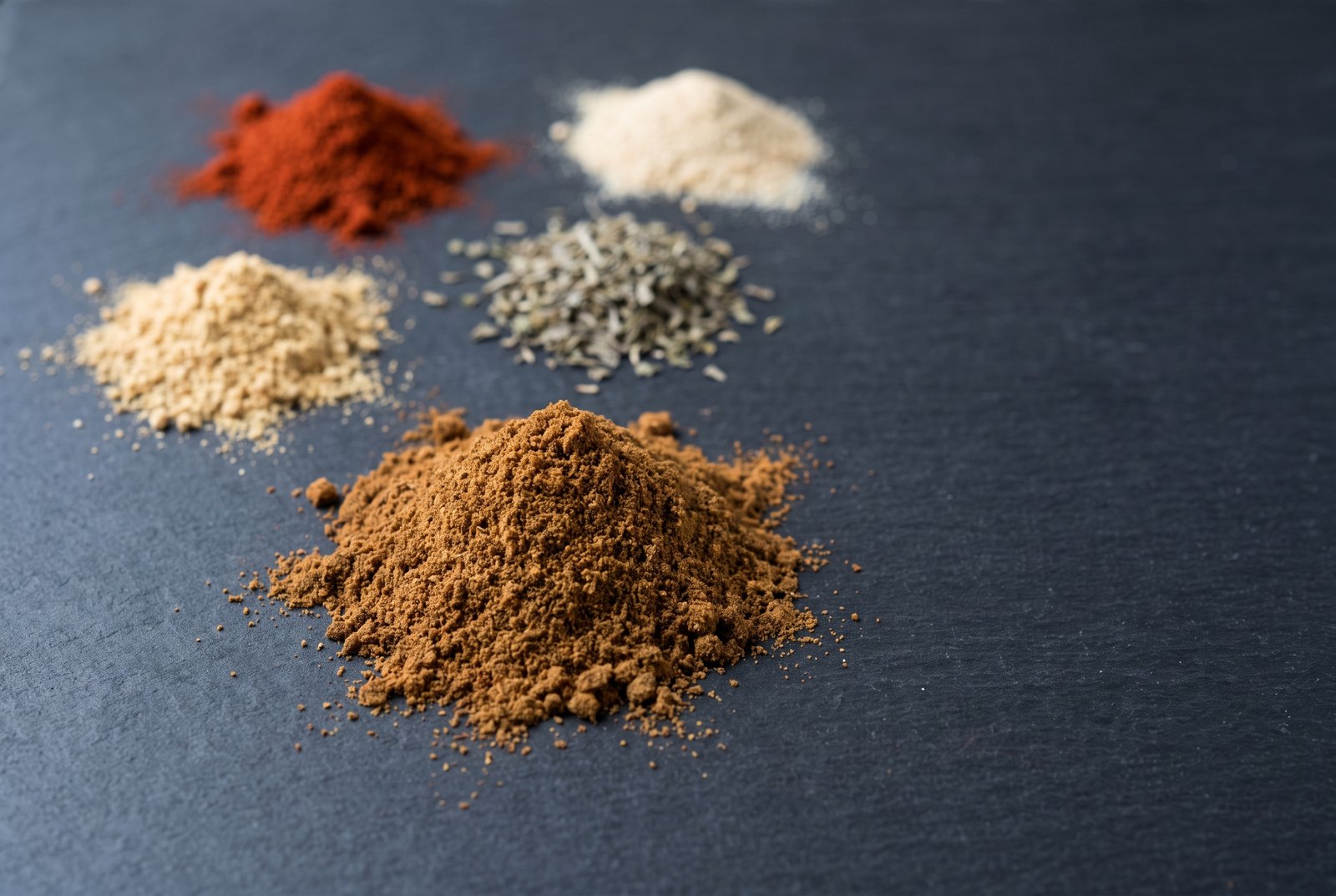
Chili powder is a blend, not a single spice — so the best substitute is two minutes of mixing. The exact ratio, the single-jar swaps that work, and why taco seasoning needs the salt taken out.