
Cayenne
Chili Flakes vs Red Pepper Flakes: Are They the Same Thing?
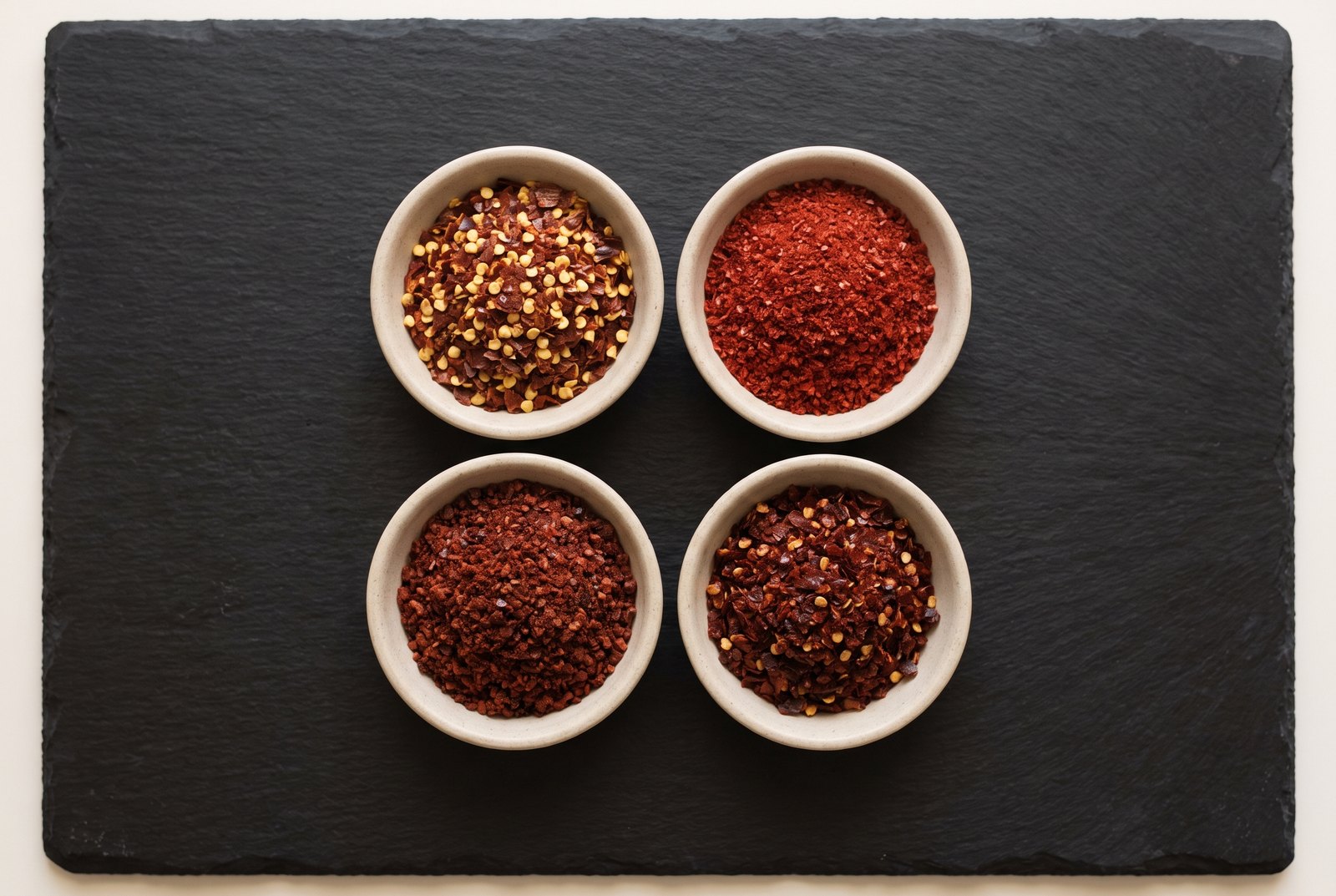
Quick answer
If you are in the United States: they are the same thing. Chili flakes, red pepper flakes and crushed red pepper are three names for one jar — coarsely crushed cayenne-type chillies with the seeds left in. Use whichever you have and stop worrying.
If you are anywhere else, check the jar. In Britain especially, “red pepper flakes” sometimes means mild flakes of sweet red pepper with no heat at all, while “chilli flakes” always means the hot ones.
And there is a third thing going on that neither name warns you about: “chilli flakes” is a category, not a product. Gochugaru, Aleppo and Calabrian flakes are all sold under it, and they are not interchangeable in heat or taste.
Why one jar has three names
Nothing here is a real botanical difference. It is a labelling habit.
American spice companies settled on crushed red pepper for the shaker on the pizza table. Recipe writers tend to write red pepper flakes. Everyone speaking casually says chilli flakes. Three names, one product, no meaningful difference between them.
The product itself is consistent enough to cook with:
| Standard American crushed red pepper | |
|---|---|
| Pepper | Cayenne-type, often blended |
| Grind | Coarse — visible flakes, not powder |
| Seeds | Left in, which is why it looks speckled |
| Heat | Roughly 15,000–30,000 SHU |
| Taste | Straightforward heat, faint dried-fruit note, no smoke |
Where the two names really do part company
Cross the Atlantic and the words stop agreeing.
In Britain, a packet labelled red pepper flakes is quite often dried sweet red bell pepper — mild, faintly sweet, sometimes smoky, and carrying essentially no heat. Chilli flakes is the phrase reserved for the hot ones.
This is the single mistake worth guarding against, and it runs in one direction. A British cook following an American recipe that says “red pepper flakes” may reach for the mild sweet flakes and wonder why the dish has no bite at all.
The check that settles it: tip a little into your palm. Hot flakes are speckled — red flesh with pale yellow seeds mixed through. Mild sweet-pepper flakes are an even red, with no pale seeds. If you see seeds, you have heat.
The bigger issue: “chilli flakes” is a category
Here is the part most comparisons miss. Crushed red pepper is a specific product. Chilli flakes is a whole shelf.
Any dried chilli, crushed, can be sold as chilli flakes. Several of them are genuinely excellent and none of them taste like the pizza shaker.
| Named flake | Heat | Tastes like | Use it for |
|---|---|---|---|
| Crushed red pepper | 15,000–30,000 SHU | plain heat | pizza, pasta, anything American-Italian |
| Gochugaru (Korean) | 1,500–10,000 SHU | fruity, mildly smoky, a touch sweet | kimchi, stews, noodles, eggs |
| Aleppo / pul biber | 8,000–10,000 SHU | raisiny, slightly salty, oily | hummus, flatbread, roast vegetables |
| Calabrian (Italian) | 15,000–30,000 SHU | close to crushed red pepper, rounder | pasta, pizza, oil infusions |
| Kashmiri | 1,000–2,000 SHU | mild, deeply coloured | Indian dishes wanting colour, not fire |
| Urfa biber | 5,000–7,500 SHU | dark, smoky, almost chocolatey | lamb, roast vegetables, finishing |
Look at the range: from Kashmiri at around 1,000 units to crushed red pepper at up to 30,000. That is a factor of twenty, all under one phrase.
So does the swap actually matter?
Mostly, no. In practice:
Swap freely between crushed red pepper, Calabrian and any unnamed hot flakes. Start with the same amount, taste, adjust.
Swap with care for gochugaru — it is much milder and sweeter, so use up to half again as much and expect a fruitier dish.
Swap with care for Aleppo and Urfa — the heat is close enough, but both bring a distinct flavour that will sit at the front of a simple dish.
Do not swap mild British red pepper flakes into a recipe wanting heat. They cannot do that job at any amount.
Do not swap Kashmiri in for heat either. It is bought for colour, and it is very good at that and almost nothing else.
What to look for on the label
The useful rule from all of this is not about the two names at all. It is this: the front of the jar tells you very little, and the back tells you everything.
A jar labelled only chilli flakes or crushed red pepper, with no pepper named in the ingredients, can be a different blend from one production run to the next. That is legal and normal, and it is exactly why a pinch from one jar seasons a sauce and a pinch from the next one wrecks it.
A jar that names its pepper — gochugaru, Aleppo, Calabrian, Kashmiri — will taste the same next time you buy it.
If you cook with heat often, owning two named jars beats owning one anonymous one: a hot workhorse for cooking into dishes, and a fruity milder one for sprinkling over finished plates.
Related guides
- Red pepper flakes substitute — exact swap amounts when you have run out entirely.
- Cayenne vs chili powder vs paprika — the same confusion, one aisle over, among the ground red powders.
- Which chilli powder to buy — how to read a chilli label properly, and what is worth owning.
Frequently asked questions
Are chili flakes and red pepper flakes the same thing?+
In the United States, yes — the two names sit on the same product, a coarse grind of cayenne-type chillies with the seeds left in. Anywhere else, not reliably. In Britain, red pepper flakes are sometimes mild flakes of sweet red bell pepper with no heat at all, while chilli flakes always mean the hot ones. Check what your jar actually looks like before you assume.
Is crushed red pepper the same as red pepper flakes?+
Yes. These are two names for one product, and American spice brands use them interchangeably on their own labels. If a recipe asks for one and your jar says the other, use it and do not think about it again.
Which is hotter, chili flakes or red pepper flakes?+
There is no reliable answer, because chilli flakes is a category rather than a product. American crushed red pepper is fairly consistent at 15,000 to 30,000 Scoville units. A jar labelled chilli flakes might be Korean gochugaru at a fifth of that heat, Aleppo pepper at about a third, or a nameless hot blend well above it. The name on the front tells you far less than the pepper named on the back.
Can I use chili flakes instead of red pepper flakes?+
Nearly always, yes. Start with the same amount, taste, and adjust — the risk is that your flakes are milder or fruitier than the recipe expected, not that the dish will fail. The two exceptions are mild British red pepper flakes, which add no heat at all, and gochugaru, which is much milder and noticeably sweeter.
What kind of peppers are red pepper flakes made from?+
Usually cayenne, often blended with other Capsicum annuum varieties, crushed coarsely with the seeds and pith left in. That mix is why heat varies between brands and even between jars, and why a good pinch out of one jar is a mouthful of fire from another.
Why do my chilli flakes taste different from the last jar?+
Because most flakes are sold without naming the pepper. A jar labelled only chilli flakes or crushed red pepper can legally be a different blend of chillies each production run. If you want the same heat every time, buy flakes with a named pepper on the label — gochugaru, Aleppo, Calabrian, Kashmiri.
New: Google now lets you choose which sites it shows you first. One tap lifts our spice guides in your results — nobody else's — and you can undo it any time.
More on Cayenne
Cayenne Pepper Substitute: What to Use, and How Much
The best cayenne pepper substitutes with exact swap amounts — red pepper flakes, hot paprika, chili powder, gochugaru and hot sauce — by dish, plus the two swaps that quietly ruin a recipe.
Cayenne vs Chili Powder vs Paprika: Which Red Powder Do You Need?
Three red powders, one constant mix-up. What cayenne, chili powder, paprika and Indian red chilli powder each are, how much hotter one is than the next, and which two jars are worth owning.
Chili Powder Substitute: Make It, or Swap It
Chili powder is a blend, not a single spice — so the best substitute is two minutes of mixing. The exact ratio, the single-jar swaps that work, and why taco seasoning needs the salt taken out.