
Clove
How to Use Clove Oil for a Toothache, Safely
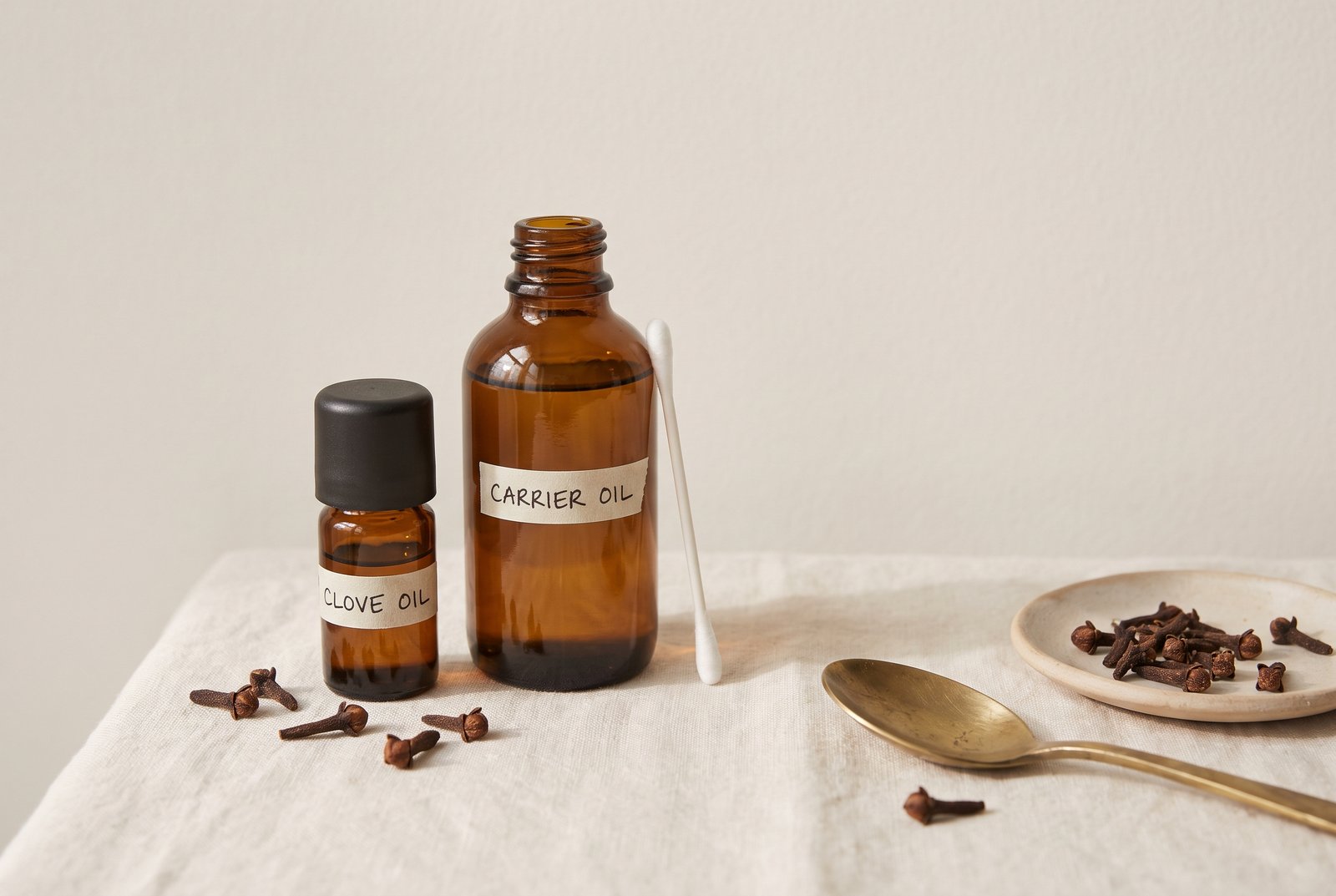
Quick answer: Never apply clove oil undiluted. Mix 1–2 drops of clove essential oil into about half a teaspoon of a carrier oil (olive or coconut), dab it onto the sore tooth and surrounding gum with a cotton swab, and remove after a few minutes. Reapply no more than every 2–3 hours. Never swallow it, and never use it on children.
Clove oil is the one traditional toothache remedy that modern dentistry actually adopted — but it’s also concentrated enough to burn tissue or, if swallowed, cause real harm. Used correctly, it’s a genuinely useful piece of first aid. Used carelessly, it stops being a remedy and becomes a hazard. Here’s exactly how to use it well.
Why clove oil works on tooth pain
Clove’s numbing effect comes from eugenol, the compound that makes up most of clove essential oil. Eugenol reversibly blocks the nerve pathways that carry pain signals from the tooth — a mechanism related to how clinical local anesthetics work. It’s well-enough established that the U.S. FDA recognizes clove oil as a dental analgesic and antiseptic, and eugenol has long been used in dental cements and temporary fillings.
What it does not do is fix the cavity, clear an infection, or repair a cracked tooth. It buys you comfort and time — nothing more, nothing less.
Step-by-step: the diluted-oil method
This is the method for the strongest, most targeted relief.
- Choose a carrier oil. Olive oil, coconut oil, or a food-safe neutral oil all work. This isn’t optional — it’s what prevents the clove oil from burning your gum.
- Mix the dilution. Combine 1–2 drops of pure clove essential oil with about half a teaspoon (roughly 2.5 ml) of your carrier oil. Stir gently.
- Apply with a cotton swab. Dip the swab in the mixture and dab it directly onto the painful tooth and the gum immediately around it. Dab — don’t soak.
- Hold for a few minutes. You should feel a warm, tingling numbness as the eugenol takes effect.
- Remove the swab. Don’t rinse and swallow the residue.
- Space out applications. Limit to roughly once every 2–3 hours, and stop if the gum stings, reddens, or feels irritated.
What we’d actually keep in the cupboard As an Amazon Associate I earn from qualifying purchases.
We don’t recommend a particular clove essential oil. Undiluted, it burns gum tissue, and the margin between “numb” and “irritated” is narrower than most labels admit. If you use one, buy it locally where you can read the bottle, and dilute it exactly as above.
- Whole dried cloves — the gentler method further down this page, and the one to try first: organic whole cloves
- A neutral carrier oil — what makes dilution possible at all, and worth having before the oil: fractionated coconut oil
The gentler alternative: whole cloves
If you’d rather not handle concentrated essential oil, whole dried cloves are a milder, more forgiving option — a good default, especially for a first try.
- If the cloves are very dry, soften them in warm water for about a minute.
- Hold one or two whole cloves against the sore tooth and gum for 5–10 minutes. A gentle bite helps release more of the oil.
- Discard afterward. Repeat a few times a day as needed.
Getting the dilution right
| Use | Ratio | Simple recipe |
|---|---|---|
| Single-tooth dab | Very low | 1–2 drops clove oil in ½ tsp carrier oil |
| General topical use | 1–2% | 6–12 drops per 30 ml (2 tbsp) carrier oil |
| First-time or sensitive use | ~1% | 6 drops per 30 ml carrier oil |
A “drop” is approximate — when in doubt, use less than you think you need. With clove oil, more is not better; it’s simply more likely to irritate.
What to check before you buy
Quality varies, and clove oil is sometimes stretched or mislabeled. Look for:
- The botanical name Syzygium aromaticum on the label, ideally specifying bud oil (gentler than stem or leaf oil).
- Dark glass packaging — light and air degrade eugenol over time.
- A single ingredient — just clove oil, nothing pre-diluted unless that’s what you’re intentionally buying.
- A strong, warm, true clove aroma — a faint or “off” smell suggests an old or diluted product.
Safety rules that matter
- Never apply undiluted. Full-strength clove oil is caustic and can cause chemical burns to gum and mouth tissue. There’s even a documented case of lasting local nerve effects after undiluted oil was spilled on skin.
- Never swallow it. This is the single most important rule in this guide. Swallowing even a small amount of clove essential oil — as little as 5–10 ml — has caused serious harm in young children, including liver failure and seizures. Concentrated clove oil is not a supplement to drink.
- Keep it away from children entirely. Store it capped, labeled, and out of reach, the way you’d store a medicine. If a child swallows any, contact poison control immediately (in the US: 1-800-222-1222).
- Patch-test first. Dab a little of your diluted mixture on your inner forearm and wait 24 hours before using it in your mouth, especially the first time. Eugenol is a known contact allergen for some people.
- Check for interactions if you take medication. Clove has a mild blood-thinning effect, so if you take warfarin, aspirin, clopidogrel, or regular NSAIDs, or have a bleeding disorder, talk to a pharmacist before using it regularly. The same caution applies if you manage diabetes with medication.
- It’s first aid, not treatment. Use it to stay comfortable — then see a dentist for the cause.
When to stop and see a dentist
- Facial or jaw swelling, fever, or a bad taste of pus.
- Pain following a recent extraction (possible dry socket).
- Pain lasting more than a day or two, or that returns as soon as the clove wears off.
- Any tooth pain in a child.
Bottom line
Used with respect — diluted, dabbed rather than soaked, kept far from children, and treated as first aid rather than treatment — clove oil is one of the most useful things you can keep in a home first-aid kit for dental pain. Skip the dilution or the storage discipline, and the same oil that numbs a tooth can burn one, or worse.
Want the fuller picture — how to make your own infused clove oil, the drug interactions in detail, and every other genuinely evidence-based use of clove? It’s all laid out, chapter by chapter, in our book Clove: Nature’s Painkiller. And if you haven’t already, see our companion guides on home remedies for toothache and natural vs. OTC toothache relief.
Sources: U.S. FDA classification of clove oil as a dental analgesic/antiseptic; NIH LiverTox monograph on eugenol (clove oil); Isaacs 1983, The Lancet (permanent local effects after undiluted oil spillage); Kamatou et al. 2012, Molecules.
Frequently asked questions
How many drops of clove oil should I use for a toothache?+
1-2 drops diluted into about half a teaspoon of carrier oil is enough for a single application. Never apply clove oil undiluted.
Can I swallow clove oil for a toothache?+
No. Never swallow clove essential oil. Concentrated amounts can be dangerous, particularly for children. Always keep it strictly topical and diluted.
How long does clove oil take to numb a toothache?+
Most people feel a warming, numbing effect within a few minutes of application. Relief typically lasts from several minutes up to a couple of hours.
Is clove oil safe for children's toothaches?+
No. Clove oil is not appropriate for infants or young children, and swallowing even a small amount can be dangerous for them. Take a child's dental pain to a dentist.
New: Google now lets you choose which sites it shows you first. One tap lifts our spice guides in your results — nobody else's — and you can undo it any time.
More on Clove

Clove Benefits for Women and Men: Separating the Claims from the Evidence
Clove is sold to women for hormones and fertility, and to men for testosterone and stamina. Almost none of it has been tested in people. Here is what clove genuinely does, what it does not, and the one sex-specific caution that is real.

Clove Water Benefits: What the Trend Gets Right, and What It Invents
Clove water is all over social media for digestion, skin, hormones and detox. Here is what soaking cloves in water actually does, how to make it properly, who should skip it, and which viral claims have no evidence at all.

Cloves for Bad Breath: Does Chewing One Actually Work?
Chewing a clove for bad breath — whether it works, how long it lasts, how it compares with mints and mouthwash, and the far more important question of what is causing the smell in the first place.