
Clove
Natural vs. Over-the-Counter Toothache Relief: Which Should You Reach For?
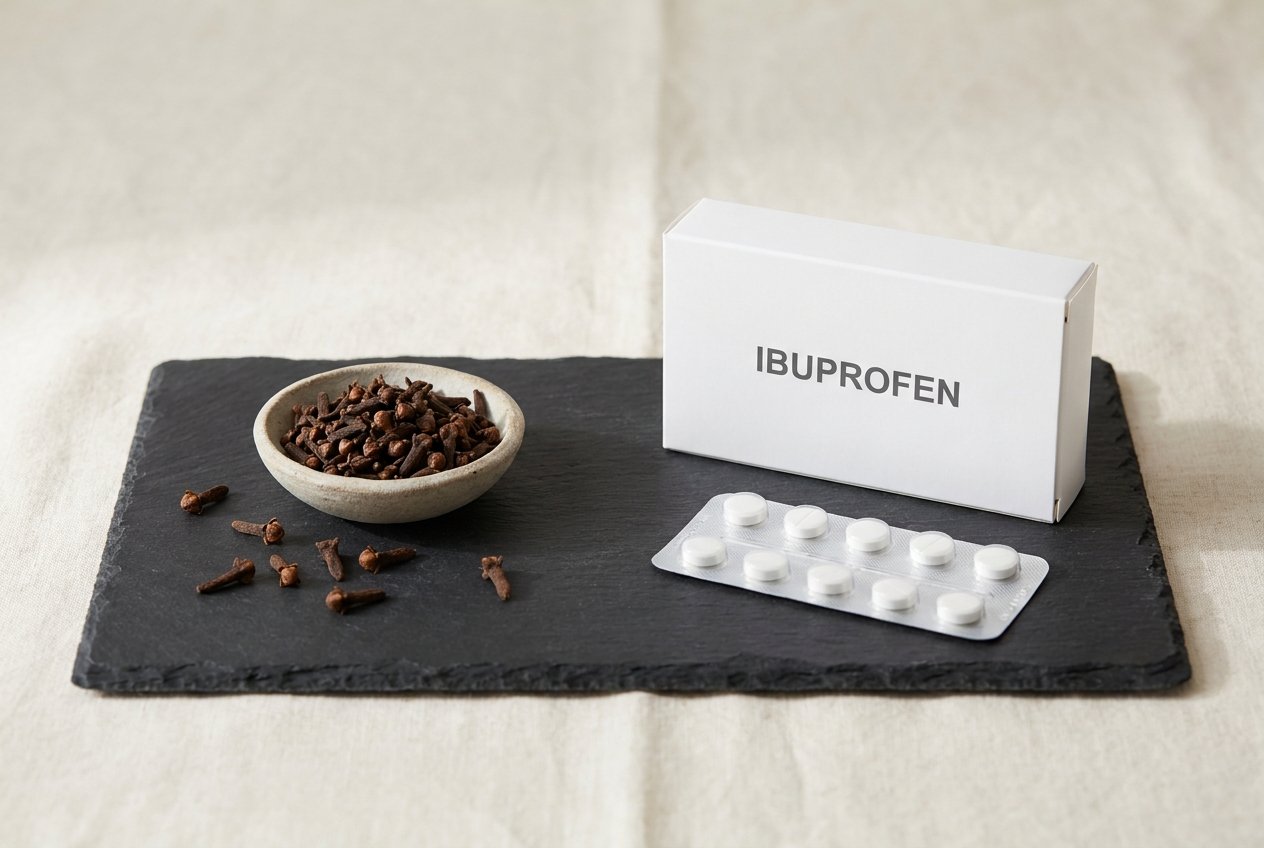
Quick answer: Natural options like clove numb the surface of a sore tooth; OTC painkillers like ibuprofen work from the inside by reducing inflammation. For most toothaches, the two work well together — a topical natural remedy for the spot, plus an oral painkiller for the underlying ache — rather than one replacing the other.
Search “toothache relief” and you’ll find two very different camps: one pointing you to the spice cupboard, the other to the pharmacy aisle. The truth is less of a rivalry than it sounds. Natural and over-the-counter (OTC) remedies work through different mechanisms, on different parts of the problem — and understanding that difference is what lets you actually build an effective toothache plan instead of guessing.
How they’re different, in one paragraph
Topical natural remedies (clove, cold, salt water) act locally — they numb, soothe, or clean the area around the tooth. OTC oral painkillers (ibuprofen, acetaminophen) act systemically — absorbed into your bloodstream, targeting inflammation and pain signaling throughout the body, including at the source of a deep toothache. Neither treats the actual cause. Both can be part of a sensible plan.
Natural options: what the evidence actually shows
Clove — the one with real pharmacology
Clove is the standout among natural toothache remedies, and not by folklore alone. Its main compound, eugenol, reversibly blocks the nerve pathways that carry pain signals — the same broad mechanism used by clinical local anesthetics. It’s well-established enough that the FDA recognizes clove oil as a dental analgesic and antiseptic, and it has been used in dental cements and temporary fillings for generations.
How to use it: a whole clove held against the tooth for 5–10 minutes, or 1–2 drops of clove oil diluted in half a teaspoon of carrier oil, dabbed on with a cotton swab. Never apply undiluted, and never swallow the essential oil. Full instructions are in our guide to using clove oil for toothache safely.
What it’s good for: temporary numbing, especially useful at night or when you can’t get to a pharmacy. What it won’t do: clear an infection or repair the tooth.
Cold compress
A cold pack against the cheek for 15–20 minutes narrows blood vessels, which reduces both pain signaling and swelling. Fast, free, and genuinely useful — especially alongside either clove or an OTC painkiller.
Warm salt-water rinse
Loosens debris, soothes irritated gum tissue, and has mild antiseptic value. A sensible companion to almost anything else on this list. See our fuller roundup of home remedies for toothache for the full method.
OTC options: what the evidence actually shows
Ibuprofen (an NSAID)
Often considered the most effective single OTC option for dental pain, because it directly reduces the inflammation that’s driving a throbbing ache — not just the sensation of it. Take as directed on the packaging, and be aware that NSAIDs affect blood clotting slightly, which matters if you’re also using concentrated clove or take a blood thinner.
Acetaminophen (paracetamol)
A solid alternative for people who can’t take NSAIDs — it manages pain without the anti-inflammatory action or the stomach and bleeding considerations of ibuprofen. Some people alternate the two under a pharmacist’s guidance for stronger relief.
Topical benzocaine gels
These work almost identically to clove in principle — surface-level numbing of the nerve endings around the tooth — just via a synthetic anesthetic instead of eugenol. Similar relief profile, similar limitation: temporary and symptomatic only. Follow the package directions and age guidance closely; benzocaine products carry specific warnings for young children.
Side-by-side
| How it works | Best for | Limitation | |
|---|---|---|---|
| Clove (natural) | Local nerve-signal blocking (eugenol) | Targeted, surface numbing at the tooth | Must dilute; short-acting; not for children |
| Cold compress | Reduces blood flow/swelling | Fast, mild relief; safe for almost everyone | Mild effect alone |
| Salt-water rinse | Cleans area, soothes gum | Everyday hygiene and comfort | Not a painkiller on its own |
| Ibuprofen (OTC) | Reduces inflammation body-wide | Deep, throbbing pain | Bleeding/stomach caution; not for everyone |
| Acetaminophen (OTC) | Blocks pain signaling | Those who can’t take NSAIDs | No anti-inflammatory effect |
| Benzocaine gel (OTC) | Local nerve-signal blocking (synthetic) | Quick surface numbing | Short-acting; age warnings apply |
The combination that works for most people
For a genuinely painful toothache, many people get the best relief from layering rather than choosing sides:
- An oral painkiller (ibuprofen or acetaminophen, per label directions) for the deep, systemic ache.
- A topical option — diluted clove oil or a cold compress — for the specific sore spot.
- A salt-water rinse to keep the area clean while you wait for your appointment.
Worth keeping on hand: whole cloves and a small bottle of pure clove oil, alongside your usual painkillers, for exactly this kind of night. See our guide to choosing and using clove oil safely for our product recommendations.
Where both approaches hit their limit
Neither camp — natural or pharmacy — treats the cause of a toothache. A cavity still needs filling. An infection still needs treatment, sometimes antibiotics. A cracked tooth still needs repair. Relief is not resolution.
See a dentist without delay if you have facial swelling, fever, a bad taste of pus, pain following a recent extraction, or pain that persists more than a day or two.
Bottom line
Reach for clove or cold for fast, local numbing; reach for ibuprofen or acetaminophen for a deep, systemic ache; use salt water as your everyday companion. Used together and sensibly, natural and OTC relief aren’t rivals — they’re a toolkit. Just remember: the goal is comfort until you see a dentist, not a substitute for going.
For the complete, safety-first breakdown of clove — dosing, dilution, drug interactions, and more — see our book Clove: Nature’s Painkiller.
Frequently asked questions
Is clove oil as effective as ibuprofen for a toothache?+
They work differently. Clove numbs the surface of the tooth locally, while ibuprofen reduces inflammation throughout the body, which often makes it more effective for deep, throbbing pain. Many people use both together.
Can I use clove oil and ibuprofen at the same time?+
Generally yes for most healthy adults. If you take a blood thinner or have a bleeding disorder, check with a pharmacist first, since both concentrated clove and NSAIDs can affect clotting.
What's the fastest way to numb a toothache naturally?+
A whole clove or diluted clove oil held against the tooth for 5-10 minutes is the quickest natural option with real evidence behind it, alongside a cold compress on the cheek.
Is benzocaine gel better than clove oil?+
They work almost the same way, via local numbing of nerve endings. Benzocaine is synthetic and pre-diluted; clove is natural but needs to be diluted yourself. Effectiveness is broadly comparable for temporary relief.
New: Google now lets you choose which sites it shows you first. One tap lifts our spice guides in your results — nobody else's — and you can undo it any time.
More on Clove

Clove Benefits for Women and Men: Separating the Claims from the Evidence
Clove is sold to women for hormones and fertility, and to men for testosterone and stamina. Almost none of it has been tested in people. Here is what clove genuinely does, what it does not, and the one sex-specific caution that is real.

Clove Water Benefits: What the Trend Gets Right, and What It Invents
Clove water is all over social media for digestion, skin, hormones and detox. Here is what soaking cloves in water actually does, how to make it properly, who should skip it, and which viral claims have no evidence at all.

Cloves for Bad Breath: Does Chewing One Actually Work?
Chewing a clove for bad breath — whether it works, how long it lasts, how it compares with mints and mouthwash, and the far more important question of what is causing the smell in the first place.