
Clove
Clove Tea: What It Actually Does, and How to Brew It Properly
Quick answer
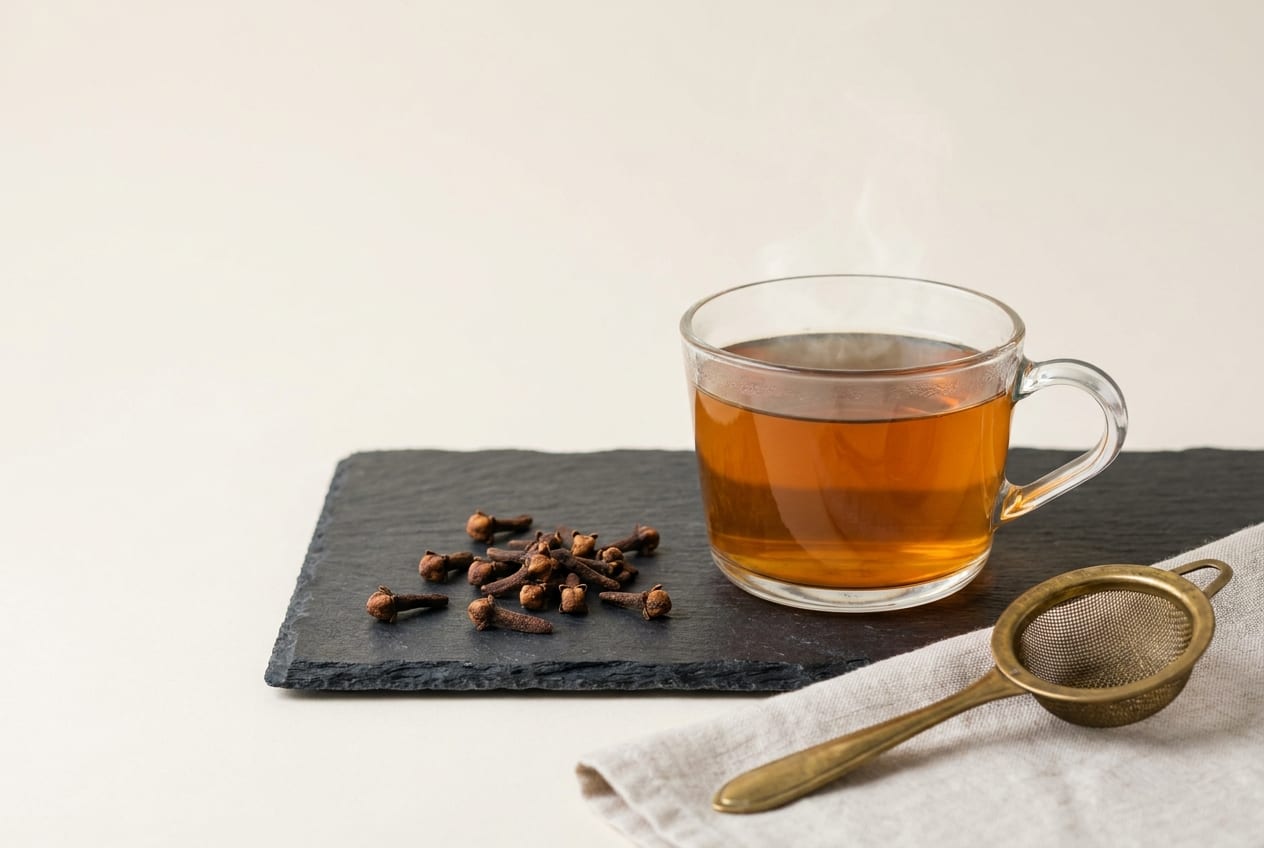
Clove tea is a mild, warming infusion of whole cloves in hot water. The honest position: it is a pleasant drink with a real but modest effect on digestive comfort and a genuinely antibacterial compound in it — eugenol — and almost none of the dramatic claims made for it online have been tested in people drinking tea. Three to five whole cloves steeped for ten minutes is a cup. More is not better; clove is potent, and the concentrated forms are where the safety cautions live. If you are pregnant, on blood thinners, or heading for surgery, treat clove tea as something to mention to your clinician rather than something to start quietly.
Search for clove tea and you will be told, within about four results, that it balances blood sugar, melts fat, cures infections and fixes your liver. Almost all of that is borrowed — taken from laboratory studies on concentrated clove extract or clove oil, then reported as though it applied to a mug of hot water with four cloves in it.
That does clove a disservice, because the modest, real things it does are quite nice enough.
What clove tea actually is
Cloves are the dried unopened flower buds of Syzygium aromaticum. Their character comes almost entirely from one compound, eugenol, which makes up the large majority of clove’s essential oil and is responsible for the warmth, the numbing tingle, and most of the biological activity anyone has ever measured.
Steeping whole cloves in hot water extracts some of that eugenol, along with tannins and other aromatics. Crucially, it extracts far less than you would get from clove oil — which is the entire reason clove tea is a drink and clove oil is something you dilute before it touches you.
The mental model: clove tea is to clove oil what a cup of coffee is to a caffeine tablet. Same origin, wildly different dose.
The benefits, graded honestly
We grade every claim by how strong the evidence behind it is. Here is clove tea, without the enthusiasm.
Digestive comfort — reasonable
The oldest and most defensible use. Warm aromatic infusions of this family — clove, fennel, ginger, cardamom — are traditionally taken after heavy meals, and clove has measurable effects on digestive secretions and smooth muscle in laboratory work. Whether a cup of tea reproduces that reliably in a person has not been properly tested, but it is a plausible mechanism attached to centuries of consistent use, and the downside of trying it is a nice drink.
Antibacterial activity in the mouth — reasonable, with a caveat
Eugenol genuinely kills bacteria; this is not folklore, and it is why dentistry uses it. In the mouth, where the tea makes direct contact, that activity is real. The caveat is that killing bacteria in a dish is not the same as treating an infection in a person. Clove tea is a reasonable thing to sip; it is not a treatment for a dental infection, and a tooth that hurts needs a dentist rather than a teapot.
Antioxidant content — strong for the fact, weak for the benefit
Cloves are, gram for gram, among the most antioxidant-dense foods ever measured. This is well established and frequently used to imply health outcomes it does not demonstrate. You drink a few grams at most, and “high in antioxidants” has never by itself been shown to make anyone healthier. Enjoy the fact; do not build a health plan on it.
Blood sugar, weight, liver, immunity — insufficient
These are the claims that fill the search results, and they rest on animal studies and cell-culture work using doses of extract that a cup of tea comes nowhere near. There is no good human evidence that drinking clove tea changes blood sugar, body weight, liver markers or infection rates. If you see a confident claim about any of them, check whether the underlying study gave anyone a cup of tea. It almost never did.
How to brew it properly
Most people’s first clove tea is too strong, tastes medicinal, and never gets made again. The fix is fewer cloves and more patience.
For one cup:
- Use 3–5 whole cloves. Whole, not ground — ground clove turns the cup cloudy and bitter and over-extracts within a minute.
- Crack them lightly. Press once with the flat of a knife or the back of a spoon. Just enough to open them, not to crush them to dust.
- Pour water just off the boil — around 90–95 °C. A hard rolling boil drives off the aromatics you are trying to capture.
- Steep 8–10 minutes, covered. Covering matters more than people expect; the lid keeps the volatile compounds in the cup rather than in the room.
- Strain, and taste before you add anything. Clove is sweeter than expected on its own.
Good additions: a slice of fresh ginger, a short piece of cinnamon bark, a strip of orange peel, a little honey after steeping. Bad addition: more cloves.
Whole cloves keep their oils for a year or more; ground clove is stale within months, which is the real reason a lot of clove tea tastes like nothing.
If your cloves have been in the cupboard since a Christmas ham, they are past it. A bag of whole organic cloves is a few dollars and lasts a year — → True Organic Ceylon whole cloves. As an Amazon Associate we may earn from qualifying purchases.
How much is too much
This is the part the benefit lists leave out.
A few cups a day of a normal-strength infusion is a food-level exposure and is not a concern for most healthy adults. The caution attaches to concentration, not to clove itself:
- Do not drink clove oil, and do not add it to tea. Clove oil is a concentrated product. Swallowing it has caused serious poisoning, and the reported cases are overwhelmingly in children. Whole cloves in water are a different thing entirely.
- Blood thinners. Eugenol can affect platelet function. If you take warfarin, apixaban or similar, keep clove to normal food amounts and mention regular clove tea to whoever manages your anticoagulation.
- Surgery. Stop concentrated clove products two weeks beforehand, on the same reasoning.
- Pregnancy and breastfeeding. Clove as a food is fine. Clove tea daily as a remedy has not been studied for safety here — ask, do not assume.
- Children. Not as a remedy. Clove’s poisoning risk is concentrated in exactly this group.
- Reflux. Clove is warming and aromatic. A minority of people find it makes heartburn worse; if that is you, this is not your tea.
The bottom line
Clove tea is a good drink with a modest, real case behind it for digestive comfort and mouth bacteria, and no serious case behind it for blood sugar, weight or immunity. Brew it with 3–5 whole cloves, keep the lid on, and enjoy it as a warm ritual rather than a medicine. The moment anyone suggests adding clove oil to make it stronger, they have crossed from tea into something that hurts people.
The complete account — how eugenol behaves in the body, safe preparation at every strength, the drug interactions in full, and what clove is genuinely good for — is in our ebook, Clove: Nature’s Painkiller.
Related reading:
Frequently asked questions
What are the benefits of clove tea?+
The defensible benefits are modest: it may ease digestive discomfort after a meal, and eugenol is genuinely antibacterial in the mouth it passes through. Cloves are also extremely antioxidant-dense. Claims about blood sugar, weight loss, liver health and immunity come from studies on concentrated extract rather than tea, and have not been shown in people drinking it.
How many cloves do you use for one cup of tea?+
Three to five whole cloves, cracked lightly, steeped 8 to 10 minutes in water just off the boil, covered. More cloves make the cup bitter and medicinal rather than stronger in any useful sense.
Can I drink clove tea every day?+
For most healthy adults a cup or two a day is a food-level amount and is not a concern. Take more care if you are pregnant, breastfeeding, taking blood thinners, or approaching surgery, and never use clove oil in place of whole cloves.
Does clove tea help with weight loss or blood sugar?+
There is no good human evidence that it does. Those claims trace back to animal and cell studies using concentrated clove extract at doses a cup of tea comes nowhere near.
What are the side effects of clove tea?+
Brewed from whole cloves it is generally well tolerated, though some people find it aggravates reflux. The real risks belong to concentrated clove oil, which must never be swallowed or added to a drink; ingesting it has caused serious poisoning, particularly in children.
New: Google now lets you choose which sites it shows you first. One tap lifts our spice guides in your results — nobody else's — and you can undo it any time.
More on Clove
Clove Benefits for Women and Men: Separating the Claims from the Evidence
Clove is sold to women for hormones and fertility, and to men for testosterone and stamina. Almost none of it has been tested in people. Here is what clove genuinely does, what it does not, and the one sex-specific caution that is real.
Clove Water Benefits: What the Trend Gets Right, and What It Invents
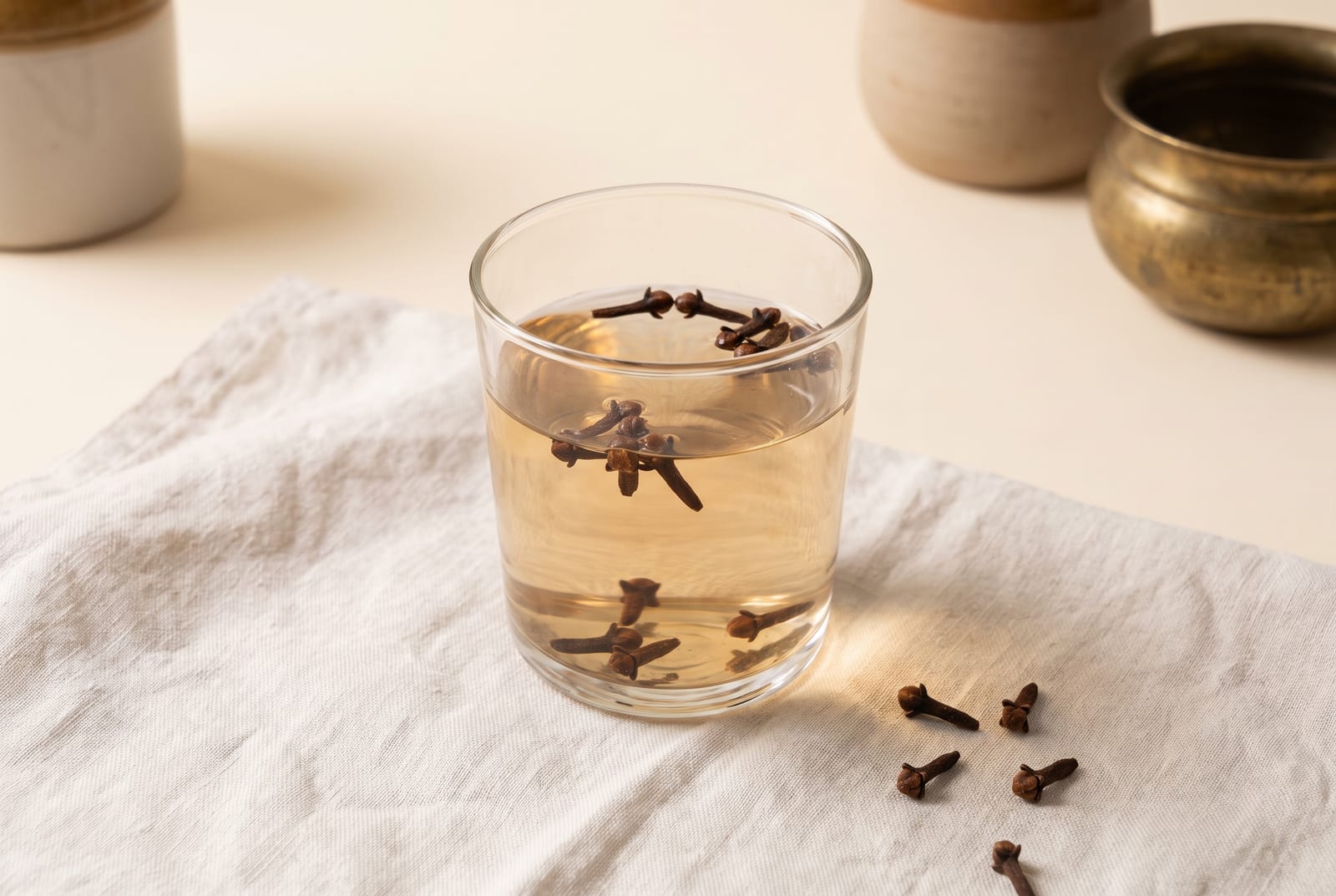
Clove water is all over social media for digestion, skin, hormones and detox. Here is what soaking cloves in water actually does, how to make it properly, who should skip it, and which viral claims have no evidence at all.
Cloves for Bad Breath: Does Chewing One Actually Work?
Chewing a clove for bad breath — whether it works, how long it lasts, how it compares with mints and mouthwash, and the far more important question of what is causing the smell in the first place.