
Cumin
Cumin Substitute: What to Use, and How Much
Quick answer
Use ground coriander at three quarters of the amount. For 1 teaspoon of cumin, use 3/4 teaspoon of ground coriander. It is not the same flavour — but it is the seed already sitting beside cumin in most of the recipes that call for it, so the dish still tastes like the dish.
No coriander? Caraway at half the amount is closer in flavour and much easier to overdo. In anything Tex-Mex, chili powder at roughly the same amount is the right answer, because it already contains cumin. In an Indian pot, garam masala at half the amount, stirred in near the end works well.
Cumin is the hardest common spice to replace, and the reason is worth understanding before you pick a stand-in.
Most spices are doing one obvious job. Cayenne is heat. Cinnamon is sweetness and warmth. Cumin is doing something less nameable — a heavy, earthy, faintly bitter base note that sits underneath everything else and makes a dish taste cooked rather than assembled. Take it out and people rarely say “this needs cumin”. They say the food tastes thin.
That means there is no perfect substitute. There are good ones, and the right choice depends almost entirely on what you are cooking.
What you are actually replacing
Cumin’s character comes mostly from cuminaldehyde, and nothing else in an ordinary kitchen contains much of it. Caraway comes closest, which is why the two are confused so often and why they are genuinely related plants.
That matters for your expectations. When you swap cayenne for paprika you are trading heat for less heat, and the food still tastes like itself. When you swap cumin for anything, you are changing what the dish tastes of. The goal is not to hide the swap. It is to make the result good on its own terms.
The rule of thumb: replace cumin with something the dish already expects. In an Indian pot, coriander or garam masala. In a Tex-Mex pot, chili powder. In a Middle Eastern pot, coriander and a little paprika. Reaching outside the cuisine is what makes a substitution taste like a mistake.
The swaps, by amount
All amounts replace 1 teaspoon of ground cumin, which is roughly what a recipe for four asks for.
| Substitute | Amount | Best for | Notes |
|---|---|---|---|
| Ground coriander | 3/4 tsp | Curry, dal, soup, hummus, rice | The safest answer. Lighter and brighter, never wrong |
| Caraway, ground | 1/2 tsp | Stews, cabbage, breads, sausage | Closest flavour. Strong rye-and-aniseed note. Taste first |
| Chili powder | 1 tsp | Tacos, chilli, beans, rubs | Already contains cumin. Brings salt and oregano too |
| Taco seasoning | 1 tsp | Anything Tex-Mex | Same logic, more salt again. Cut the recipe’s salt |
| Garam masala | 1/2 tsp | Curry, dal, marinades | Contains cumin. Add near the end, not at the start |
| Curry powder | 1 tsp | Dal, soup, stew | Cumin-heavy, but turmeric turns the dish yellow |
| Coriander + caraway, 50/50 | 3/4 tsp total | Anything, if you have both | The closest home-made match to real cumin |
| Ground coriander + smoked paprika | 3/4 tsp + 1/4 tsp | Shawarma, roast veg, chickpeas | Coriander for the body, paprika for the missing depth |
| Fennel seed, ground | 1/2 tsp | Almost nothing | Listed to be dismissed. See below |
A note on the blends. Chili powder, taco seasoning, garam masala and curry powder all work for the same reason — cumin is already in them. That makes them reliable and slightly dishonest: you are not replacing cumin, you are adding a smaller amount of it wrapped in five other things. Adjust the salt, and do not also add the recipe’s other spices on top, or the dish goes muddy.
By dish, which is what actually matters
Curry, dal and Indian cooking
Ground coriander at 3/4, or garam masala at 1/2. These are the two the pot already knows. Coriander goes in early with the onions, exactly where the cumin would have gone. Garam masala is a finishing spice and belongs in the last few minutes — put it in at the start and the delicate top notes cook off, leaving a flat, slightly dusty taste.
If you are out of both, a spoonful of curry powder will carry a dal perfectly well. Accept that the colour will shift.
The deeper version of this question — why Indian recipes pair the two seeds in the first place — is cumin vs coriander.
Tacos, chilli con carne and Tex-Mex
Chili powder at 1:1, and take some salt out of the recipe. This is the easiest substitution on the page, because American chili powder is essentially mild chilli plus cumin plus oregano. You are putting the cumin back in a slightly diluted form.
A supermarket taco seasoning packet does the same job with more salt again and a little cornflour. Use it if it is what you have and season the dish at the end rather than the start.
Do not reach for garam masala here. Its cinnamon, clove and cardamom read as sweet and Indian in a pot of chilli, and the result is confusing rather than bad.
Shawarma, kebabs and Middle Eastern rubs
Ground coriander at 3/4 plus smoked paprika at 1/4. This is the one place a two-part swap is clearly better than a one-part swap. Coriander does the seed-spice work; the smoked paprika replaces the dark, almost charred depth cumin gives a rub.
Add a little cinnamon if the recipe is Levantine — a quarter teaspoon, no more. Warmth is part of the flavour those rubs are built on.
Hummus and cold dips
Ground coriander only, at 3/4, and keep it pale. Curry powder and chili powder both work on flavour and both wreck the appearance, which matters more in a dip than anywhere else. A dish nobody wants to look at does not get eaten.
Soups, stews and roast vegetables
The most forgiving category on the page. Any of the first six swaps in the table will do, and caraway is genuinely good here in a way it is not in a curry — a carrot, squash or cabbage soup takes caraway happily, because that is a pairing European cooking has used for centuries.
Butter chicken and creamy curries
Garam masala at 1/2, added at the end. A rich tomato-and-cream sauce is already carrying a lot of flavour, and the earthy base cumin provides matters less here than it does in a dry dish. Half a teaspoon of garam masala stirred through at the finish is usually indistinguishable from the version with cumin in it.
The three swaps that quietly ruin things
Fennel seed, or saunf. It is a similar size and turns up in the same drawer, and it tastes of aniseed. Cumin does not. A curry made with fennel instead of cumin tastes sweet and faintly medicinal, and no amount of anything else fixes it. If you are reaching for fennel because you think it is cumin, read which seed is which first — that mix-up is more common than it should be.
Shahi jeera used as ordinary jeera. It looks like a darker, thinner cumin and it is sold beside it, but it is a different plant with a smoky, caraway-like flavour and roughly four times the price. Used spoon for spoon in an everyday curry it overwhelms the dish and empties your wallet doing it. Shahi jeera belongs in Mughlai and Kashmiri cooking in small amounts, and it is not a stand-in.
Doubling a blend to get enough cumin. The most common quiet failure. If a recipe wants 2 teaspoons of cumin and you use 2 teaspoons of chili powder, that is a sensible swap. If you use 4 teaspoons to “make up for it being weaker”, you have also added four teaspoons’ worth of salt, oregano and chilli, and the dish is now a different dish. Match the volume, not the cumin content.
When to leave it out
Count what the cumin is doing. In a recipe carrying eight other spices, a missing teaspoon of cumin is a gap, not a hole — the dish will be slightly flatter and still good. Leave it out and move on.
In a recipe where cumin is one of two or three seasonings — a simple dal, a jeera rice, a cumin-roasted carrot, a plain taco filling — it is the flavour, and there is no version of the dish without it. That is the point to go and buy some.
Buying it, when you get there: whole seeds keep their flavour for about a year and ground cumin for about six months, so buy by how fast you will get through it rather than by what looks cheapest. If you cook Indian or Tex-Mex food most weeks, a bulk bag is genuinely cheaper per gram and you will empty it before it fades. If cumin comes out a few times a year, the smallest jar in the shop beats the value bag, which will be dust long before the bottom. Frontier Co-op’s organic whole cumin seed is the bulk end of that choice — one ingredient, certified organic, in a one-pound bag, which is the right buy for the first reader and the wrong one for the second.
If the packet says only “black cumin”, put it back and read the label properly — that phrase means at least two different seeds depending on who printed it, and neither of them is the cumin this recipe wants.
The bottom line
Ground coriander at three quarters, in almost anything. After that, match the substitute to the cuisine rather than to the flavour: chili powder for Tex-Mex, garam masala for Indian, coriander and smoked paprika for Middle Eastern, caraway for anything European and hearty.
Keep fennel out of it, keep shahi jeera for the dishes that ask for it by name, and when you swap in a blend, match the spoonful rather than trying to match the cumin hiding inside it.
Related reading:
Frequently asked questions
What is the best substitute for cumin?+
Ground coriander, at about three quarters of the amount. It is not a flavour match — coriander is bright and citrusy where cumin is earthy — but it is the seed cumin is already paired with in most Indian recipes, so the dish still tastes like itself. For 1 teaspoon of cumin, use 3/4 teaspoon of ground coriander.
Can I use coriander instead of cumin?+
Yes, and it is the swap least likely to go wrong. The two are sold together as dhania-jeera in India precisely because they do different halves of one job, so the pot is already expecting coriander. Expect the dish to come out lighter and less smoky. Adding a pinch of smoked paprika brings back some of the depth cumin was providing.
Is caraway a good substitute for cumin?+
It is the closest in flavour and the easiest to overdo. Caraway and cumin look alike and share an earthy, slightly bitter base, but caraway carries a strong aniseed-and-rye note that takes over a dish quickly. Use half the amount — 1/2 teaspoon of caraway for 1 teaspoon of cumin — and taste before adding more. It suits stews, cabbage and breads far better than a curry.
What can I use instead of cumin in tacos?+
Chili powder, at roughly the same amount. American chili powder is a blend that already contains cumin, along with mild ground chilli, oregano and usually salt, so it is a taco seasoning missing only the heat you choose to add. Because it is salted, take some salt out of the recipe to match. A packet of taco seasoning works the same way for the same reason.
Can I use curry powder instead of cumin?+
In a savoury pot, yes, at about the same amount — most curry powders are cumin-heavy. The catch is colour: curry powder contains turmeric, so a pale dish will turn yellow. That is fine in a dal or a soup and wrong in a Mexican rice or a hummus, where the colour is part of what the dish is meant to look like.
How much ground cumin equals cumin seeds?+
Use about 3/4 to 1 teaspoon of ground cumin for 1 teaspoon of whole seeds. Grinding packs the same seed into less space, so the swap is close to even by volume. Going the other way, add slightly more whole seed than the ground amount called for, and give it time in hot oil at the start of cooking so the flavour actually comes out.
New: Google now lets you choose which sites it shows you first. One tap lifts our spice guides in your results — nobody else's — and you can undo it any time.
More on Cumin
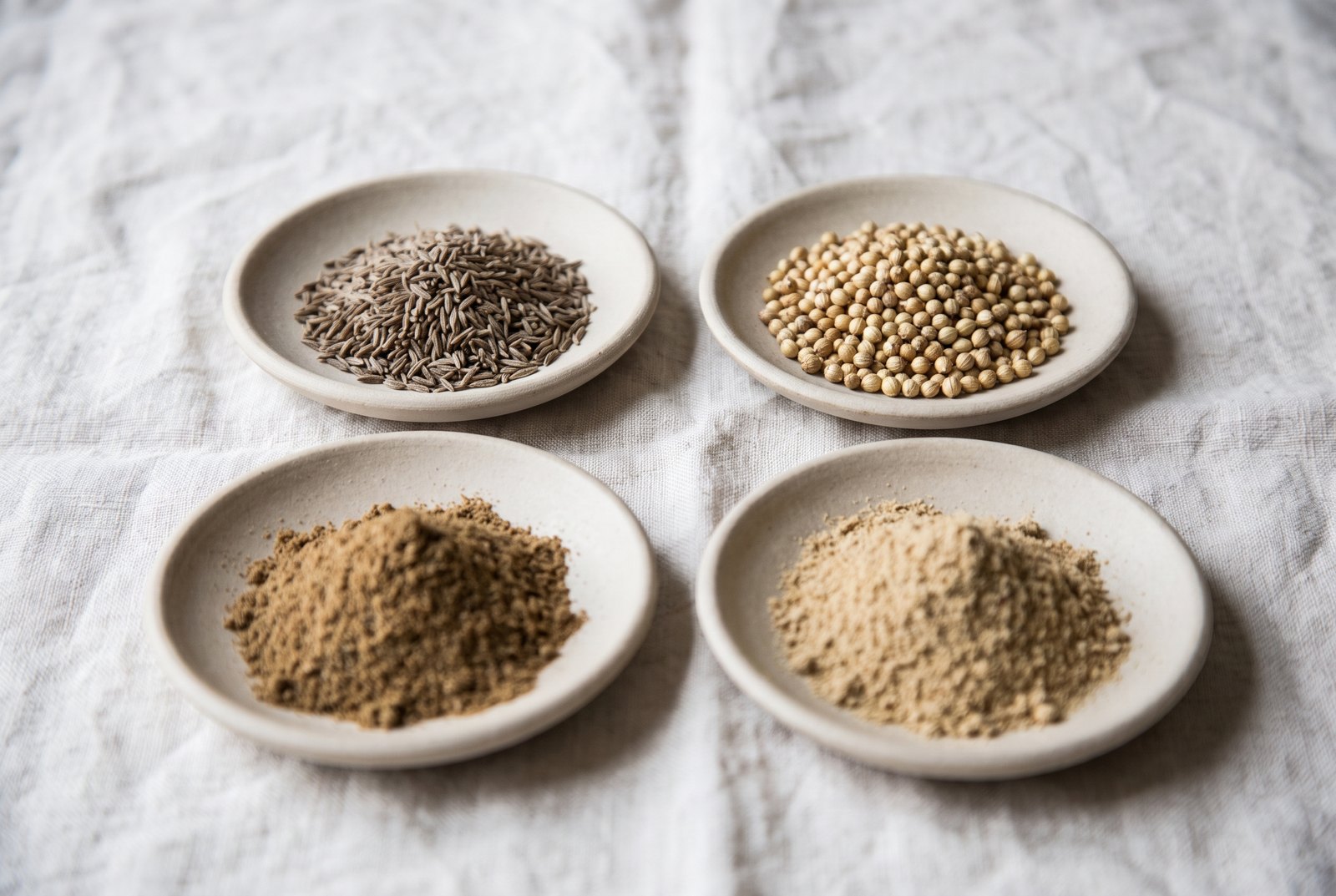
Cumin vs Coriander: Two Seeds, Two Jobs, and Why Recipes Use Both
Cumin and coriander are different plants doing different halves of one job. How they taste, how to tell them apart, why Indian cooking sells them pre-mixed as dhania-jeera, and whether you can swap one for the other.

Jeera in English: Which of These Four Seeds Do You Actually Have?
Jeera, zeera, jira and geera are all cumin. Shahi jeera, kala jeera and black cumin usually are not. A plain guide to which seed is which, what each one is called in English, and how to tell them apart in the jar.
Jeera Water Benefits: What It Does, and What It Does Not
Jeera water is the most recommended home remedy in an Indian kitchen and the most oversold one online. What cumin water genuinely does for digestion, what the weight-loss studies actually say, how to make it, and who should be careful.