
Cumin
Jeera in English: Which of These Four Seeds Do You Actually Have?
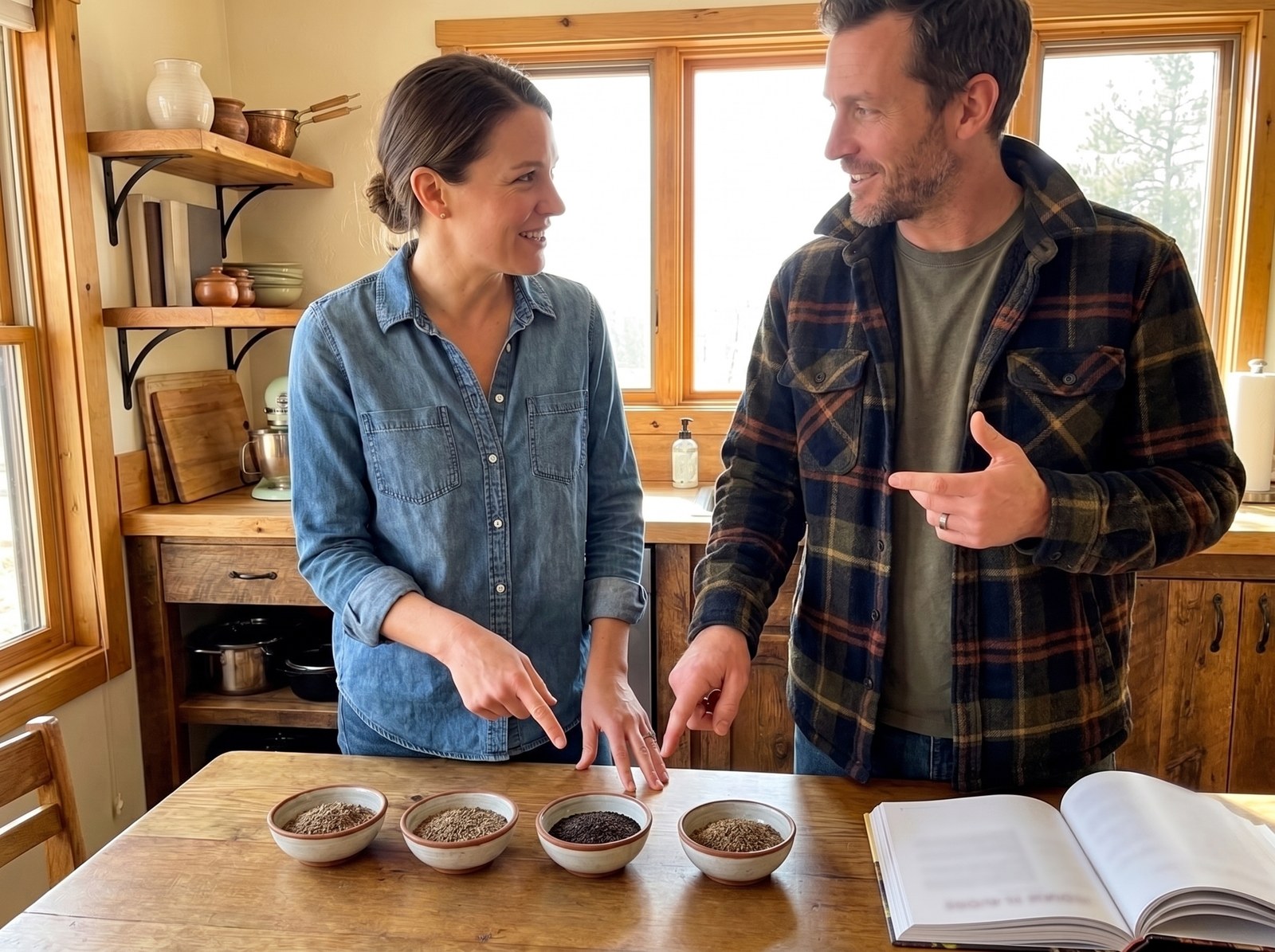
Quick answer
Jeera is cumin. So are zeera, zira, jira and geera — one seed, five spellings.
Shahi jeera is not cumin. It is Bunium persicum, a related plant with darker, thinner, curved seeds and a smoky, caraway-like taste.
Kala jeera depends on where you are. In North India it usually means shahi jeera. In Bengal it usually means nigella.
Black cumin, in an American or British shop, usually means nigella — Nigella sativa, also sold as kalonji or black seed. It is not related to cumin at all.
Cumin has collected more names than almost any spice in the world, and three unrelated seeds have borrowed some of them. The result is that “black cumin” can mean at least two different plants, “kala jeera” can mean either of them depending on the state you bought it in, and a recipe that says “jeera” and a recipe that says “shahi jeera” want two different things at four times the price difference.
This page is the sorting.
The table
| Name on the packet | What it actually is | English name | What it looks like |
|---|---|---|---|
| Jeera, zeera, zira, jira, geera | Cuminum cyminum | Cumin | Pale brown-grey, ridged, straight-ish, about 5 mm |
| Shahi jeera, kala zeera, Kashmiri jeera | Bunium persicum | Black caraway, Kashmiri caraway | Darker, thinner, clearly curved, smaller |
| Kalonji, kala jeera (Bengal) | Nigella sativa | Nigella, black seed, “black cumin” | Matte black, angular, teardrop, not ridged |
| Shia jeera, videshi jeera | Carum carvi | Caraway | Dark brown, crescent-shaped, ridged |
| Saunf | Foeniculum vulgare | Fennel | Plump, pale green, sweet-smelling |
| Ajwain | Trachyspermum ammi | Carom seed, bishop’s weed | Very small, pale, smells of thyme |
Three of those six are in the same botanical family as cumin. Nigella is not — it is not even a distant relative, and it ended up with cumin’s English name purely because it is small, dark and used in the same part of the world.
One seed, five spellings
There is nothing to separate here. Jeera, zeera, zira, jira and geera are the same Sanskrit-derived word written down by different people:
- Jeera — the common Hindi spelling, and the one most Indian recipe sites use.
- Zeera or zira — the common Urdu and Pakistani spelling.
- Jira — Bengali and Odia, and also the more common spelling in Nepali.
- Geera — Trinidad, Guyana and the wider Caribbean, carried there by Indian indentured labourers in the nineteenth century and now a fixture of Caribbean curry and geera pork.
In South India the word changes shape rather than spelling: jeeragam or seeragam in Tamil, jeerakam in Malayalam, jilakarra in Telugu, jeerige in Kannada. All the same seed.
Practical upshot: if a packet, a recipe or a shopkeeper uses any of those words on its own, you want ordinary cumin, and the jar labelled “cumin seed” in any supermarket is the correct thing to buy.
Shahi jeera: the expensive one
Shahi jeera means “royal cumin”, and it earns the name honestly — it grows wild at altitude in Kashmir, Iran and Central Asia, is largely hand-gathered, and costs several times what cumin does.
It is Bunium persicum. In English it is usually called black caraway or Kashmiri caraway, occasionally great cumin.
How to recognise it: the seeds are shorter and much thinner than cumin, noticeably darker, and curved into a crescent rather than running straight. Held next to cumin the difference is immediate. Alone in a jar, it looks like cumin that has been left somewhere hot.
How it tastes: smokier and more resinous than cumin, with a clear caraway-like note behind it and much less of cumin’s dusty earthiness. It is used in Mughlai, Kashmiri and Awadhi cooking — biryani, rogan josh, korma — in small amounts, because it is assertive and because of the price.
It is not a substitute for jeera and jeera is not a substitute for it. Using shahi jeera spoon for spoon in an everyday dal makes the dal taste of rye bread and costs four times as much. Using ordinary cumin in a Kashmiri recipe simply produces a different, flatter dish.
Kala jeera: the question, not the answer
Kala jeera translates literally as “black cumin”, and that is exactly the problem.
- Across much of North India, kala jeera on a packet means shahi jeera — Bunium persicum. Kala zeera and shahi jeera are used almost interchangeably there.
- In Bengali cooking, kalo jeere means nigella — Nigella sativa. It is the black seed in panch phoron, and no Bengali cook means shahi jeera by it.
Both usages are correct in their own place. Neither is a mistake being made by the other side.
So do not buy on the phrase. Look at the seed. If it is thin, brown-black and curved, it is shahi jeera. If it is matte black, angular and looks like a tiny chip of coal, it is nigella. They do not resemble each other at all once you have seen both.
Black cumin, and the American shelf
In an English-speaking shop, “black cumin” most often means nigella, sold under some combination of black seed, black cumin, black caraway, kalonji and Nigella sativa. Black seed oil — a large supplement category — is nigella oil, not cumin oil.
This matters beyond the kitchen. Someone who reads about the health claims made for “black cumin seed oil” and then buys ground cumin has bought an entirely different plant from a different botanical family. The two share no active compounds worth speaking of.
Nigella is not covered on these pages as a cumin, because it is not one. It gets its own hub in time.
What Google currently gets wrong
Search jeera in English from the United States and the answer box at the top of the page offers, as a follow-up, “the difference between regular jeera and shahi jeera (black cumin)”.
That parenthesis is the error, and it is being served above every real result. Shahi jeera is Bunium persicum. Black cumin, to almost every English-speaking shop and every supplement label, is Nigella sativa. Two plants from two different families, joined by a bracket.
It is an easy mistake, because both plants genuinely carry the English name black caraway in some sources. It is still wrong, and it is worth knowing that the fastest answer on the page is the one that conflates them.
The two-minute jar test
You do not need a label. You need daylight and your nose.
Cumin. Pale brown-grey. Straight or barely curved, tapering at both ends, with obvious lengthwise ridges. Smells earthy, heavy and slightly bitter, with a faint sweetness underneath.
Shahi jeera. Clearly darker, thinner and shorter, curved like a tiny crescent moon. Smells smoky and sharper, closer to caraway than to cumin.
Caraway. Similar crescent shape to shahi jeera but plumper and more evenly brown. Smells unmistakably of rye bread and aniseed — the most distinctive smell of the four.
Nigella. Matte black, angular, with flat faces rather than ridges. Looks like coarse black grit. Smells faintly of onion and toasted sesame, and nothing like cumin.
If you are still unsure between cumin and caraway, crush one seed between your fingers. Caraway announces itself instantly. Cumin takes a second and then smells of curry.
Buying, and the label test
Whole seed keeps its character for about a year; ground cumin is noticeably flat after six months. So buy by the rate you cook, not by what looks cheapest: a bulk bag is better value if you cook this food most weeks, and the smallest packet in the shop is better value if you do not.
Frontier Co-op’s organic whole cumin seed is the honest default for the first case — the label says cumin, which is the whole point of the rule below.
Beyond that, one rule covers all of this: buy the packet that names the plant, not the colour.
A bag that says cumin (Cuminum cyminum) or simply jeera is unambiguous. A bag that says only black cumin has told you almost nothing — it might be nigella, it might be shahi jeera, and the price is usually the only clue, since shahi jeera costs several times more. If a packet gives you a colour and no species, put it back and pick one that commits.
The bottom line
Jeera, zeera, zira, jira and geera are cumin. One seed, one plant, five ways of writing the same word.
Shahi jeera is a different plant — Bunium persicum, smokier, thinner, curved, and several times the price. Use it where a recipe asks for it by name and nowhere else.
Kala jeera means shahi jeera in the north and nigella in Bengal, so look at the seed rather than the word. And black cumin on an English label almost always means nigella, which is not related to cumin at all.
Related reading:
Frequently asked questions
What is jeera in English?+
Jeera is cumin — the seed of Cuminum cyminum. It is the ordinary brown-grey ridged seed sold as cumin everywhere, and the powder sold as ground cumin. Zeera, zira, jira and geera are the same word carried into Urdu, Punjabi, Bengali and Caribbean English, and they mean the same seed.
Is shahi jeera the same as black cumin?+
Not reliably, and this is where most of the confusion starts. Shahi jeera is Bunium persicum, sometimes called black caraway or Kashmiri caraway. In English-speaking shops, black cumin much more often means Nigella sativa — kalonji — which is an unrelated plant with matte black angular seeds. Two different seeds, one English phrase, and the label rarely tells you which one is in the packet.
What is kala jeera in English?+
It depends where the packet was written. Kala jeera literally means black cumin, and in much of North India it refers to shahi jeera, Bunium persicum. In Bengali cooking, kalo jeere is nigella, Nigella sativa — the seed in panch phoron. Both are legitimate uses of the phrase in their own region, so treat kala jeera as a question rather than an answer, and look at the seed.
Is zeera the same as jeera?+
Yes. Zeera, zira, jeera, jira and geera are one word written down by different people in different scripts. Zeera is the more common Urdu and Pakistani spelling, jeera the more common Hindi one, and geera is what the word became in Trinidad and Guyana. Any packet carrying any of those spellings is ordinary cumin.
How can I tell cumin from caraway?+
Look at the curve and smell them. Cumin seeds are longer, straighter, pale brown-grey and ridged, and smell earthy and slightly bitter. Caraway is darker, distinctly crescent-shaped, and smells sharply of aniseed and rye bread. Side by side the difference is obvious. In separate jars months apart it is not, which is why they are swapped so often.
Is jeera the same as saunf or ajwain?+
No to both. Saunf is fennel — plumper, pale green, and clearly sweet with an aniseed note. Ajwain is carom seed, much smaller and tasting strongly of thyme. Both live in the same drawer as cumin and neither is a substitute for it. Ajwain in particular is used in tiny amounts, so a spoonful in place of cumin will make a dish taste medicinal.
New: Google now lets you choose which sites it shows you first. One tap lifts our spice guides in your results — nobody else's — and you can undo it any time.
More on Cumin
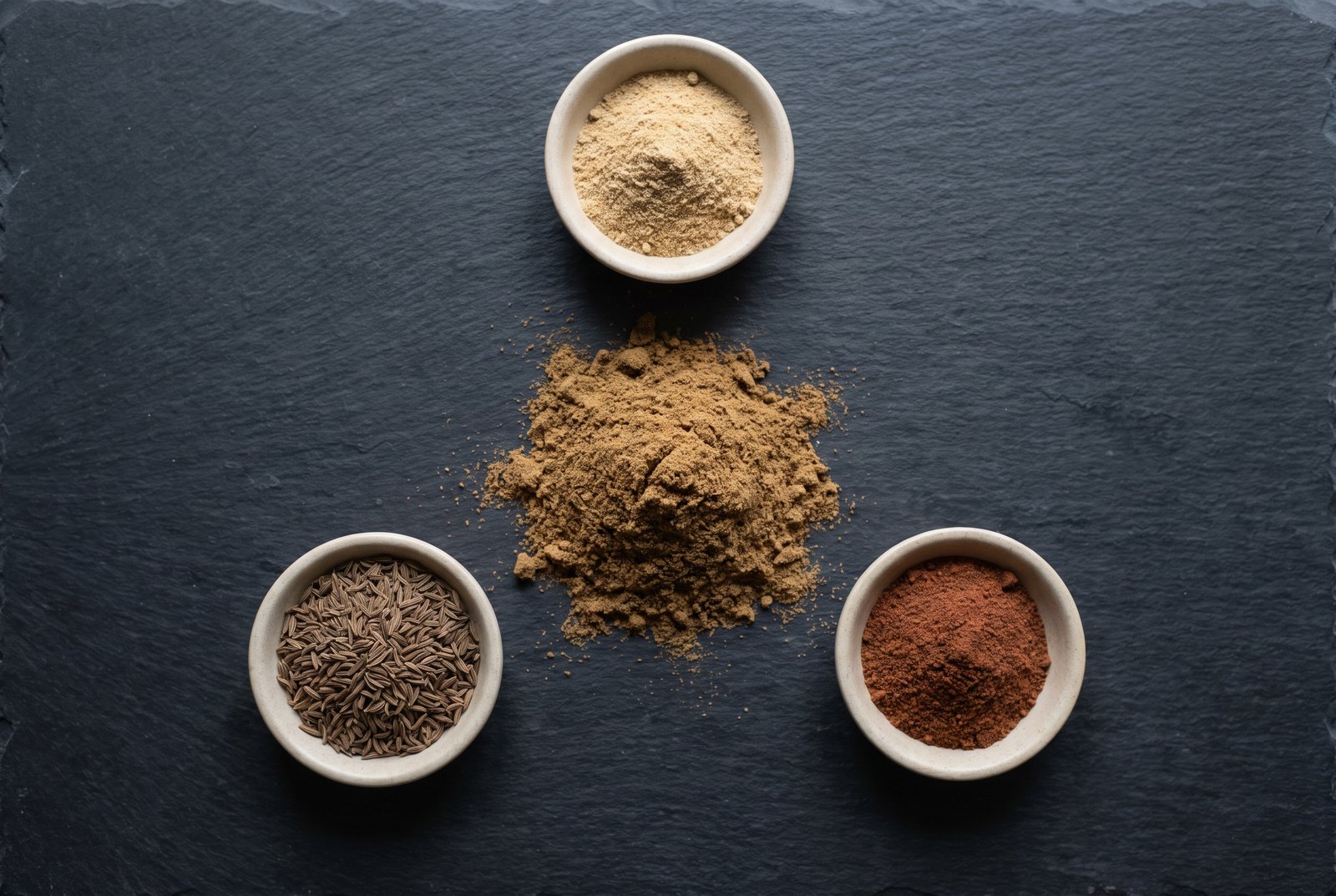
Cumin Substitute: What to Use, and How Much
The best cumin substitutes with exact swap amounts — ground coriander, caraway, chili powder, garam masala and taco seasoning — sorted by dish, plus the three swaps that quietly ruin a recipe.
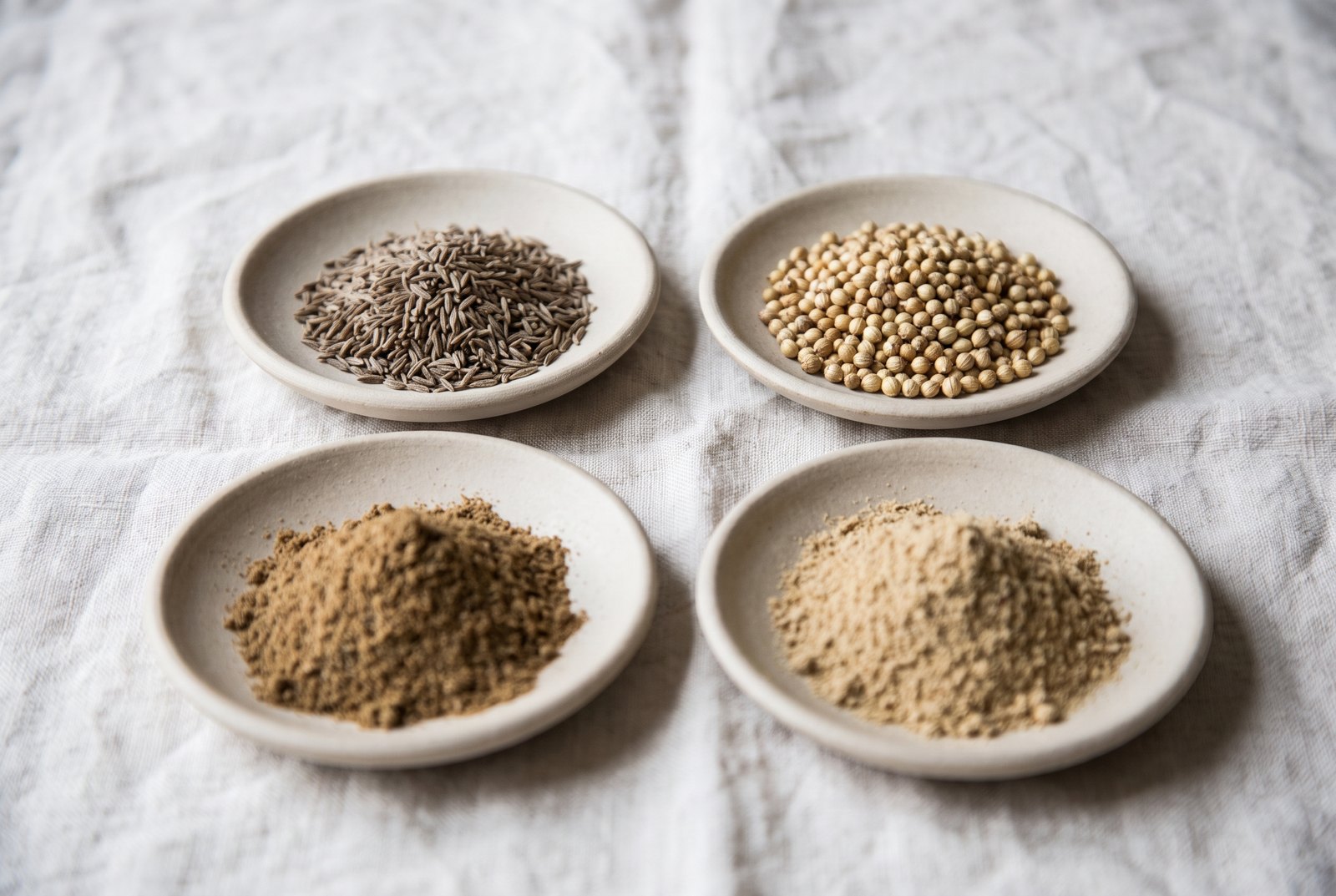
Cumin vs Coriander: Two Seeds, Two Jobs, and Why Recipes Use Both
Cumin and coriander are different plants doing different halves of one job. How they taste, how to tell them apart, why Indian cooking sells them pre-mixed as dhania-jeera, and whether you can swap one for the other.
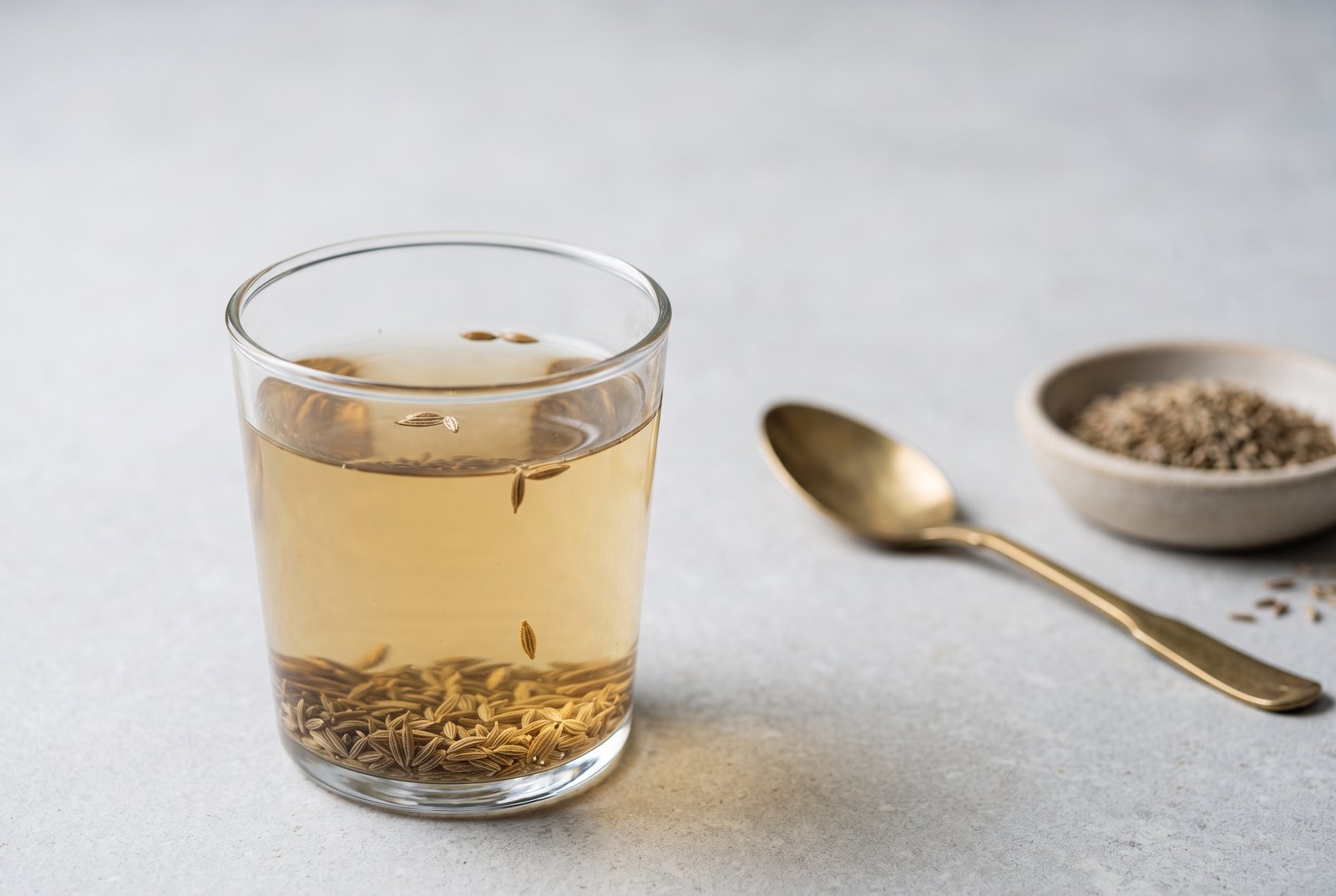
Jeera Water Benefits: What It Does, and What It Does Not
Jeera water is the most recommended home remedy in an Indian kitchen and the most oversold one online. What cumin water genuinely does for digestion, what the weight-loss studies actually say, how to make it, and who should be careful.