
Cumin
Cumin vs Coriander: Two Seeds, Two Jobs, and Why Recipes Use Both
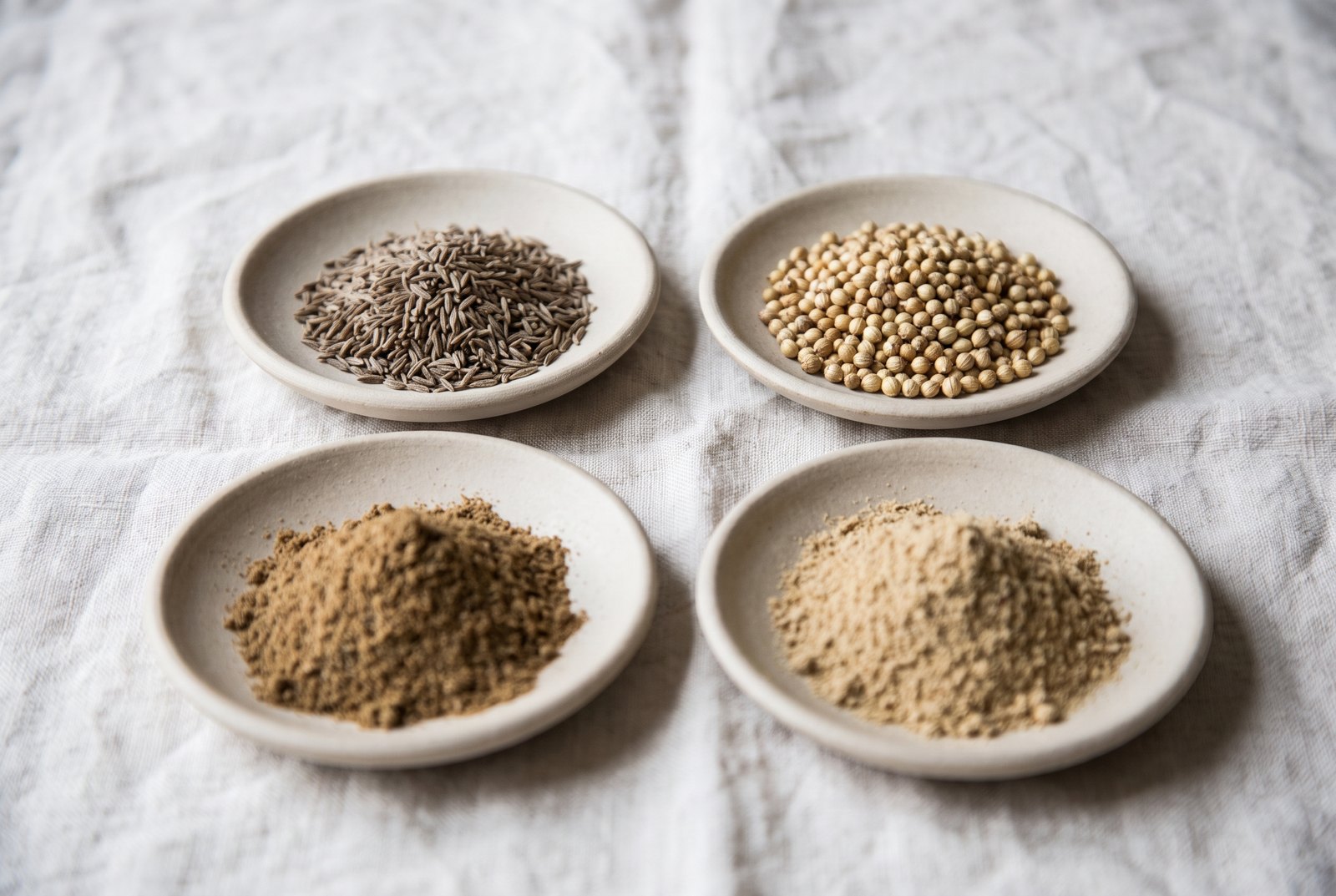
Quick answer
Different plants, opposite jobs. Cumin is the base note — earthy, heavy, slightly bitter, and strong enough to define a dish on its own. Coriander seed is the top note — citrusy, floral, faintly sweet, and mild enough that most recipes use two or three times as much of it.
Telling them apart takes a second: cumin seeds are elongated, ridged and brown-grey. Coriander seeds are round, pale tan and so brittle they crush under a thumbnail.
Swapping them: coriander for cumin at three quarters of the amount works and makes the dish lighter. Cumin for coriander at half the amount works and makes it much heavier. Neither is a like-for-like.
These two turn up in the same recipes so often that a lot of people assume they are variations on one thing. They are not related at all closely, they taste nothing alike, and the reason they appear together is precisely that they are opposites.
The two plants
| Cumin | Coriander | |
|---|---|---|
| Plant | Cuminum cyminum | Coriandrum sativum |
| Indian name | Jeera, zeera | Dhania |
| Seed shape | Elongated, tapered, ridged | Round to oval, ribbed, hollow |
| Colour | Brown-grey | Pale tan to straw |
| Texture | Hard, dense | Brittle, crushes easily |
| Taste | Earthy, heavy, slightly bitter | Citrusy, floral, mildly sweet |
| Strength | Assertive | Mild |
| Typical amount | 1 tsp for four | 2–3 tsp for four |
| Also sold as | — | The fresh leaf: cilantro |
Both belong to the carrot and parsley family, which is a broad family containing most of the seed spices in an Indian kitchen — including caraway, fennel, ajwain and dill. Being in the same family means very little about how two spices taste.
How they taste, properly
Cumin is the smell of a curry house from the street. Warm, dusty, earthy, with a faint bitterness at the back and a slightly meaty quality that makes vegetarian food taste substantial. It is one of the few spices that reads as savoury rather than as aromatic.
Coriander seed is almost the opposite. It is bright and slightly sweet, with an orange-peel note that becomes obvious the moment you toast it, and a nutty softness underneath. Ground coriander in quantity also does something cumin cannot: it gives a sauce body. A masala with a lot of ground coriander in it is thicker and rounder, not just more flavoured.
Together, coriander lifts and cumin anchors. That is the entire logic of the pairing, and it is why removing one leaves a dish that tastes noticeably incomplete rather than simply less spiced.
The cilantro problem
This trips up more people than the cumin comparison does.
- In the United States, cilantro means the fresh green leaf and coriander means the dried seed. Two words, no ambiguity.
- In Britain, India and most of the Commonwealth, coriander on its own usually means the leaf, and the seed is called coriander seed.
So a British recipe saying “a handful of coriander” wants leaves, and an American recipe saying “1 teaspoon of coriander” wants ground seed. Any recipe asking for ground coriander means the seed, wherever it was written, because nobody grinds the leaf.
And if you are one of the people for whom fresh cilantro tastes of soap: that reaction is linked to a smell-receptor gene and to particular aldehydes in the leaf. The dried seed has a different chemistry, and most people who cannot go near the leaf enjoy the seed without any trouble at all. Do not skip coriander seed on the strength of a bad experience with the herb.
Dhania-jeera: why the pairing is sold in one jar
Walk into an Indian grocery and you will find dhania-jeera powder — coriander and cumin, pre-ground and pre-mixed, usually at around two parts coriander to one part cumin, sometimes three to one.
It exists because the ratio is nearly always the same. Coriander is mild and gives body, so a dish wants a lot of it. Cumin is strong and gives depth, so a dish wants less. Rather than measure both every time, a great many Indian kitchens keep the one jar.
If you cook Indian food regularly, the mixed jar is a genuine convenience. If you cook it occasionally, keep them separate — the ratio you want in a Mexican pot or a Middle Eastern rub is not two-to-one, and having the two seeds apart lets you change it.
Roasting matters more here than the ratio does. Both seeds are usually dry-roasted before grinding in Indian cooking, and it is not an optional refinement. Raw ground coriander tastes papery; roasted, it turns nutty and orange-peel bright. Thirty to sixty seconds in a dry pan, until you can smell them, is the whole technique.
When to use which
Reach for cumin when the dish needs weight: dal, chilli, taco filling, roast potatoes, a lamb rub, jeera rice, anything where the base flavour is the point.
Reach for coriander when the dish needs volume and lift: a curry sauce that needs body, a masala base, a spice paste, pickles, a marinade for fish or chicken, and almost any recipe where you want a lot of seed spice without one flavour dominating.
Use both when you are cooking anything Indian, which is most of the time. The pairing is standard for a reason.
Substituting one for the other
They are not interchangeable, but each stands in for the other better than most alternatives — because whichever one is missing, the dish was already expecting the other.
| Swap | Amount | What changes |
|---|---|---|
| Coriander instead of cumin | 3/4 of the cumin amount | Lighter, brighter, less smoky. Add a pinch of smoked paprika to recover some depth |
| Cumin instead of coriander | 1/2 of the coriander amount | Much heavier and darker. The sauce also loses body — coriander was thickening it |
The direction that goes wrong is cumin for coriander, and it goes wrong in two ways at once. Cumin is far stronger, so an equal spoonful takes over the dish, and ground coriander was providing bulk that cumin does not replace, so the sauce comes out thinner as well as heavier. Halve the amount, and expect a different dish rather than the same one.
The full set of alternatives, when you have neither, is in the cumin substitute guide.
Whole or ground
Cumin: whole seeds go into hot oil at the very start — the tadka — where they sizzle, pop and release their flavour into the fat. Ground cumin cannot do that; it burns. Ground goes in later, with the onions or the tomatoes.
Coriander: almost always ground. Whole coriander seeds appear in pickles, brines and some braises, where they soften over a long cook, but they are too papery to add much to a quick dish left whole.
Both fade at the same rate. Whole seed keeps its character for about a year in a closed jar away from heat; ground is noticeably flat after six months. If you buy one of the two whole, make it the cumin — the tadka is what it is for, and the difference between fresh and stale cumin is much easier to taste. Frontier Co-op’s organic whole cumin seed is a plain one-ingredient bag of exactly that.
Coriander is the one to buy whole second, and the reason is the arithmetic above rather than the cooking: you get through far more coriander than cumin, and it is the half you are most likely to be using stale. Whole coriander seed keeps a year, costs less per gram than the ground jar, and takes seconds in a spice mill — but only do this if you will actually grind it. If you will not, buy ground coriander in whatever size you finish inside six months, and that decision is worked through here.
The bottom line
Cumin is the base, coriander is the lift. Cumin is elongated, ridged and strong; coriander is round, pale and mild. Indian cooking uses them at roughly one part cumin to two parts coriander, which is why the pre-mixed jar exists.
Swap coriander in for cumin at three quarters and the dish will be lighter but fine. Swap cumin in for coriander at half and it will be a different dish. And a recipe asking for ground coriander always means the seed, however the country it came from uses the word.
Related reading:
Frequently asked questions
What is the difference between cumin and coriander?+
They are different plants doing opposite jobs. Cumin is elongated, ridged and brown-grey, and tastes earthy, heavy and slightly bitter — it is the base note of a dish. Coriander seed is round, pale tan and brittle, and tastes citrusy, floral and mildly sweet — it is the top note. Indian cooking uses them together because neither is complete on its own.
Can I substitute coriander for cumin?+
Yes, and it is the safest swap available, but understand what changes. Use about three quarters of the amount. The dish will come out lighter, brighter and less smoky, because you have removed the base note and added more of the top one. It will still taste correct, because coriander is what the recipe was already expecting alongside the cumin.
Is coriander the same as cilantro?+
They are the same plant, Coriandrum sativum, but not the same ingredient. In American usage, cilantro means the fresh leaf and coriander means the dried seed. In British and Indian usage, coriander alone usually means the leaf, and the seed is called coriander seed. A recipe asking for ground coriander always means the seed, whichever country wrote it.
Why do Indian recipes use cumin and coriander together?+
Because they cover different parts of the flavour. Coriander gives a curry body, sweetness and a citrus lift; cumin gives it depth and weight. The pairing is so standard that it is sold pre-mixed as dhania-jeera powder, usually with roughly twice as much coriander as cumin, and a great many home cooks use that one jar rather than two.
Which is stronger, cumin or coriander?+
Cumin, by a wide margin. A teaspoon of cumin makes itself heard in a large pot; a teaspoon of coriander mostly disappears. That is why blends carry more coriander than cumin, and why swapping them one for one in either direction gives a result that is either overpowering or oddly flat.
If I hate cilantro, will I hate coriander seed?+
Probably not. The soapy taste some people get from fresh cilantro is linked to a smell-receptor gene and to specific aldehydes in the leaf. The dried seed has a different chemistry, tasting citrusy and nutty rather than green, and most cilantro-haters have no problem with it at all. Try it toasted before deciding.
New: Google now lets you choose which sites it shows you first. One tap lifts our spice guides in your results — nobody else's — and you can undo it any time.
More on Cumin
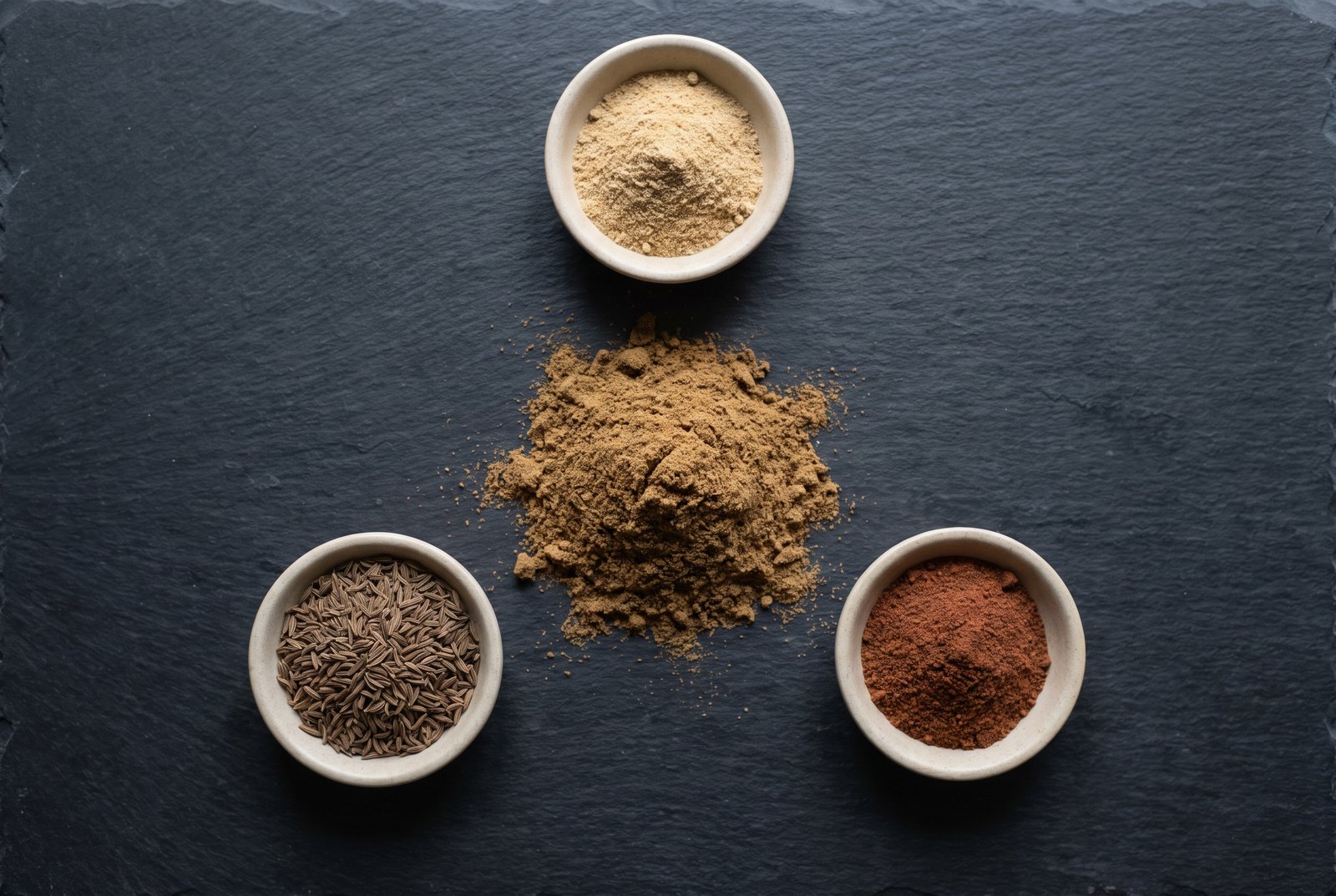
Cumin Substitute: What to Use, and How Much
The best cumin substitutes with exact swap amounts — ground coriander, caraway, chili powder, garam masala and taco seasoning — sorted by dish, plus the three swaps that quietly ruin a recipe.
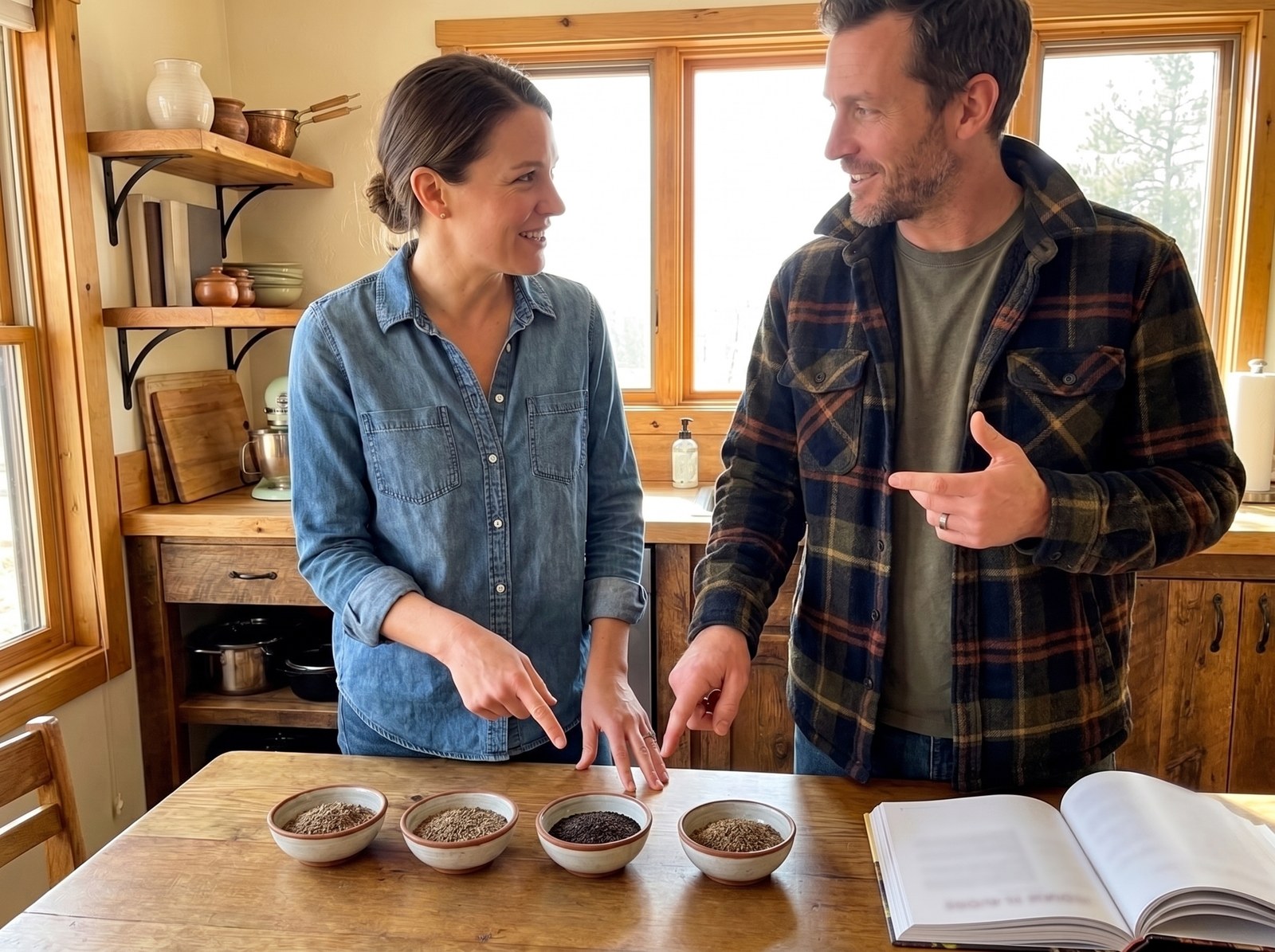
Jeera in English: Which of These Four Seeds Do You Actually Have?
Jeera, zeera, jira and geera are all cumin. Shahi jeera, kala jeera and black cumin usually are not. A plain guide to which seed is which, what each one is called in English, and how to tell them apart in the jar.
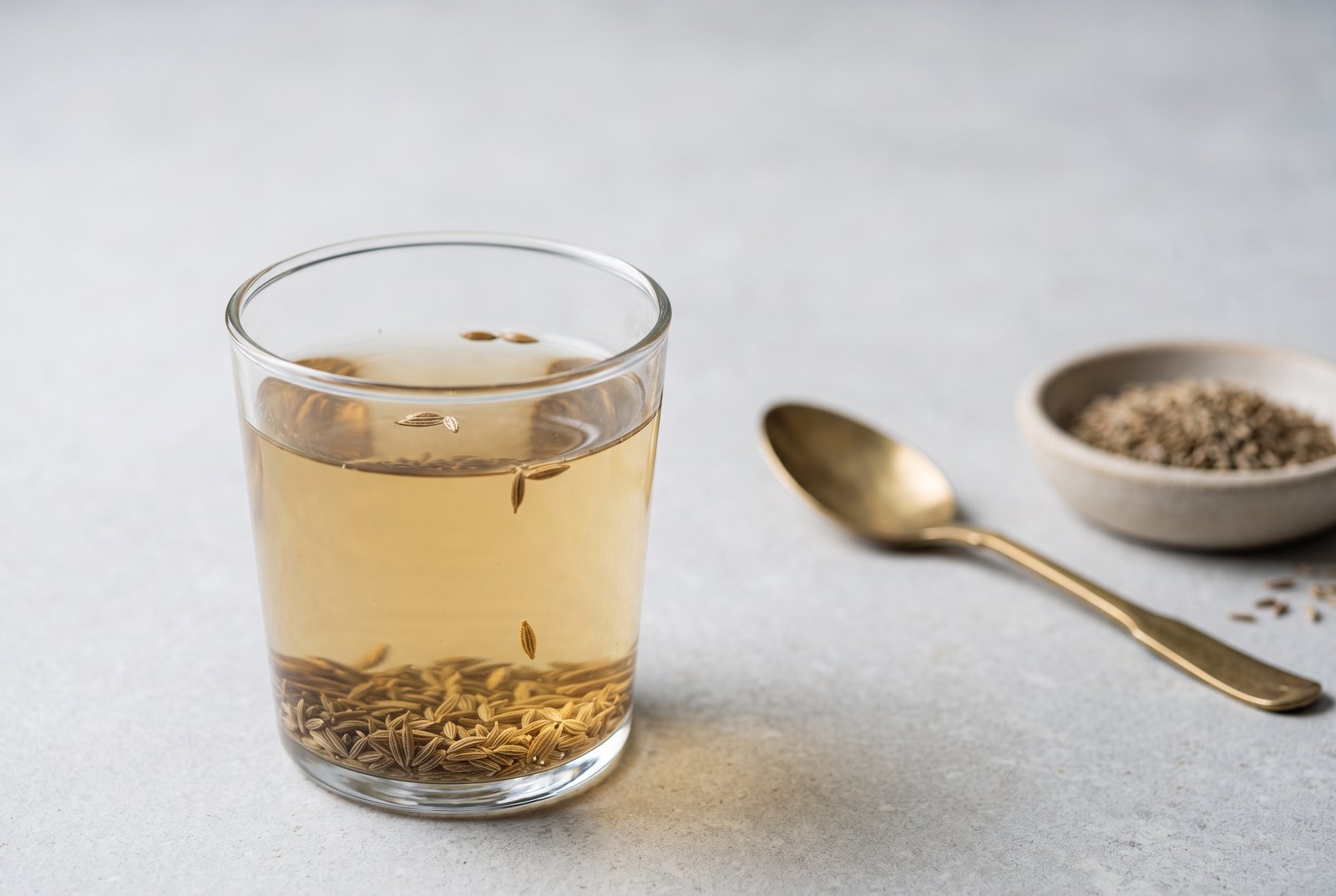
Jeera Water Benefits: What It Does, and What It Does Not
Jeera water is the most recommended home remedy in an Indian kitchen and the most oversold one online. What cumin water genuinely does for digestion, what the weight-loss studies actually say, how to make it, and who should be careful.