
Turmeric
Turmeric Face Mask for Dark Spots: What It Can (and Can't) Do
· Updated
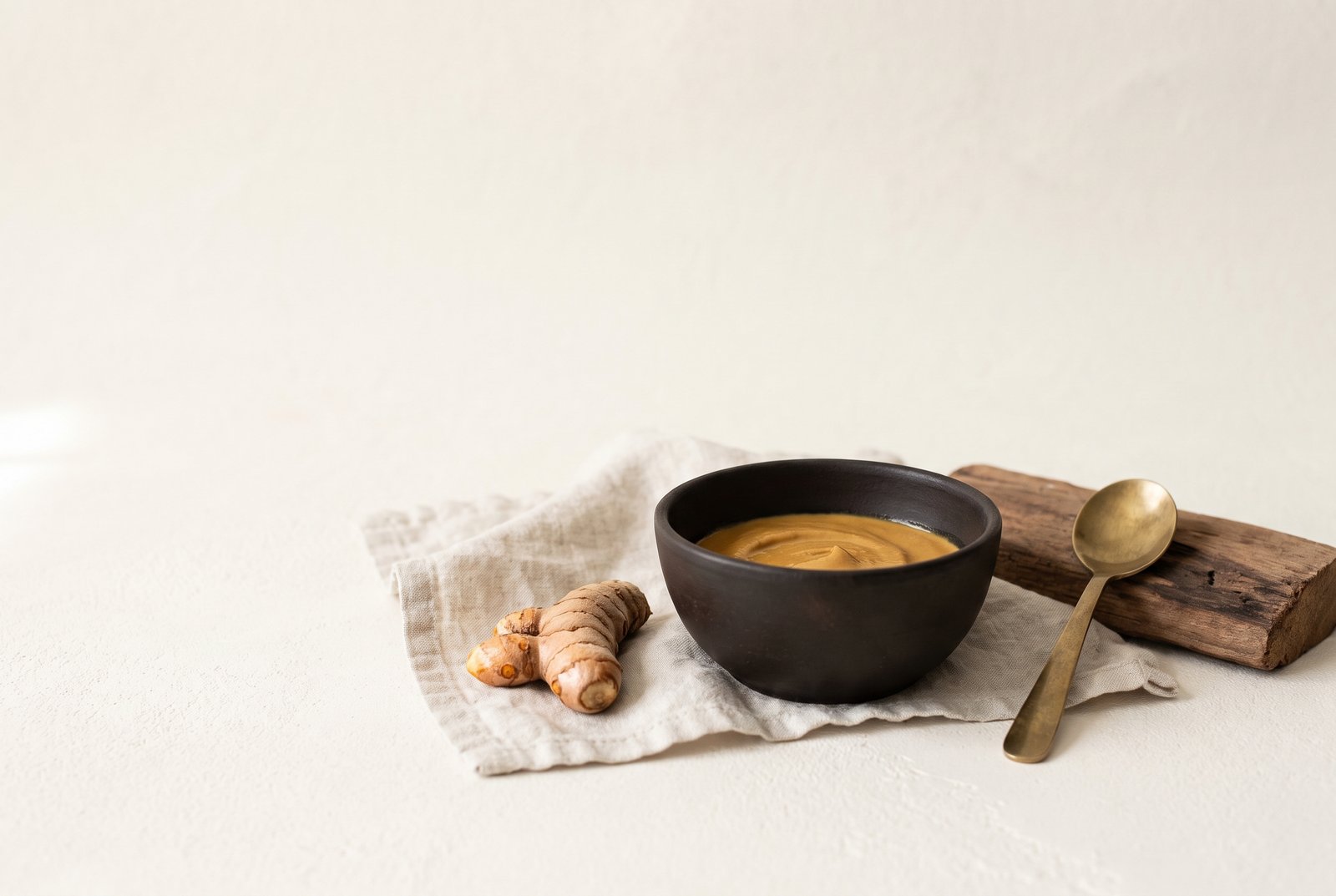
Quick answer
Turmeric has real antioxidant and antimicrobial activity in the lab, and a long tradition in skincare — which is why it’s trending for dark spots and brightening, now often paired with kojic acid in viral K-beauty serums. But be honest about the evidence: rigorous human proof that a turmeric mask fades dark spots is limited, and most of the visible “glow” comes from gentle exfoliation, hydration, and the other actives in a formula. A mask is low-risk if you patch-test first and accept that turmeric can leave a temporary yellow tint (worst on fair skin). For stubborn pigmentation, a formulated serum — or a dermatologist — will out-perform a DIY bowl.
If your feed looks like ours, turmeric has taken over skincare: DIY masks promising a “glow,” before-and-afters for dark spots, and a wave of kojic-acid-plus-turmeric serums from K-beauty brands going viral for brightening. Turmeric’s golden reputation is ancient — it’s been part of South Asian beauty ritual for centuries. So does it actually fade dark spots? Here’s the grown-up version.
What turmeric genuinely does for skin
Let’s give tradition and the lab their due. Turmeric (and its compound curcumin) shows antioxidant and antimicrobial activity in laboratory studies, and topical curcumin is a genuine area of research. In traditional practice it’s been used on skin for brightness and blemishes for generations. None of that is nothing.
But there’s a gap between “active in a lab dish” and “fades your dark spots in the mirror,” and honesty about that gap is the whole point. Rigorous, human, dermatology-grade evidence for most turmeric skin claims — including fading hyperpigmentation — is still thin. A turmeric mask is more likely to give you a temporary radiance from moisture and mild exfoliation than to erase a sun spot. Keep expectations modest and you won’t be disappointed.
The honest frame: turmeric is a pleasant, low-risk skincare tradition with promising lab activity — not a proven dark-spot treatment. Use it for the ritual and the glow, not as a guaranteed fix.
The viral kojic-acid + turmeric combo
Why are the trending serums pairing turmeric with kojic acid? Because kojic acid is a better-established brightening ingredient that interferes with excess pigment production. In these formulas, turmeric is largely the supporting act with the recognisable name — the pigment-fading work is mostly being done by the other actives. That’s not a knock: a well-formulated serum with proven brighteners, delivered at the right concentration and pH, will simply do more than turmeric smeared on from your spice jar. If dark spots are your real goal, a formulated product (or professional advice) is the smarter route than a DIY mask.
A gentle turmeric face mask recipe worth making
If you want the ritual — and many people love it — keep it simple and safe.
Gentle turmeric–yoghurt mask:
- Mix 1 tbsp plain yoghurt (or honey for dry skin) with just ¼ tsp turmeric — more will stain, not help.
- Optionally add a little honey or a pinch of chickpea flour to thicken.
- Patch-test on your jaw first and wait a few minutes.
- Apply thinly, leave 10 minutes, and rinse well.
- Follow with a cleanser to lift any residual colour.
That’s it — a calming, inexpensive weekly ritual.
Prefer a formulated route for dark spots? A turmeric + kojic acid brightening serum delivers proven actives more reliably than a DIY mask, and a gentle vitamin-C or niacinamide product pairs well for tone. → medicube kojic acid + turmeric serum · vitamin C + niacinamide serum. As an Amazon Associate we may earn from qualifying purchases.
How to avoid the yellow stain (and other cautions)
- Use a tiny amount. A quarter-teaspoon is plenty; piling on turmeric guarantees a tint without adding benefit.
- Expect a temporary cast, especially on fair skin. Rinse thoroughly and cleanse after; a little usually fades within a wash or two.
- Always patch-test. Turmeric and its carriers can irritate or, rarely, trigger a contact allergy.
- Skip broken or actively inflamed skin, and stop immediately if you get redness, itching, or stinging.
- It’s cosmetic care, not treatment. For persistent acne, melasma, or pigmentation that bothers you, see a dermatologist — those have real, evidence-based treatments that a kitchen mask can’t match.
The bottom line
Turmeric earns its place in skincare as a gentle, pleasant tradition with genuine lab credentials — just not as a proven eraser of dark spots. The viral kojic-acid serums work mostly because of their other actives, and a formulated product will out-perform a DIY bowl for real pigmentation. So enjoy a turmeric mask for the ritual and the temporary glow, patch-test it, mind the stain — and if fading dark spots is the actual goal, reach for proven brighteners or a dermatologist.
Curious where turmeric’s skin claims sit against everything else it’s said to do — graded honestly? It’s all in our ebook, Turmeric: Nature’s Anti-Inflammatory, Chapter 7.
Related reading:
Frequently asked questions
How do you make a turmeric face mask?+
The simplest version that does not stain badly is a small pinch of turmeric — less than you think — stirred into a tablespoon of plain yoghurt or honey until it is pale gold rather than orange. Patch-test on your jaw, leave it about ten minutes, and rinse well. More turmeric does not make it work better; it only makes the stain worse.
Does turmeric actually fade dark spots?+
The strong human evidence is limited. Turmeric has antioxidant and antimicrobial activity in the lab and a long skincare tradition, but a mask is more likely to give a temporary glow from hydration and mild exfoliation than to reliably fade pigmentation. Formulated brighteners and dermatologist treatments do more.
How long does it take turmeric to work on skin?+
There's no proven timeline, because the pigment-fading effect isn't well established. Any brightness from a mask is usually immediate and temporary. For genuine dark-spot fading, proven actives like kojic acid or professional treatments over weeks to months are more dependable.
How do I get rid of the yellow stain from a turmeric mask?+
Use only a small amount, rinse thoroughly, and follow with a cleanser. A temporary yellow cast is common on fair skin and usually fades within a wash or two. A little gentle exfoliation the next day helps if any lingers.
Is turmeric or kojic acid better for dark spots?+
Kojic acid has stronger evidence for brightening and reducing excess pigment. In viral turmeric-plus-kojic serums, the kojic acid and other actives are doing most of the work; turmeric is largely the recognisable supporting ingredient.
Can I leave a turmeric mask on overnight?+
It's not recommended. Longer contact increases the chance of irritation and staining without added proven benefit. Keep masks to about 10 minutes, patch-test first, and rinse well.
New: Google now lets you choose which sites it shows you first. One tap lifts our spice guides in your results — nobody else's — and you can undo it any time.
More on Turmeric
Turmeric Benefits for Men: What Holds Up, and What Is Being Sold to You
Turmeric is marketed to men for testosterone, muscle recovery and prostate health. Here is what the human evidence actually supports, what it does not, and how to tell a useful turmeric supplement from an inert one.
Turmeric Side Effects: The Ones That Are Real, and Who They Apply To
Most turmeric side-effect lists blur the spice and the supplement together. Here is the honest split — what culinary turmeric can do, what concentrated curcumin can do, which medications interact, and the warning signs worth acting on.
Is Turmeric Bad for Your Liver? What the Recent Warnings Actually Mean
Doctors have linked some trendy turmeric supplements to rare liver injury — and the black-pepper combo everyone recommends may be part of the problem. Here's the honest, evidence-based picture: who's at risk, the warning signs, and how to use turmeric safely.