Kindle eBook · Available on Amazon
Volume III · The Spice Pharmacopeia
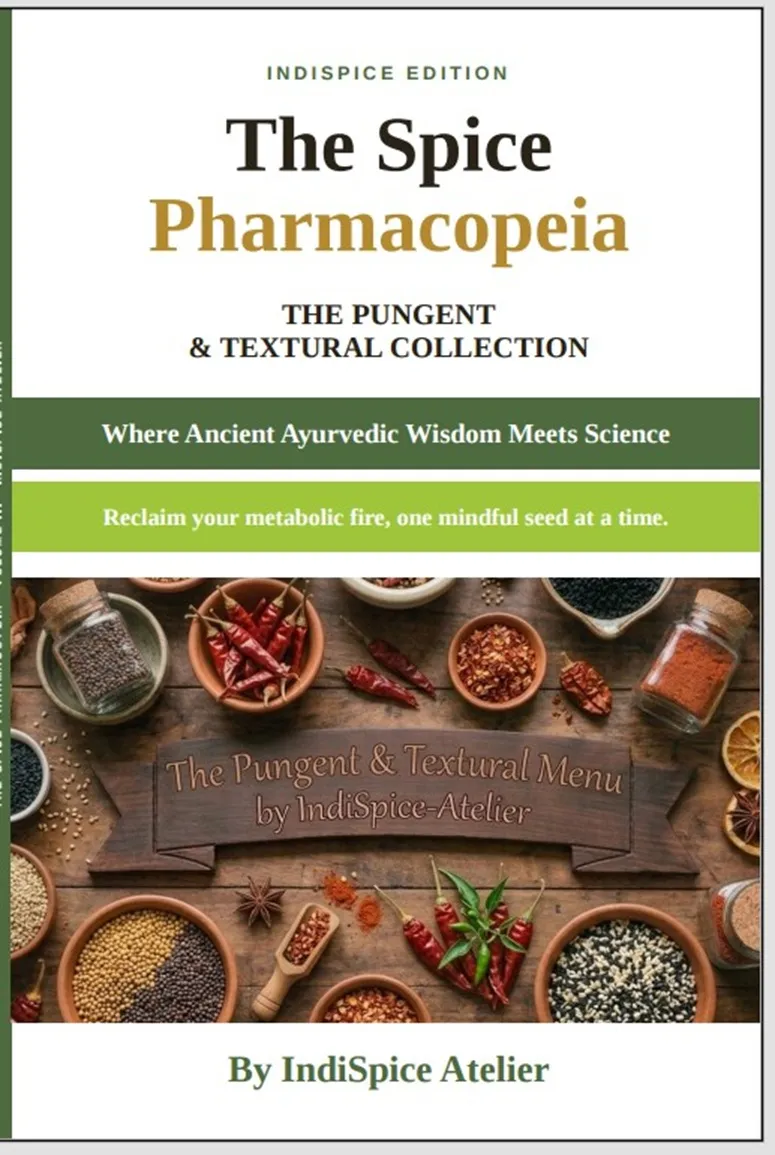
The Pungent & Textural Collection
Where ancestral wisdom meets modern science
Mustard, nigella, sesame and red chili — pungent catalysts and textural anchors for circulation, structure and metabolic heat.
Kindle eBook · Available on Amazon
By IndiSpice Atelier. Researched against peer-reviewed pharmacology.
As an Amazon Associate, IndiSpice Atelier earns from qualifying purchases.
What you'll learn
- Master the mustard tempering (tadka) that ruptures isothiocyanates into a thermogenic, circulation-sparking oil.
- Extract nigella's thymoquinone correctly — crushed and steeped under a seal to protect the volatile oils.
- Build a mineral-dense sesame gomasio that anchors the skeletal and nervous scaffolding.
- Use red chili's capsaicin to drive metabolic speed and peripheral blood flow without scorching it.
- Understand why pungent catalysts need textural anchors — and how sesame stabilises the volatile spices.
- Read the cardiometabolic and longevity case across the Ayurvedic Rasa–Virya–Vipaka framework.
Inside this volume
Volume III of The Spice Pharmacopeia, by IndiSpice Atelier, covers four structural spices — mustard seed (Brassica spp.), nigella/kalonji (Nigella sativa), sesame (Sesamum indicum) and red chili (Capsicum annuum) — pairing pungent circulatory catalysts with textural anchors to support circulation, structure and metabolic heat.
Mustard seed and red chili are the pungent catalysts. Mustard's isothiocyanates, released by dry heat or 'popping', drive thermogenesis and peripheral perfusion; red chili's capsaicin modulates metabolic speed and blood flow. Nigella (kalonji) and sesame are the structural anchors: nigella's thymoquinone supports systemic integrity and recovery, while sesame's mineral density targets the skeletal and nervous 'scaffolding' and stabilises the more volatile spices.
Layered together, the four facilitate cardiometabolic modulation — supporting Ojas (systemic immunity) and Prana (vital circulation) to build what the series calls 'adaptive scaffolding': the structural steadiness that lets the body bend without breaking. For the diaspora, nigella in particular represents the recovery of a gesture — the everyday seed-extraction habit that migration often displaced.
A taste of the kitchen
A few recipes from the book
Ingredients shown without quantities — the full, optimised recipes are in Volume III.
The Circulatory-Spark Mustard Tempering
A 10-second tadka that detonates mustard's circulatory oils into ghee.
Ingredients
- Black mustard seeds
- Premium ghee
Method
- Heat the ghee until it shimmers.
- Drop in the mustard seeds and cover immediately as they pop.
- Pour the activated tempering over lentils or vegetables to lock the aromatics in.
The Thymoquinone Daily Wellness Infusion
A simple nigella infusion that protects the volatile thymoquinone.
Ingredients
- Nigella (kalonji) seeds
- Filtered water
Method
- Lightly crush the nigella seeds to expose the inner oils.
- Steep in ~90°C water for five minutes under a sealed lid.
- Strain and drink on an empty stomach.
The Sesame & Mineral Gomasio
A mineral-dense daily condiment that anchors structure.
Ingredients
- Unhulled sesame seeds
- Coarse sea salt
Method
- Slow-toast the sesame in a dry pan to a deep golden hue.
- Grind with the salt to partially crack the seeds.
- Store in glass and use as a daily topper for grains.
Why this volume matters
Where Volume I restored metabolic fire and Volume II tuned digestion, Volume III moves into deep tissue — circulation and structure. These are the spices that keep the body's scaffolding perfused, mineralised and resilient under the erosive pressure of modern, stationary life.
The pairing is the point: pungent catalysts alone scatter; anchored by sesame and nigella, they become a steady, daily contribution to cardiometabolic health rather than a fleeting hit of heat.
Bring the apothecary back to your kitchen.
As an Amazon Associate, IndiSpice Atelier earns from qualifying purchases.
Frequently asked
Questions about Volume III
What is The Spice Pharmacopeia Volume III about?+
Volume III — The Pungent & Textural Collection — profiles four structural spices (mustard seed, nigella, sesame and red chili), pairing pungent circulatory catalysts with mineral-rich textural anchors for circulation, structure and metabolic heat.
Which spices does Volume III cover?+
Mustard Seeds (Rai/Sarso), Nigella (Kalonji), Sesame (Til) and Red Chili (Lal Mirch).
Why pair pungent spices with sesame and nigella?+
The pungent catalysts spark circulation but can be erratic; the textural anchors provide mineral density and stability, so the energy moves steadily through the tissues. The book explains the synergy in detail.
What is tempering, or tadka?+
Tempering is the technique of blooming whole spices — like popping mustard seeds — in hot fat to release their active oils. Volume III shows the precise timing that maximises the therapeutic effect.
Is Volume III suitable for beginners?+
Yes. It starts with sourcing and simple techniques like tempering and toasting, building to everyday condiments and dishes with no special equipment.
From the kitchen
Cook and read alongside this volume
High-Protein
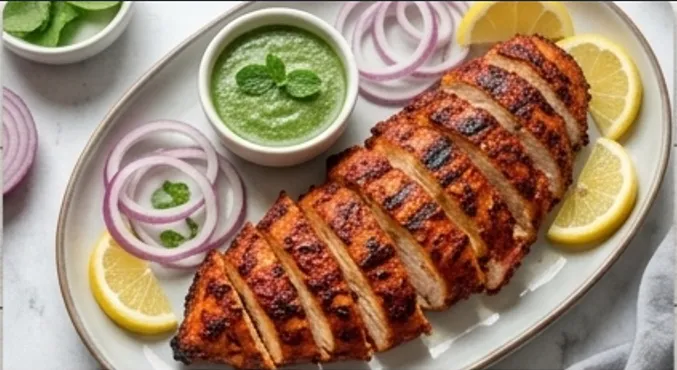
Air Fryer Tandoori Chicken Breast
Crispy, protein-packed tandoori chicken made in the air fryer with traditional Indian spices.
Appliances
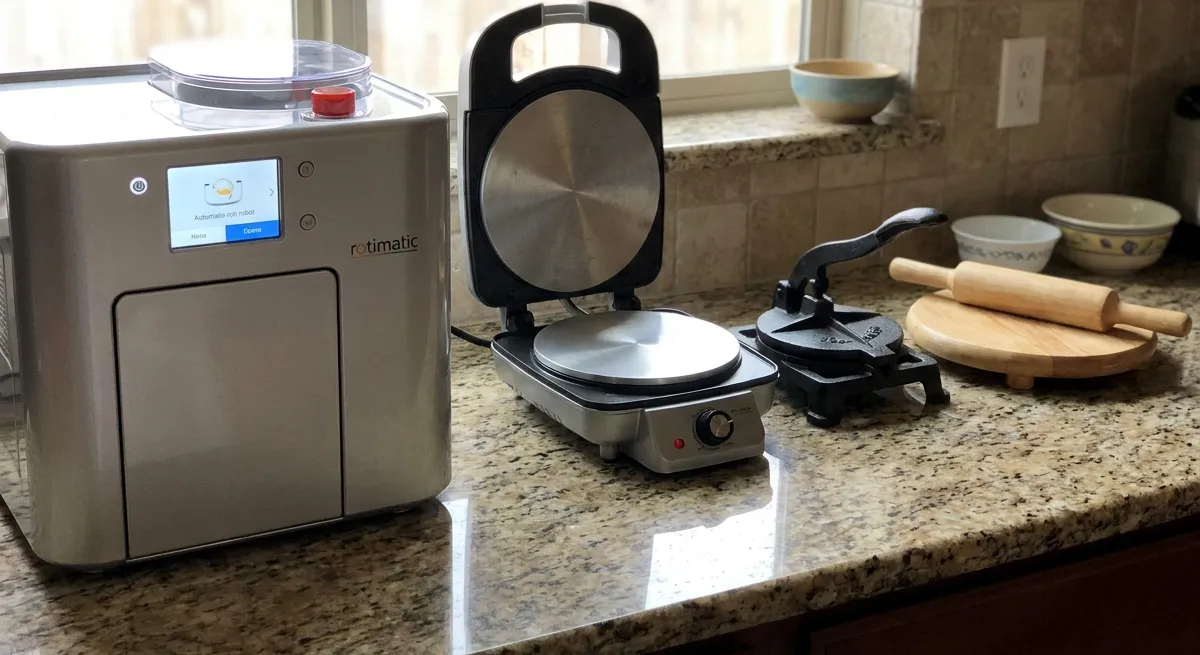
Automatic Roti Makers: Press, Robot, or Neither
Two machines share one name and the prices are twenty times apart — a $30 press that only flattens dough you already made, and a $1,500-plus robot that takes flour and water and hands you a finished roti. Which is which, whether either copes with real atta, and who should not buy one at all.
Technique
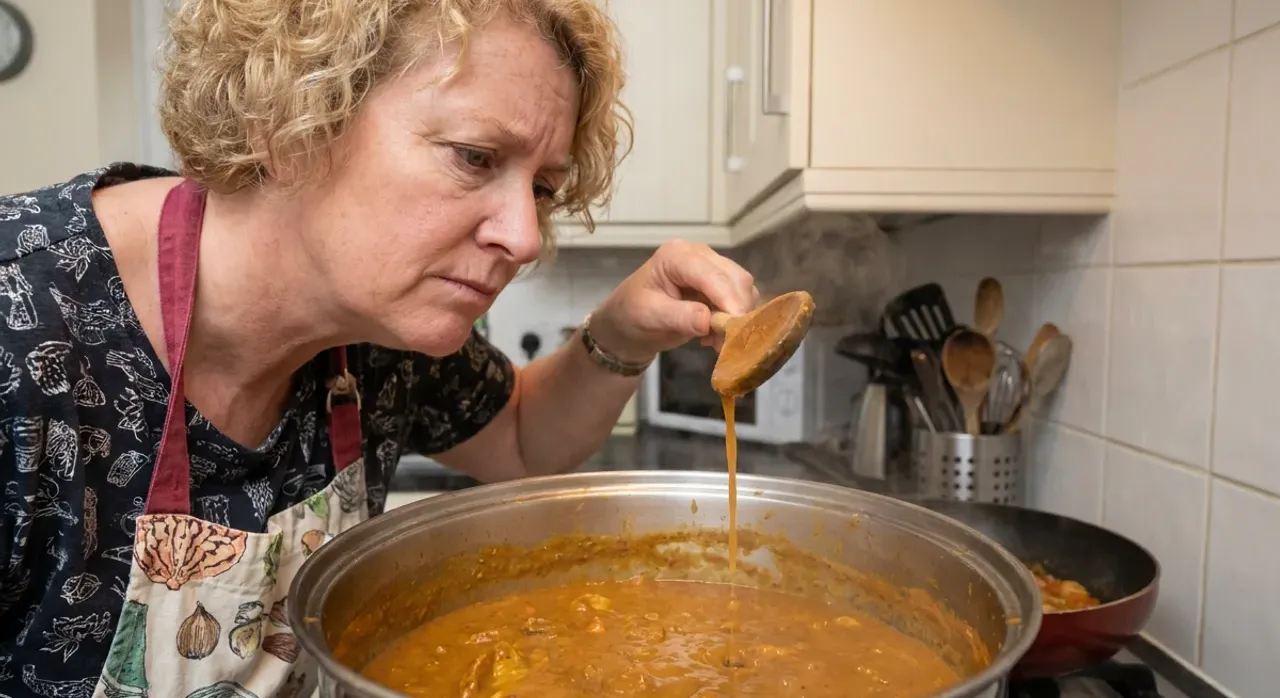
How to Thicken a Curry (Without Flour)
A watery curry is usually an unfinished base, not a missing thickener. Why the cornflour instinct makes it worse, the seven things Indian kitchens actually use, and how to add yoghurt without it splitting.
New: Google now lets you choose which sites it shows you first. One tap lifts our spice guides in your results — nobody else's — and you can undo it any time.
Continue the series