
Cayenne
Red Pepper Flakes Substitute: What to Use, and How Much
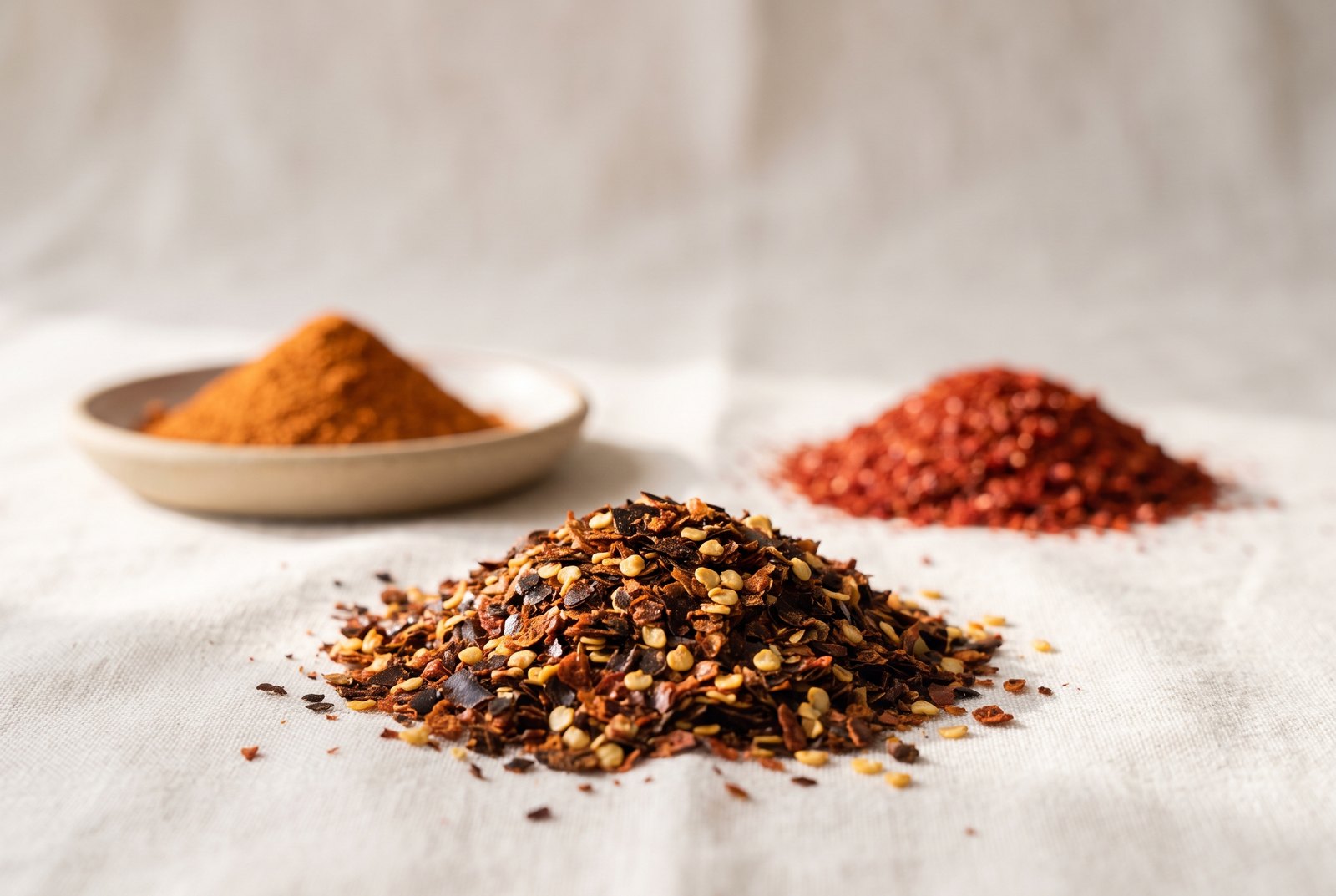
Quick answer
Use ground cayenne at a quarter of the amount. For 1 teaspoon of red pepper flakes, use 1/4 teaspoon of cayenne. Flakes are usually made from cayenne peppers to begin with, so you are changing the texture, not the flavour.
That swap is right for anything cooked into a dish — a pasta sauce, a chilli, a marinade, a stir-fry.
It is wrong for anything sprinkled on top. For a finished pizza or a bowl of noodles, reach for another flake instead: gochugaru, Aleppo pepper or Calabrian flakes, all at roughly equal amounts.
Most substitute guides give you a list. The list is not the hard part. The hard part is that red pepper flakes are doing two completely different jobs depending on when they go in, and the right stand-in changes with the job.
The question to ask first: in, or on?
Cooked in. The flakes go into hot oil, a sauce, a rub or a braise. They soften, bleed their heat into the fat, and disappear. Nobody is going to bite one. Here, texture does not matter — only heat and flavour. A powder is fine, and often better, because it spreads evenly.
Sprinkled on. The flakes go onto a finished plate: pizza, pasta, avocado toast, garlic bread, a bowl of ramen. They stay whole. You see them and you bite them. Here, texture is most of the point — and a powder will let you down.
The rule: cooked in, swap for a powder. Sprinkled on, swap for another flake. Get this backwards and the dish is not just milder, it is wrong in the mouth.
What you are actually replacing
Standard crushed red pepper sits at roughly 15,000 to 30,000 Scoville heat units, and it is nearly always a cayenne-type chilli with the seeds left in.
| Stand-in | Roughly | Compared to flakes | Best for |
|---|---|---|---|
| Red pepper flakes | 15,000–30,000 SHU | — | — |
| Ground cayenne | 30,000–50,000 SHU | about four times stronger by spoon | cooked in |
| Gochugaru (Korean) | 1,500–10,000 SHU | milder, fruitier, smoky | sprinkled on |
| Aleppo pepper | 8,000–10,000 SHU | milder, fruity, slightly salty | sprinkled on |
| Calabrian flakes | 15,000–30,000 SHU | about the same | either |
| Ground chipotle | 5,000–10,000 SHU | milder, strongly smoky | cooked in |
| Hot paprika | 500–2,000 SHU | about a tenth | colour, not heat |
| American chili powder | 500–1,000 SHU | about a twentieth | cooked in, savoury only |
| Hot sauce | varies wildly | adds liquid and acid | sauces and soups |
Note the gap between cayenne and flakes. It is not that cayenne is a hotter chilli — it is usually the same chilli. It is that a spoonful of fine powder packs in far more pepper than a spoonful of coarse flakes with air and seeds between them.
The swaps, by amount
Every amount below replaces 1 teaspoon of crushed red pepper flakes.
Ground cayenne — 1/4 teaspoon
The closest match in flavour, because it is very often the same pepper. Add it early, into oil or liquid, so it disperses. Added late to a finished sauce it can taste raw and slightly bitter.
Best for: pasta sauce, chilli, curry, marinades, rubs, soup. Avoid for: anything sprinkled on at the table.
Gochugaru — 1 teaspoon, sometimes a little more
Korean chilli flakes, coarse and bright red, with a fruity sweetness and a gentle smoke behind them. Meaningfully milder than crushed red pepper, so at equal amounts expect less burn — go to 1 1/2 teaspoons if you want to match the heat.
Best for: sprinkling on anything, noodles, eggs, stews. Watch for: it is sold both coarse and fine. Buy coarse if you are replacing flakes.
Aleppo pepper (pul biber) — 1 teaspoon
Dark red, slightly oily, faintly salty, with a raisin-like fruitiness. It is the best-tasting swap on this list and the one most likely to make you stop buying ordinary flakes.
Best for: finishing — hummus, flatbread, roast vegetables, eggs, yoghurt. Watch for: many brands add salt. Taste before you salt the dish.
Calabrian chilli flakes — 1 teaspoon
Italian, and the closest thing to a straight one-for-one replacement, because standard “pizza pepper” flakes are trying to be roughly this in the first place.
Best for: anything at all. This is a like-for-like swap.
Ground chipotle — 1/2 teaspoon
Smoked, dried jalapeño, ground. Milder than cayenne but with a heavy smoke that walks into the front of the dish and takes over.
Best for: chilli, beans, barbecue rubs, tomato sauces. Avoid for: delicate dishes, anything Italian, anything where smoke would be strange.
American chili powder — 2 teaspoons
A blend, not a chilli: mild ground chillies with cumin, oregano, garlic and usually salt. It will get you some heat, but it brings a whole flavour profile with it.
Best for: chilli con carne, beans, taco fillings, anything that already wanted cumin. Take note: two teaspoons of a salted blend is a real amount of salt. Take some out of the recipe. Avoid for: Italian food, Indian food, or any finishing sprinkle.
Hot paprika — 2 teaspoons, and accept less heat
You would need about ten times as much to match the burn, which is far too much paprika. Use two teaspoons, get a warm background heat and a lot of red colour, and stop there.
Best for: stews and braises where colour is welcome.
Fresh chilli — half a small one, finely chopped
A bright, sharp, green-tasting heat quite unlike the deep dried one. Not the same flavour, but often a very good dish.
Best for: stir-fries, dressings, salsas, anything already fresh-tasting. Watch for: it adds moisture. Fine in a wet dish, wrong in a dry rub.
Hot sauce — 1/2 teaspoon, then taste
The emergency option, and a perfectly honest one for a sauce or a soup. It brings vinegar and salt as well as heat, so it will brighten the dish whether you wanted that or not.
Avoid for: dry rubs, bakes, anything where extra liquid matters.
The two swaps that quietly ruin a dish
Sweet or smoked paprika used for heat. They have essentially none. You will keep adding, the dish will turn deep red and taste strongly of paprika, and it still will not be spicy. If the recipe wanted heat, these do not provide it.
Any powder as a finishing sprinkle. Powder does not behave like flakes on a hot, wet, cheesy surface. It clumps, it sticks in patches, and uncooked chilli powder has a raw, dusty taste that whole flakes simply do not have. If the recipe says “sprinkle over before serving”, use a flake or use nothing.
When to just leave it out
Worth saying plainly, because most substitute guides never do: in the large majority of recipes, red pepper flakes are optional.
They are a seasoning, not a structural ingredient. No sauce splits without them and no bake fails. Leave them out and you get the same dish, milder.
If you are cooking for other people, this is often the better call anyway — make it mild, and put the jar on the table. Everyone gets the heat they actually want, which is never the same number.
Related guides
- Cayenne pepper substitute — the same problem in the other direction, for when it is the cayenne you have run out of.
- Chili flakes vs red pepper flakes — whether the two jars in your cupboard are actually different things.
- Chili powder substitute — for when the recipe wanted the American blend.
- Which chilli powder to buy — how to read a chilli label, and what is worth owning.
Frequently asked questions
What is the best substitute for red pepper flakes?+
Ground cayenne, at a quarter of the amount. Red pepper flakes are usually made from cayenne peppers in the first place, so the flavour is already right and only the texture changes. For 1 teaspoon of flakes, use 1/4 teaspoon of cayenne. This works well when the flakes are cooked into a dish, and poorly when they were meant to sit on top of it.
How much cayenne equals 1 teaspoon of red pepper flakes?+
About 1/4 teaspoon. Flakes are coarse and include seeds and pith, so by volume they carry roughly a quarter of the heat of the same spoonful of fine cayenne powder. Start at 1/4 teaspoon, taste, and add more — you cannot take it back out.
Can I use chili powder instead of red pepper flakes?+
In a savoury pot, yes, at about twice the amount. But American chili powder is a blend, so you are also adding cumin, oregano, garlic and usually salt. Reduce the salt in the recipe to match. Do not use it as a finishing sprinkle — it tastes raw and dusty uncooked.
What can I use instead of red pepper flakes on pizza?+
Another flake, not a powder. Gochugaru, Aleppo pepper or Calabrian flakes all sit on the surface the way crushed red pepper does and taste right raw. A powder sprinkled on a finished pizza clumps, sticks to the cheese in patches and tastes dusty.
Is paprika a good substitute for red pepper flakes?+
Only hot paprika, and only for heat you barely notice. Hot paprika is roughly a tenth as strong as flakes, so you would need ten times as much, which floods the dish with paprika flavour and colour. Sweet and smoked paprika have almost no heat at all — they replace the colour, not the bite.
Can I leave red pepper flakes out of a recipe?+
Almost always, yes. In most recipes flakes are a seasoning rather than a structural ingredient, so leaving them out gives you a milder version of the same dish and nothing breaks. Put a jar of flakes or a bottle of hot sauce on the table instead and let people add their own.
New: Google now lets you choose which sites it shows you first. One tap lifts our spice guides in your results — nobody else's — and you can undo it any time.
More on Cayenne
Cayenne Pepper Substitute: What to Use, and How Much
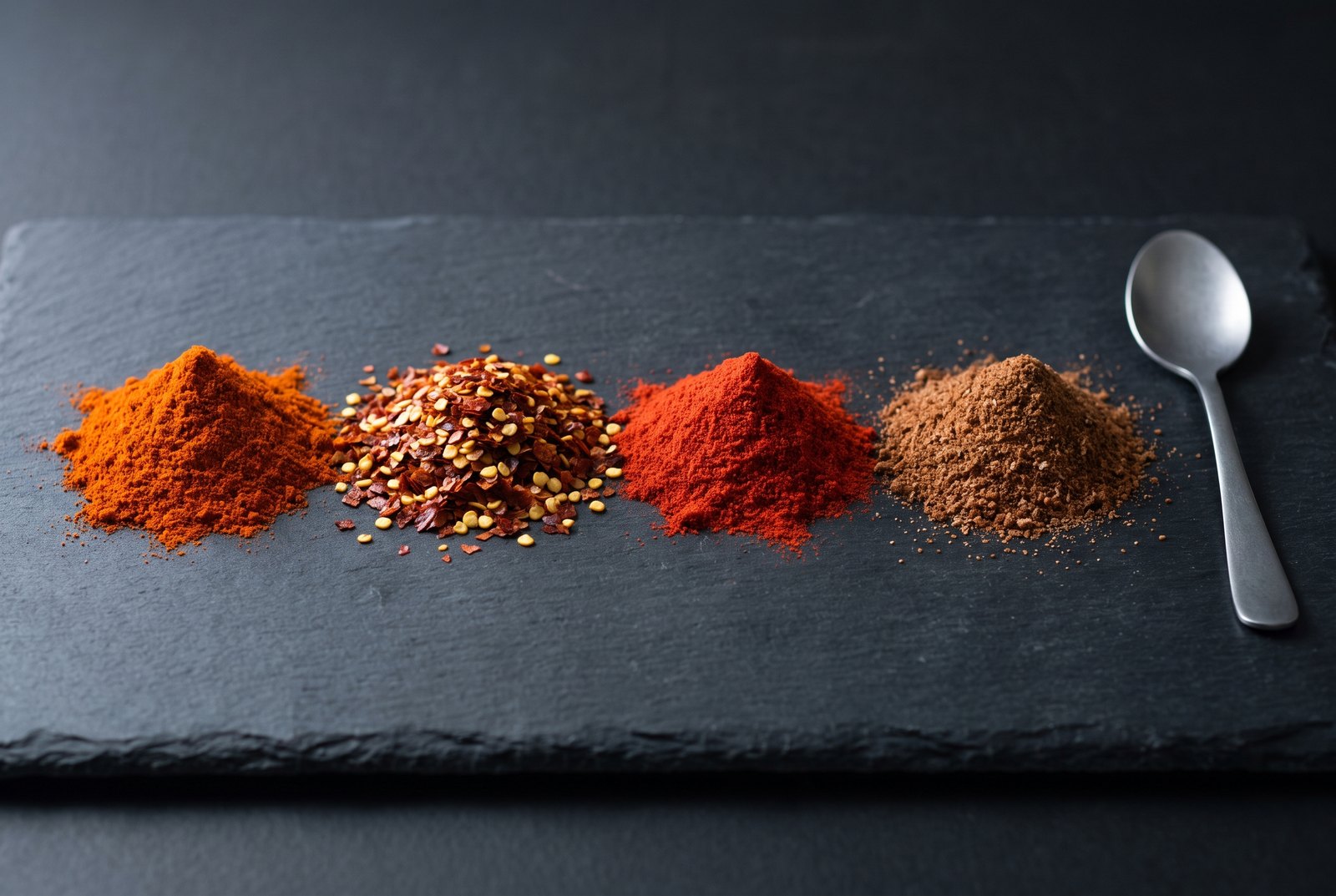
The best cayenne pepper substitutes with exact swap amounts — red pepper flakes, hot paprika, chili powder, gochugaru and hot sauce — by dish, plus the two swaps that quietly ruin a recipe.
Cayenne vs Chili Powder vs Paprika: Which Red Powder Do You Need?
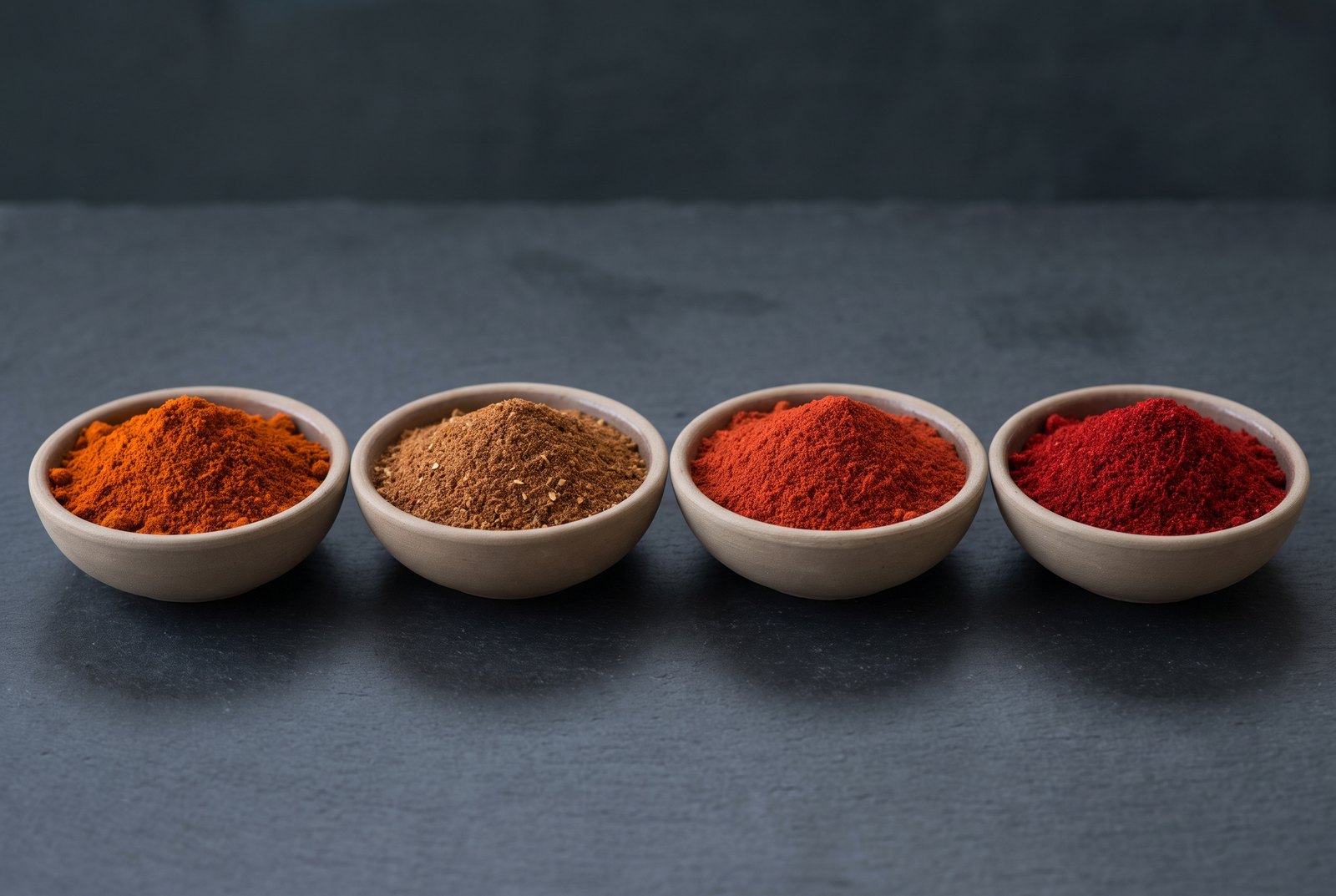
Three red powders, one constant mix-up. What cayenne, chili powder, paprika and Indian red chilli powder each are, how much hotter one is than the next, and which two jars are worth owning.
Chili Flakes vs Red Pepper Flakes: Are They the Same Thing?
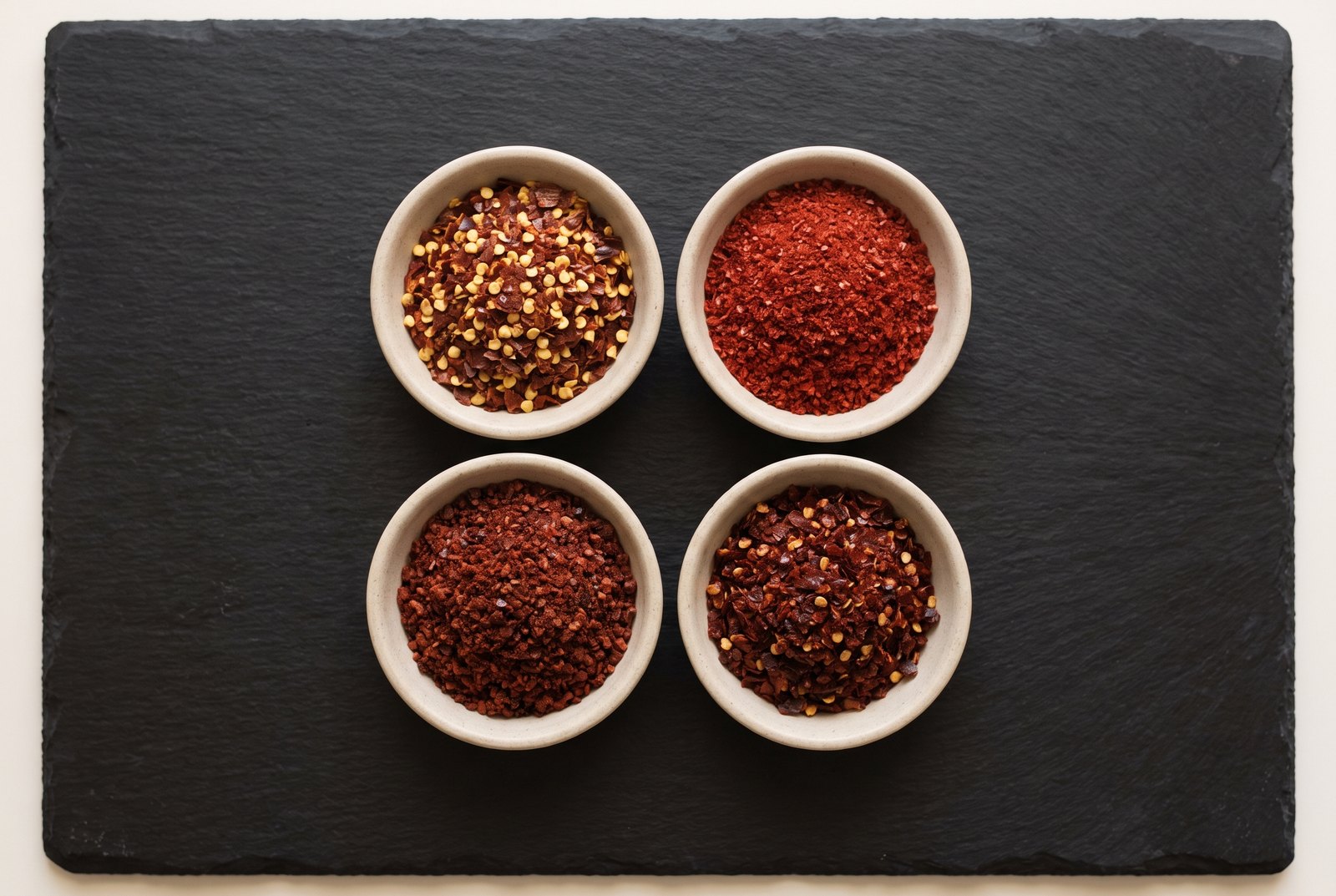
In an American kitchen they are the same jar. In a British one they are often not. What the two labels mean, why gochugaru and Aleppo are also sold as chilli flakes, and when swapping them actually matters.