
Cayenne
Which Chili Powder to Buy — and Which One for Chilli
Quick answer
Buy a salt-free blend that names its chillies on the label. Ancho-based for depth, no anti-caking agent, in the smallest jar you will finish inside a year.
For chilli con carne, buy a dark (ancho-heavy) blend and use two to three tablespoons in a pot for six — more than most recipes tell you to.
If you cook chilli often, the real upgrade is different: buy single-chilli ancho powder and add your own cumin, oregano and garlic. That is the same purchase, minus the salt and minus somebody else’s ratio.
Chili powder is a cheap product where the expensive versions are genuinely better, and where the difference is easy to see on the label before you taste anything. Four things separate a good jar from a bad one.
1. Salt — the one that matters most
Most supermarket chili powder contains salt. Some contain a lot.
That is a problem in one direction only: you cannot take it out. A recipe seasoned around a salted blend gives you no control over how salty the dish becomes, and it is the reason a pot of chilli sometimes tastes over-seasoned and under-flavoured at the same time — you added more powder chasing flavour and got more salt instead.
Buy salt-free and salt the dish yourself. The first time you do it the food will taste under-salted, because it is. Add salt at the end, taste, and you will not go back.
2. What is actually in it
A good label names the chillies. A poor one says “chili pepper” and leaves it there.
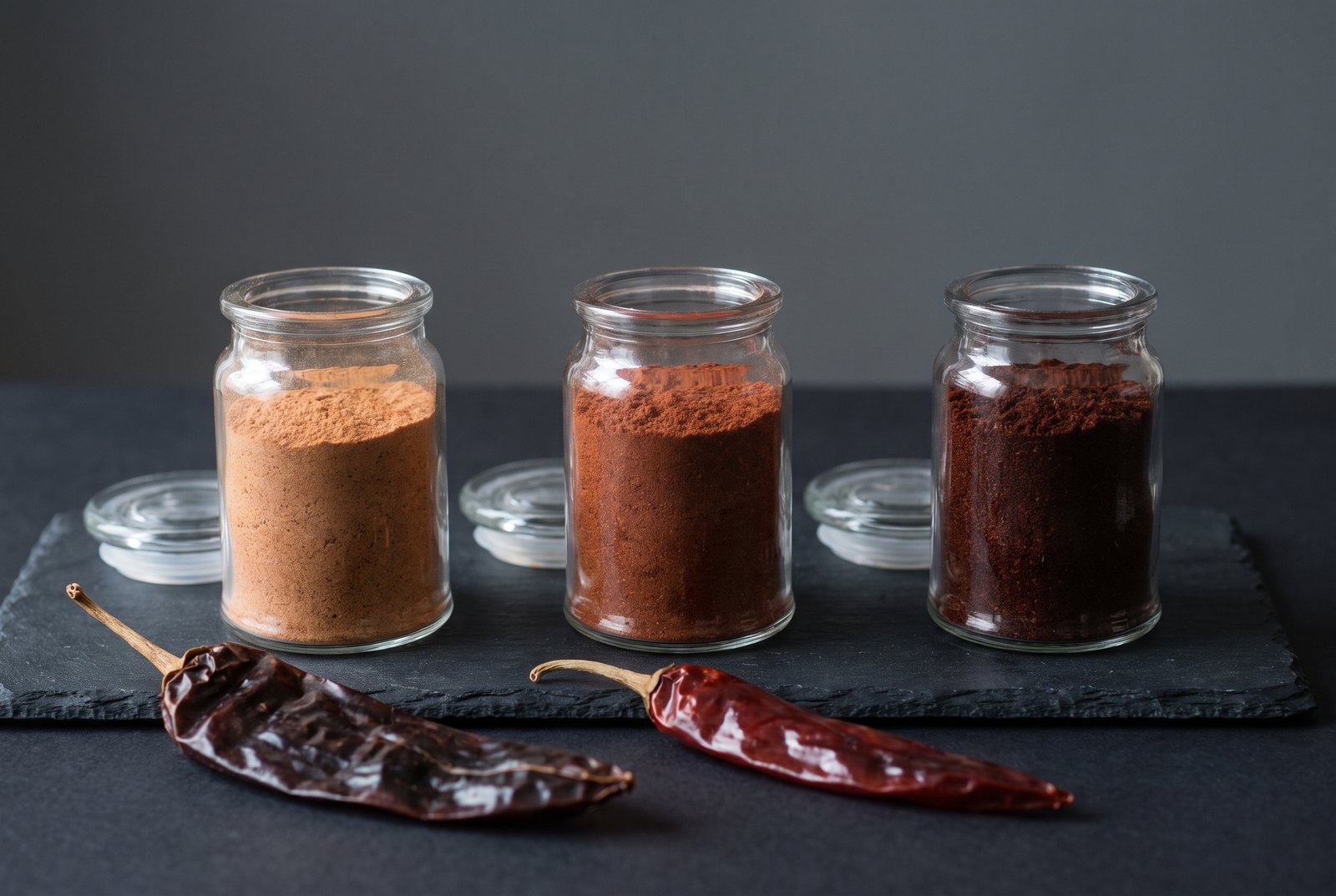
- Ancho — dried poblano. Deep, sweet, faintly raisin-like. The backbone of a dark blend and the best base for chilli con carne.
- New Mexico — brighter, earthier, a little more heat.
- Guajillo — tangy and mildly fruity, good in anything with tomato.
- Chipotle — smoked jalapeño. Not usually the base, excellent as part of one.
After the chillies come cumin, oregano, garlic and onion. That is the blend. Anything else — sugar, cornflour, “natural flavour”, silicon dioxide as an anti-caking agent — is filler, and it is diluting the part you are paying for.
Look out for “chili seasoning” and taco seasoning packets. They are the same idea with more salt, sugar and thickener added. Convenient, but do not treat them as the same product on the shelf.
3. Dark or regular
Dark chili powder simply uses more ancho. It is deeper, sweeter, slightly more raisin-like — and no hotter.
For a long-simmered pot it is usually the better jar. For quick weeknight tacos the difference is small enough not to worry about. Neither is a mistake.
4. How old it is
Ground chilli does not spoil, it fades. The pigments and the aromatic oils go first, over roughly a year, and much faster in a warm cupboard above the hob or a jar sitting in daylight.
The test is your nose. Open it and inhale: a good blend smells of sweet dried chilli and cumin from arm’s length. If it smells of nothing much, no quantity will fix the dish.
Which means the big tub is usually a false economy. Buy the small jar and finish it.
A word on what is actually on the shelf. A blend that is salt-free and names its chillies is harder to find than it should be, because salt is cheap and “chili pepper” is vague on purpose. We would rather link nothing here than link a jar this page argues against. Read the two lines on the back — the ingredients, and the order they are in — and if salt appears before the chilli, put it down. The section below is the way around the problem entirely.
Chili powder for chilli — how much, and when
The most common mistake with a pot of chilli is not the brand. It is the amount.
Chili powder is mostly mild chilli and seasoning, not heat — around 500 to 1,000 Scoville units, against cayenne’s 30,000 to 50,000. It is closer to a curry powder than to a hot sauce, and it needs to be used at curry-powder quantities.
For a pot serving six:
- 2 to 3 tablespoons of chili powder in total
- two thirds of it early, bloomed in the fat with the onions for a minute before the liquid goes in, which is what pulls the colour and flavour out of it
- the last third in the final ten minutes, so the top notes are still there when it reaches the table
- heat, if you want any, from cayenne added separately — a quarter teaspoon at a time
That last point is the useful one. Season with the blend, heat with the cayenne, and the two decisions stop fighting each other.
The upgrade: buy the chillies, not the blend
If you make chilli more than a few times a year, the better purchase is not a better blend. It is single-chilli ancho powder, or whole dried anchos and a cheap spice grinder.
You then build the blend in the pot: ancho for the body, your own cumin, oregano, garlic, and cayenne to taste. It costs about the same, contains no salt or filler, and lets you push the cumin up without pushing the salt up with it. The full ratio is here — the same mix that works as a substitute is simply a better chili powder.
Whole chillies also keep far longer than ground ones, which solves the fading problem at the same time.
The base, if you want to try it: Frontier ancho chili powder is ground ancho and nothing else — one ingredient, no salt, the chilli named on the front, in a jar small enough to finish. Add your own cumin, oregano, garlic and cayenne on top of it. As an Amazon Associate we may earn from qualifying purchases.
What not to bother with
- Enormous tubs. Ground chilli is fading from the day it is packed.
- “Chili powder” with no chilli named. If the maker will not say, assume the cheapest available.
- Anything with sugar or cornflour high in the list. That is a seasoning packet wearing a spice jar.
- Paying a premium for heat. The blend is not where heat comes from, and cayenne costs almost nothing.
The bottom line
Buy salt-free, with the chillies named, dark if it is going into chilli, in a jar small enough to finish. Use two to three tablespoons in a pot for six, in two additions, and get your heat from cayenne rather than from a hotter blend. If chilli is a regular habit, buy ancho powder and mix your own — it is the same shopping trip and a better pot.
Related reading:
Frequently asked questions
What is the best chili powder to buy?+
A salt-free blend with the chillies named on the label — ancho, New Mexico or guajillo — and no anti-caking agent. Salt-free matters most: it lets you season the dish yourself instead of inheriting whatever the blender decided, and it is the single biggest difference between a good jar and a cheap one.
What chili powder is best for chilli con carne?+
A dark, ancho-based blend, used generously — a big pot wants two to three tablespoons, not two teaspoons. If you want the best version, use a single-chilli ancho powder as the base and add your own cumin, oregano and garlic, so you can push the cumin up without pushing the salt up with it.
Is dark chili powder different from regular chili powder?+
Yes, mildly. Dark chili powder uses a higher proportion of ancho, which is a dried poblano, so it is deeper, sweeter and a little more raisin-like. It is not hotter. In a long-cooked pot the dark version usually tastes better; in a quick taco filling either works.
How much chili powder do I use for a pot of chilli?+
Far more than most recipes suggest. For a pot serving six, two to three tablespoons is normal — chili powder is mostly mild chilli and spices, not heat, so it seasons rather than burns. Add two thirds early so it cooks, and the rest in the last ten minutes so it still tastes fresh.
Does chili powder go off?+
It does not spoil, but it fades. Ground chilli loses colour and aroma over about a year and much faster in a warm, lit spot. A jar that has gone brown and smells of nothing but dust will not season anything, however much you add. Buy the small jar and finish it.
Is chili powder the same as chilli powder in a British or Indian recipe?+
No. In the United States, chili powder is a mild seasoning blend containing cumin and oregano. In British and Indian recipes, chilli powder means pure ground chilli and is several times hotter. Check which cuisine the recipe comes from before you measure a tablespoon of anything.
New: Google now lets you choose which sites it shows you first. One tap lifts our spice guides in your results — nobody else's — and you can undo it any time.
More on Cayenne
Cayenne Pepper Substitute: What to Use, and How Much
The best cayenne pepper substitutes with exact swap amounts — red pepper flakes, hot paprika, chili powder, gochugaru and hot sauce — by dish, plus the two swaps that quietly ruin a recipe.
Cayenne vs Chili Powder vs Paprika: Which Red Powder Do You Need?
Three red powders, one constant mix-up. What cayenne, chili powder, paprika and Indian red chilli powder each are, how much hotter one is than the next, and which two jars are worth owning.
Chili Flakes vs Red Pepper Flakes: Are They the Same Thing?
In an American kitchen they are the same jar. In a British one they are often not. What the two labels mean, why gochugaru and Aleppo are also sold as chilli flakes, and when swapping them actually matters.