
Cinnamon
Cinnamon Side Effects: The Coumarin Problem Nobody Mentions
Quick answer
Cinnamon as a seasoning is safe and this page is not about that. It is about the two situations where cinnamon genuinely carries risk: taking it daily by the spoonful, and taking it as a supplement.
The specific problem is coumarin, a compound in cassia — the bark sold as cinnamon in most supermarkets — that stresses the liver at sustained high intakes. Ceylon cinnamon contains only traces of it.
The single most useful thing on this page is that the answer is not “take less cinnamon”. It is change which cinnamon.
Most spice side-effect pages have to strain to find a risk. Cinnamon does not. It has one real, documented, well-characterised problem, and almost nobody selling cinnamon mentions it.
The distinction that decides everything
There are two barks sold as cinnamon, and this whole page turns on which one you have.
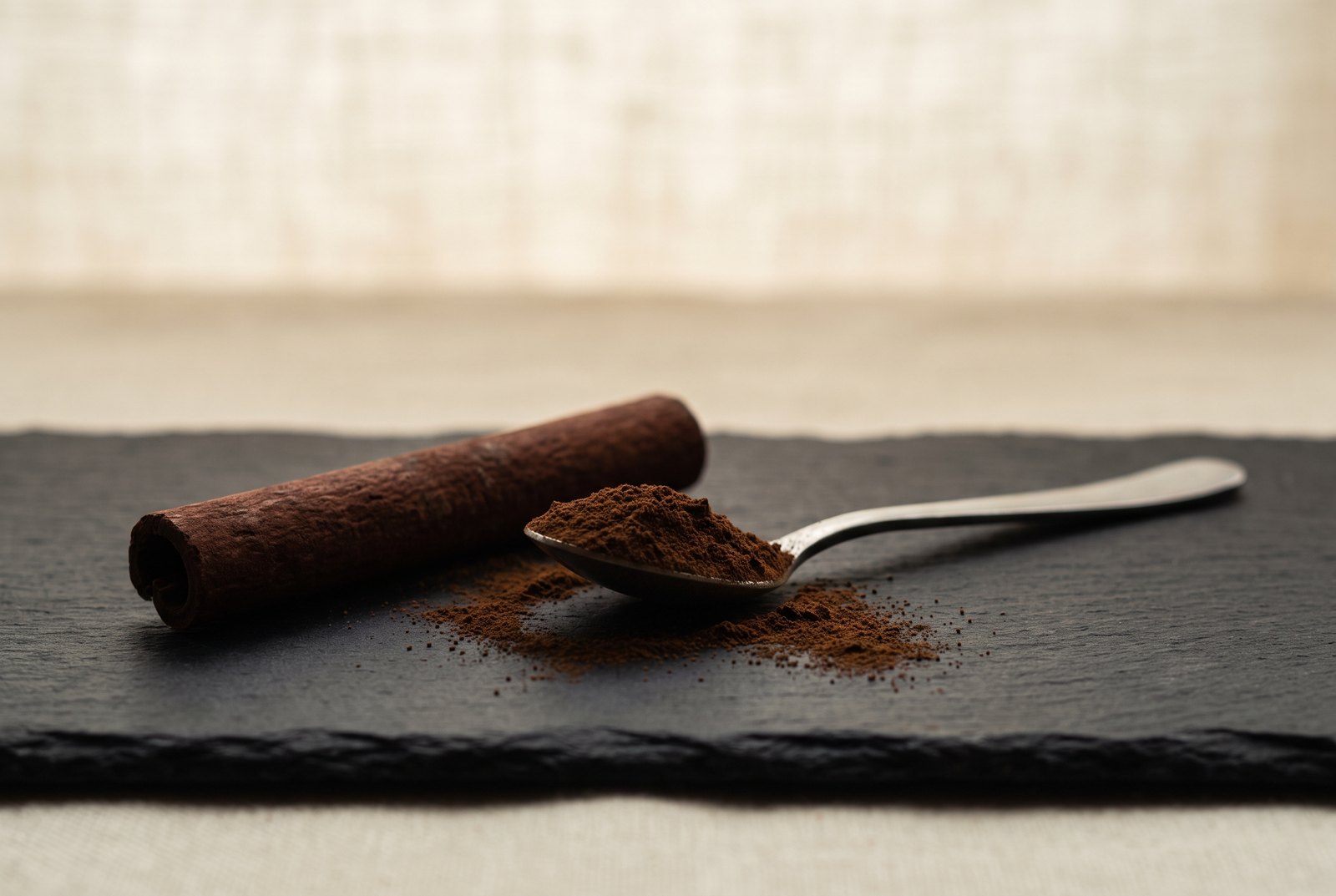
Cassia — dark, hard, one thick hollow tube, cheap, and what fills the standard supermarket jar. High in coumarin.
Ceylon — pale, fragile, many thin layers, more expensive, and always labelled as Ceylon because the producer paid for it. Trace coumarin.
If you do not know which you own, the full comparison has a two-second test using a stick from your own cupboard.
Coumarin — established, and the reason this page exists
Coumarin occurs naturally in cassia bark. At sustained high intake it is toxic to the liver, and this is not a fringe finding — it is why European food-safety authorities set a tolerable daily intake for it and why several countries have issued advice about cassia specifically.
The important word is sustained. This is a cumulative, daily-over-time concern, not an acute poison. Nobody has been hurt by cinnamon on a bun.
What makes cinnamon unusual is that it is one of the very few kitchen spices people take deliberately, daily, in doses far above cooking amounts — the blood-sugar habit, the cinnamon-water habit, the heaped-spoon-in-coffee habit. That pattern, not baking, is where the arithmetic starts to matter, and the people most likely to be doing it are the ones who read that cinnamon helps their blood sugar.
There are documented case reports of liver injury associated with heavy cassia or cinnamon supplement use, and they resolve when it stops.
We will not tell you your limit. It depends on your weight, your liver, and what else you take, and a website that hands out a number is guessing. Read the jar. Ask a pharmacist. Or sidestep it: Ceylon.
Mouth and throat irritation — common, mild, easy to miss
Cinnamaldehyde is a contact irritant, and cinnamon is one of the more frequent causes of oral irritation from a food.
It shows up as burning, white patches, or ulcers on the inside of the cheeks and tongue. The usual culprits are not cooking at all — they are cinnamon gum, sweets, mouthwash and toothpaste, where the flavouring is concentrated and sits against the tissue for a long time.
It resolves on its own once exposure stops. If it does not, that is a dentist’s question.
Reflux and stomach upset — real at high doses
Large amounts of cinnamon, particularly cassia, can worsen heartburn and cause nausea. This is dose-related and unremarkable; it is the same story as any strong spice.
If you have GERD and you have started a daily cinnamon habit, this is the first thing to suspect.
Medicine interactions — the practical risk for most people
Diabetes medication. Cinnamon’s blood-sugar effect is small, but it points in the same direction as your prescription. Adding it on top without telling your prescriber is how people end up with readings they cannot explain. This is a conversation, not a prohibition.
Blood thinners. This one is routinely overstated. Coumarin is not warfarin — warfarin is a synthetic derivative, and cinnamon does not act as an anticoagulant. But if you take warfarin or another blood thinner and you are consuming cassia in daily quantity, mention it, because the liver is metabolising both.
Anything hepatically cleared. If you take a medication that is hard on the liver, adding a daily coumarin load is not a good pairing. Ask.
Before surgery. Standard advice for any supplement is to stop two weeks ahead. Cinnamon supplements are no exception.
Cinnamon and pregnancy
Cinnamon as food is food, and pregnant people eat cinnamon buns without incident.
Concentrated supplements and daily spoonfuls are a different question, and it is not one we will answer. There is not enough good data, and the advice belongs to a midwife or doctor who knows the pregnancy. The same goes for breastfeeding.
The “how much” question, answered honestly
People arrive at this page wanting a number, and we understand why. Here is what we will say instead.
Cooking amounts are not the issue. A teaspoon in a cake shared between eight people is nowhere near anything.
The daily-spoonful habit is the issue, and only with cassia.
The tolerable coumarin intake is a real published figure, and a heaped teaspoon of cassia can approach it for a smaller adult. Cassia’s coumarin content also varies a great deal between batches and origins, which is exactly why a personal number from a stranger is worthless.
Ceylon removes the calculation. That is not a sales pitch — it is why this page exists in the form it does.
Who should be careful
- Anyone with liver disease — this is the clearest one
- Anyone on diabetes medication, until they have asked
- Anyone on blood thinners, as a matter of disclosure
- Anyone taking cinnamon supplements rather than eating the spice
- Anyone pregnant or breastfeeding taking more than culinary amounts
- Anyone with recurring mouth ulcers, who should look at their gum and toothpaste first
The bottom line
Cinnamon in food is safe. Cinnamon as a daily supplement or a daily spoonful is a different product with a different risk profile, and the risk has a name: coumarin, in cassia.
If cinnamon has become a habit rather than a seasoning for you, the fix is not restraint. It is buying the other bark.
This page sells nothing, on purpose. If you want to act on it, the comparison guide tells you what you are holding, and which cinnamon to buy tells you what to replace it with.
Frequently asked questions
What are the side effects of too much cinnamon?+
The one that matters is liver stress from coumarin, and it applies to cassia rather than Ceylon. Below that, large amounts can irritate the mouth and cause sores, worsen reflux, and interact with diabetes and blood-thinning medication. Cinnamon in ordinary cooking amounts causes none of this.
How much cinnamon is too much in a day?+
We do not publish a personal figure, because the honest answer depends on which cinnamon you have, how much you weigh and what else you take. European food-safety bodies set a tolerable daily coumarin intake that a heaped teaspoon of cassia can approach for a smaller adult. Read the label on your jar and ask a pharmacist. Switching to Ceylon removes the question rather than answering it.
Is Ceylon cinnamon safer than cassia?+
Yes, on this specific point. Ceylon contains only trace coumarin where cassia contains a great deal, so the liver concern effectively disappears. Ceylon is not risk-free in other respects — it can still irritate the mouth, still interacts with the same medicines — but the one documented serious risk is tied to cassia.
Can cinnamon cause mouth sores?+
Yes, and it is more common than people expect. Cinnamaldehyde is a known contact irritant, and it turns up most often with cinnamon-flavoured gum, sweets and toothpaste rather than cooking. It presents as a burning sensation, white patches or ulcers inside the cheeks and clears up when the exposure stops.
Who should avoid cinnamon supplements?+
Anyone with liver disease, anyone on diabetes medication without speaking to their prescriber first, anyone on blood thinners, anyone due surgery in the next fortnight, and anyone pregnant or breastfeeding who has not been told otherwise by their own clinician. Cinnamon in food remains food for all of these groups.
New: Google now lets you choose which sites it shows you first. One tap lifts our spice guides in your results — nobody else's — and you can undo it any time.
More on Cinnamon
Ceylon Cinnamon Capsules: How to Read the Label Before You Buy
What to look for in a Ceylon cinnamon supplement — why the species on the label decides everything, extract versus whole bark, the fillers to avoid, third-party testing, and when capsules are the wrong answer entirely.

Ceylon vs Cassia vs Saigon Cinnamon: Which One Do You Have?
The three cinnamons compared — how Ceylon, cassia and Saigon differ in taste, appearance and coumarin content, how to tell them apart in the jar, and which one to use for what.

Cinnamon Tea Benefits: What It Does, and How to Make It Properly
What cinnamon tea actually does — the blood sugar evidence read honestly, why the stick you use changes the answer, how to brew it so it tastes of something, and who should be careful.