
Cinnamon
Cinnamon Tea Benefits: What It Does, and How to Make It Properly
Quick answer
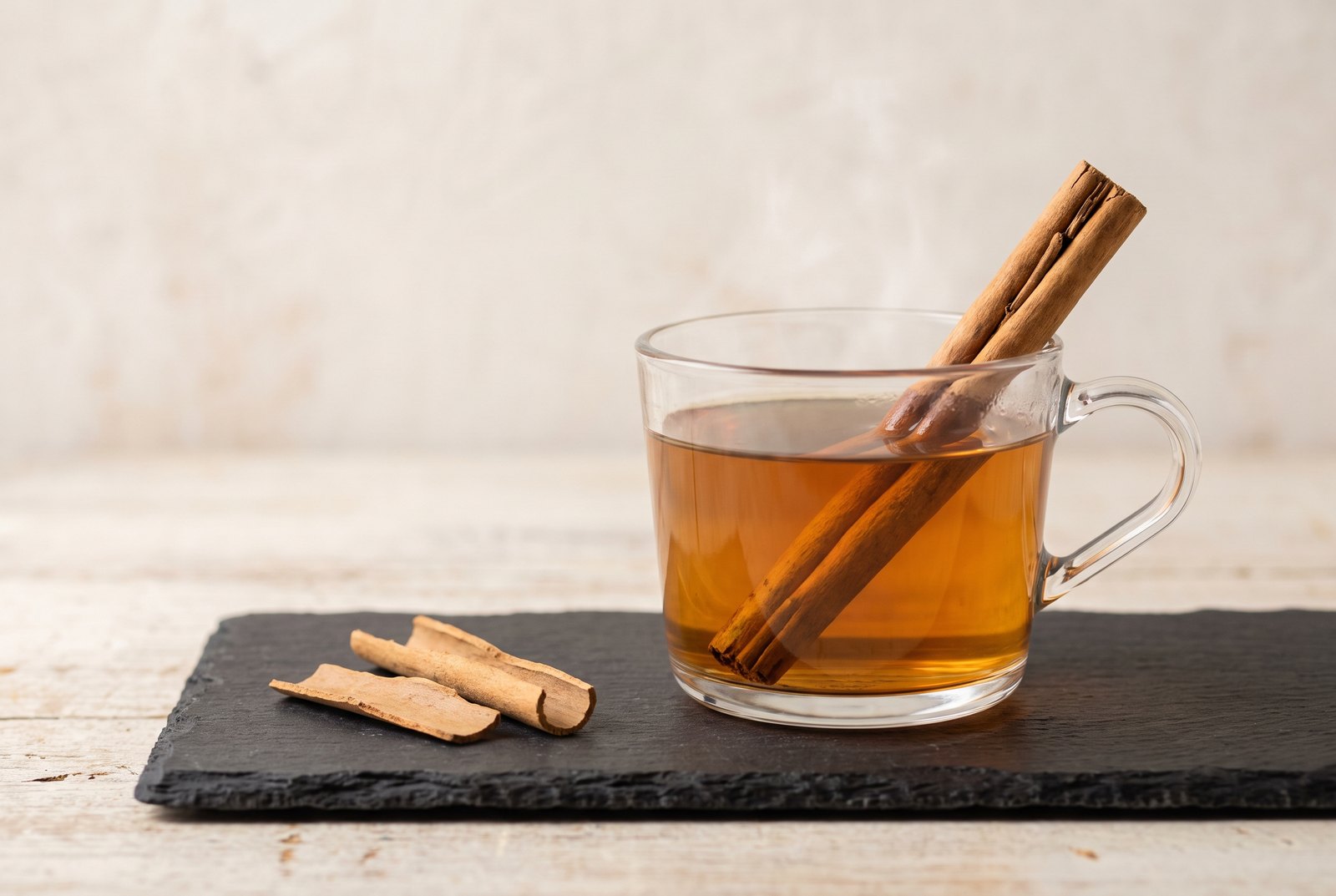
Cinnamon tea’s one genuinely supported benefit is a small reduction in fasting blood sugar — real in trials, inconsistent between them, and usually at doses above what a cup delivers. Everything else attributed to it (weight loss, detox, infection-fighting) does not survive contact with the evidence at tea strength.
To make it worth drinking: simmer a stick for 10–15 minutes with a lid on, do not steep it like a tea bag. And if this is going to be a daily habit, use Ceylon, not the cassia in the supermarket jar.
Cinnamon tea occupies an odd position. It is one of the few spice drinks with a real clinical literature behind it, and also one of the few where almost everybody makes it wrong and concludes it does nothing.
Both of those are worth fixing.
Why most homemade cinnamon tea tastes of nothing
People treat cinnamon like a tea leaf: hot water, a few minutes, done.
Cinnamon is bark. Its aromatic compounds are locked in a dense woody structure that hot water barely penetrates in five minutes, and the hard tube of a cassia stick is especially reluctant. Steeping gives you faintly beige water.
Simmering is the fix, and the lid is not optional — the compounds you want are volatile, and an open pan sends most of them into the kitchen.
The method
- One stick per cup, roughly 250 ml of water.
- Bring to a gentle simmer, not a rolling boil.
- Lid on, 10–15 minutes. Ceylon at the shorter end, cassia at the longer.
- Remove from heat. Add anything else now, off the heat.
You should end up with a clear amber liquid that smells of cinnamon from across the room. If it is pale and smells faint, it did not simmer long enough or the lid was off.
Ground cinnamon works but behaves differently — about half a teaspoon per cup, and it will not dissolve. You will drink a cloudy tea with sediment at the bottom. Some people prefer it; it is certainly faster.
One stick per cup, and for a daily habit it should be Ceylon: 52USA whole Ceylon quills. Cassia works and tastes stronger, but this is the use where the coumarin question applies. As an Amazon Associate we may earn from qualifying purchases.
What the blood sugar evidence actually says
This is the claim worth taking seriously, so it deserves to be stated carefully.
Multiple human trials have tested cinnamon against fasting blood glucose, and the pattern across them is a small average reduction. It is not imaginary. It is also not large, and the trials disagree with each other more than anyone quoting them tends to mention.
Three things get lost in the retelling:
The dose. Trials generally use cinnamon in gram amounts, delivered as powder in capsules. A cup of tea made from one stick delivers considerably less, because you are drinking an extract rather than eating the bark.
The spice. Almost all of this work used cassia. Ceylon has been studied much less. So the cinnamon with the better evidence is the one with the coumarin problem, and the safer one has thinner data — an awkward gap rather than a scandal.
The context. These are averages across groups, mostly in people with elevated blood sugar to begin with, added to whatever else they were doing. None of it makes cinnamon an alternative to medication, and nothing on this page is a treatment.
The honest version: a daily cup of cinnamon tea is a reasonable habit that may nudge a number slightly. It is not managing anything.
The claims that do not hold up
Weight loss. The metabolic effects cited come from cell and animal work, or from trial doses far above a cup of tea. There is no evidence a cinnamon drink burns fat.
Detox. Cinnamon does not detoxify anything. Your liver does that, and — with cassia — it is the organ carrying the small extra load rather than getting help.
Fighting colds and infections. Cinnamaldehyde is genuinely antimicrobial in a laboratory dish. That result does not travel into a mug. A hot drink can soothe a sore throat, and that is a real comfort, but it is the heat and the fluid doing it.
Hormonal and menstrual claims. There is some early work on cinnamon and menstrual pain, and it is small and preliminary. Not nothing, not enough to promise anything.
Cinnamon tea with honey
The common pairing, and worth being clear about: honey adds sugar to a drink people are often making for blood sugar reasons. A teaspoon is not a disaster, but it works against the stated purpose.
If you want it sweeter without that, the better lever is the brew — a longer simmer brings out more of cinnamon’s natural sweetness, and Ceylon reads sweeter than cassia to begin with.
The traditional honey-and-cinnamon claims (weight, immunity) have no meaningful support. As a warm drink for a scratchy throat it is genuinely comforting, which is enough of a reason on its own.
Who should be careful
If you take diabetes medication. Cinnamon’s effect is small, but “small effect in the same direction as your medication” is exactly the conversation to have with a pharmacist rather than with a website.
If you take blood thinners. Coumarin is not warfarin — this connection is routinely overstated — but cassia in daily quantity plus anticoagulants is worth mentioning to whoever manages your prescription.
If you have liver disease. The coumarin question stops being theoretical. Use Ceylon, or skip the daily habit.
If you are pregnant. Cinnamon as food is food. Concentrated daily amounts are not something we will give guidance on; ask your midwife or doctor.
Our fuller account is in cinnamon side effects, which does not sell anything.
Ceylon or cassia for tea?
For a daily cup: Ceylon, without much argument. The coumarin in cassia accumulates precisely under this pattern of use, and Ceylon removes the question entirely rather than managing it.
For an occasional cup: cassia is fine and frankly makes a bolder tea. Its higher cinnamaldehyde is exactly what people want in a mug on a cold evening.
The two barks are different species with different chemistry — our full comparison covers how to tell which one is in your cupboard, and which cinnamon to buy covers what to actually order.
The bottom line
Simmer it, lid on, ten to fifteen minutes. Use Ceylon if you are going to drink it every day. Expect a pleasant, aromatic, sugar-free drink that may nudge a blood sugar reading slightly — and do not expect it to do the things the internet says it does.
That is a smaller promise than most pages make about cinnamon tea. It is also the one that survives reading the studies.
Frequently asked questions
What are the benefits of cinnamon tea?+
The best-supported one is a small effect on fasting blood sugar, seen across a number of human trials but varying widely between them and usually at doses larger than a cup of tea delivers. Beyond that, cinnamon tea is a warm, sugar-free drink with a genuine aroma, which is a real benefit if it is replacing something sweeter. Claims about weight loss, detoxification and infection are not supported at tea strength.
How do you make cinnamon tea?+
Simmer a stick, do not steep it. Put one cinnamon stick in about 250 ml of water, bring it to a gentle simmer and hold it there for ten to fifteen minutes with the lid on. Steeping in off-the-boil water the way you would treat a tea bag extracts very little, which is why most homemade cinnamon tea tastes of almost nothing.
Is it better to use Ceylon or cassia cinnamon for tea?+
Ceylon, if you drink it regularly. Cassia carries coumarin, a compound that stresses the liver at sustained high intakes, and a daily tea habit is exactly the pattern where that adds up. Cassia makes a stronger-tasting tea, so it is the better choice for an occasional cup and the worse one for a daily ritual.
Can you drink cinnamon tea every day?+
Many people do, and if you are using Ceylon it raises no particular concern beyond ordinary moderation. With cassia, daily is the pattern worth reconsidering, because coumarin intake accumulates. We do not publish a personal limit — check the label on your jar and speak to a pharmacist if you take regular medication, particularly for diabetes or blood thinning.
Does cinnamon tea help with weight loss?+
Not directly, and the evidence for a metabolic effect at drinkable amounts is weak. What it can do is replace a sweetened drink with an unsweetened one that still tastes of something, which is a real and underrated advantage. Treat it as a substitution tool, not a fat burner.
New: Google now lets you choose which sites it shows you first. One tap lifts our spice guides in your results — nobody else's — and you can undo it any time.
More on Cinnamon
Ceylon Cinnamon Capsules: How to Read the Label Before You Buy
What to look for in a Ceylon cinnamon supplement — why the species on the label decides everything, extract versus whole bark, the fillers to avoid, third-party testing, and when capsules are the wrong answer entirely.

Ceylon vs Cassia vs Saigon Cinnamon: Which One Do You Have?
The three cinnamons compared — how Ceylon, cassia and Saigon differ in taste, appearance and coumarin content, how to tell them apart in the jar, and which one to use for what.
Cinnamon Side Effects: The Coumarin Problem Nobody Mentions
The real risks of cinnamon — what coumarin in cassia does to the liver, why the daily-spoonful habit is the pattern that matters, mouth and medicine interactions, and who should avoid it.