
Spice guide
Cilantro Benefits, and the Naming Problem That Sends Half of America to the Wrong Shelf
Coriander is the only common ingredient where one word means two things that taste nothing alike. The green leaf Americans call cilantro and the round tan seed Americans call coriander come from the same plant and share almost no flavour compounds. These guides sort out which one your recipe means, what the soap thing actually is, what to reach for when you run out, and which of the four forms on the shelf is worth your money.
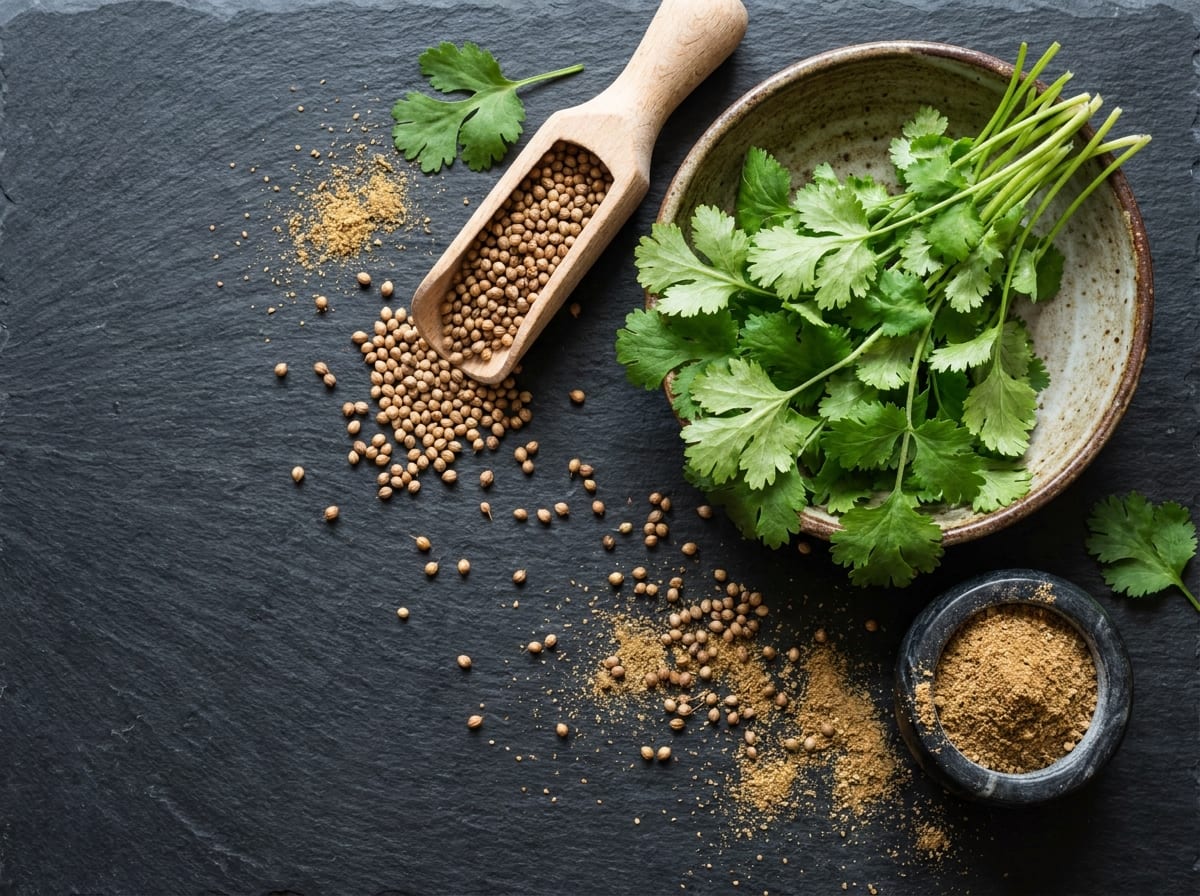
Coriander has a problem no other spice has.
One word, in half the English-speaking world, means two ingredients that share a plant and almost no flavour compounds. Cilantro is the fresh green leaf — bright, grassy, citrus-sharp, and destroyed by two minutes of heat. Coriander seed is the round tan seed — warm, nutty, faintly sweet, and it needs heat to taste of anything at all.
In American English those are two words for two things, which is tidy. In British, Indian and Australian English they are one word, which is not. And a recipe rarely tells you which it means.
The result is a specific, very common kitchen failure: ground coriander stirred into a salsa, or a bunch of fresh leaves thrown into a curry base at the start and never seen again.
The four questions this plant raises
“Which one does my recipe mean?” — because the word depends on where the recipe was written, not on what the writer wanted.
“Why does it taste like soap?” — because for a large minority of people it does, and being told to try it prepared properly is not an answer.
“What do I use when I run out?” — and the answer is completely different depending on whether you have lost the leaf or the seed.
“Which form should I actually buy?” — because it is sold as four different products and three of them go stale at different speeds.
What the evidence actually supports
We grade every claim inline so you can see the strength of the support without leaving the sentence.
- Nutrition from the fresh leaf — real, and small. Cilantro carries vitamin K, some vitamin A and C, and antioxidant compounds. It is a leafy green, and a garnish-sized portion delivers a garnish-sized amount.
- Digestive use of the seed — traditional, and long-standing. Coriander seed has centuries of use as a digestive across Indian, Middle Eastern and European cooking, with a plausible mechanism behind it.
- Antioxidant and antibacterial activity — lab. Real in a dish, unproven in a person.
- Blood sugar and cholesterol — preliminary and thin. Mostly animal work, nothing replicated in people at a size that should change what you eat.
- Heavy-metal detox — not supported. This is the most-repeated claim about cilantro online and the least supported. There is no human evidence that eating cilantro chelates heavy metals, and we do not carry that claim.
- Flavour — the actual reason it is in your kitchen. Not a health claim, and the only one that a dead jar or a slimy bunch destroys.
Read this first
Coriander in food is a food, and safe as one. Nothing on these pages is a treatment, and none of it tells you how much to take.
Two things are worth stating plainly. Concentrated forms — coriander oil, or supplements sold for detox — are a different thing from the seed in your dinner, and they are the form to be careful with. And if cilantro tastes of soap to you, that is a difference in perception rather than an allergy; a genuine coriander allergy exists but is rare, and it looks like an allergy rather than a taste complaint.
Going deeper
The complete account — the one plant that became two ingredients, the naming trail from kuzbara to dhania to cilantro, the soap gene read properly rather than as a party trick, and the Indian, Mexican, Thai and Levantine traditions kept separate — is Coriander: One Plant, Two Ingredients, a 60-page book that grades every health claim by the strength of the evidence behind it, and that declines the biggest claim made about this plant out loud rather than quietly leaving it out. The guides here are free and stay free.
Guides
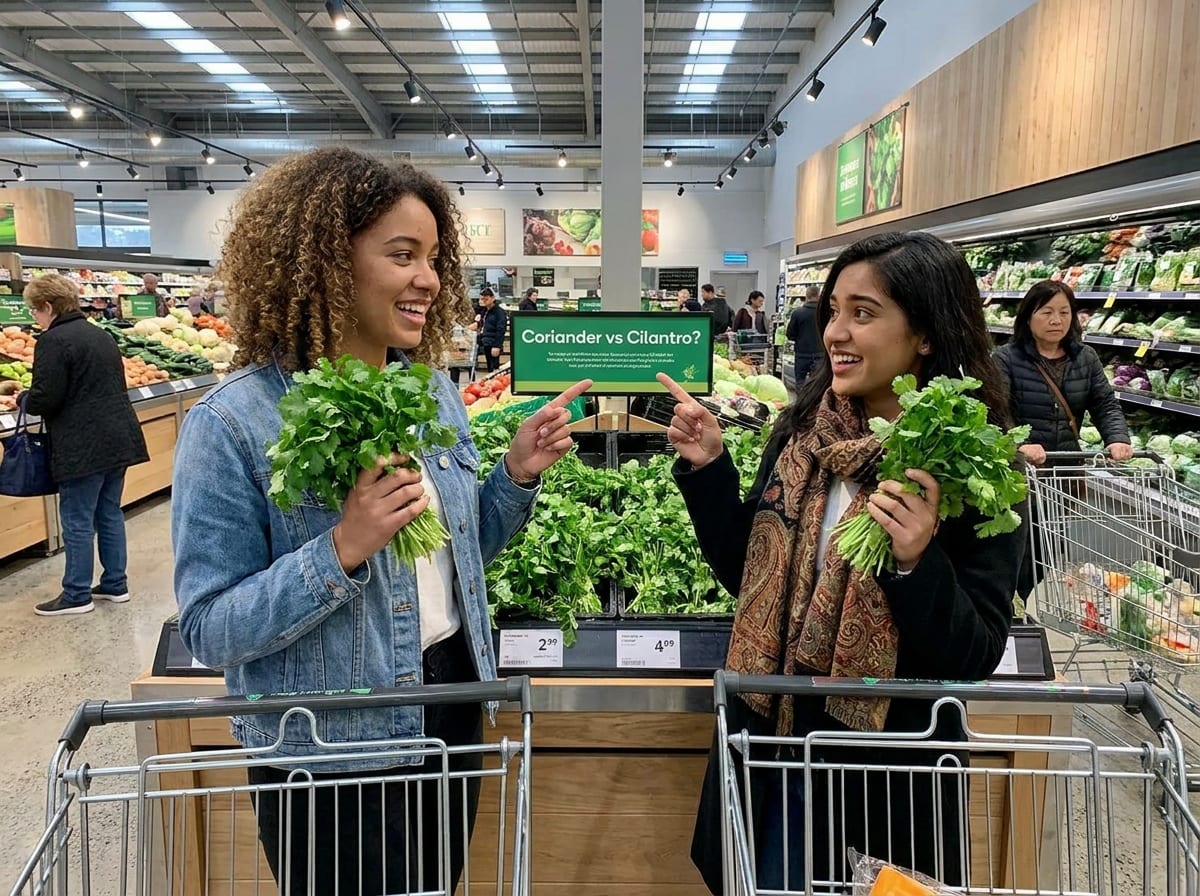
Coriander vs Cilantro: One Plant, Two Names, Two Different Ingredients
Coriander and cilantro are the same plant and not the same ingredient. Which word means the leaf, which means the seed, why the answer changes between American and British recipes, and how to tell which one your recipe actually wants.
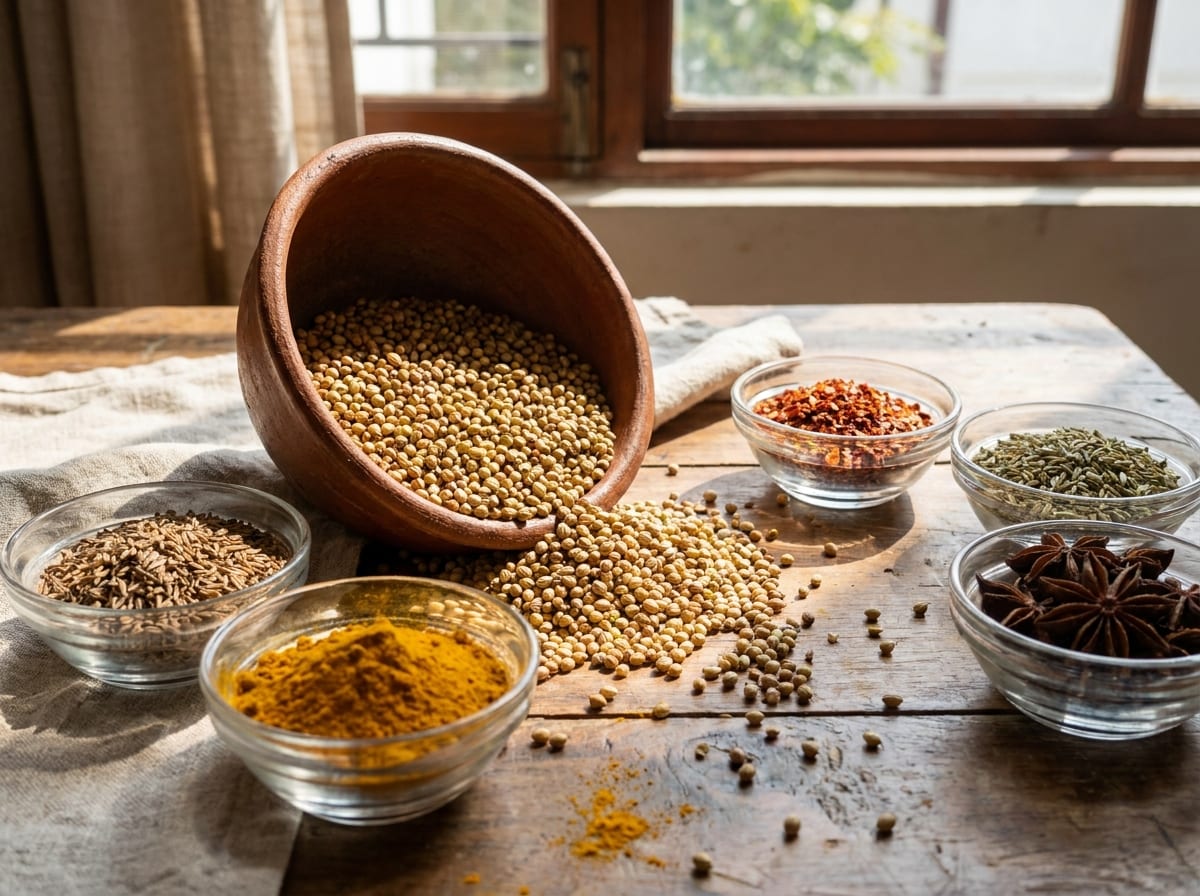
Coriander Substitute: What to Use for the Seed, and How Much
The best substitutes for coriander seed and ground coriander, with exact swap amounts — cumin, caraway, fennel, garam masala and curry powder — sorted by dish, plus the swap that ruins a curry.

Cilantro Substitute: What to Use, and Why It Tastes Like Soap to You
Around a quarter of people taste soap when they eat cilantro, and it is inherited, not fussiness. What is actually happening, and the substitutes that work in salsa, curry, pho and guacamole — with amounts.
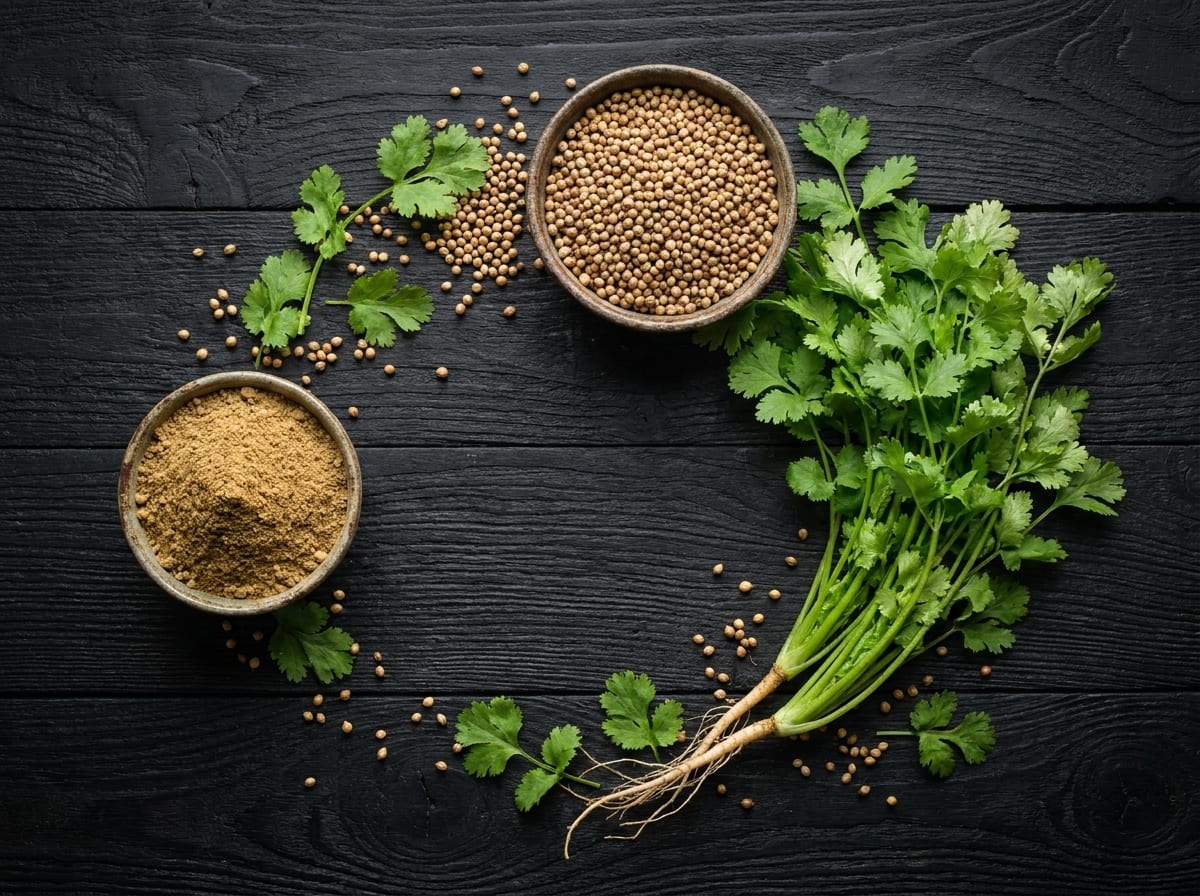
Dhania in English: Every Name This One Plant Travels Under
Dhania, dhaniya, kothimbir, kothamalli, coentro, cilantro, Chinese parsley — all one plant. Which name means the leaf, which means the seed, and how to buy the right one in any shop.
Which Coriander to Buy: Seed, Powder, Fresh or Dried
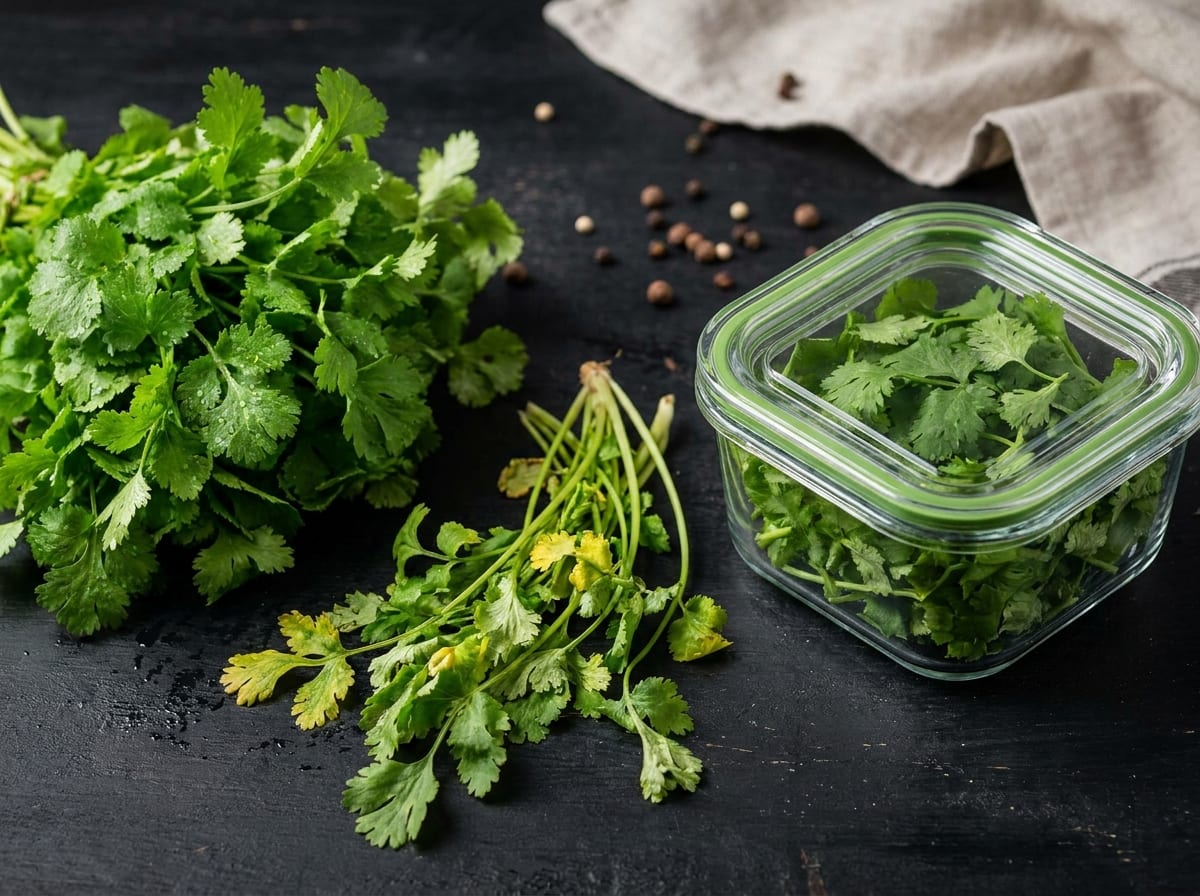
Coriander is sold as four different products and they are not interchangeable. Which one your recipe needs, what each is worth paying for, how to tell if yours has gone flat, and how to keep a fresh bunch alive for three weeks.
Common questions
What are the benefits of cilantro?+
Modest and mostly nutritional, which is the honest answer. Fresh cilantro is a leafy green: it carries vitamin K, some vitamin A and C, and a set of antioxidant compounds, in the small amounts a garnish actually delivers. Lab work shows antibacterial and antioxidant activity, and there is early animal work on blood sugar and cholesterol that has not been replicated in people at a size worth acting on. Coriander seed has a longer traditional record as a digestive. Cilantro in food is a food, and a pleasant one. Nothing here is a treatment.
Is cilantro good for you?+
Yes, in the ordinary way any fresh green herb is good for you, and no more than that. A quarter cup of chopped cilantro is a meaningful amount of vitamin K and very little else by weight, because a garnish is a small thing. The reason to use it is that it makes food taste better. Anyone selling it as a detox or a cure is describing something the evidence does not support.
Is coriander the same as cilantro?+
Same plant, different part, and often a different word depending on the country. In American English cilantro means the fresh green leaves and coriander means the dried seeds. In British, Indian and Australian English coriander means both, and the recipe says fresh coriander or coriander seed to tell you which. One plant, two ingredients that taste nothing alike.
Why does cilantro taste like soap to some people?+
Because the soap is genuinely there and some people are built to notice it. Cilantro leaf contains aldehydes that also occur in soaps and lotions. Most people read them as one thread in a bright citrusy whole; a minority carry variants near a cluster of olfactory receptor genes on chromosome 11 that make the soapy thread dominate. It is at least partly inherited, and it varies sharply by ancestry, which is why it is rarest in the cuisines that use the most cilantro.
What is dhania in English?+
Coriander. Dhania covers the whole plant, exactly as the British word does. Hara dhania and dhania patta are the fresh leaves, which Americans call cilantro. Sabut dhania is the whole dried seed and dhania powder is that seed ground. Dhaniya is the same word spelled differently, and kothimbir, kothamalli and malli are the Marathi, Tamil and Malayalam names for the same plant.
Should I buy whole coriander seeds or ground coriander?+
Whole seed if you cook with it regularly, and grind as you go. Coriander's flavour comes from a volatile compound that escapes once the shell is broken, so whole seed keeps for about a year and ground for about six months. If coriander appears in your cooking a few times a year, buy the smallest jar of ground you will finish rather than the value bag.
How do you keep cilantro from going bad?+
Trim the stem ends, stand the bunch in a jar with an inch or two of cold water, tent a plastic bag loosely over the leaves, and refrigerate. Change the water every two or three days. That keeps a bunch usable for two to three weeks instead of three days. Do not wash it before storing — surface water on the leaves is what turns a bunch to slime.
Can you eat coriander stems?+
Yes, and they are the better half. The stems carry more aroma than the leaves, which surprises most people because recipes routinely tell you to pick the leaves off. Chop the tender upper stems finely and use them anywhere you would use the leaf. Only the thick woody base is worth discarding.