
Coriander
Coriander Substitute: What to Use for the Seed, and How Much
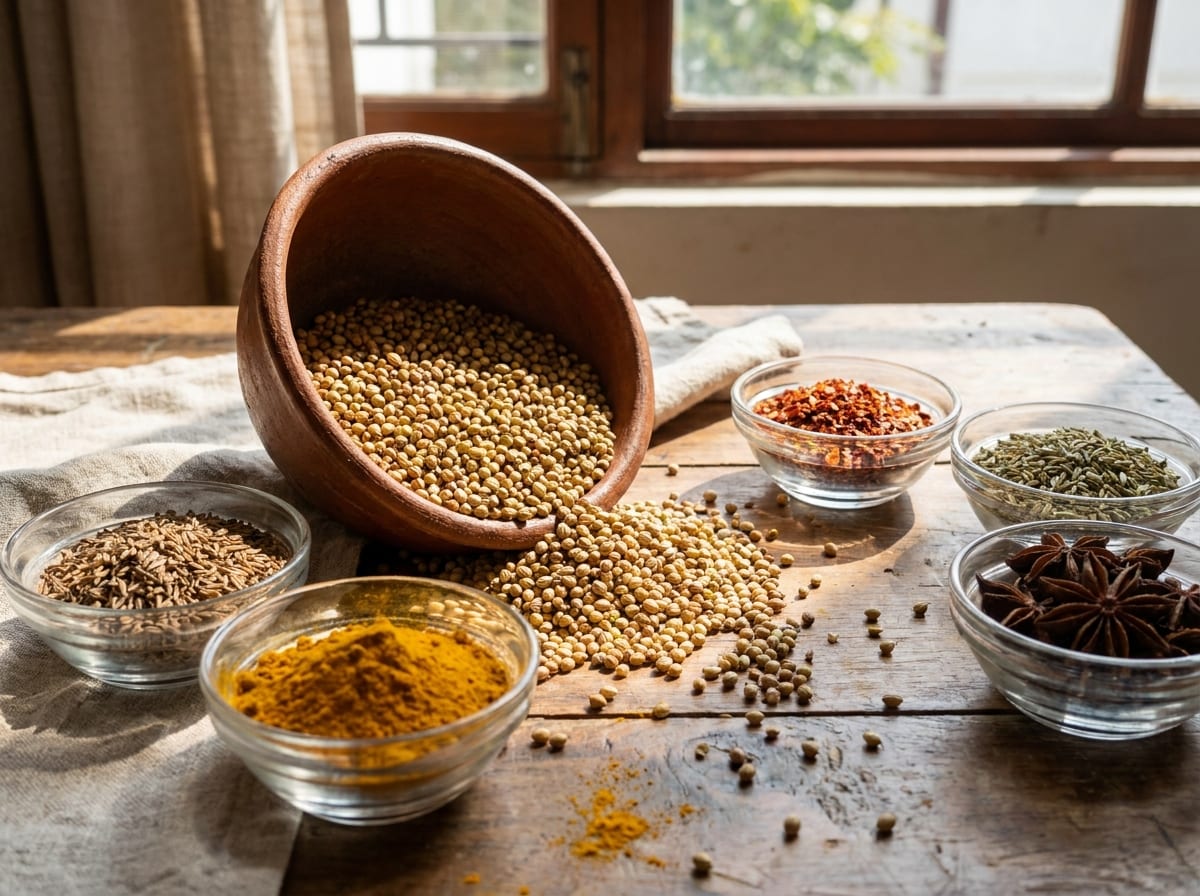
Quick answer
Use ground cumin at half to three quarters of the amount. For 1 teaspoon of ground coriander, use 1/2 to 3/4 teaspoon of ground cumin. The dish comes out heavier and earthier, but it still tastes like itself, because these two seeds are already partners in most recipes that call for either.
No cumin? Caraway at 1:1 for anything European or pickled. Garam masala or curry powder at half the amount for an Indian pot — both are coriander-heavy already.
This page is about the seed. If you are out of the fresh green leaves, that is a different problem with a different answer.
Coriander seed is the quiet one in the spice drawer, and that is exactly what makes it awkward to replace.
Cumin announces itself. Cinnamon announces itself. Coriander does not — it adds body, a faint sweetness and an orange-peel brightness underneath everything else, without adding heat, colour or a flavour anyone can name. It is the most-used spice by weight in Indian cooking for that reason.
So when it is missing, nobody says “this needs coriander”. They say the curry tastes flat, or heavy, or a bit one-note. Which is a harder thing to fix, and why picking the right stand-in matters.
What you are actually replacing
Coriander seed’s character comes mostly from linalool — the same compound that gives bergamot and lavender their floral, citrus-adjacent lift. That is the orange-peel note, and it is why coriander makes a heavy dish taste lighter.
Nothing else in an ordinary spice drawer contains much linalool. So every substitute below is a compromise on a different axis: some match the body, some match the sweetness, none match the lift.
The rule of thumb: replace coriander with something the dish already expects. In an Indian pot, cumin or garam masala. In a pickle or a rub, caraway. In a Middle Eastern dish, cumin plus a pinch of cardamom. Reaching outside the cuisine is what makes a substitution taste like a mistake.
The swaps, by amount
All amounts replace 1 teaspoon of ground coriander.
| Substitute | Amount | Best for | Notes |
|---|---|---|---|
| Ground cumin | 1/2–3/4 tsp | Curry, dal, chilli, rubs, soup | The safest answer. Heavier and earthier. Never wrong |
| Caraway, ground | 1 tsp | Pickles, cabbage, sausage, rye breads | Same family, similar body, strong aniseed note |
| Garam masala | 1/2 tsp | Curry, dal, marinades | Coriander is usually its biggest ingredient. Add late |
| Curry powder | 1/2–1 tsp | Dal, soup, stew | Coriander-heavy, but turmeric turns pale dishes yellow |
| Fennel seed, ground | 1/2 tsp | Sausage, pork, tomato sauces | Gets the sweetness, brings aniseed you did not ask for |
| Cumin + fennel, 50/50 | 3/4 tsp total | Almost anything savoury | The closest home-made match: body plus sweetness |
| Cumin + a pinch of cardamom | 3/4 tsp + a pinch | Shawarma, kebabs, Levantine rubs | Cardamom restores some of the floral lift |
| Ground caraway + orange zest | 1/2 tsp + 1/4 tsp zest | Pickling brine, roast vegetables | The only swap that goes after the citrus note directly |
| Cilantro leaf | — | Nothing | Listed to be dismissed. See below |
A note on the blends. Garam masala and curry powder both work for the same reason: coriander is usually the largest single ingredient in each. That makes them reliable and slightly circular — you are adding a diluted coriander wrapped in five other things. Use half the amount, and do not also add the recipe’s other spices on top, or the dish goes muddy.
By dish, which is what actually matters
Curry, dal and Indian cooking
Ground cumin at 1/2 to 3/4, or garam masala at 1/2. The pot already knows both.
Coriander and cumin are sold pre-mixed in India as dhania-jeera — usually two parts coriander to one part cumin — because they do opposite halves of one job. Coriander is the top note, cumin the base. Removing the top note and adding more base gives you a darker, heavier curry that is still recognisably a curry.
Go easy. Cumin is roughly twice as assertive as coriander, which is why the swap is not 1:1. Use the full teaspoon and the dish tastes of cumin and nothing else.
Garam masala is a finishing spice. Put it in at the start and its delicate notes cook off, leaving a flat, dusty taste. Stir it in during the last few minutes.
Pickles, brines and preserving
Caraway at 1:1. This is the one place caraway is not just acceptable but arguably better. Pickling liquids are built on seed spices with a bit of bite, and caraway sits in that role naturally. It is a traditional pickling spice across northern and eastern Europe for exactly this reason.
Mustard seed and dill seed also work here at 1:1, though they take the brine somewhere more specific.
Shawarma, kebabs and Middle Eastern rubs
Ground cumin at 3/4 plus a pinch of cardamom. Coriander is doing two jobs in these rubs — body and a floral lift — and cumin only replaces the first. A very small amount of green cardamom puts the lift back.
Do not overdo the cardamom. A pinch means a pinch; more and the rub tastes like a dessert.
Salsa and Mexican cooking
Read the recipe again first. A Mexican recipe calling for cilantro wants the fresh leaf, not the seed, and no amount of ground spice substitutes for it. This is the single most common way people end up on this page by mistake — see coriander vs cilantro.
If the recipe genuinely wants ground coriander — some mole and adobo recipes do — use cumin at 3/4. Mexican cooking is already cumin-forward, so the swap disappears.
Soups, stews and roast vegetables
The most forgiving category on the page. Any of the first six swaps will do. Caraway is genuinely good here in a way it is not in a curry — a carrot, squash or cabbage soup takes caraway happily, because European cooking has paired them for centuries.
Sausage, pork and tomato sauces
Fennel at 1/2. Normally fennel is a risky substitute because of the aniseed, but Italian sausage and slow tomato sauces already expect that note. This is the one context where fennel is the better answer rather than the desperate one.
Beer, gin and baking
Do not substitute; adjust the recipe. Coriander seed in a Belgian wheat beer or a gin botanical mix is a named, deliberate flavour, and there is no stand-in that produces the same result. Cardamom is the nearest in spirit, but you will have made something else. That is fine — just do not expect a witbier.
The swaps that quietly ruin things
Cilantro leaf in place of the seed. The most common mistake, and it comes from the naming confusion rather than from bad cooking. They share a plant and almost no flavour compounds. Chopped leaves stirred into a curry base disappear within two minutes and leave you with neither ingredient.
Cumin at 1:1. Cumin is much more assertive than coriander. Match the spoonful and the dish tastes of cumin, full stop — especially in anything pale or delicate. Start at half and taste.
Fennel in a curry. It works in an Italian sausage and it is wrong in a dal. Aniseed reads as sweet and slightly medicinal against Indian spicing, and once it is in there is no removing it.
Doubling a blend to get enough coriander. If a recipe wants 2 teaspoons of coriander and you use 1 teaspoon of garam masala, that is a sensible swap. Using 4 teaspoons “because it is diluted” also adds four teaspoons’ worth of cinnamon, clove and pepper, and the dish is now a different dish. Match the spoonful, not the coriander hiding inside it.
Whole seed instead of ground, and the other way round
Whole seed for ground: toast it in a dry pan for a minute until it smells of orange peel, then grind it. Use roughly the same volume as the ground amount called for. Whole seed dropped into a sauce late releases almost nothing — the shell has to be broken.
Ground for whole: use about 3/4 of the volume, and add it later than the recipe says. Ground spice burns quickly in hot oil, where a whole seed can sit happily.
If a recipe specifically wants whole coriander — a pickling brine, a whole-spice tadka, a biryani — ground is a poor stand-in. The point of the whole seed there is texture and slow release, not just flavour.
When to leave it out
Count what the coriander is doing. In a recipe carrying eight other spices, a missing teaspoon is a gap rather than a hole. The dish will be slightly heavier and still good. Move on.
In a simple dal, a two-spice rub, or anything where coriander is one of three seasonings, it is the flavour. There is no version of that dish without it, and that is the moment to go and buy some.
Buying it, when you get there: whole seeds hold their flavour for about a year and ground coriander for about six months, so a small jar you finish beats a big one you do not. Coriander loses its lift faster than most spices, because linalool is volatile — an old jar of ground coriander tastes of dust and nothing else. That is the argument for buying whole seed and grinding it as you go. Which form to buy, and how to tell if yours is dead, is here.
The bottom line
Ground cumin at half to three quarters, in almost anything savoury. After that, match the substitute to the cuisine rather than to the flavour: caraway for pickles and European dishes, garam masala or curry powder for an Indian pot, fennel for sausage and tomato, cumin plus a pinch of cardamom for a Middle Eastern rub.
Keep fennel out of a curry, never reach for the fresh leaf, and when you swap in a blend, match the spoonful rather than trying to match the coriander hiding inside it.
Related reading:
Frequently asked questions
What is the best substitute for coriander seed?+
Cumin at half to three quarters of the amount, in almost any savoury dish. The two seeds are sold together in Indian cooking precisely because they do opposite halves of one job, so a pot that has lost its coriander is still a pot that knows what cumin is. Expect the dish to come out heavier and earthier, since you have removed the bright top note and added more of the base. For 1 teaspoon of ground coriander, use 1/2 to 3/4 teaspoon of ground cumin.
Can I use cilantro instead of ground coriander?+
No. They are the same plant but not the same ingredient, and they taste nothing alike. The fresh leaf is grassy and citrus-sharp and collapses in heat. The seed is warm, nutty and mildly sweet and needs heat to open up. Putting chopped leaves into a curry base in place of ground coriander gives you neither flavour.
Is caraway a good substitute for coriander?+
It works, at a 1:1 ratio, and it is best in pickling, rubs and anything European and hearty. Caraway is in the same plant family and shares the seed-spice body, but it carries a strong rye-and-aniseed note that coriander does not have. In a curry it pushes the dish somewhere odd. In a pickle brine, a cabbage dish or a sausage it is genuinely good.
What can I use instead of coriander in curry?+
Garam masala or curry powder at about half the amount, because coriander is usually the largest single ingredient in both. You are not really replacing the coriander, you are adding a smaller amount of it wrapped in several other spices. Add garam masala near the end rather than the start, and expect curry powder to turn a pale dish yellow.
How much ground coriander equals coriander seeds?+
Roughly 3/4 to 1 teaspoon of ground coriander for 1 teaspoon of whole seeds. Grinding packs the same seed into less space, so by volume the swap is close to even. Going the other way, toast the whole seeds in a dry pan first and grind them, because whole seed dropped into a sauce late releases very little.
Can I just leave coriander out?+
It depends what else is in the pot. In a recipe carrying eight other spices, a missing teaspoon of coriander is a gap rather than a hole, and the dish will be slightly flatter and still good. In a simple dal, a spice rub or a dish with two or three seasonings, coriander is doing most of the work and leaving it out changes what you are making.
New: Google now lets you choose which sites it shows you first. One tap lifts our spice guides in your results — nobody else's — and you can undo it any time.
More on Coriander

Cilantro Substitute: What to Use, and Why It Tastes Like Soap to You
Around a quarter of people taste soap when they eat cilantro, and it is inherited, not fussiness. What is actually happening, and the substitutes that work in salsa, curry, pho and guacamole — with amounts.

Coriander vs Cilantro: One Plant, Two Names, Two Different Ingredients
Coriander and cilantro are the same plant and not the same ingredient. Which word means the leaf, which means the seed, why the answer changes between American and British recipes, and how to tell which one your recipe actually wants.
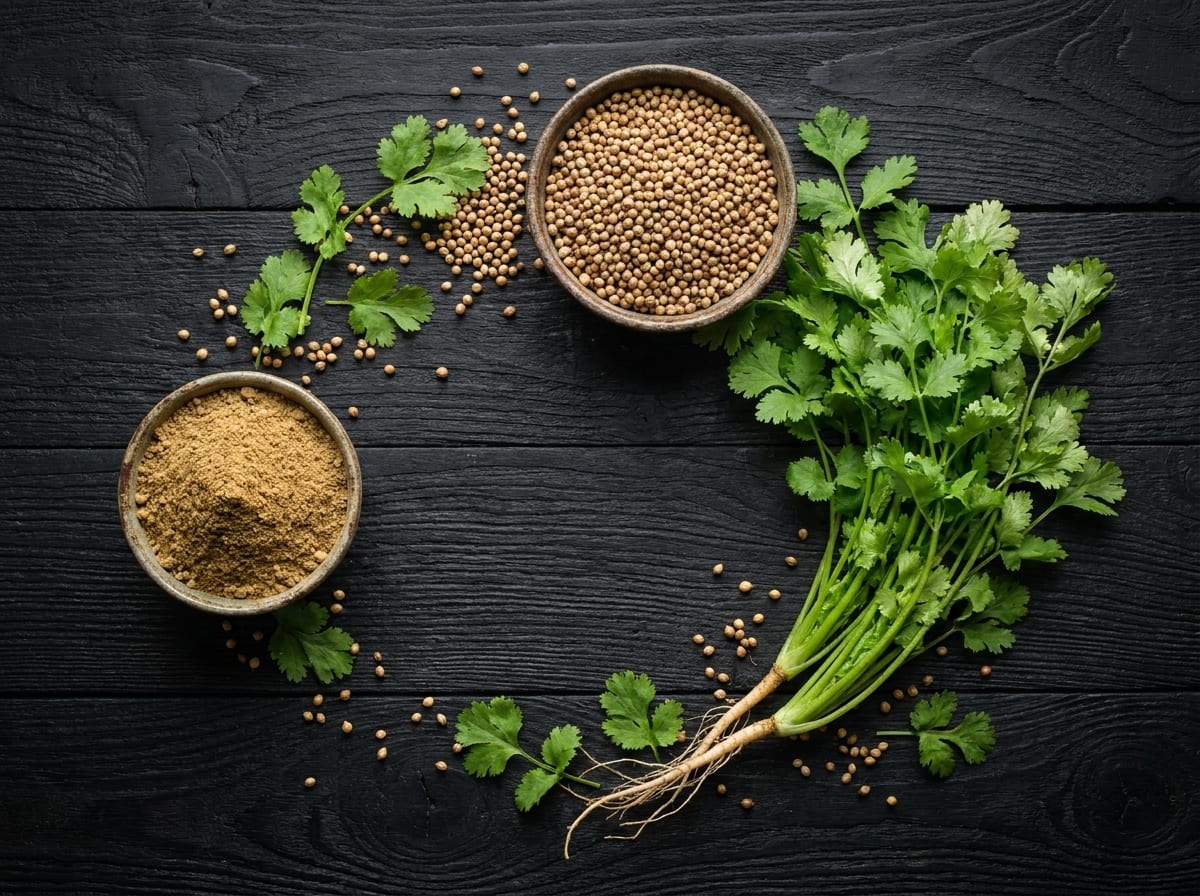
Dhania in English: Every Name This One Plant Travels Under
Dhania, dhaniya, kothimbir, kothamalli, coentro, cilantro, Chinese parsley — all one plant. Which name means the leaf, which means the seed, and how to buy the right one in any shop.