
Coriander
Cilantro Substitute: What to Use, and Why It Tastes Like Soap to You

Quick answer
If you need a substitute: flat-leaf parsley plus a squeeze of lime, at roughly the same volume. Parsley brings the green freshness, the lime brings the citrus lift. In Thai and Vietnamese dishes use Thai basil or mint instead.
If you are here because it tastes like soap: that is inherited, not fussiness. Cilantro leaf contains aldehydes that are genuinely also found in soap, and a minority of people carry olfactory receptor variants that make those compounds dominate everything else. You are not imagining it. You are smelling it more accurately.
Most substitution questions start with an empty jar. This one usually does not.
People search for a cilantro substitute because they cannot stand cilantro — and then get told, by a recipe comment or a relative, that they simply have not tried it prepared properly. That advice is wrong, and the science has been clear for over a decade.
So this guide answers both halves: what is actually happening in your mouth, and what to put in the bowl instead.
Why it tastes like soap
Cilantro leaf’s aroma comes largely from a group of compounds called aldehydes — specifically several unsaturated aldehydes in the (E)-2-alkenal family. Those same compounds, and close relatives of them, occur in soaps, lotions and some detergents. This is not a coincidence or a metaphor. The soap smell is chemically present in the herb.
What differs between people is which part of that mixture their nose reports loudest.
Most people perceive the aldehydes as one thread inside a bright, grassy, citrus-sharp whole. A minority perceive the soapy thread as the entire experience — not a hint of soap in a nice herb, but soap, full stop.
The genetics, honestly stated
A genome-wide association study run on tens of thousands of people found a variant near a cluster of olfactory receptor genes on chromosome 11 associated with perceiving a soapy taste in cilantro. The receptor most often named in the coverage is OR6A2, which is known to bind aldehydes of exactly this shape.
Two honest caveats, because this fact gets overstated constantly:
- It is an association, not a switch. The variant shifts the odds. It does not sort humanity into two clean groups, and people with the variant are not all cilantro-haters.
- It is not the only factor. Other genetic regions have been implicated, and so has simple exposure — people raised eating a herb are far more likely to have made peace with it.
But the core finding holds, and it is the part worth taking away: the difference is in the taster, and it is at least partly inherited.
How common is it?
This varies more by ancestry than almost any other taste difference, which is itself strong evidence that it is inherited rather than learned.
| Ancestry group | Roughly report a soapy taste |
|---|---|
| South Asian | 3–7% |
| Latin American | 4–7% |
| Middle Eastern | 3–7% |
| African | 8–15% |
| European | 13–17% |
| East Asian | 14–21% |
The widely repeated “about a quarter of people” figure sits above even the highest of these. It is fair as a rough ceiling for some populations and much too high for others. The reliable statement is that it is a large minority in some groups and a small minority in others — and, tellingly, it is rarest in exactly the cuisines that use the most cilantro.
The two things that genuinely help
If you are cooking for a mixed table rather than avoiding the herb entirely:
Heat it. Those aldehydes are volatile. Cilantro stirred into a hot dish and given two minutes loses much of the soapy edge. It also loses most of its other flavour, which is the trade you are making — but for a soap-taster, a faint herb beats a bowl of detergent.
Crush or chop it finely. Bruising the leaves breaks down some of the aldehydes before they reach you. A finely minced cilantro in a dressing is noticeably less soapy than a whole leaf on top.
Neither converts anybody. Both take the edge off enough to keep one dish on the table instead of two.
The substitutes, by amount
All amounts replace 1 tablespoon of chopped fresh cilantro, and volumes are close to 1:1 because these are all soft leafy herbs.
| Substitute | Amount | Best for | Notes |
|---|---|---|---|
| Flat-leaf parsley + lime juice | 1 tbsp + a squeeze | Salsa, guacamole, tacos, curry garnish | The all-purpose answer. Green look, citrus lift |
| Flat-leaf parsley alone | 1 tbsp | Anything where colour matters most | Mild and safe. Missing the brightness |
| Thai basil | 1 tbsp | Pho, larb, Thai curry, Vietnamese rolls | The right answer for South-East Asia, not a compromise |
| Mint | 2 tsp | Chutney, salads, lamb, Vietnamese dishes | Strong. Use less than you think |
| Mint + parsley, 50/50 | 1 tbsp total | Green chutney, kebabs, yoghurt sauces | The closest match for Indian and Middle Eastern uses |
| Fresh dill | 2 tsp | Fish, yoghurt sauces, pickled dishes | Takes the dish somewhere else, but somewhere good |
| Celery leaves | 1 tbsp | Soups, stews, stocks | Free with the celery, and nobody expects it |
| Fresh oregano (Mexican if possible) | 1 tsp | Salsa, beans, Mexican cooking | Adds back a specifically Mexican note |
| Papalo or culantro | 1 tsp | Authentic Latin dishes | Stronger than cilantro. Only if you can find it |
| Dried cilantro | — | Nothing | Listed to be dismissed. See below |
By dish
Salsa, pico de gallo and guacamole
Flat-leaf parsley plus extra lime, at the same volume. The lime is doing more work than the parsley here — cilantro’s job in a salsa is brightness, and citrus is brightness.
A little fresh oregano, ideally Mexican oregano, restores a note that reads as authentically Mexican. Avoid mint and basil. Both are good substitutes elsewhere and both make a salsa taste wrong in a way people notice immediately.
Pho, larb and South-East Asian food
Thai basil or mint, and this is the one category where the substitute is not a compromise at all. A pho garnish plate normally carries Thai basil, mint, cilantro and sawtooth herb together — dropping one and increasing the others is what half the region does anyway.
Indian food and green chutney
Mint and parsley, half and half. Mint-only chutney is a real dish in its own right (pudina chutney), so this swap has somewhere honest to land rather than being an approximation.
If the cilantro is a scattered garnish on a curry rather than a blended ingredient, just leave it out and add a squeeze of lemon. Nobody will notice.
Middle Eastern: tabbouleh, falafel, herb salads
Flat-leaf parsley, and increase it. Most of these dishes are parsley-dominant already with cilantro as a supporting note, so removing the support and adding more of the lead is the smallest possible change.
Thai green curry paste
Thai basil for the leaf, but read the recipe first — many green curry pastes call for coriander root or seed, which are different ingredients entirely and are not affected by the soap problem. If the recipe wants seed, that is the other substitute guide.
Soups and stews
The easiest category. Parsley, celery leaves, or nothing at all plus a squeeze of lemon. Cilantro is a garnish here and garnishes are optional.
Why dried cilantro is not the answer
It looks like the obvious fix — same plant, in a jar, no soap-taster required — and it fails for a specific reason worth understanding.
The compounds that make cilantro taste of anything are highly volatile. Drying is a process that removes volatile compounds. Cilantro is therefore one of the weakest dried herbs on the shelf: it survives the process worse than oregano, thyme or rosemary, all of which hold their character because their aroma compounds are more stable.
The result is a jar of green flakes that look correct and deliver very little. If a recipe wants fresh cilantro, reach for a fresh substitute, not a dried version of the same plant.
Freeze-dried cilantro is genuinely better than air-dried, and cilantro frozen in oil or water in an ice-cube tray is better again. Neither matches a fresh bunch. The full comparison of the four forms this plant is sold in is in the buying guide.
If you like it and it keeps dying on you
The opposite problem, and a common one — a bunch of cilantro can go from perfect to slime in three days. That is a storage question rather than a substitution one, and it has a genuinely good answer involving a jar of water: how to keep it alive.
The bottom line
If cilantro tastes like soap to you, you are right. The soapy compounds are in the leaf, and a minority of people are built to notice them above everything else. It is at least partly genetic, it varies sharply by ancestry, and no amount of trying it “prepared properly” will change what your receptors report.
For the bowl in front of you: flat-leaf parsley plus lime in almost anything, Thai basil or mint in South-East Asian dishes, mint and parsley in Indian ones. Skip the dried jar. And in a cooked dish where it was only ever a garnish, leaving it out and adding citrus is a perfectly respectable answer.
Related reading:
Frequently asked questions
Why does cilantro taste like soap to me?+
Because of how you are built, not because you are being difficult. Cilantro leaf contains aldehydes that are also found in soaps and lotions. Most people's noses read those compounds as part of a bright, citrusy whole. A minority carry variants near a cluster of olfactory receptor genes — the one most often named is OR6A2 — that make the soapy aldehydes dominate everything else. Genome-wide studies have linked that region to the dislike directly. The soap is really there. You are just smelling it more clearly than the person next to you.
What percentage of people think cilantro tastes like soap?+
It varies enormously by ancestry, which is itself good evidence that it is inherited. Surveys of tens of thousands of people put it around 3 to 7 percent in South Asian, Latin American and Middle Eastern groups, and up to around 14 to 21 percent in people of East Asian and European descent. The often-quoted figure of about a quarter comes from the higher end of that range, so it is fair for some populations and too high for others.
What is the best substitute for fresh cilantro?+
Flat-leaf parsley plus a squeeze of lime, at roughly the same volume. Parsley gives you the fresh green look and a mild herbal note, and the lime supplies the citrus lift that made the cilantro worth having. It is not a flavour match, and nothing is — but in salsa, guacamole and anything finished with lime, it is close enough that most people do not notice.
Can I use dried cilantro instead of fresh?+
Not really, and it is worth saying plainly. The compounds that make cilantro taste of anything are highly volatile, and drying removes most of them. Dried cilantro is one of the weakest dried herbs on the shelf — it looks like the ingredient and delivers very little of it. If a recipe wants fresh cilantro, use a fresh substitute rather than a dried version of the same plant.
What can I use instead of cilantro in salsa?+
Flat-leaf parsley plus extra lime juice, at about the same volume as the cilantro. For a Mexican salsa, a small amount of fresh oregano — Mexican oregano if you have it — adds back a note the cilantro was providing. Avoid mint and basil here; both are good substitutes elsewhere and both pull salsa somewhere it should not go.
Can I just leave cilantro out?+
In most cooked dishes, yes. It goes on at the end as a finishing herb, so leaving it out gives you the same dish slightly less bright, and a squeeze of lime covers most of the gap. In a few dishes it is a main ingredient rather than a garnish — a green chutney, a chimichurri, a large bunch blended into a sauce — and there leaving it out means making something else.
Does cooking cilantro stop it tasting like soap?+
It helps, and it is the most useful practical trick for a mixed table. The soapy aldehydes are volatile, so heat drives them off. Cilantro stirred into a hot dish and left a couple of minutes loses much of the soapy edge — along with most of its other flavour, which is the trade. Crushing or finely chopping the leaves also breaks down some of the compounds. Neither turns a soap-taster into a fan, but both take the edge off.
New: Google now lets you choose which sites it shows you first. One tap lifts our spice guides in your results — nobody else's — and you can undo it any time.
More on Coriander
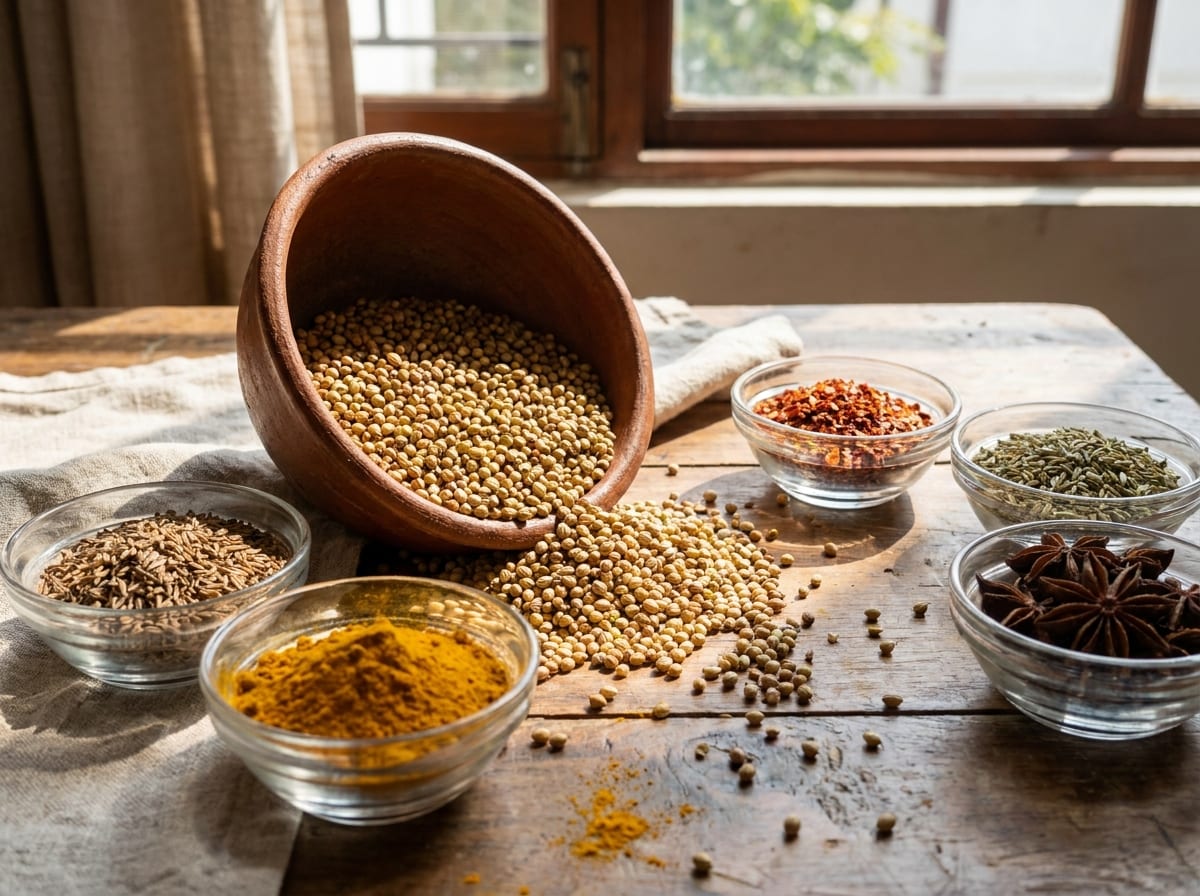
Coriander Substitute: What to Use for the Seed, and How Much
The best substitutes for coriander seed and ground coriander, with exact swap amounts — cumin, caraway, fennel, garam masala and curry powder — sorted by dish, plus the swap that ruins a curry.

Coriander vs Cilantro: One Plant, Two Names, Two Different Ingredients
Coriander and cilantro are the same plant and not the same ingredient. Which word means the leaf, which means the seed, why the answer changes between American and British recipes, and how to tell which one your recipe actually wants.
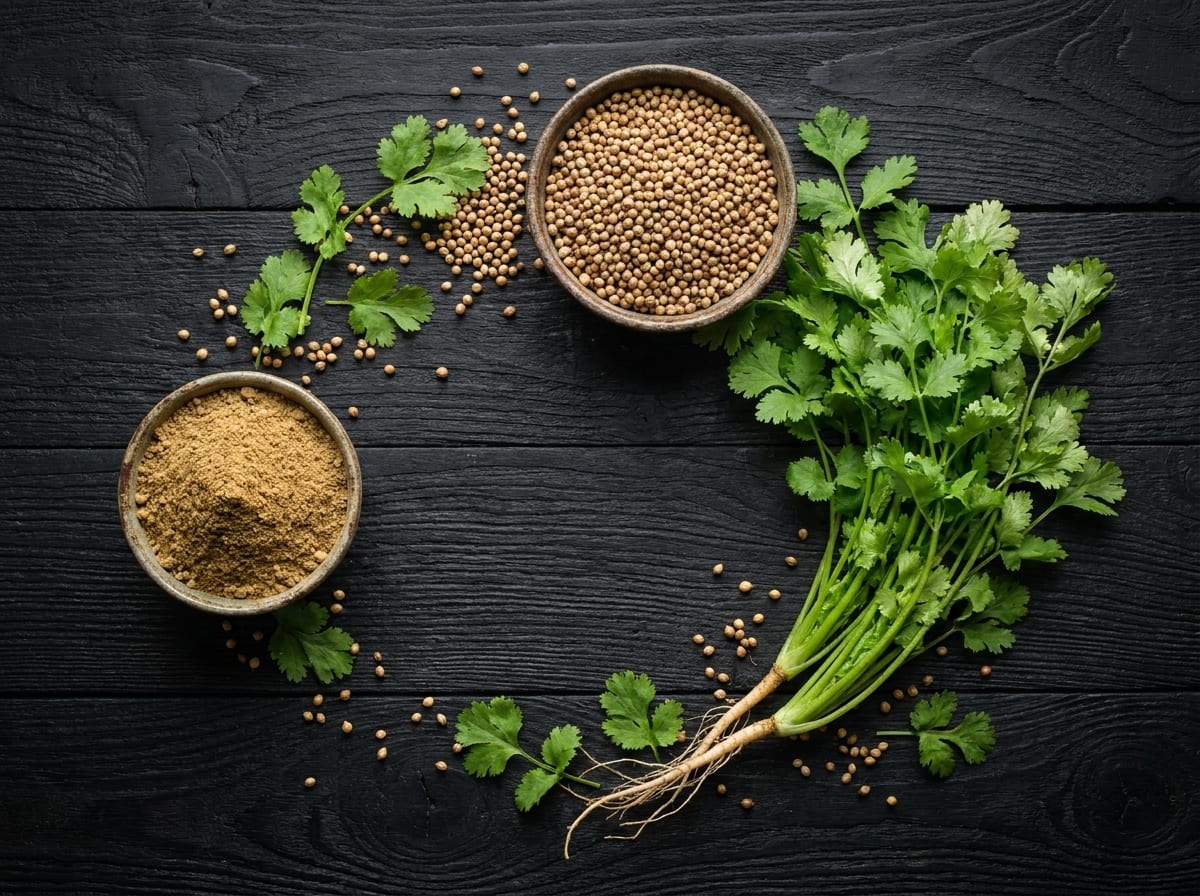
Dhania in English: Every Name This One Plant Travels Under
Dhania, dhaniya, kothimbir, kothamalli, coentro, cilantro, Chinese parsley — all one plant. Which name means the leaf, which means the seed, and how to buy the right one in any shop.