
Coriander
Dhania in English: Every Name This One Plant Travels Under
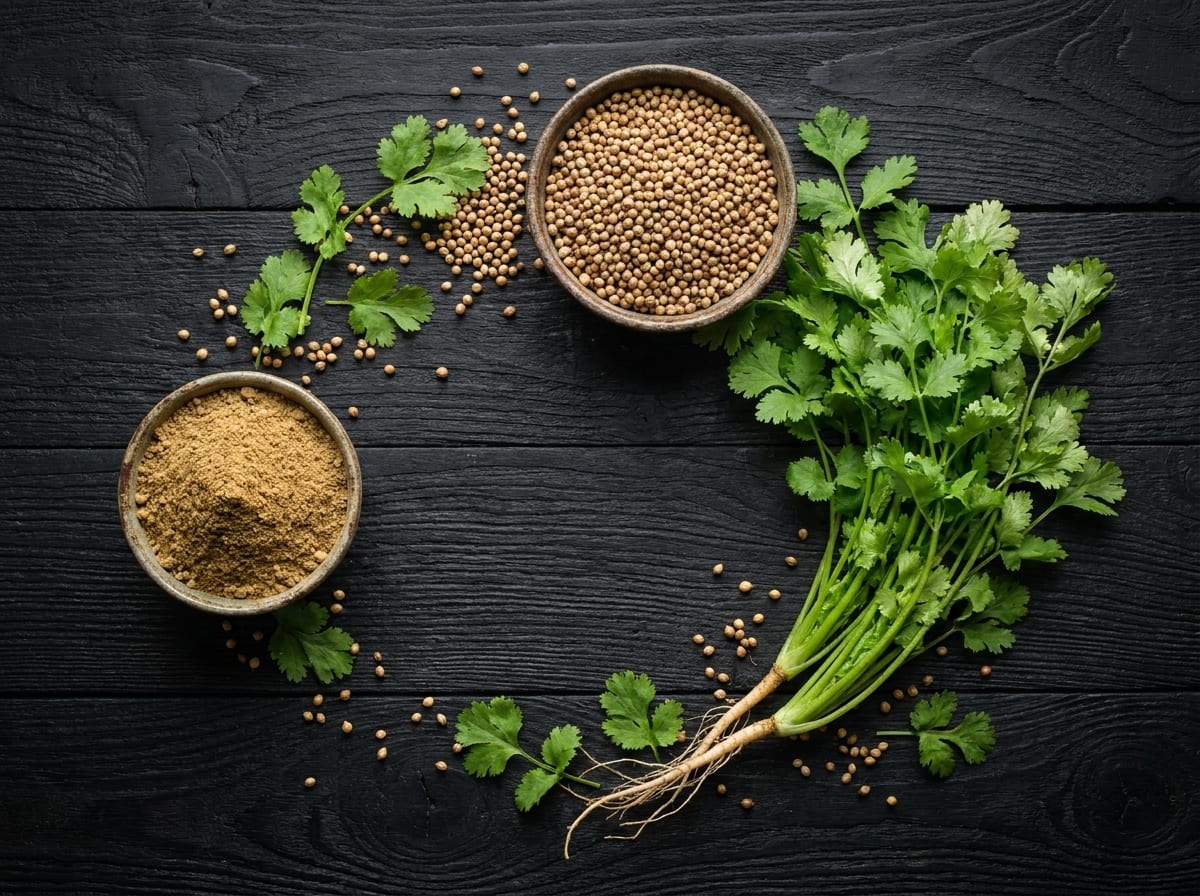
Quick answer
Dhania is coriander. Same plant, Coriandrum sativum.
Like the British word coriander, dhania covers both the leaf and the seed:
- Fresh dhania / hara dhania / dhania patta → the green leaves. Americans call this cilantro.
- Sabut dhania → whole dried seed. Dhania powder → that seed, ground.
Dhaniya is the same word, spelled differently. Kothimbir (Marathi), kothamalli (Tamil), malli (Malayalam), coentro (Portuguese) and Chinese parsley (older American) are all the same plant again.
And dhania is not jeera. Jeera is cumin, a different plant entirely.
This plant has a naming problem, and it is not a small one.
Walk into an American Indian grocery and the same plant is on four shelves under four names, in two languages, in two completely different forms. The bunch of green leaves in the chiller is labelled dhania. The packet of round tan seeds in the spice aisle is also labelled dhania. The jar beside it says coriander. And the identical green leaves in the supermarket down the road say cilantro.
None of this is anybody’s fault. It is what happens when one plant travels from the Mediterranean to India to Mexico to a California supermarket, picking up a local name at every stop — while the leaf and the seed get treated as separate ingredients by every cuisine that uses both.
The one thing that resolves most of it
Almost every language on this page does what British English does: one word for the whole plant, with a qualifier for the part.
American English is the outlier. It is the only major variety that gave the leaf and the seed two unrelated words — cilantro and coriander — and that split is the source of most cross-cultural recipe confusion.
So when you meet an unfamiliar name, the question is not “which ingredient is this?” It is “which part, and how is this recipe qualifying it?”
The names, sorted
Hindi and Urdu
| Name | Means | Notes |
|---|---|---|
| Dhania | The whole plant, leaf or seed | The word you will see most often |
| Dhaniya | Same word | Just a different transliteration. Not a different thing |
| Hara dhania | Green dhania — the fresh leaf | Hara means green |
| Dhania patta | Leaf dhania — the fresh leaf | Patta means leaf |
| Sabut dhania | Whole dhania — whole dried seed | Sabut means whole |
| Dhania powder | Ground coriander seed | The everyday curry spice |
| Dhania-jeera | Coriander and cumin, pre-mixed | Usually about 2 parts coriander to 1 cumin |
On spelling: dhania and dhaniya are the same Hindi word written two ways in the Latin alphabet, and shops use both. So do dhanya and daniya. None of them is more correct and none is a different plant.
Regional Indian names
| Language | Name | Usually means |
|---|---|---|
| Marathi | Kothimbir | The fresh leaf |
| Tamil | Kothamalli | The fresh leaf |
| Malayalam | Malli | Usually the seed |
| Telugu | Kothimeera | The fresh leaf |
| Bengali | Dhone / dhoniya | Both |
| Gujarati | Kothmir | The fresh leaf |
| Punjabi | Dhania | Both |
| Kannada | Kottambari | Both |
A pattern worth noticing: the southern names — kothimbir, kothamalli, kothimeera, kothmir — are clearly related to each other and unrelated to dhania. Two separate naming traditions for one plant, meeting somewhere around the middle of the subcontinent.
Outside India
| Language / region | Name | Means |
|---|---|---|
| Spanish | Cilantro | The fresh leaf |
| Portuguese | Coentro | The whole plant |
| Arabic | Kuzbara / kusbara | The whole plant |
| Persian | Gishniz | The whole plant |
| Thai | Phak chi | The leaf. Rak phak chi is the root |
| Vietnamese | Ngò rí | The leaf |
| Chinese | Xiāngcài — “fragrant vegetable” | The leaf |
| Older American English | Chinese parsley | The leaf |
| British / Australian | Coriander | The whole plant |
The three genuine traps
Most of the names above are just synonyms. These three are places where a name means something else, and each one costs somebody a dish.
1. Cilantro is not culantro
In Spain and parts of Latin America you will hear culantro used loosely for ordinary cilantro. But in English-language cooking, culantro is the standard name for Eryngium foetidum — a different plant with long, flat, serrated leaves and a much stronger flavour, used across the Caribbean and South-East Asia.
If a Caribbean recipe calls for culantro, it means the serrated one. Use about a third as much cilantro if you cannot find it.
2. Dhania is not jeera
The single most common Indian spice-drawer mix-up, and it happens because the two are almost always sold and used together.
| Dhania (coriander) | Jeera (cumin) | |
|---|---|---|
| Shape | Round, ball-like | Elongated, ridged |
| Colour | Pale tan | Brown-grey |
| Feel | Brittle, hollow, splits easily | Hard, dense |
| Tastes | Citrusy, floral, mildly sweet | Earthy, heavy, faintly bitter |
| Role in the pot | The top note | The base note |
They are sold pre-mixed as dhania-jeera precisely because neither is complete on its own. Different plants, permanently paired. The full comparison is cumin vs coriander.
3. Coriander root is its own ingredient
Thai recipes calling for rak phak chi mean the root, not the leaf and not the seed. It is earthier and more intense than the leaf, it holds up to pounding in a paste, and it survives cooking in a way the leaf does not.
Western supermarkets sell cilantro with the roots trimmed off, which is why Thai recipes so often tell you to substitute the stems. That substitution is real and it works — the stems are a genuinely underused ingredient.
Reading an Indian recipe
If the recipe says dhania with no qualifier, the timing tells you which one it means:
- Early, into hot oil with onions, ginger and whole spices → the ground seed.
- At the end, scattered on after the heat is off → the fresh leaf.
The amount is the second clue. A teaspoon or two is the powder. A handful, a bunch or “garnish with chopped dhania” is the leaf.
This is the same test that resolves a British recipe saying “coriander”, and it works for the same reason: no cook puts fresh leaves in first on purpose, because they vanish in about two minutes.
Buying it under the right name
In an Indian grocery, the green bunch in the chiller is fresh dhania and it is usually cheaper and fresher than the supermarket equivalent, because it turns over faster. The seed is in the spice aisle as sabut dhania or dhania powder, generally in bigger bags at a fraction of the supermarket price.
In an American supermarket, the green bunch is cilantro, in the produce section near the parsley. The seed is in the spice aisle as coriander, and if it says coriander without qualification, it means the seed.
In a British supermarket, the green bunch is fresh coriander and the jar is coriander seed or ground coriander.
One caution worth carrying into any of them: ground coriander goes flat faster than most ground spices, because its aroma compound is volatile. A cheap large bag is only a bargain if you will finish it. Which form to buy, and how to tell whether yours has died.
The bottom line
Dhania is coriander, and it means the whole plant — leaf and seed both, exactly like the British word.
Hara dhania and dhania patta are the leaf, which Americans call cilantro. Sabut dhania is the whole seed and dhania powder is that seed ground. Dhaniya is the same word spelled differently.
Kothimbir, kothamalli, malli, kothimeera, kothmir, coentro, kuzbara, phak chi and Chinese parsley are all the same plant under a different flag.
And dhania is not jeera — that one is cumin, a different plant that happens to live in the same jar of masala.
Related reading:
Frequently asked questions
What is dhania in English?+
Coriander — the plant Coriandrum sativum. Dhania covers both halves of it, exactly as the British word coriander does. Fresh dhania means the green leaves, which Americans call cilantro. Dhania powder or sabut dhania means the dried seed, whole or ground. Dhaniya is the same word with a different transliteration, and it means the same thing.
Is dhania the same as cilantro?+
Partly. Cilantro means only the fresh green leaf. Dhania means the leaf and the seed both, so it is the wider word. If an Indian recipe says dhania and the step comes at the end of cooking, it means cilantro. If the step comes at the start with the onions and whole spices, it means the ground seed.
What is dhania powder?+
Ground coriander seed. It is the most-used spice by weight in most Indian kitchens — the thing that gives a curry body and a faint citrus sweetness without adding heat or colour. It is not made from the leaves and it is not a substitute for them.
What is the difference between sabut dhania and dhania powder?+
Sabut means whole, so sabut dhania is the whole dried seed and dhania powder is that same seed ground. Whole seed keeps its flavour for about a year, ground for about six months, because coriander's aroma compound is volatile and escapes faster once the shell is broken. Recipes that toast whole spice at the start want sabut; most curry recipes want the powder.
What is coriander called in Tamil and Marathi?+
Kothamalli in Tamil and kothimbir in Marathi, both usually meaning the fresh leaf. The seed is dhaniya vidai or malli in Tamil usage and dhane in Marathi. Malayalam uses malli, Bengali dhone, Telugu kothimeera and Gujarati kothmir. All the same plant.
What is cilantro in Spanish?+
Cilantro is already the Spanish word — that is exactly how it entered American English, through Mexican cooking. In Spain and parts of Latin America it is also called culantro, which is confusing, because culantro is separately the English-language name for Eryngium foetidum, a different plant with long serrated leaves and a stronger flavour. Coentro is the Portuguese word.
Is dhania the same as jeera?+
No, and this is the most common mix-up in an Indian spice drawer. Jeera is cumin — elongated, ridged, brown-grey and earthy. Dhania seed is round, pale tan, brittle and citrusy. They are sold together as dhania-jeera because they do opposite halves of one job, which is precisely why people assume they are related. They are different plants.
New: Google now lets you choose which sites it shows you first. One tap lifts our spice guides in your results — nobody else's — and you can undo it any time.
More on Coriander

Cilantro Substitute: What to Use, and Why It Tastes Like Soap to You
Around a quarter of people taste soap when they eat cilantro, and it is inherited, not fussiness. What is actually happening, and the substitutes that work in salsa, curry, pho and guacamole — with amounts.
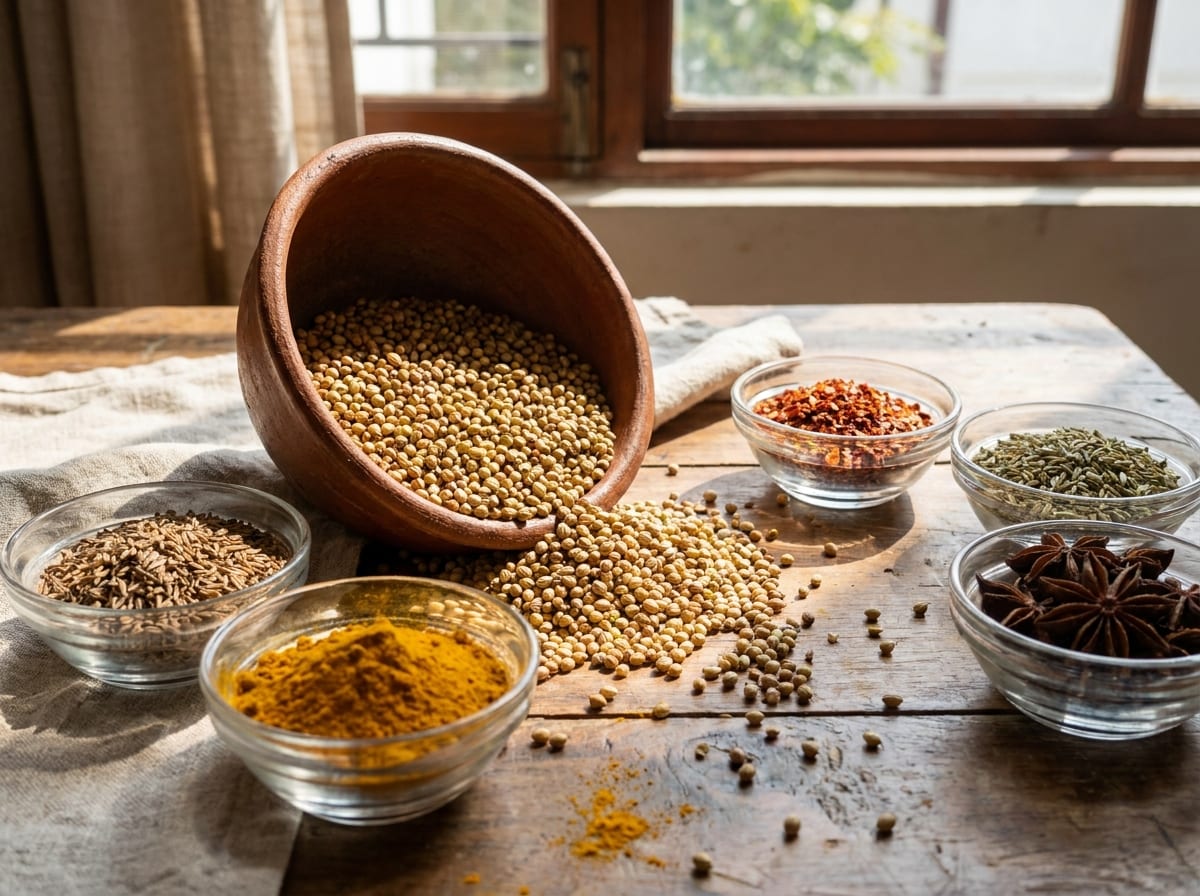
Coriander Substitute: What to Use for the Seed, and How Much
The best substitutes for coriander seed and ground coriander, with exact swap amounts — cumin, caraway, fennel, garam masala and curry powder — sorted by dish, plus the swap that ruins a curry.
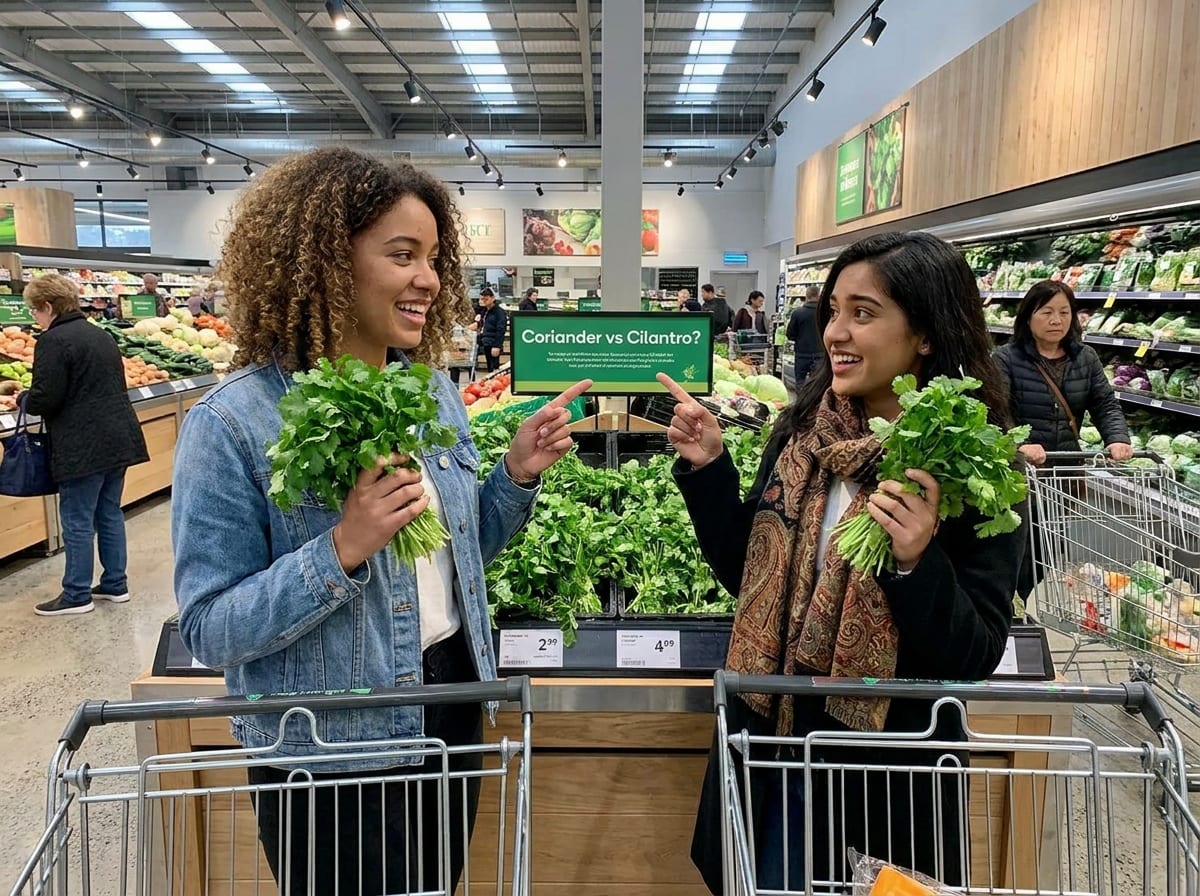
Coriander vs Cilantro: One Plant, Two Names, Two Different Ingredients
Coriander and cilantro are the same plant and not the same ingredient. Which word means the leaf, which means the seed, why the answer changes between American and British recipes, and how to tell which one your recipe actually wants.