
Coriander
Which Coriander to Buy: Seed, Powder, Fresh or Dried
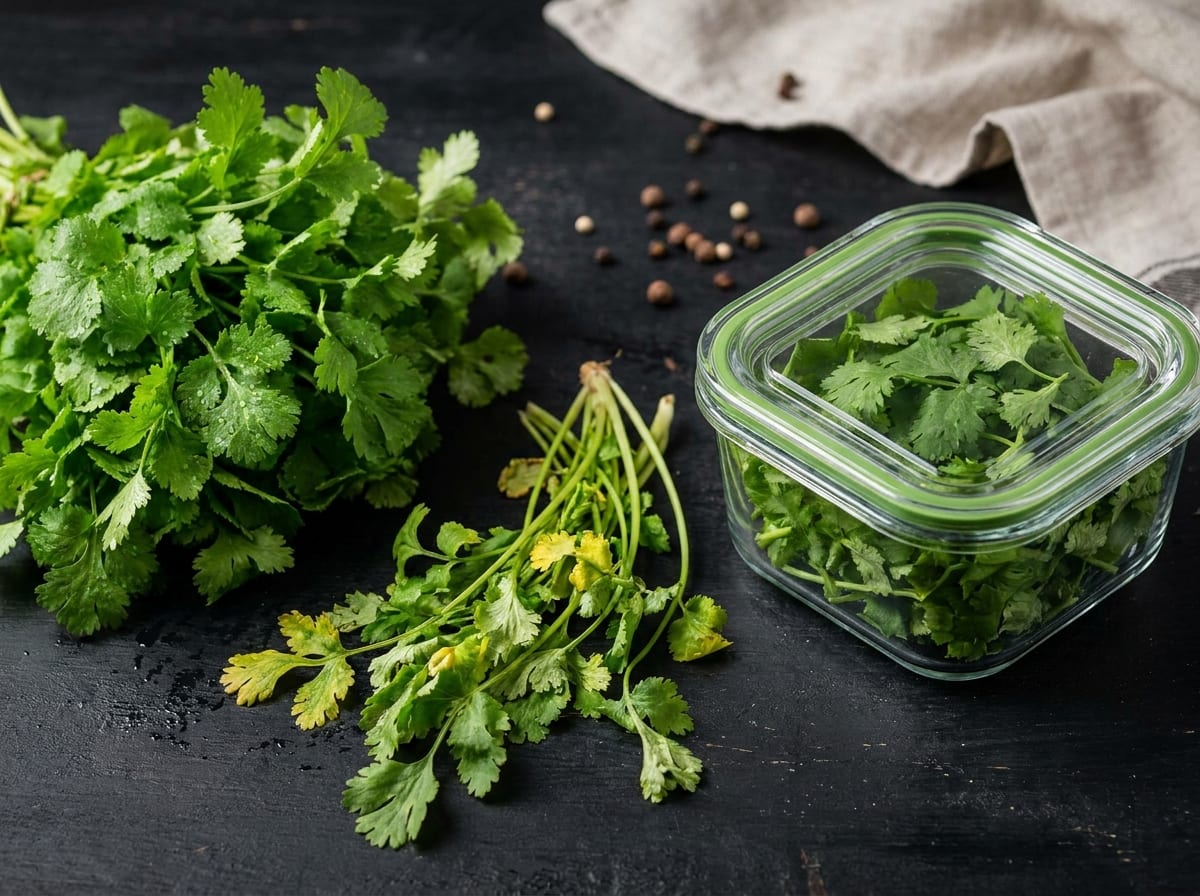
Quick answer
Coriander is sold as four different products. They are not interchangeable, and buying the wrong one is the most common mistake this plant causes.
| If your recipe wants | Buy | Roughly |
|---|---|---|
| A green garnish, salsa, chutney | Fresh bunch (cilantro) | $1–2 a bunch |
| Curry base, spice rub, everyday cooking | Ground coriander | size you will finish in 6 months |
| Pickling, tadka, biryani, or you cook this a lot | Whole seed, ground as needed | best value by far |
| Convenience in winter | Frozen, not dried | — |
Whole seed is the best-value form and the one worth owning if you cook Indian, Middle Eastern or pickled food at all regularly. Dried cilantro leaf is the one to skip.
Most spices come in one or two forms and the choice barely matters. Coriander comes in four, and the choice matters twice: once because the products taste completely different from each other, and once because three of the four go stale at wildly different speeds.
This is also the plant where a recipe most often sends you to the wrong shelf, because the word “coriander” means the leaf in half the world and the seed in the other half. So before buying anything, be sure which ingredient you are actually after.
The four products
1. Fresh leaf — sold as cilantro or fresh coriander
What it is for: finishing. Salsa, guacamole, pho, chutney, a scatter over a finished curry. It goes in raw or in the last thirty seconds, because heat destroys it.
What to look for: perky, deep green, no yellowing, no black slime at the stem base. Buy the bunch with the stems attached and intact — those stems are an ingredient, and they are also what lets you store it properly.
Where to buy it: an Indian or Latin grocery will almost always be cheaper and fresher than a supermarket, because the turnover is faster. A supermarket “living” pot of cilantro on the windowsill is usually a poor deal — it is grown for looks, bolts quickly, and costs several times a bunch.
Honest note: if cilantro tastes of soap to you, that is inherited and not fixable by shopping better. Buy parsley and limes instead.
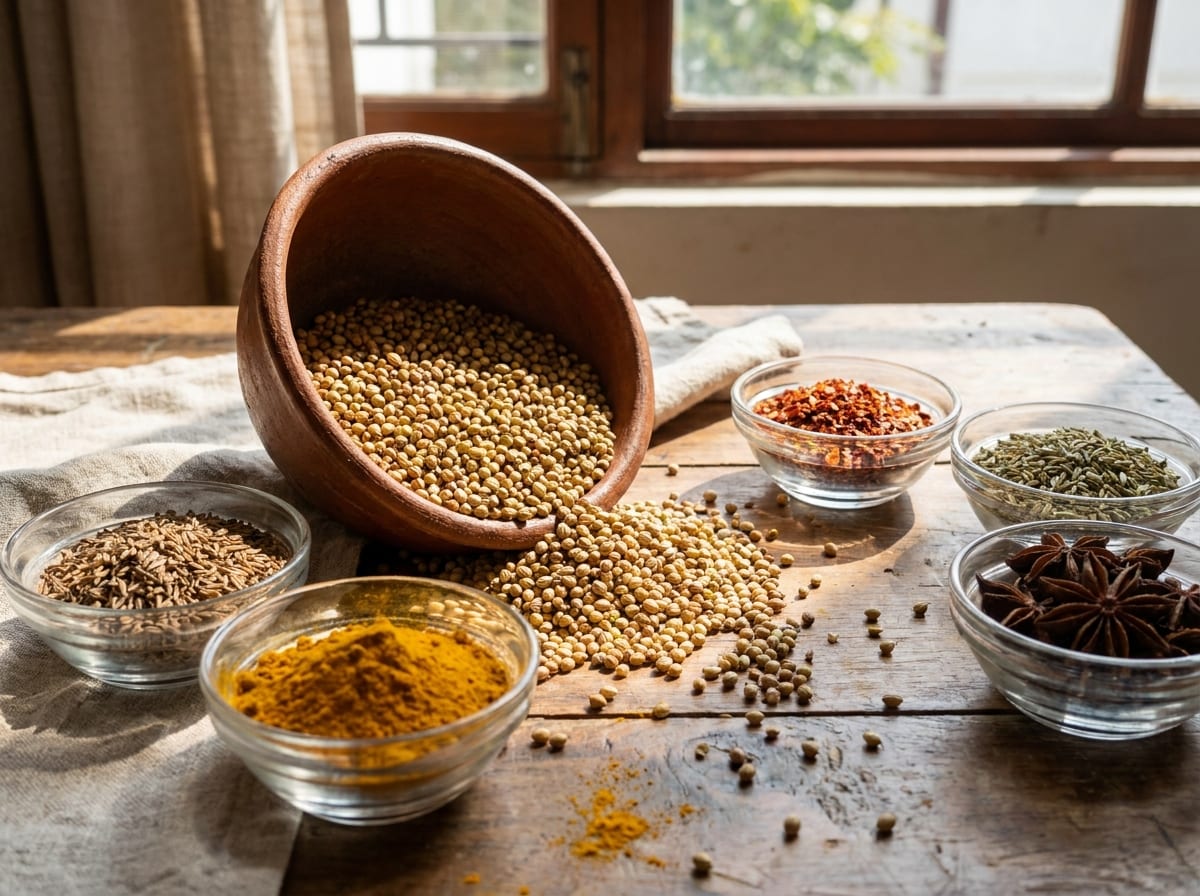
2. Whole seed — sabut dhania
What it is for: pickling brines, whole-spice tempering, biryani, and grinding fresh for everything else.
This is the form worth owning. Coriander’s flavour is dominated by linalool, which is volatile — it escapes into the air once the seed is broken open. Intact, the shell holds it in. That single fact is why whole seed keeps for about a year and ground keeps for about six months.
What to look for: pale tan to light brown, round, and dry enough to rattle. Squeeze a few — good coriander is brittle and splits easily, and should smell of orange peel the moment it does. Indian and Middle Eastern groceries sell it in bags at a fraction of supermarket jar prices, and because it lasts a year, the big bag is a comfortable buy here for almost anyone.
If there is no such shop near you, Frontier Co-op’s organic whole coriander seed comes in the same one-pound format, single ingredient and certified organic.
The one thing that improves it most: toast the seeds in a dry pan for about a minute, until they smell sweet and nutty, before grinding. This is the biggest single upgrade available to anyone cooking with coriander and it costs sixty seconds.
3. Ground coriander — dhania powder
What it is for: the everyday curry spice, and the most-used spice by weight in most Indian kitchens.
What to buy: the size you will finish in six months. That is the whole rule, and it splits people into two groups rather than one.
Ground coriander fades faster than most ground spices, so a bag is only cheaper per gram if it is empty before it dies. Do the arithmetic once and it settles the question. A pound is about 450 g. A heaped teaspoon is about 3 g.
- If you cook curry three or four times a week, that is roughly 10–12 g a week, so you are through most of a pound inside six months. The bulk bag is the correct buy and it is several times cheaper per gram. Spicely’s organic ground coriander is that format — a one-pound bag, single ingredient, certified organic.
- If coriander appears in your cooking a handful of times a year, a pound will be dust long before you reach the bottom of it. Buy the smallest jar on the shelf, 1 to 2 oz, and replace it annually. The value bag is a false economy at that rate and no brand’s version of it is any better.
This is the opposite of the advice for whole seed, where the big bag is right for almost everybody, because whole seed keeps twice as long.
Is it worth grinding your own? If you cook with coriander weekly, yes — freshly ground toasted coriander is a noticeably different ingredient, not a marginally better one. If that sounds like effort you will not sustain, the bulk ground bag above is the honest second-best and it is what most Indian kitchens actually run on.
Testing whether yours is dead: pinch, rub it warm between finger and thumb, and smell. Orange peel and something faintly floral means it is fine. Dust, or nothing, means it is contributing nothing to your food. It is not unsafe — it is just inert.
4. Dried leaf — the one to skip
Dried cilantro looks like the obvious convenience buy and it is the weakest product on this page.
The aroma compounds in the fresh leaf are highly volatile, and drying is a process that removes volatile compounds. Cilantro survives it far worse than oregano, thyme or rosemary, whose aroma compounds are more stable. What is left is green flakes that look correct and taste of very little.
If you want the leaf year-round, freeze it instead. Chop it, pack it into an ice-cube tray, top with olive oil or water, and freeze. It keeps far more of the plant than any dried jar, and a cube drops straight into a hot pot. Freeze-dried cilantro is a genuine step up on air-dried, and still not a fresh bunch.
Whole seed or ground: the actual decision
This is the question most people arrive with, so here it is plainly.
| Whole seed | Ground | |
|---|---|---|
| Keeps | About a year | About six months |
| Cost per gram | Much lower, especially in bulk | Higher |
| Needs | A grinder or mortar | Nothing |
| Best flavour | Yes, by a clear margin, if toasted | Convenient, never as good |
| Right for | Regular cooks, pickling, whole-spice dishes | Occasional cooks, quick curries |
Buy whole if you cook Indian, Middle Eastern, Mexican or pickled food more than occasionally, and own any kind of grinder — a cheap electric coffee grinder kept for spices is enough.
Buy ground if coriander appears in your cooking a handful of times a year. There is no virtue in owning a bag of seed you never grind.
Many people should buy both: a bag of whole seed for pickling and for grinding fresh, and a small jar of ground for the weeknight curry where nobody has time. That is not indecision, it is how most Indian kitchens are actually stocked.
Keeping the fresh bunch alive
Here is why this section is in a buying guide rather than a separate article: the reason people over-buy dried cilantro is that fresh cilantro dies on them. A bunch goes from perfect to yellow slime in about three days in a supermarket bag. Solve that and the dried jar stops being tempting.
The jar method — three weeks instead of three days
- Do not wash it. Surface water on the leaves is what turns a bunch to slime. Wash it as you use it.
- Trim about a centimetre off the stem ends, on the diagonal.
- Stand it in a glass or jar with an inch or two of cold water, stems down, leaves above the waterline.
- Tent it loosely with a plastic bag over the leaves. Loose matters — sealed traps moisture and rots it.
- Refrigerate, and change the water whenever it clouds, roughly every two or three days.
Done properly this keeps a bunch usable for two to three weeks. It is the single most useful thing on this page and it costs nothing.
The paper towel method — for a crowded fridge
If there is no room for a jar: pick off any yellow or slimy leaves, wrap the bunch loosely in a lightly damp paper towel, put it in a bag or container left slightly open, and keep it in the crisper drawer. Not as good as the jar. Much better than the bag it came in.
Do you need a herb keeper?
No. A jam jar does the same job for nothing, and anyone who tells you otherwise is selling one.
A purpose-made herb keeper is a container with a water reservoir and a lid — it is the jar method in a tidier package that will not tip over in a packed fridge, and holds its shape without a plastic bag. If your fridge is chaotic and you buy herbs weekly, that convenience is real. It does not preserve herbs better than the free version it is copying, and it should not be sold as if it does.
So: you do not need one. If you want one anyway, the Prepara Herb Savor Eco is the standard version of the design — a water reservoir in the base, a pod that holds the stems upright, and a lid instead of the plastic bag. It is doing exactly what the jar does, in a shape that survives a full fridge.
Freezing, for when you have too much
Chop the leaves and tender stems, pack into an ice-cube tray, top with olive oil, freeze, then bag the cubes. Straight into a hot pot from frozen. This is the correct answer to half a bunch you cannot finish, and it is much better than letting it die and buying dried.
The stems, which almost everybody throws away
The stems carry more aroma than the leaves.
That contradicts most recipes, which cheerfully instruct you to pick the leaves off, and it is worth knowing because you are discarding the stronger half of what you paid for.
Finely chop the tender upper stems — anything not woody — and use them anywhere you would use the leaf. In a salsa, a chutney or a blended sauce they simply disappear into the mix. In Thai cooking the stems are the standard substitute for coriander root, which is a named ingredient in curry pastes and is trimmed off before Western supermarkets ever see it.
The only part worth discarding is the thick woody base near the root, and even that can go into a stock.
Practical version: chop the bunch from the leafy end down until the stems stop being tender. Everything above that point goes in the bowl.
How long each form actually lasts
| Form | Keeps | Stored how |
|---|---|---|
| Fresh bunch, in the bag it came in | 2–3 days | Don’t |
| Fresh bunch, jar method | 2–3 weeks | Jar of water, loose bag, fridge |
| Fresh, chopped and frozen in oil | 6 months | Ice-cube tray, then a freezer bag |
| Whole seed | About 1 year | Airtight, dark, away from the hob |
| Ground | About 6 months | Small jar, airtight, dark |
| Dried leaf | Sold as 1–2 years | Weak on day one. Skip it |
A note on where you keep spices: the shelf directly above the cooker is the worst place in the kitchen for them, and it is where most people keep them. Heat and light are what destroy volatile aroma compounds. A drawer or a closed cupboard away from the heat roughly doubles the useful life of everything in it.
The bottom line
Buy whole seed if you cook with coriander regularly — it is cheaper per gram, keeps twice as long, and toasted and freshly ground it is a genuinely better ingredient.
Buy ground in the size you will finish in six months — the bulk bag if you cook curry weekly, the smallest jar on the shelf if you do not.
Buy the fresh bunch with its stems on, store it in a jar of water under a loose bag, and use the stems.
Skip dried cilantro. Freeze the fresh leaf instead.
And you do not need a herb keeper. A jam jar and a plastic bag will hold a bunch of cilantro for three weeks, which is longer than you will take to eat it.
Related reading:
Frequently asked questions
Should I buy whole coriander seeds or ground coriander?+
Buy whole seed if you cook Indian, Middle Eastern or pickled food more than occasionally, and grind as you go. Coriander's flavour comes from a volatile compound that escapes once the shell is broken, so whole seed holds for about a year and ground for about six months. Ground is the right choice if you would rather not own a grinder. Buy by how fast you will get through it: a bulk bag is genuinely cheaper per gram and a curry-three-times-a-week household finishes one inside six months, but if coriander appears in your cooking a few times a year, buy the smallest jar on the shelf, because ground coriander is flat in about six months whatever the label cost.
How do you keep cilantro fresh?+
Trim the stem ends, stand the bunch in a jar with an inch or two of cold water, put a loose plastic bag over the leaves like a tent, and refrigerate. Change the water when it clouds, every two or three days. Done properly this keeps a bunch usable for two to three weeks instead of three days. Do not wash it before storing — surface water on the leaves is what turns a bunch to slime.
Can you eat cilantro stems?+
Yes, and you should. The stems carry more aroma than the leaves, not less, which surprises most people because recipes routinely tell you to pick the leaves off. Finely chop the tender upper stems and use them anywhere you would use the leaf. Only the thick woody base near the root is worth discarding, and even that can go into a stock.
Is dried cilantro worth buying?+
Generally no. The compounds that make the fresh leaf taste of anything are highly volatile, and drying removes most of them, so dried cilantro is one of the weakest dried herbs sold. It looks like the ingredient and delivers very little. If you want the leaf on hand year-round, freezing chopped cilantro in oil in an ice-cube tray keeps far more of it than any dried jar.
How do I know if my ground coriander has gone off?+
Put a pinch in your palm, rub it with a thumb to warm it, and smell. Fresh ground coriander smells clearly of orange peel and something faintly floral. Old ground coriander smells of dust, or of almost nothing. It will not make you ill, but it is contributing nothing to your cooking, and coriander fades faster than most spices because its aroma compound is unusually volatile.
How much coriander seed makes a teaspoon of ground?+
About one teaspoon of whole seed gives roughly one teaspoon of ground, or very slightly less. Coriander seeds are hollow and brittle, so they crush down less dramatically than a dense seed like cumin. Toast them in a dry pan for a minute before grinding — it is the single biggest improvement available to anyone cooking with coriander.
Do I need a herb keeper container?+
No. A drinking glass or jam jar with water in it does the same job for nothing, and that is the honest answer. A purpose-made herb keeper is tidier in a crowded fridge and holds the bag-tent shape without a bag, which some people find worth the shelf space. It does not preserve herbs better than the jar method it is copying.
New: Google now lets you choose which sites it shows you first. One tap lifts our spice guides in your results — nobody else's — and you can undo it any time.
More on Coriander

Cilantro Substitute: What to Use, and Why It Tastes Like Soap to You
Around a quarter of people taste soap when they eat cilantro, and it is inherited, not fussiness. What is actually happening, and the substitutes that work in salsa, curry, pho and guacamole — with amounts.
Coriander Substitute: What to Use for the Seed, and How Much
The best substitutes for coriander seed and ground coriander, with exact swap amounts — cumin, caraway, fennel, garam masala and curry powder — sorted by dish, plus the swap that ruins a curry.

Coriander vs Cilantro: One Plant, Two Names, Two Different Ingredients
Coriander and cilantro are the same plant and not the same ingredient. Which word means the leaf, which means the seed, why the answer changes between American and British recipes, and how to tell which one your recipe actually wants.