
Coriander
Coriander vs Cilantro: One Plant, Two Names, Two Different Ingredients
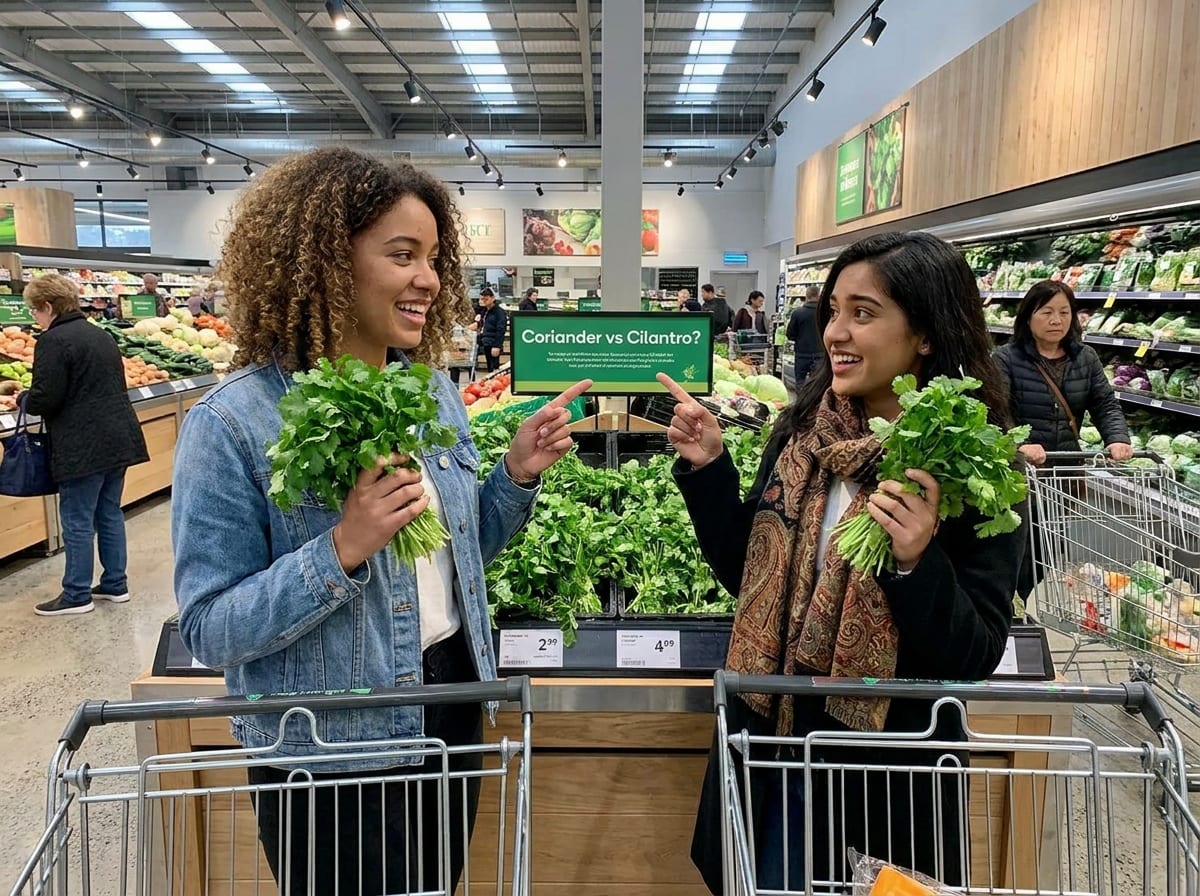
Quick answer
They are the same plant, Coriandrum sativum, and two completely different ingredients.
In American English: cilantro is the fresh green leaf, coriander is the dried seed.
In British, Indian and Australian English: coriander is both, and the recipe says fresh coriander or coriander seed to tell you which.
So when a recipe just says “coriander”, the question is not what the word means. It is where the recipe was written. A US recipe means the seed. A British or Indian one usually means the leaf.
There is no other common ingredient where one word means two things that taste nothing alike.
Cinnamon is cinnamon. Cumin is cumin. But coriander is a green herb that tastes of citrus and grass and dies the moment it meets heat, and a round tan seed that tastes warm and nutty and needs heat to wake up. Same plant. Same word, in half the world. Nothing else in the kitchen does this.
The result is a specific and very common kitchen failure: someone buys ground coriander for a salsa, or throws fresh leaves into a curry base at the start and wonders where they went.
The plant, in one paragraph
Coriandrum sativum is an annual in the carrot family, alongside cumin, fennel, dill and parsley. It grows fast, throws out soft green leaves, then bolts — sends up a flower stalk, blooms, and sets round seed. Every part is edible: the leaf, the tender stem, the root (used heavily in Thai cooking), and the seed.
The leaf and the seed contain almost entirely different aroma compounds. That is the whole reason they taste unrelated. It is not that one is a stronger version of the other. They are chemically two different ingredients that happen to grow on the same stalk.
Which word means what, by country
| Word | United States | Britain, India, Australia |
|---|---|---|
| Cilantro | The fresh green leaf | Rarely used; understood but not standard |
| Coriander | The dried seed, whole or ground | The leaf and the seed |
| Fresh coriander | Uncommon phrasing | The green leaf |
| Coriander seed | Redundant but clear | The seed |
| Dhania | Indian shops and recipes | The leaf and the seed both |
| Chinese parsley | Older US name for the leaf | Rare |
The practical rule: the word cilantro on a recipe always means leaves, everywhere. The word coriander means whatever the writer’s country means by it.
How to tell which one your recipe wants
Three tells, in order of reliability.
1. When it goes in. This is the strongest clue and it almost never fails.
- Going into hot oil at the start, with onions, garlic or whole spices → the seed.
- Scattered on at the end, after the heat is off, or stirred into something cold → the leaf.
Coriander leaf loses its flavour in a couple of minutes of cooking. No recipe writer puts it in first on purpose.
2. The amount. A teaspoon or two is a spice, so it is the seed. A handful, a bunch, or a quarter cup chopped is a herb, so it is the leaf. Nobody measures fresh leaves in teaspoons.
3. The dish. Salsa, guacamole, pho, larb, chutney and anything finished with lime want the leaf. A curry base, a spice rub, a pickling liquid, a sausage, a Belgian wheat beer or a garam masala want the seed.
What each one actually tastes like
The fresh leaf
Bright, grassy and citrus-sharp, with a soapy edge that some people taste far more strongly than others. It is a finishing ingredient. Heat destroys it within a minute or two, which is why it goes on at the end and why cooking it into a sauce is a waste of a bunch.
To a substantial minority of people — the proportion varies sharply by ancestry — it tastes overwhelmingly of soap, and that is a genuine inherited difference rather than fussiness. The full explanation, and what to use instead, is here.
The dried seed
Warm, nutty, gently sweet, with a distinct orange-peel note. It is a base ingredient. It wants heat, either dry-toasted in a pan or bloomed in oil, and it gets rounder and sweeter when it gets it. Used raw and unground it tastes of very little.
Ground coriander is the single most-used spice by weight in Indian cooking, because it does something no other spice does: it adds body and a faint sweetness without adding heat, colour or a flavour that announces itself.
Side by side
| Fresh leaf (cilantro) | Dried seed (coriander) | |
|---|---|---|
| Tastes of | Citrus, grass, soap to some | Warm, nutty, orange peel, mildly sweet |
| Role | Finishing, raw | Base, cooked |
| Heat | Destroys it | Needs it |
| Added | Last 30 seconds, or cold | First few minutes |
| Measured in | Handfuls and bunches | Teaspoons |
| Keeps for | 3 days to 3 weeks, refrigerated | A year whole, 6 months ground |
| Swaps for the other? | No | No |
The mistake this article exists to prevent
Ground coriander in a salsa. It turns the salsa dusty, warm and slightly sweet, when the whole point of the leaf was to make it sharp and green. There is no fixing it once it is stirred in.
Fresh leaves at the start of a curry. They vanish. You have spent a bunch of herbs on nothing, and the dish still needs the seed’s body.
Buying “coriander” for a British recipe in an American shop. The recipe wanted a bunch of green leaves. The American jar labelled coriander is ground seed. Different aisle, different ingredient, different dish.
The fix in all three cases is the timing test above. Ask when it goes in, not what the word means.
Can you swap one for the other?
No. This is worth being blunt about, because it is the first thing people try.
They share almost no aroma compounds. The leaf’s character is a set of aldehydes that are volatile and vanish with heat. The seed’s is dominated by linalool, which is warm and floral and survives cooking well. Substituting one for the other does not produce a milder version of the dish. It produces a different, usually worse one.
If you are out of one of them, the answer depends on which one, and the answers are genuinely different:
- Out of coriander seed or powder? → what to use instead of the seed
- Out of fresh cilantro? → what to use instead of the leaf
While we are here: coriander is not cumin
The other half of this confusion is the seed next to it in the drawer. Coriander seed is round, pale tan and brittle, and tastes bright. Cumin is elongated, ridged and brown-grey, and tastes earthy and heavy.
Indian cooking uses them together — sold pre-mixed as dhania-jeera — precisely because they do opposite halves of one job. Coriander is the top note, cumin is the base. The full comparison, including whether you can swap them, is cumin vs coriander.
What it is called elsewhere
The plant has a different name in almost every kitchen it reached, and in an American Indian grocery you may meet several of them on one shelf. Dhania is the Hindi word and the one you will see most. Kothimbir is Marathi, kothamalli Tamil, coentro Portuguese, and cilantro is simply the Spanish word that American English adopted.
The full naming guide — including which of these mean the leaf, which the seed, and which shop label to trust — is dhania in English.
The bottom line
One plant, two ingredients, and one word doing double duty in half the English-speaking world.
If the recipe is American, coriander means the seed and cilantro means the leaf. If it is British or Indian, coriander means the leaf unless it says coriander seed.
And when the recipe is ambiguous, use the timing test: early in hot oil is the seed, scattered on at the end is the leaf. That one question answers it almost every time.
Related reading:
Frequently asked questions
Is coriander the same as cilantro?+
Same plant, different part, and usually a different word depending on where the recipe was written. Coriandrum sativum produces both. In American English, cilantro means the fresh green leaves and coriander means the dried seeds. In British, Indian and Australian English, coriander means the leaves and the seeds both, and the recipe tells you which by saying fresh coriander or coriander seed. The plant is one thing. The ingredients are two.
My recipe says coriander. Do I use the leaves or the seeds?+
Look at where the recipe is from and where it appears in the method. A US recipe saying coriander means the dried seed or ground powder almost every time. A British or Indian recipe saying coriander usually means the fresh leaf, and it will say coriander seed when it wants the seed. The stronger clue is timing: a spice going in early with the onions is the seed, and a green thing scattered on at the end is the leaf.
Can I use cilantro instead of coriander seed?+
No, and this is the mistake worth avoiding. They taste nothing alike. The fresh leaf is bright, grassy and citrus-sharp, and it collapses to nothing when cooked. The seed is warm, nutty and mildly sweet, and it needs heat to open up. Swapping one for the other does not make a weaker version of the dish, it makes a different dish.
Why does America call it cilantro?+
Because American cooking met the fresh leaf through Mexican food, and cilantro is simply the Spanish word for it. The dried seed arrived separately through the spice trade under its English name, coriander. Two routes, two words, one plant — and a permanent source of confusion in any recipe that crosses the Atlantic.
Is coriander the same as parsley?+
No, though flat-leaf parsley is the plant most often mistaken for it in a shop. The leaves are a similar shape and a similar green. Crush one leaf between your fingers and the difference is instant: coriander leaf is pungent and citrus-sharp, parsley is mild and faintly peppery. Parsley is also the standard substitute when someone at the table cannot tolerate cilantro.
What is coriander called in India?+
Dhania, most commonly, and it covers both the leaf and the seed the same way the British word does. Fresh leaves are often called hara dhania or dhania patta, and the seed sabut dhania. Regional names differ: kothimbir in Marathi, kothamalli in Tamil, malli in Malayalam. All one plant.
Are coriander seeds just cilantro seeds?+
Botanically yes, and in the kitchen it matters less than it sounds. If a cilantro plant in your garden bolts and sets seed, those are coriander seeds and you can dry and use them. What is sold as cilantro seed for planting is the same thing selected for leaf production. The seed you cook with is the same seed, dried properly and harvested at the right moment.
New: Google now lets you choose which sites it shows you first. One tap lifts our spice guides in your results — nobody else's — and you can undo it any time.
More on Coriander

Cilantro Substitute: What to Use, and Why It Tastes Like Soap to You
Around a quarter of people taste soap when they eat cilantro, and it is inherited, not fussiness. What is actually happening, and the substitutes that work in salsa, curry, pho and guacamole — with amounts.
Coriander Substitute: What to Use for the Seed, and How Much
The best substitutes for coriander seed and ground coriander, with exact swap amounts — cumin, caraway, fennel, garam masala and curry powder — sorted by dish, plus the swap that ruins a curry.
Dhania in English: Every Name This One Plant Travels Under
Dhania, dhaniya, kothimbir, kothamalli, coentro, cilantro, Chinese parsley — all one plant. Which name means the leaf, which means the seed, and how to buy the right one in any shop.