
Spice guide
What Garam Masala Is, What Goes In It, and Why It Belongs at the End
Garam masala is not a spice. It is a finishing blend, and it is the one jar in a Western spice rack most likely to be used at the wrong moment. Stirred in at the start with the onions, it cooks away to almost nothing. Added in the last minute, it is the smell people mean when they say a curry tastes like a restaurant made it. These guides cover what is in it, how to build your own, what to do when the jar is empty, why it is not curry powder, and which of the supermarket blends is worth buying.
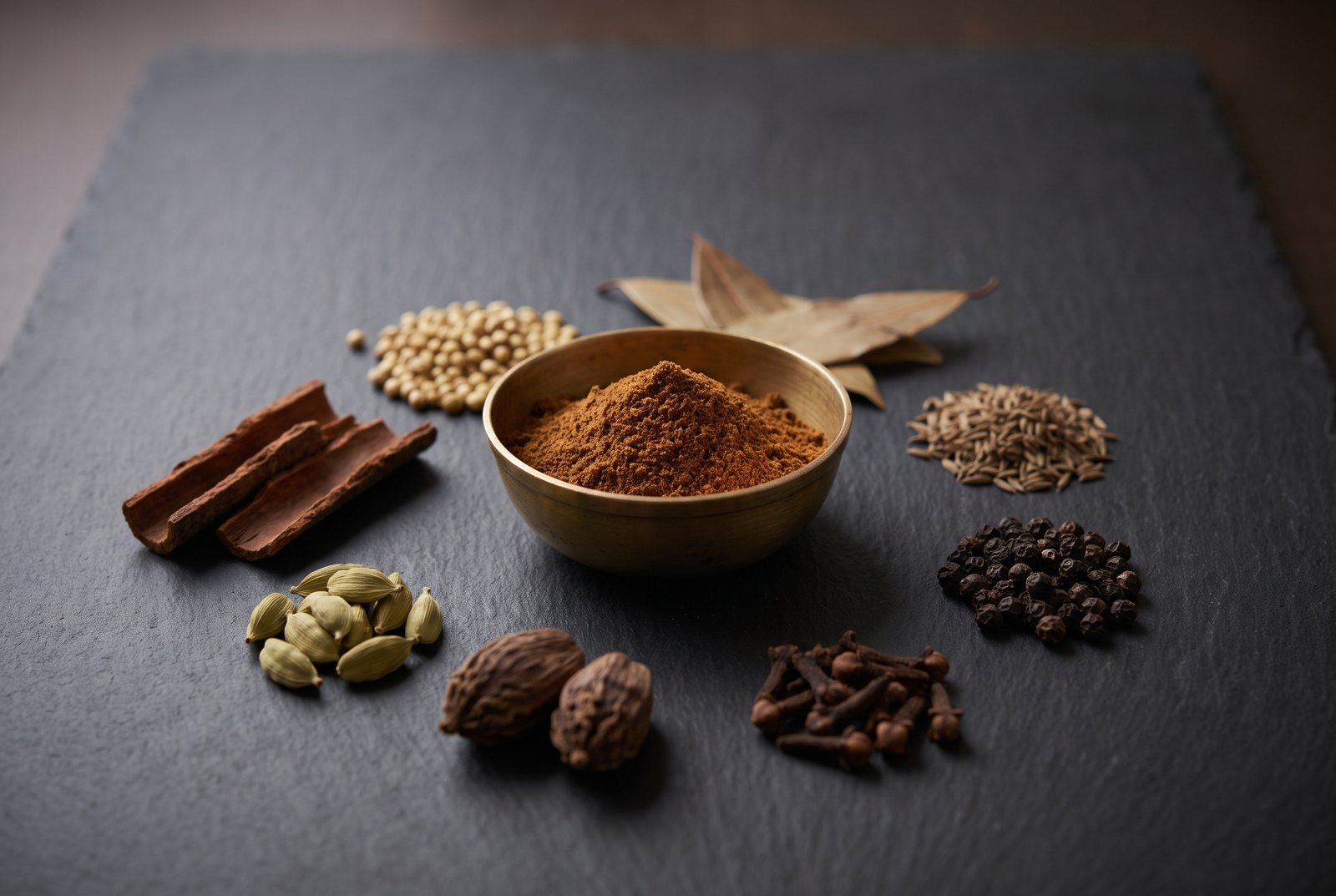
Garam masala is the most-owned and least-understood jar in a Western spice rack.
Most people who have it bought it for one recipe, added it with the onions the way the recipe told them to, and never noticed it again. That is not their fault. It is a translation problem that starts with the name and ends with the timing.
Garam masala is a finishing spice. Get that one thing right and it changes what your cooking tastes like more than buying a better brand ever will.
The name is the first thing that misleads
Garam means hot. Masala means a blend of spices. So the whole phrase reads, to an English speaker, as “hot spice mix” — and that is wrong in the way that matters.
The heat in garam is the Ayurvedic idea of a food that warms the body from the inside. It is the reason the blend is built on cinnamon, cardamom, cloves and pepper, and the reason a perfectly traditional garam masala can contain no chilli whatsoever. A cook who wants their curry hot adds chilli. A cook who wants it to smell like something adds garam masala.
The four questions this jar raises
“What is actually in it?” — because no two jars agree, and the ingredients list on a supermarket blend is usually shorter than a homemade one.
“When do I put it in?” — the question almost nobody asks, and the one that decides whether the jar was worth buying.
“Is this the same as curry powder?” — it is not, and the difference explains why one is in every Indian kitchen and the other is in none of them.
“The jar is empty and the pot is on.” — the usual reason anyone reads about a spice.
Why the end of cooking, and when that is wrong
The spices in garam masala are chosen for aroma rather than for flavour that survives heat. Cardamom, cinnamon and clove carry their character in volatile oils — compounds that evaporate readily, which is exactly why you can smell them from across a kitchen.
Put those into a pot that then simmers for forty minutes and most of what you paid for goes up with the steam. What is left is a faint background warmth. The dish is not ruined. It is just flat, in a way that is hard to name if you do not know what is missing.
Added in the last minute, the same half teaspoon perfumes the whole pot.
The exception, which page one usually skips: a dry dish has no long simmer to lose the aroma to. In a stir-fried sabzi, a dry rub, a masala omelette or anything finished in a few minutes, blooming a pinch in hot oil or ghee at the start works well — the fat catches the oils and holds them. The rule is not “never early”. The rule is never early in something wet and slow.
Many Indian cooks do both, and it is worth trying: a small pinch early for depth, the rest off the heat for perfume.
What is in the jar
There is no legal or traditional standard, which surprises people. A blend is a household’s, and the differences are real.
- The core, in nearly every blend — cinnamon or cassia, green cardamom, cloves, black peppercorns, cumin and coriander.
- The ones that separate good from ordinary — black cardamom for smoke, nutmeg and mace for a sweet woody perfume, bay leaf for a herbal edge.
- Regional signatures — a Punjabi blend leans savoury, heavy on cumin and coriander. A Kashmiri blend leans floral, sometimes with fennel or dried rose. A commercial Western blend is usually the short list, mildly ground, and a year old.
What is almost never in it: turmeric. If your blend is yellow, you are holding curry powder.
What these guides cover
The five pages here take one question each, and they are free.
Making your own is first, because it is the cheapest upgrade available — whole spices keep for years, ground ones do not, and a fresh blend is not a subtle improvement. Then what the ingredients actually are and what each one does. Then the substitute, for the evening the jar is empty. Then the curry powder comparison, which is really a piece of food history. And last, an honest look at what is on the supermarket shelf, because most of it is fine and some of it is not.
A note on health claims
Garam masala is a food. The spices in it — turmeric aside, since it is not in there — have the ordinary antioxidant and digestive record of well-spiced cooking, and nothing on this site will tell you a dose or call a spice a treatment.
The one practical health point worth making is duller and more useful: a blend built on real cardamom and real cinnamon, ground small and used fresh, means you season with aroma rather than with salt. That is the whole of the claim.
Going deeper
The full account — each of the twelve spices given a job rather than a description, the Mughal kitchen and the Ayurvedic idea of warming set out as what they are rather than dressed up as pharmacology, the British invention of curry powder told properly, and a chapter of nine dishes saying exactly when the blend goes in for each — is Garam Masala: No Recipe, No Turmeric, No Heat, a 64-page book. It is the first title in the series about a blend rather than a plant, so it has no botany chapter and a great deal more about timing. The five guides here are free and stay free.
Guides
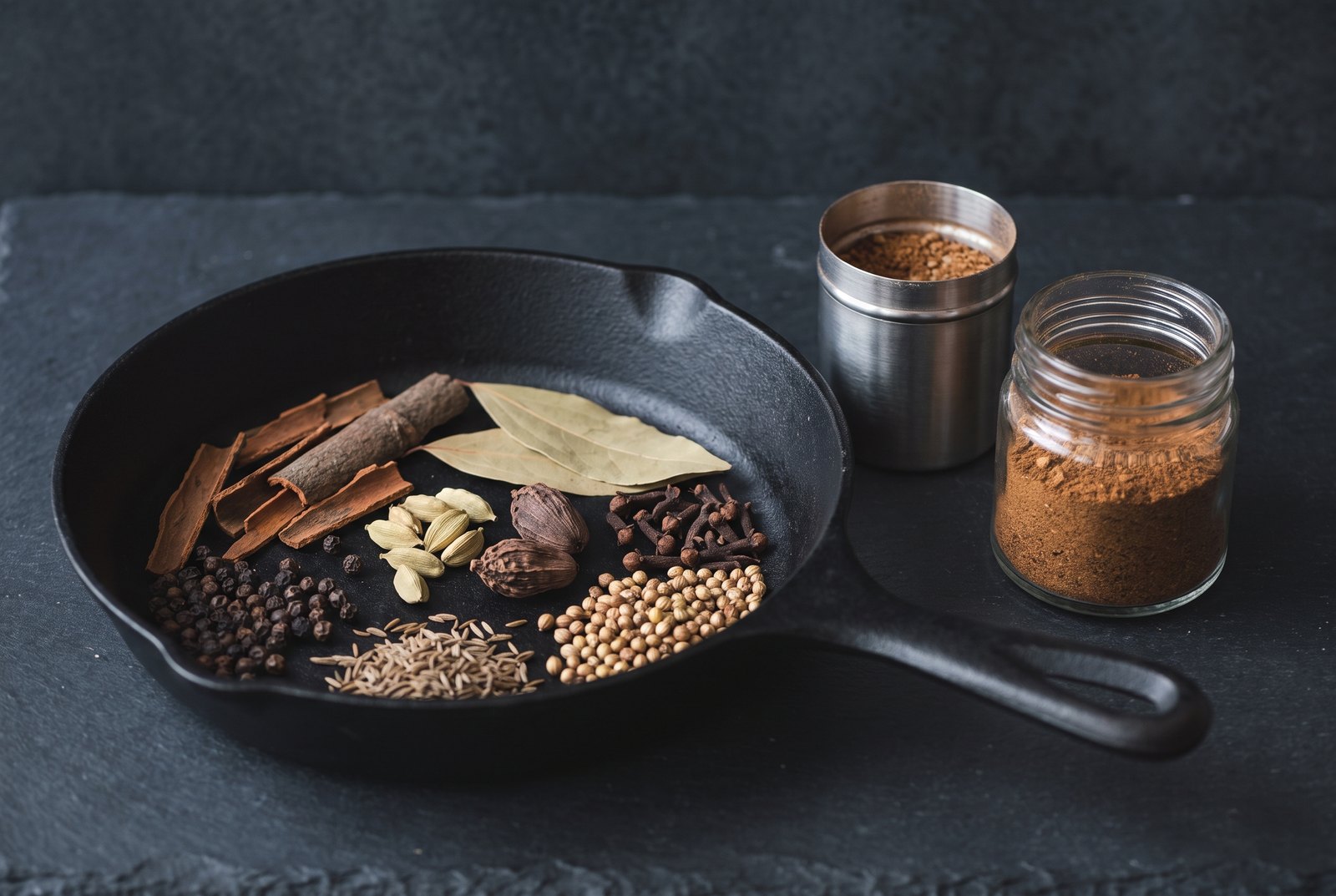
Garam Masala Recipe: How to Make It at Home
A homemade garam masala recipe with exact weights, plus the Punjabi and Kashmiri versions — which spices to roast, how long, how fine to grind, how long it keeps, and why a fresh blend beats a supermarket jar by a distance.
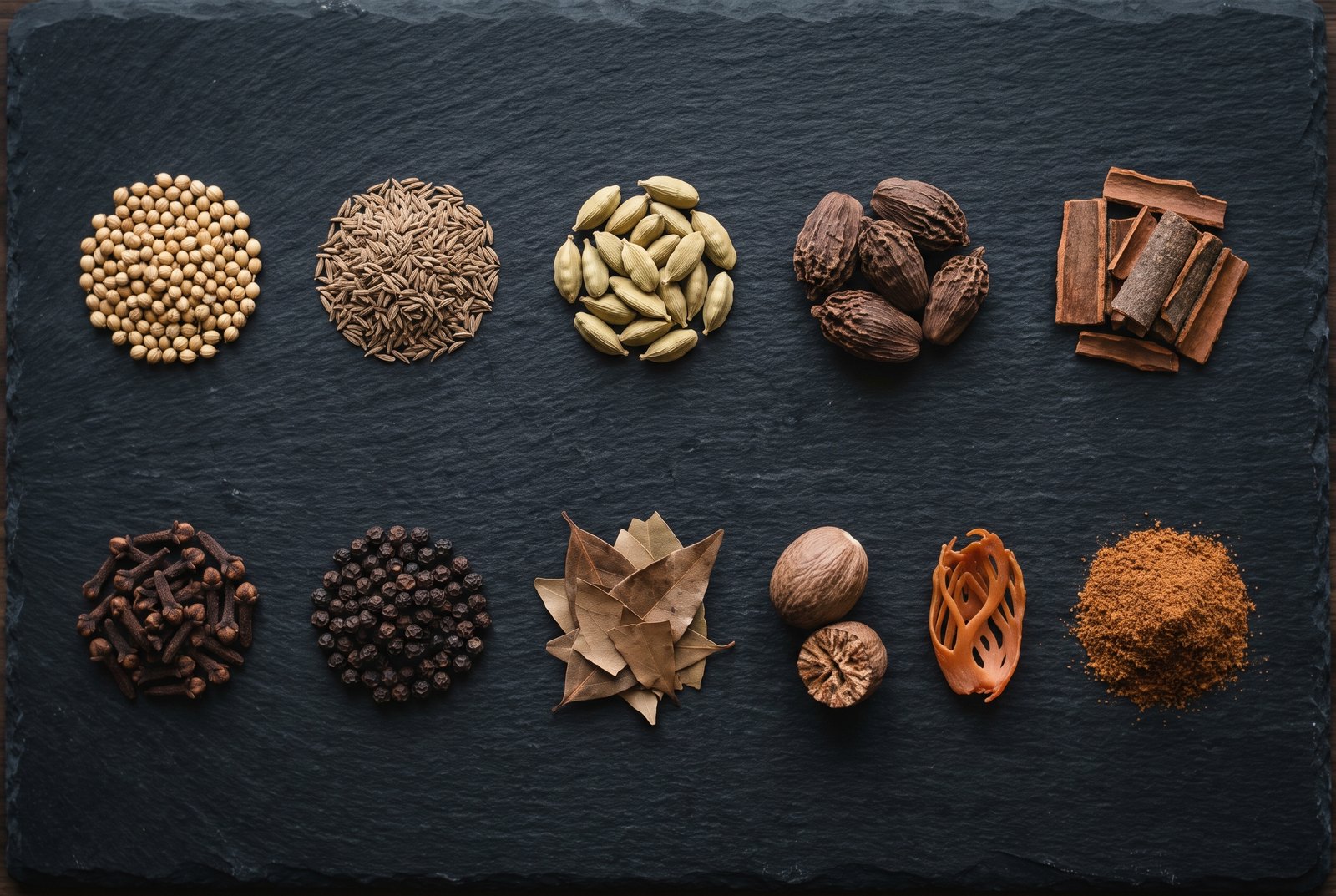
What Spices Are in Garam Masala? The Full Ingredients List
Every spice that goes into garam masala, what each one contributes, which are core and which are optional, how regional blends differ, what is never in it — and how to read a supermarket label and tell a real blend from a padded one.
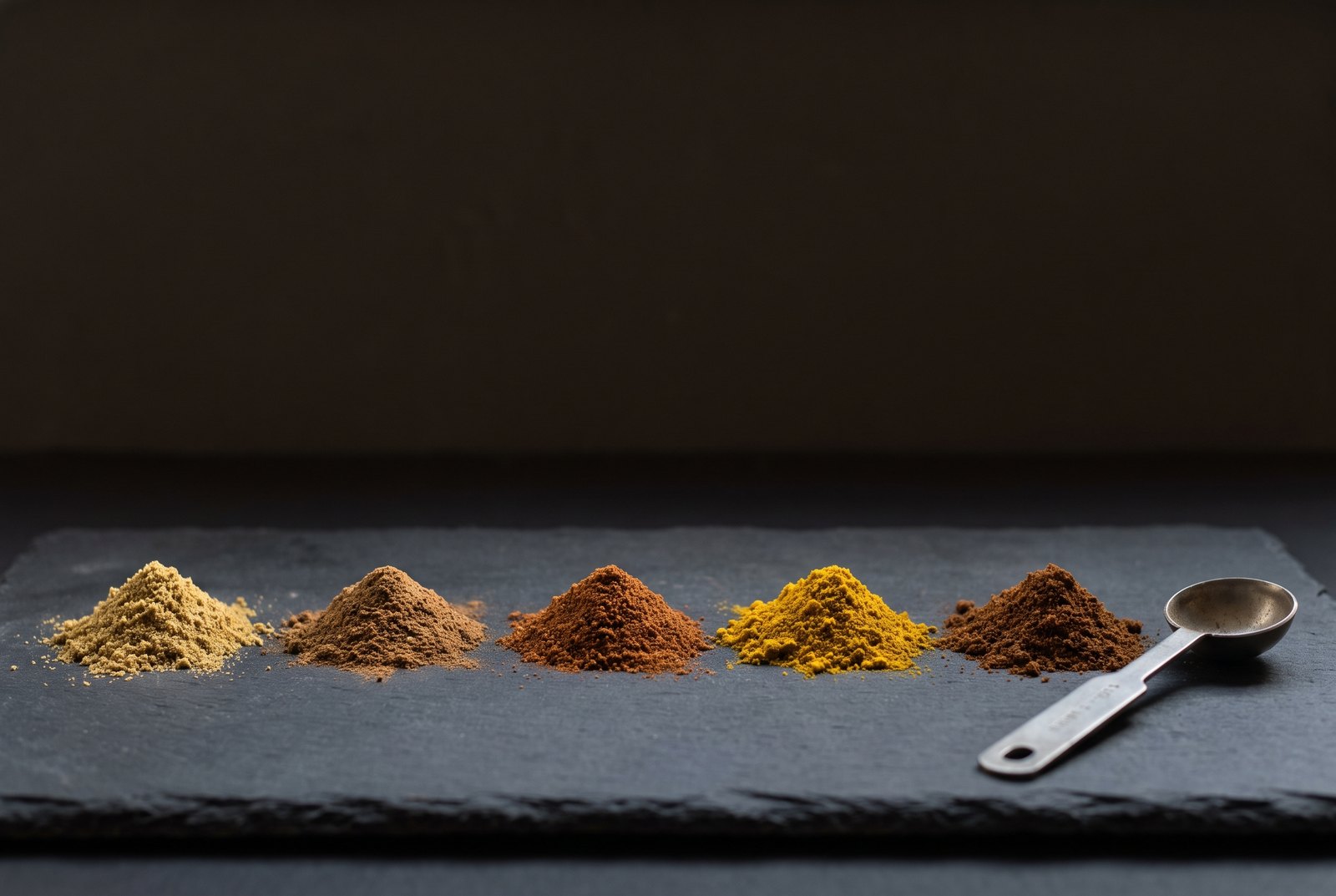
Garam Masala Substitute: What to Use, by Dish
The best garam masala substitutes with exact amounts — the two-spice cheat, a five-spice mix from a normal rack, and the three shop blends that come closest — plus why curry powder is the swap that changes your dish most.
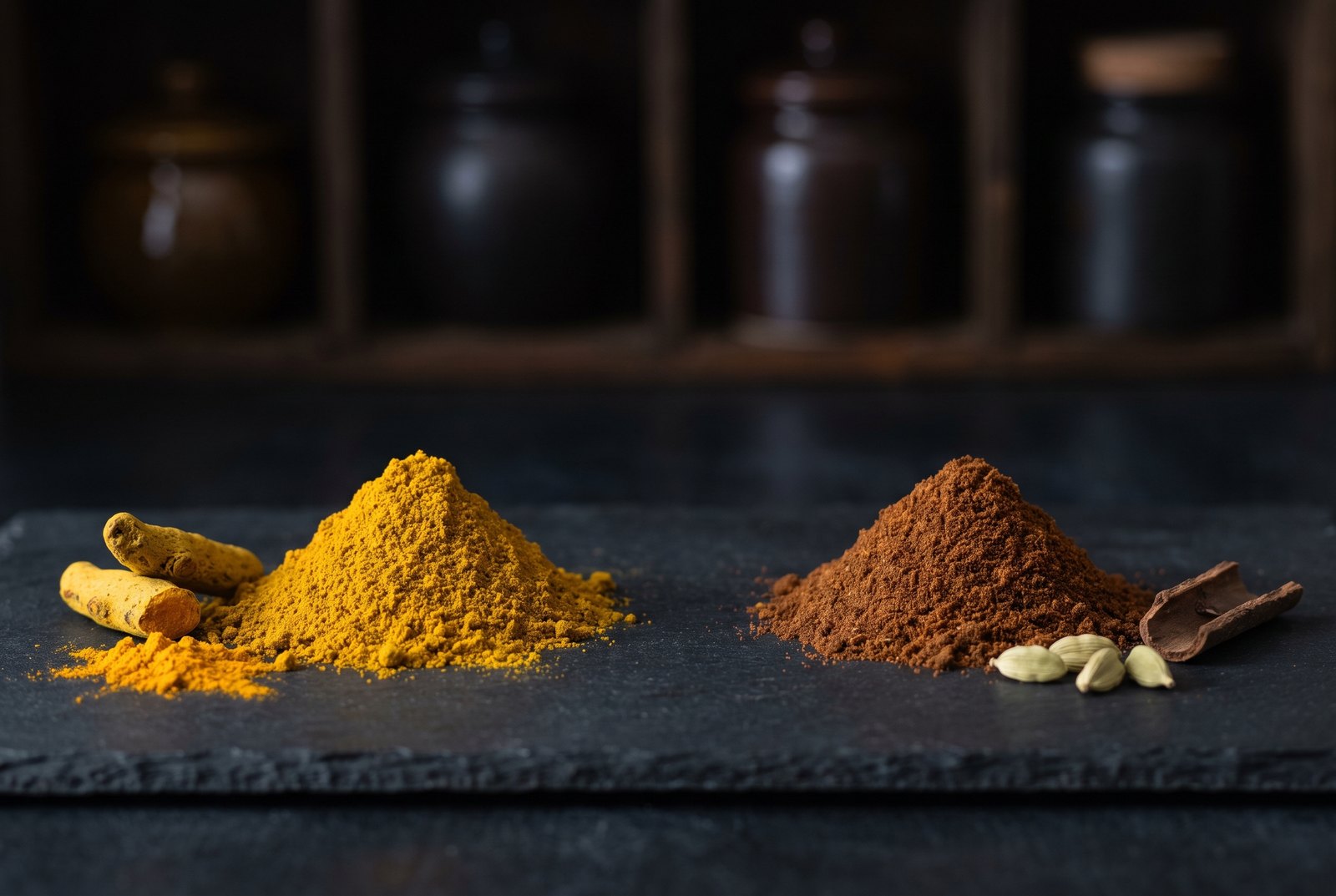
Curry Powder vs Garam Masala: What Is Curry Powder, Really?
Curry powder and garam masala are not two versions of the same thing. What curry powder actually is, why no Indian kitchen has a jar of it, when each one goes into the pot, how to substitute either — and what to use when a recipe calls for curry powder and you have none.
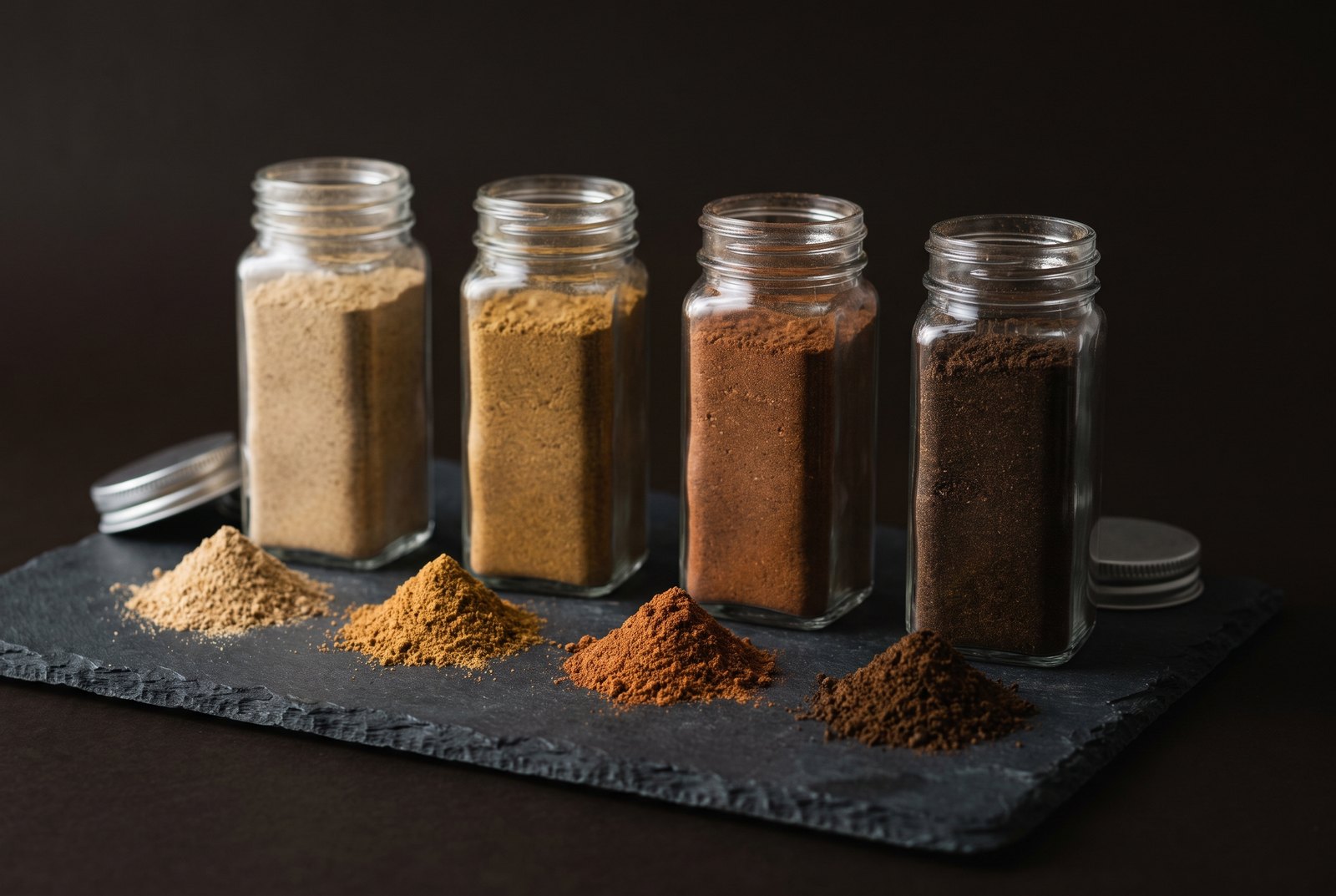
Best Garam Masala: How to Choose One, and Where to Buy It
How to pick a garam masala that is worth buying — the three things on the label that decide it, the four kinds of blend on sale in the US and who each suits, why the Indian grocer beats the supermarket, and when buying any of them is the wrong answer.
Common questions
What is garam masala?+
A ground blend of warm whole spices from northern India and Pakistan, used mainly as a finishing seasoning rather than a base. A typical blend is built on cinnamon or cassia, green and black cardamom, cloves, black peppercorns, cumin and coriander, with nutmeg, mace, bay leaf, fennel or star anise appearing depending on the region and the family. There is no single official recipe. It is not a curry powder, it is not a chilli blend, and it is not meant to be the only spice in a dish — it is the aromatic layer that goes on top of everything else.
What does garam masala mean in English?+
Warm spice blend. Garam is Hindi and Urdu for hot, and masala means a mixture of spices — but the heat meant here is the Ayurvedic sense of warming the body, not chilli heat on the tongue. This is the single most useful thing to know about the name, because it is why a good garam masala can contain no chilli at all and still be called hot. If you want heat you add chilli separately.
What does garam masala taste like?+
Warm, sweet and woody at the front, sharp and peppery at the back, with a strong perfume and very little burn. The cinnamon and cardamom carry the sweetness, the cloves give it the sharp medicinal edge, the black pepper supplies what heat there is, and the cumin and coriander sit underneath as a savoury base. Smelled from the jar it reads as almost dessert-like. In a dish it reads as depth. Blends vary a lot — a Punjabi blend is heavier on cumin and coriander, a Kashmiri one is more floral.
How do you use garam masala?+
Add it in the last minute or two of cooking, or sprinkle it over the finished dish. The aromatic compounds that make it worth having are volatile — hold them over a long simmer and they leave with the steam, which is why a curry that had garam masala stirred in at the start often tastes flat. Half a teaspoon to a teaspoon for a dish serving four is a normal amount. Curries, dals, biryani, roasted vegetables, yoghurt marinades and rubs for grilled meat are all standard uses.
Is garam masala added at the beginning or the end of cooking?+
The end, almost always. That is the rule worth learning, and it fixes more flat curries than any other single change. The exception is a dry dish with no simmering liquid to carry the aroma — a stir-fried sabzi, a spice rub, a masala omelette — where a pinch bloomed in hot oil or ghee at the start gives the fat something to hold. In anything wet and slow, keep it for the end. Some cooks do both: a little early for depth, the rest at the end for perfume.
Is garam masala the same as curry powder?+
No, and they are not really the same kind of thing. Garam masala is an Indian finishing blend of warm aromatics with no turmeric and usually no chilli. Curry powder is a British invention from the colonial period, built around turmeric — which is what makes it yellow — and designed as an all-in-one base seasoning that goes in early. Indian home kitchens do not have a jar labelled curry powder. Swapping one for the other changes both the colour and the timing of a dish.
Is garam masala spicy?+
Usually not, in the chilli sense. Most traditional blends contain no chilli at all, and the only heat comes from black pepper. Commercial blends sold in Western supermarkets sometimes add chilli, so read the ingredients if that matters to you. The word garam refers to warming the body in the Ayurvedic sense, which is why the name misleads almost every English speaker who meets it for the first time.
What is in garam masala?+
Cinnamon or cassia, green cardamom, black cardamom, cloves, black peppercorns, cumin seed and coriander seed are the core. Common additions are nutmeg, mace, bay leaf, fennel seed, star anise and dried red chilli. Nutmeg, mace and star anise are what separate a fragrant blend from a merely warm one. There is no fixed list — the blend varies by region and by household, and the version sold in a Western supermarket is usually a shorter and milder list than a homemade one.
What can I use instead of garam masala?+
Equal parts ground cumin and ground allspice is the quickest one-for-one swap if you have both. A better substitute, if your rack allows it, is a quarter teaspoon each of cumin, coriander, cardamom and black pepper plus an eighth of a teaspoon each of cinnamon and clove, per teaspoon of garam masala. Curry powder is the substitute people reach for and the one that changes the dish most, because the turmeric in it will turn the food yellow.
Does garam masala go bad?+
It does not spoil in a way that will make you ill, but it goes flat, and a flat garam masala is a waste of a step. Ground spices lose their volatile oils steadily once opened; three to four months in a sealed jar away from the stove is when a blend is at its best, and after a year it is mostly colour. This is the strongest argument for making a small batch yourself rather than buying a large jar — you grind what you will use in a season.