
Garam Masala
Curry Powder vs Garam Masala: What Is Curry Powder, Really?
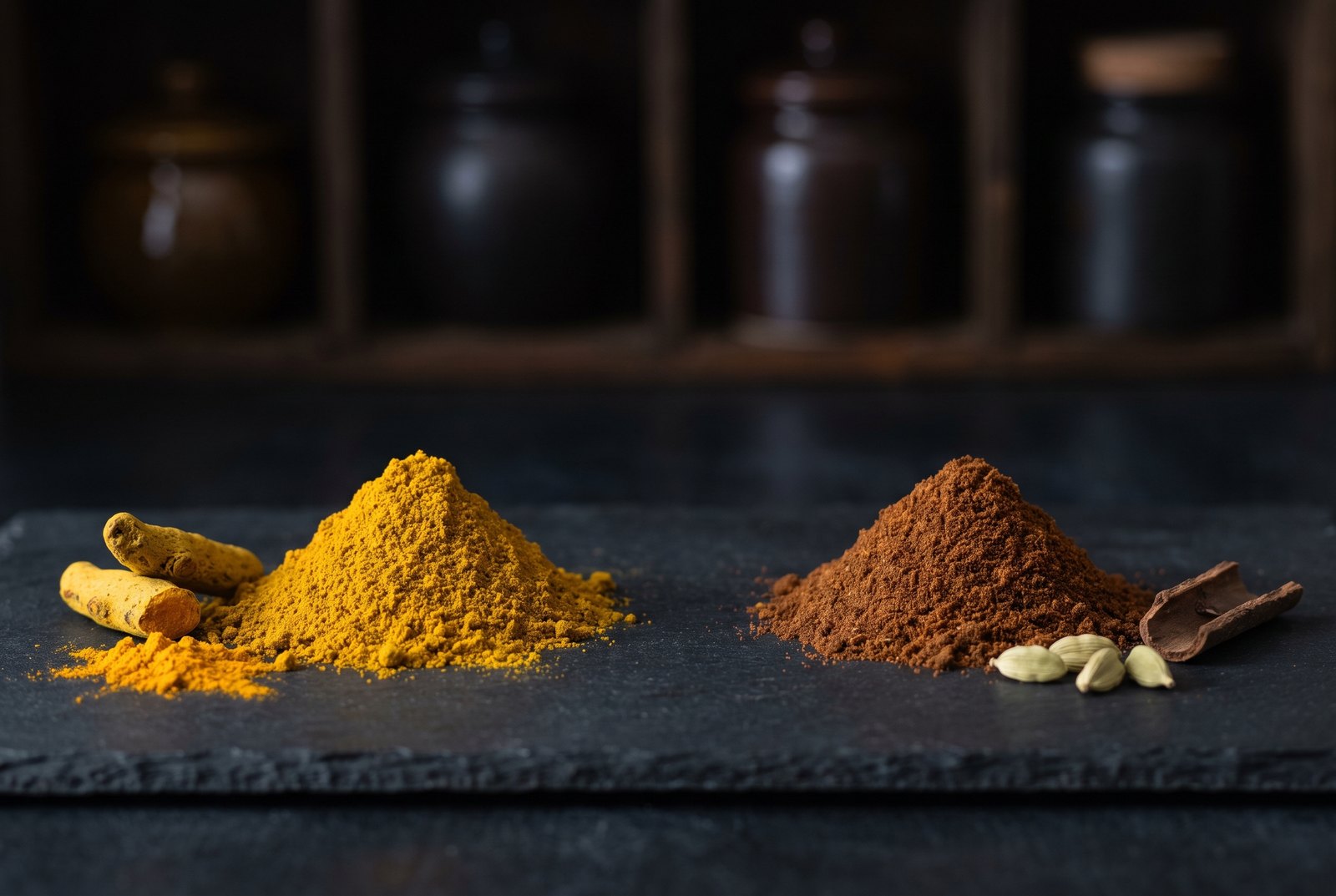
Quick answer
They are not two versions of the same thing.
| Curry powder | Garam masala | |
|---|---|---|
| Colour | Yellow | Reddish-brown to dark brown |
| Turmeric | Yes — it is the base | No |
| Chilli | Usually | Usually not |
| When it goes in | Start of cooking | End of cooking |
| What it is for | A whole dish’s seasoning | An aromatic finish |
| Where it is from | Britain, colonial period | Northern India and Pakistan |
The one-line version: curry powder is a base, garam masala is a perfume.
What curry powder actually is
Curry powder is a British invention, and knowing that explains everything else about it.
In the eighteenth and nineteenth centuries, British households and returning colonial officers wanted to reproduce the food they had eaten in India. What they did not have was the shelf of whole spices, the grinding stone, or the knowledge of which spice went in when. So merchants sold a pre-mixed compromise: one jar, standardised, that approximated the general direction of Indian food and could be spooned into a stew.
That is not a criticism. It is a genuinely useful product and it made a whole cuisine of its own — the British curry, Japanese kare, Caribbean curry powder, and a great deal of good cooking descends directly from it.
But it means there is no Indian dish that curry powder comes from. The word curry itself is an English rendering, probably of the Tamil kari. In India there is no single thing called curry, and correspondingly no single powder for making it.
What is in it
- Turmeric — the base, and the reason it is yellow. Earthy, slightly bitter, mild
- Coriander — the bulk, mild and citrusy
- Cumin — the savoury floor
- Fenugreek — the distinctive bittersweet note that says curry powder more than anything else does
- Ginger, black pepper, mustard, fennel — in varying amounts
- Chilli or cayenne — usually a little; a lot in Madras curry powder
The fenugreek is worth singling out. It is the ingredient most people would not name and the one that makes commercial curry powder instantly recognisable. It is barely present in garam masala.
What garam masala is, by contrast
Garam masala is an Indian household blend of warm aromatics — cardamom, cinnamon, cloves, black pepper, cumin and coriander, sometimes nutmeg, mace and bay.
No turmeric. Usually no chilli. And critically, it is not a base seasoning at all: it goes in at the end of cooking, or off the heat entirely, because the volatile oils that make it worth having evaporate over a long simmer.
The full ingredient list is in what spices are in garam masala.
The four differences that actually matter in a pot
1. Colour
Turmeric is a dye. It has been used as one for centuries. Stir curry powder into a pale korma, a cream sauce or a yoghurt marinade and the dish turns yellow immediately and permanently.
Garam masala browns a dish very slightly and otherwise leaves the colour alone.
2. Timing
Curry powder wants heat and time. Turmeric, coriander and fenugreek all taste raw and dusty until they have been cooked in fat for a minute or two and then simmered. Adding curry powder at the end of cooking leaves a chalky edge.
Garam masala wants neither. Its aromatics are fugitive; give them forty minutes of simmering and they leave with the steam.
This is the difference people get wrong most often, and it is more consequential than the ingredients. A recipe that says “add garam masala” at the end is not being fussy.
3. Completeness
Curry powder is designed to be the whole seasoning of a dish. One jar, one spoonful, done.
Garam masala is designed to be the last layer on top of other spices. A dish seasoned with nothing but garam masala tastes thin and oddly perfumed, because the base it was meant to sit on was never built.
4. Heat
Most curry powders carry some chilli. Madras curry powder carries a lot. Garam masala traditionally carries none, and what heat it has comes from black pepper.
Neither is a reliable way to make food hot. Add chilli separately and control it.
Substituting one for the other
Curry powder in place of garam masala
Use ¾ tsp curry powder per teaspoon of garam masala. Add it about five minutes before the end rather than at the last second, so the turmeric loses its raw edge.
Do not do this in a pale dish. Korma, a cream sauce, a white fish curry — the colour change is not a nuance, it is the whole result.
Better options are in garam masala substitute; baharat is the closest shop-bought blend and it has no turmeric.
Garam masala in place of curry powder
Use 1 tsp garam masala plus ½ tsp ground turmeric per teaspoon of curry powder, and add it early, with the onions.
The turmeric is not optional. Without it you have a brown dish that a recipe expected to be yellow, and you have lost the earthy base note that curry powder is built on. Add a pinch of ground fenugreek too if you have it — that is the missing signature.
Curry powder substitute, from scratch
If a recipe calls for curry powder and you have none, this makes about three tablespoons and is a genuine working blend:
- 2 tbsp ground turmeric
- 2 tbsp ground coriander
- 1 tbsp ground cumin
- 1½ tsp ground ginger
- 1 tsp ground fenugreek
- ½ tsp ground mustard
- ½ tsp black pepper
- ¼ to ½ tsp cayenne, to taste
For Madras curry powder, raise the cayenne to two teaspoons. That is essentially the whole difference — Madras is the same blend, hotter.
The two you cannot skip are turmeric and coriander. Turmeric because it is what curry powder is, coriander because it is the volume. Fenugreek is the one that makes it taste like the jar; if you have it, use it, and if not the blend is still good.
Using both, which is what most home kitchens should do
If your cupboard holds these two jars and not much else, the sensible way to cook Indian food is to use them at different moments:
- Curry powder early — bloomed in hot oil with the onions, ginger and garlic, then simmered with everything else.
- Garam masala at the end — half a teaspoon stirred in off the heat.
That sequence is a fair approximation of what an Indian cook does with eight separate spices: the sturdy earthy ones go in at the beginning and cook, the delicate aromatic ones go on at the end and do not.
It is not authentic. It is a good deal better than either jar used alone, and it is two jars.
And if you want to stop buying either
Both blends are, in the end, ground spices in a jar losing their oils. Making your own garam masala takes about twenty-five minutes and the whole spices you buy for it will outlast three commercial jars.
Frequently asked questions
What is curry powder?+
A British blend, created in the colonial period as a single jar meant to stand in for the many separate spices an Indian cook would use. It is built on turmeric, which is what makes it yellow, with coriander, cumin, fenugreek, ginger, black pepper and usually some chilli. It is a base seasoning designed to go in at the start of cooking. It is a real and useful thing — it is simply British, not Indian, and there is no dish in India called curry that it comes from.
Is curry powder the same as garam masala?+
No. Curry powder is a turmeric-based all-in-one seasoning added at the start of cooking; garam masala is a turmeric-free aromatic blend added at the end. They differ in colour, in ingredients, in timing and in purpose. The clearest test is the colour — curry powder is yellow because of turmeric, garam masala is brown because it has none. Swapping one for the other changes both how a dish looks and when it should be seasoned.
Can I substitute curry powder for garam masala?+
You can, but expect the dish to turn yellow and to taste flatter. Use about three quarters of a teaspoon of curry powder per teaspoon of garam masala, and add it five minutes before the end rather than at the last second, so the turmeric has a little time to cook out its raw edge. Avoid it entirely in pale dishes like korma or a cream sauce, where the colour change is the whole problem.
What can I use instead of curry powder?+
Two teaspoons of ground turmeric, two of ground coriander, one of ground cumin, half a teaspoon of ground ginger and a quarter to a half of cayenne makes a good working curry powder — the turmeric is not optional, since it is what curry powder is. If you only have garam masala, use a teaspoon of it plus half a teaspoon of turmeric per teaspoon of curry powder, and add it early. Madras curry powder is the same blend with more chilli.
Which is hotter, curry powder or garam masala?+
Curry powder, usually — most commercial versions contain chilli or cayenne, and Madras curry powder contains a good deal. Garam masala traditionally contains no chilli at all, and its only heat is black pepper. The word garam means warming in the Ayurvedic sense rather than hot on the tongue, which is why the name misleads. Neither blend is reliably hot enough to season a dish for heat; add chilli separately if you want it.
Do Indian people use curry powder?+
Essentially not, at least not as an all-purpose seasoning. An Indian kitchen has whole spices and several specific blends — garam masala, chaat masala, sambar powder, rasam powder — each for particular dishes, and the cook combines them per recipe. A single jar labelled curry powder that goes into everything is a Western convenience with no Indian equivalent. Manufacturers in India do sell blends aimed at export markets, which is where some of the confusion comes from.
Can I use both curry powder and garam masala in the same dish?+
Yes, and it is a sensible way to cook if those are the two jars you own. Use the curry powder early, with the onions and the fat, where the turmeric and coriander want heat and time. Keep the garam masala for the last minute, where its aromatics survive. That sequence is close to how an Indian cook actually layers spices, using two blends rather than eight single spices.
New: Google now lets you choose which sites it shows you first. One tap lifts our spice guides in your results — nobody else's — and you can undo it any time.
More on Garam Masala
Best Garam Masala: How to Choose One, and Where to Buy It
How to pick a garam masala that is worth buying — the three things on the label that decide it, the four kinds of blend on sale in the US and who each suits, why the Indian grocer beats the supermarket, and when buying any of them is the wrong answer.
Garam Masala Substitute: What to Use, by Dish
The best garam masala substitutes with exact amounts — the two-spice cheat, a five-spice mix from a normal rack, and the three shop blends that come closest — plus why curry powder is the swap that changes your dish most.
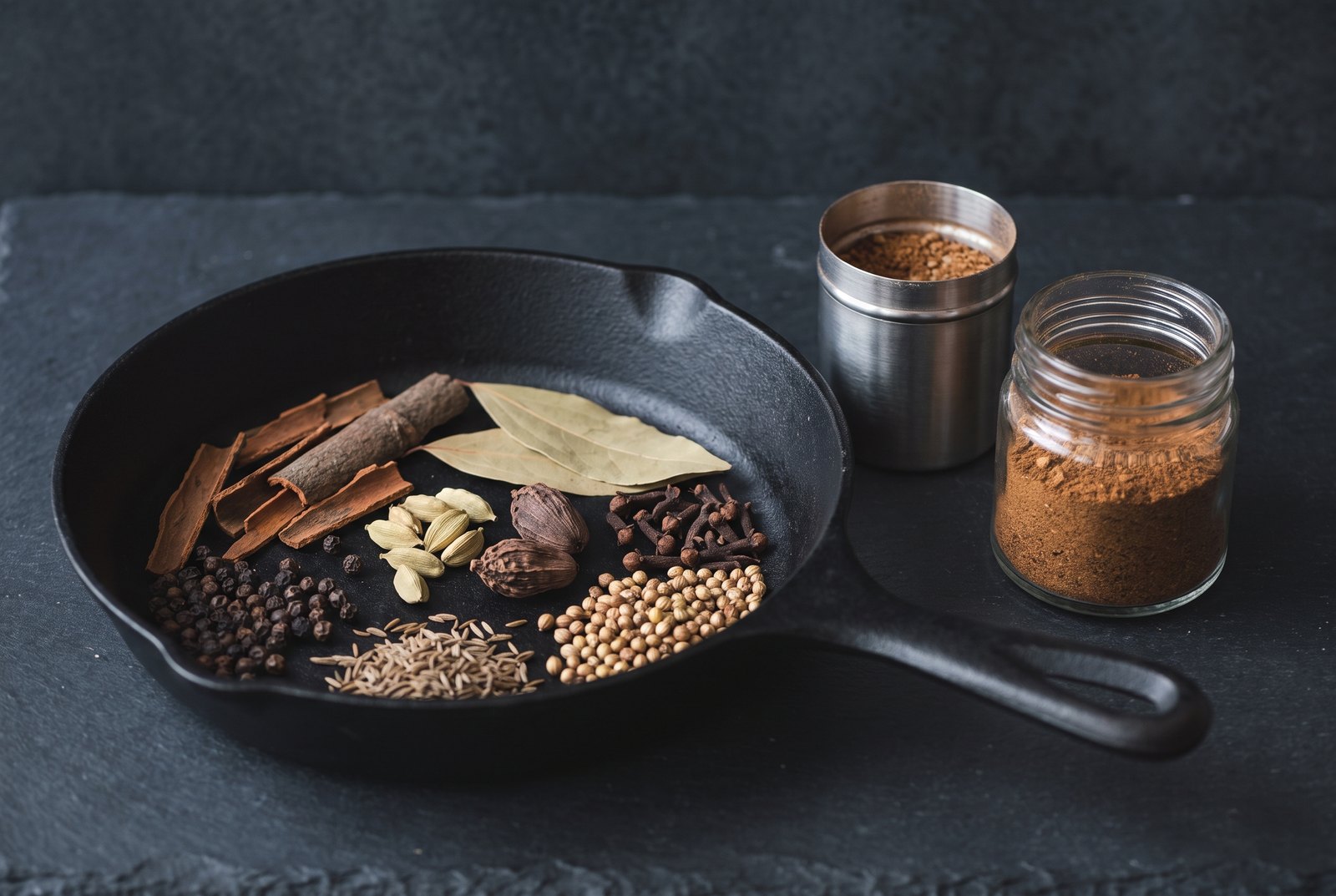
Garam Masala Recipe: How to Make It at Home
A homemade garam masala recipe with exact weights, plus the Punjabi and Kashmiri versions — which spices to roast, how long, how fine to grind, how long it keeps, and why a fresh blend beats a supermarket jar by a distance.