
Spice guide
Star Anise Benefits, and the Two Things Worth Knowing Before You Cook With It
Star anise is the eight-pointed pod that gives pho its backbone and Chinese five-spice its name. It is also the spice most often confused with something else — with aniseed, which is a different plant entirely, with javitri, which sits beside it in the biryani jar, and with Japanese star anise, which looks nearly identical and is not food. These guides sort out what it does, what to use instead, what it is called in your kitchen, and how to tell the real thing.
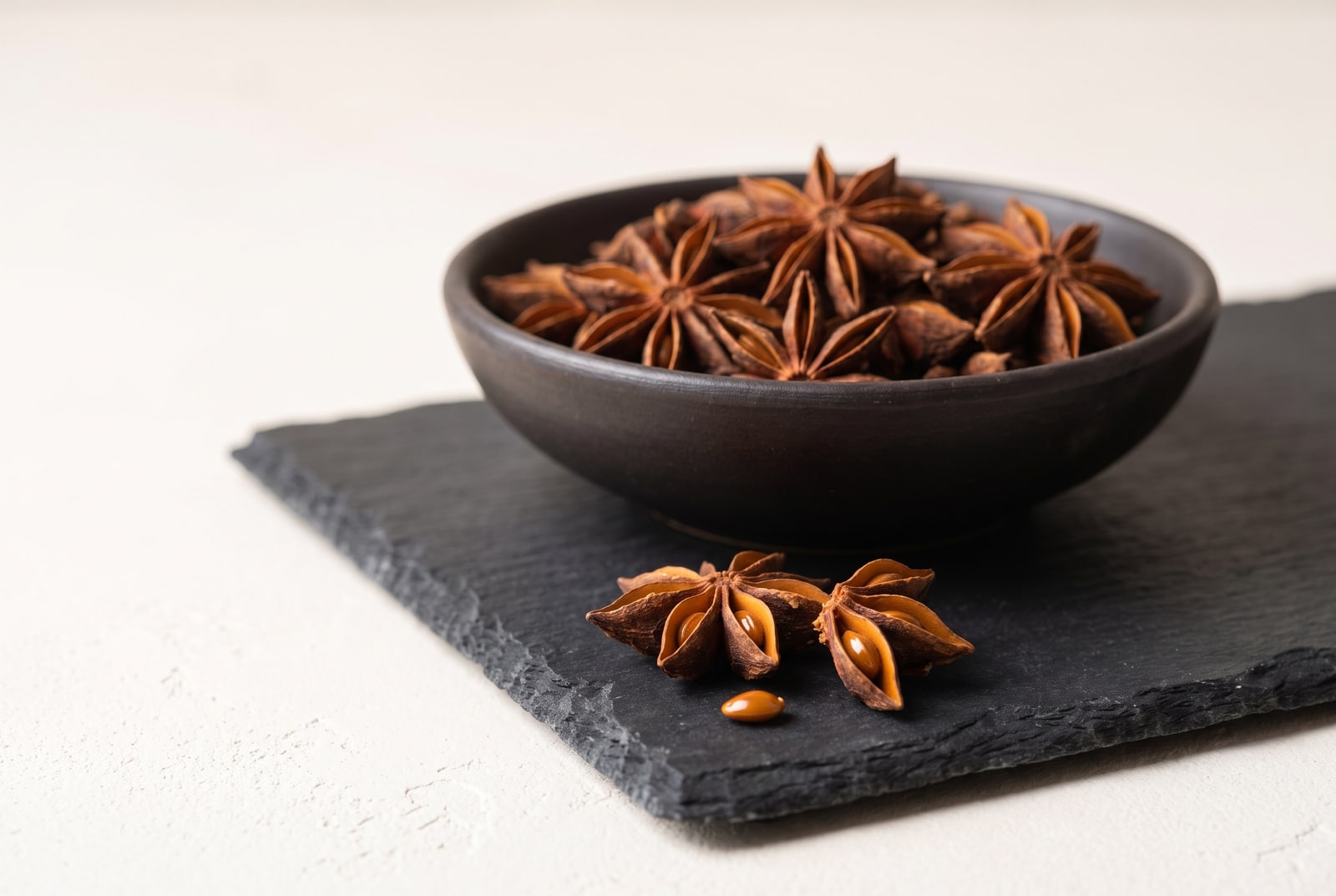
Star anise is the spice people recognise instantly and name incorrectly.
The eight-pointed pod is on the front of every pho photograph and in the middle of every Chinese five-spice blend. It is also called aniseed by people who mean a completely different plant, confused with javitri in Indian kitchens, and sold under at least six names depending on which shelf you are standing in front of.
And unlike most spice confusions, one version of this one matters. A second species, Japanese star anise, looks close enough to pass and is not food.
The four questions this pod raises
“What do I use when I run out?” — because it appears in one recipe a year for most people, and the jar is usually empty when it does.
“What is it actually doing in there?” — in a pho broth, in five-spice, in a biryani, where it is one of six whole spices and the only one most cooks cannot identify by smell.
“Is this the same thing as aniseed?” — it is not, and the two are not even related.
“Which one is on my shelf?” — chakra phool, badiyan, biryani flower, and the one species you do not want.
What the evidence actually supports
We grade every claim inline so you can see the strength of the support without leaving the sentence.
- Digestive use — traditional, and long-standing. Star anise has centuries of use after heavy meals across Chinese, Vietnamese and Indian cooking, with a plausible mechanism behind it.
- Antioxidant and antimicrobial activity — lab. Anethole and the flavonoids in the pod are genuinely active in a dish. That is not the same as being active in a person.
- The antiviral drug story — true, and routinely misread. Star anise is a commercial source of shikimic acid, which is a starting material in the manufacture of oseltamivir. The pod is not the drug, drinking the tea is not taking the drug, and no amount of star anise treats influenza. This is the single most distorted claim about this spice, and it gets a straight answer here rather than a quiet omission.
- Blood sugar and cholesterol — preliminary and thin. Animal work, not replicated in people at a size that should change what you eat.
- Flavour — the actual reason it is in your kitchen. A pho broth without it does not taste like pho, and that is worth more than any of the above.
Read this first
Star anise in food is a food, and safe as one for adults in the amounts a recipe uses. Nothing on these pages is a treatment, and none of it tells you how much to take.
Three things are worth stating plainly.
Japanese star anise is a different species and is toxic. Illicium anisatum is grown as an ornamental shrub, its fruit contains neurotoxic compounds, and it has been found adulterating culinary shipments because it is cheaper. The reliable defence is a seller who names Illicium verum on the label — not a visual check, which fails on broken or ground product.
Do not give star anise tea to a baby. The illness reports that exist are overwhelmingly infants given star anise infusions for colic, where a small body and an unclear dose meet a possible adulterant. This site does not publish doses for anyone, and for infants it does not publish the practice at all.
Concentrated forms are a different thing from the pod in your pot. Star anise essential oil and supplement extracts are not the spice, and the safe-as-food argument above does not extend to them.
Going deeper
The complete account — the tree that Europe spent two centuries trying and failing to grow, the flu-drug story told properly, the adulteration record and what regulators actually found, and the Chinese, Vietnamese and Indian traditions kept separate rather than blended into one “Asian” note — is Star Anise: One Pod, Six Names, Two Species, a 52-page book that gives three chapters to the second species because the question a cook actually has is not whether star anise is dangerous but how to know the bag in their hand is the right thing. The guides here are free and stay free.
Guides
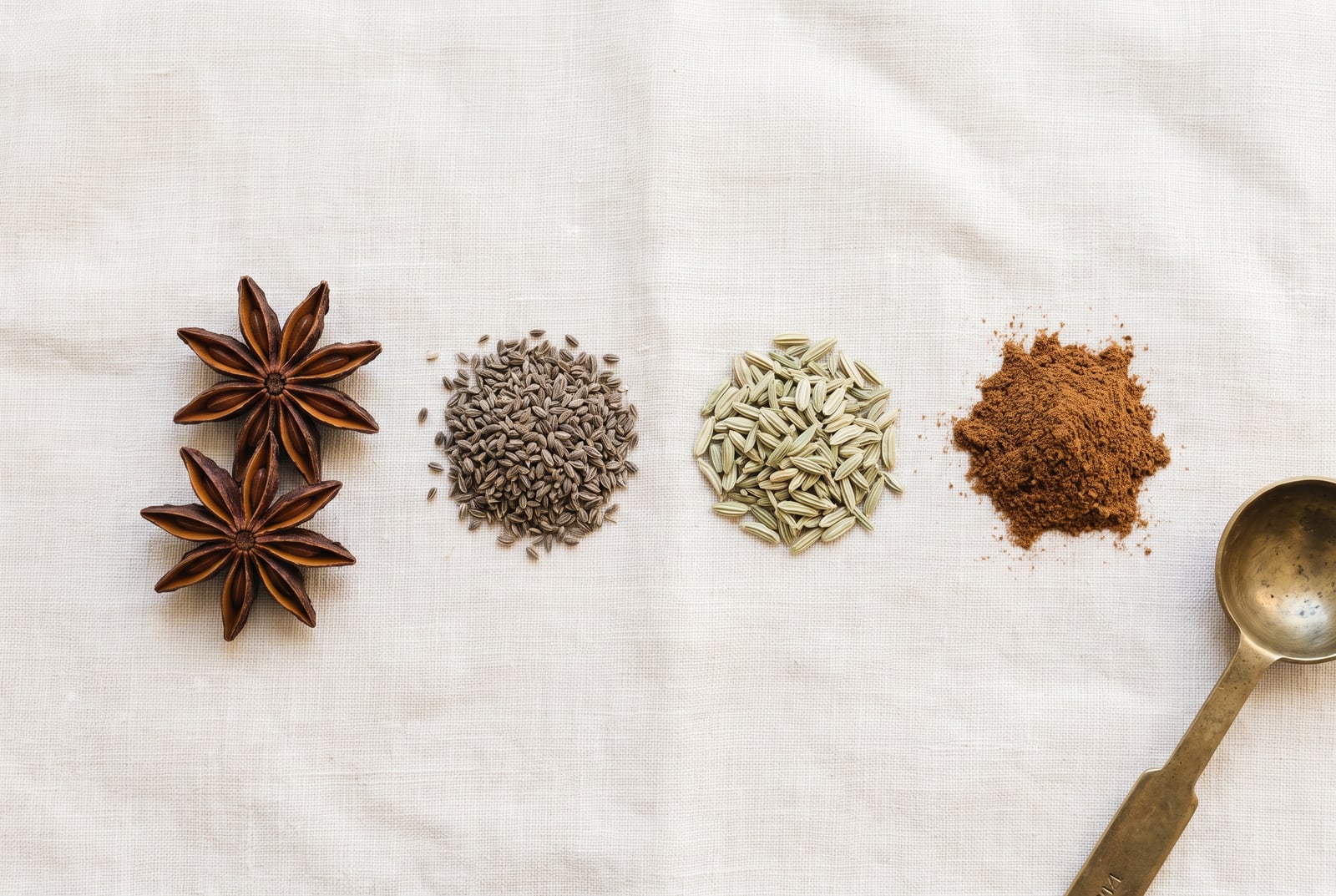
Star Anise Substitute: What to Use, by Dish
The best star anise substitutes with exact swap amounts — five-spice, aniseed, fennel, cloves and cinnamon — sorted by what you are cooking, plus the two dishes where leaving it out beats substituting.
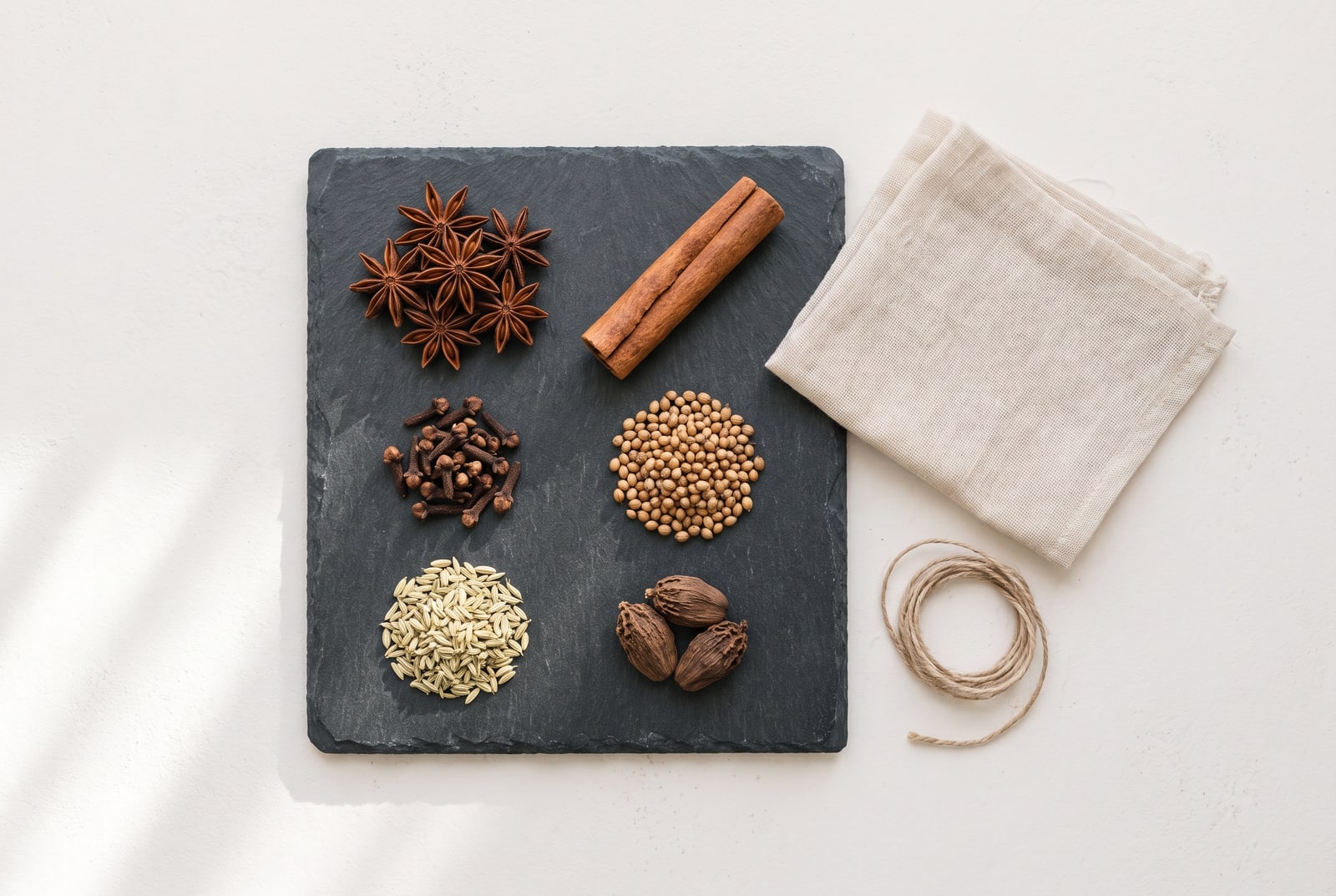
Star Anise in Pho: What It Does, and the Five Spices Beside It
What star anise actually contributes to a pho broth, how much to use, why it must be toasted first, and what each of the other five spices in the bundle is doing — a spice guide, not a broth recipe.
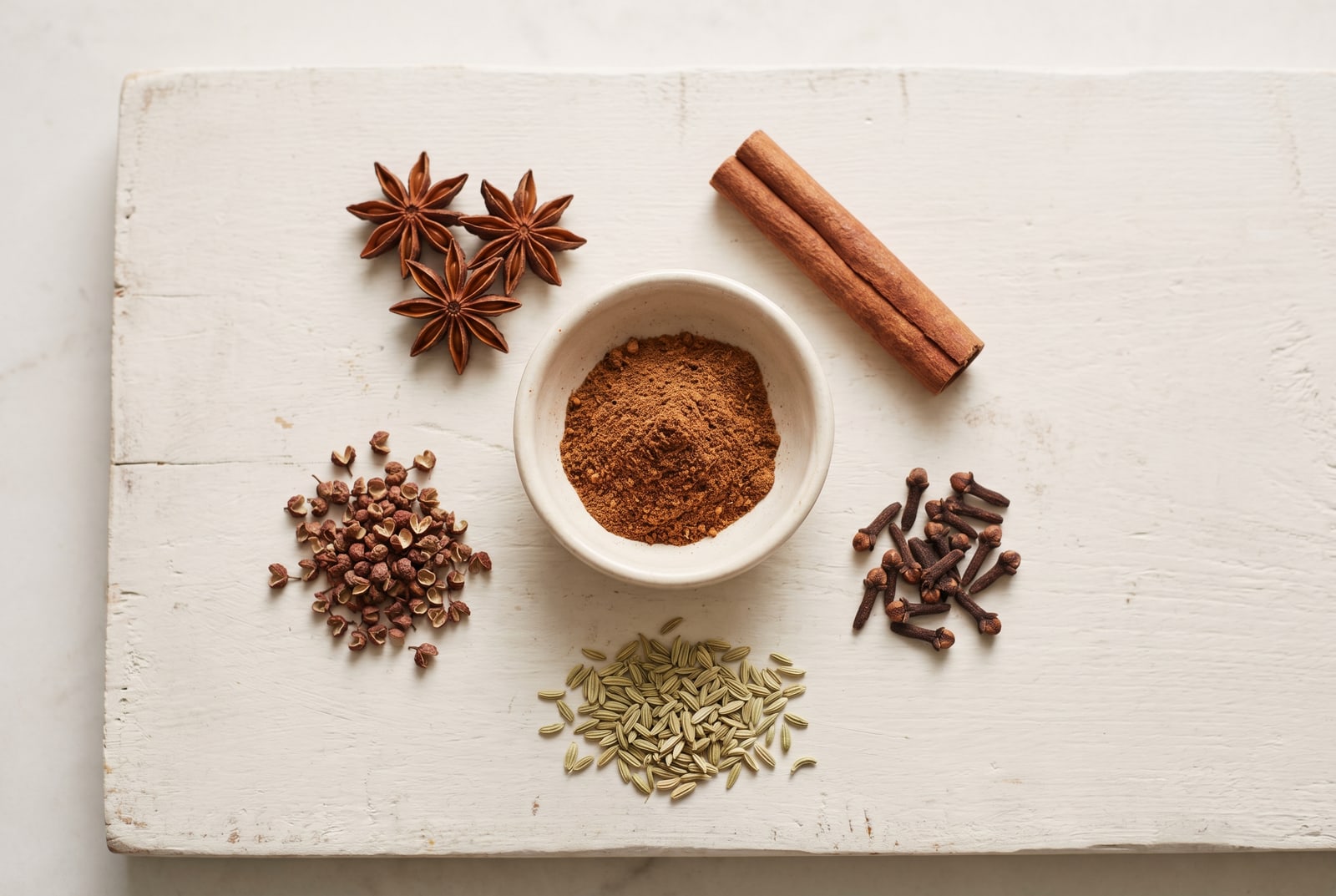
What Is Chinese Five Spice? The Blend, the Ratio, and What to Use Instead
Chinese five spice explained — the five spices in it, why no two blends match, why it is not the same thing as allspice, how to mix your own, and what to use when the jar is empty.
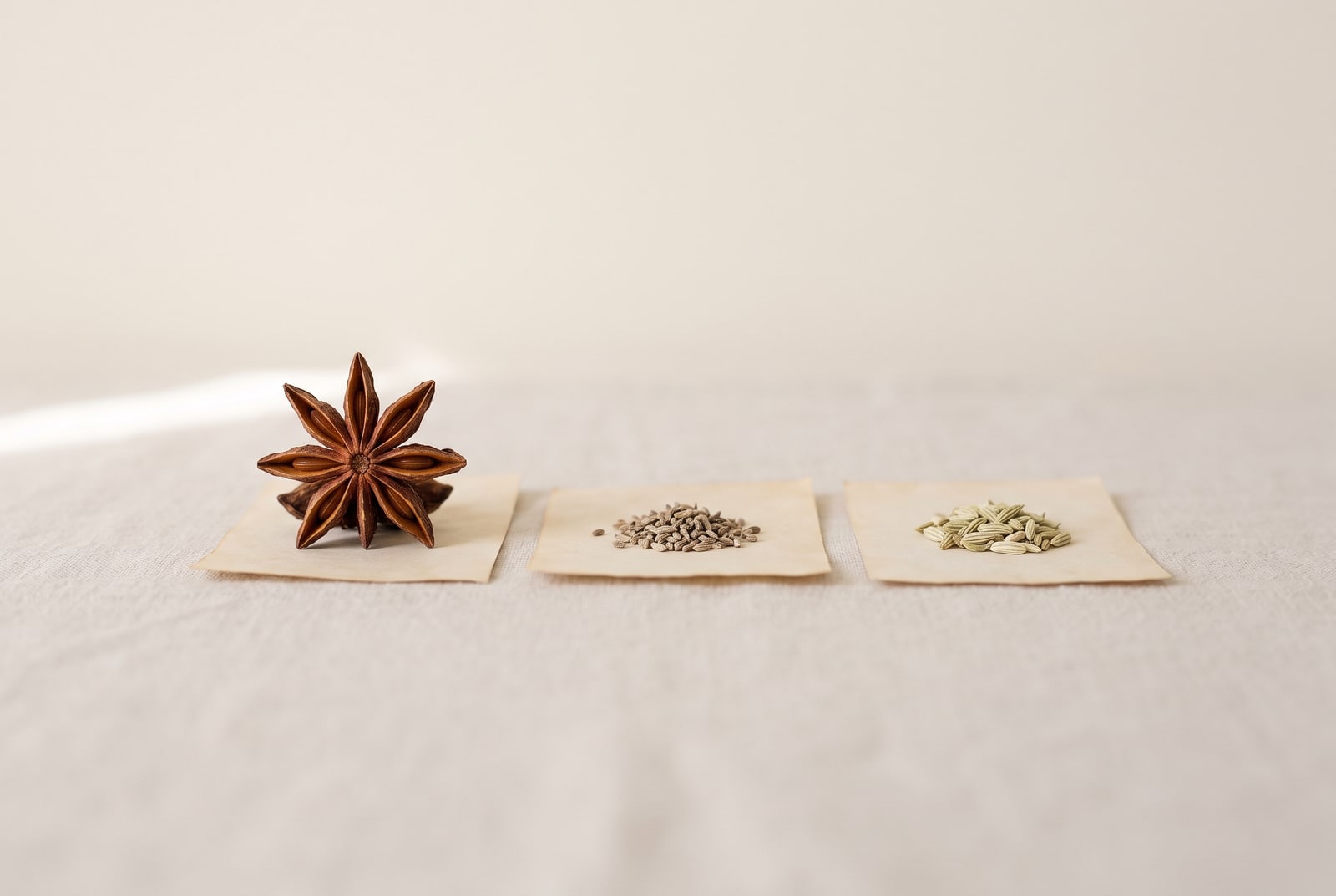
Star Anise vs Anise: Two Different Plants, and One That Is Not Food
Star anise and aniseed are unrelated plants that taste alike, and fennel is a third. What separates them, when each belongs, and how to tell culinary star anise from the toxic species that looks almost identical.
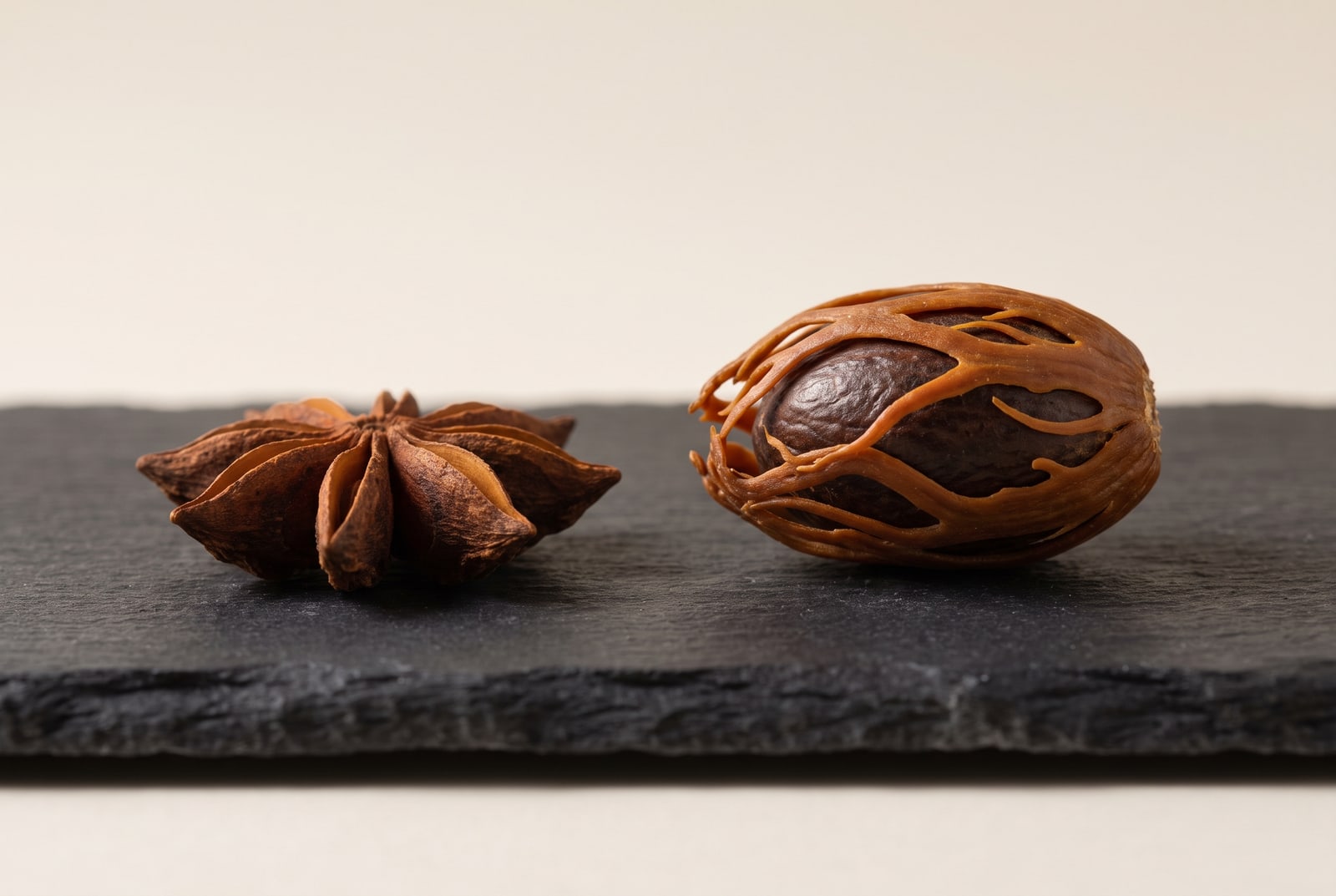
Star Anise in Hindi: Chakra Phool, Badiyan, and the Spice It Gets Confused With
Star anise in Hindi is chakra phool. Also badiyan, anasphal and biryani flower — every Indian name for it, what it does in a biryani, and why it is not javitri.
Common questions
What are the benefits of star anise?+
Modest, and mostly the ordinary benefits of a well-spiced pot. Star anise is rich in anethole, the compound that gives it the licorice character, along with flavonoids and other antioxidants. It has a long traditional record as a digestive across Chinese, Vietnamese and Indian cooking. Laboratory work shows antibacterial and antiviral activity, and the pod is a commercial source of shikimic acid, which is a starting material in manufacturing an antiviral drug. That last fact is the origin of most of the exaggeration you will read about it, and it is explained on these pages rather than repeated. Star anise in food is a food. Nothing here is a treatment.
Who should not use star anise?+
Anyone who cannot be confident of the species, and infants under any circumstances. Star anise in cooking is safe for adults in the amounts a recipe uses. The problem is not the culinary spice — it is that Japanese star anise, a toxic ornamental species, looks very similar and has been found adulterating shipments. Cases of illness have overwhelmingly involved teas given to babies, where the dose relative to body weight is high and the child cannot say something is wrong. Do not give star anise tea to an infant. If you are pregnant, breastfeeding or taking medication, ask a pharmacist rather than a website.
Are there two types of star anise?+
Yes, and only one of them is food. Chinese star anise, Illicium verum, is the culinary spice. Japanese star anise, Illicium anisatum, is an ornamental garden shrub whose fruit contains neurotoxic compounds and is not edible. They look close enough that the difference is not reliably visible in a jar of broken pieces, which is why the answer is to buy from a seller who names the species rather than to squint at the pods.
How do you tell Japanese and Chinese star anise apart?+
By the label, not by the pod. The published visual differences — Japanese pods tending to more points, smaller and more shrivelled follicles, a weaker and more medicinal smell — are real but unreliable, and useless once anything has been broken or ground. The dependable method is to buy whole pods from a seller who states Illicium verum, and to avoid ground star anise from an unnamed source. This is the same argument as buying Ceylon cinnamon by name rather than by eye.
Is star anise the same as aniseed?+
No. They are unrelated plants that happen to share one flavour compound. Star anise is the dried fruit of an evergreen tree, Illicium verum, native to southern China and Vietnam. Aniseed, or anise seed, is the tiny seed of Pimpinella anisum, a herb in the carrot family from the Mediterranean. Both contain anethole, which is why both taste of licorice, and that is the whole of the relationship. Star anise is stronger and better suited to long savoury cooking; aniseed is softer and belongs in baking.
What is star anise called in Hindi?+
Chakra phool, written चक्र फूल and meaning wheel flower. Chakri phool is the same name spelled differently. It is also widely called badiyan or badian, especially in Urdu, Punjabi and Pakistani cooking, and anasphal in some Hindi sources. In Tamil it is annasi poo or takkolam, in Telugu anaspuvvu, in Marathi badyan, and in Bengali chakra phul. English-speaking Indian home cooks often just call it the biryani flower.
Are star anise and javitri the same?+
No, and this is the most common mix-up in an Indian spice box. Javitri is mace — the lacy red-orange aril that grows around a nutmeg seed. Star anise is a woody eight-pointed pod from an unrelated tree. They share a shelf, a whole-spice role in biryani and garam masala, and a warm reddish-brown colour, which is why they get confused. They taste nothing alike: javitri is warm and nutmeg-sweet, star anise is licorice-sharp.
What can I use instead of star anise?+
Chinese five-spice powder at about half a teaspoon per pod is the closest practical answer, because star anise is the dominant spice in it already. Aniseed at half a teaspoon per pod is the closest flavour match. Fennel seed at three quarters of a teaspoon is milder and works when the licorice note should stay in the background. In a long savoury braise, a small pinch each of ground clove and cinnamon reproduces the warmth if not the licorice.
Can you eat star anise whole?+
No — it is a flavouring, not an ingredient you chew. The pod is hard and woody, and it is meant to be simmered in liquid and then fished out before serving, in the same way a bay leaf or a cinnamon stick is. Ground star anise is a different product and is used in small measured amounts inside a blend. Biting a whole pod is unpleasant rather than dangerous.