
Star Anise
Star Anise Substitute: What to Use, by Dish
Quick answer
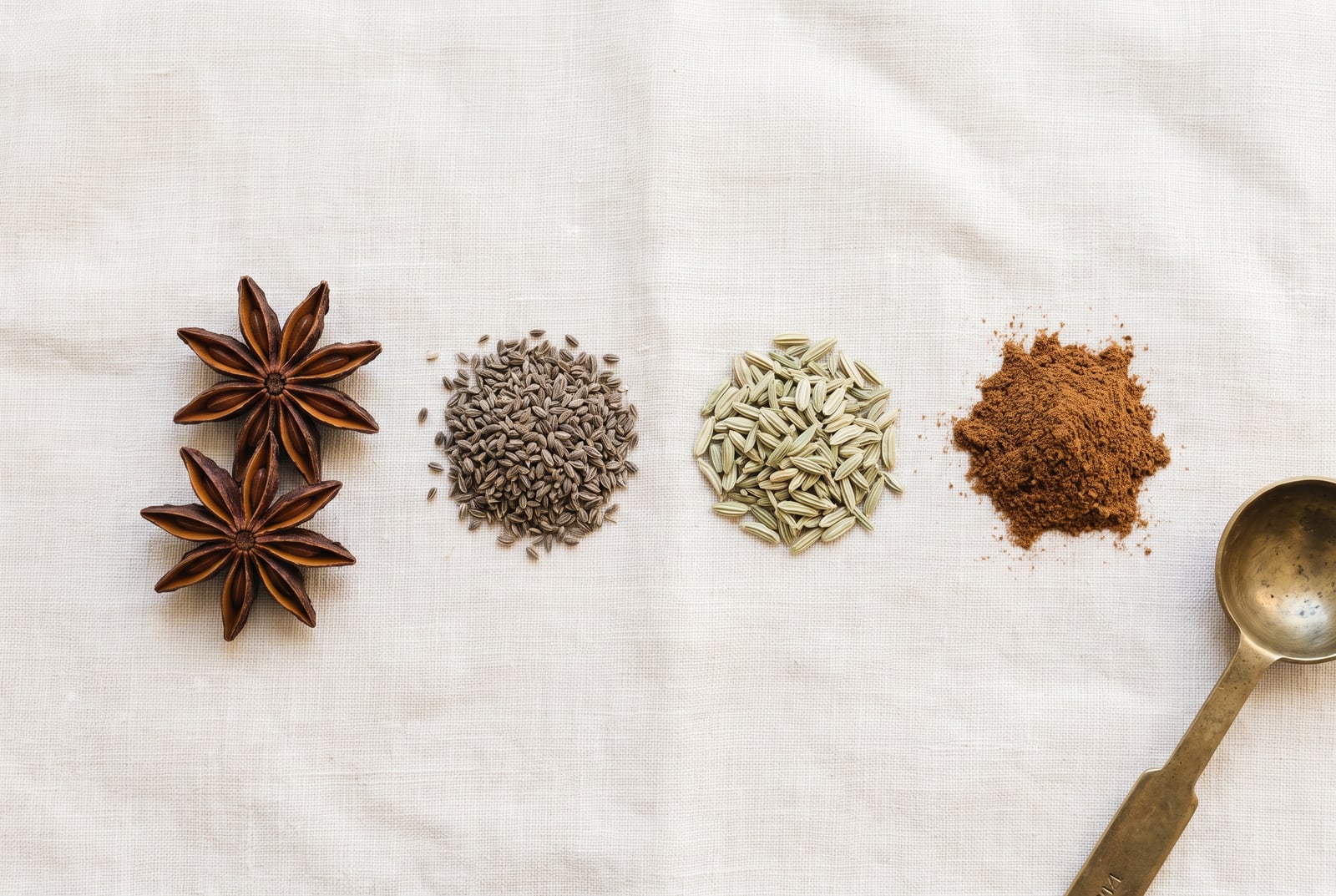
Use Chinese five-spice powder at half a teaspoon per whole pod. Star anise is already the leading spice in that blend, so you are replacing what you lost with the closest thing that exists in a normal cupboard.
No five-spice? Aniseed at half a teaspoon per pod is the closest single spice. Fennel seed at three quarters of a teaspoon is milder and safer if the licorice note is meant to sit in the background. In a long savoury braise, a pinch each of ground clove and cinnamon gives you the warmth without the licorice.
And in two dishes — pho, and anything where star anise is the only spice — leaving it out beats substituting. That is explained below.
Star anise is the spice most people own for one recipe.
It appears in a pho broth, a Chinese red-braise, a batch of mulled wine, a biryani, and then sits in the back of a cupboard for a year. So the moment you need it is usually the moment you discover the jar is empty, with the pot already on.
The good news is that star anise substitutes better than most spices, for a specific chemical reason. The bad news is that the substitution is genuinely poor in exactly the dish people most often need it for.
What you are actually replacing
Star anise tastes of licorice because it is loaded with anethole, and anethole is not rare. Aniseed contains it. Fennel contains it. Licorice root contains it. Those are four unrelated plants from three different botanical families that arrived at the same flavour independently.
That is why this substitution works better than, say, replacing cumin — you are not looking for a plant that happens to be similar, you are looking for another source of the same compound, and there are several.
What the substitutes do not carry is the rest of star anise: a woody, faintly bitter, slightly medicinal depth that comes from the tough pod itself rather than the seeds inside it. In a quick dish nobody notices. In a four-hour broth, that depth is most of the point.
The rule of thumb: the shorter the cooking time, the better the substitute works. In baking and mulled wine a swap is close to invisible. In a long simmered stock it is obvious.
The swaps, by amount
All amounts replace one whole star anise pod, which is what most recipes ask for at a time.
| Substitute | Amount | Best for | Notes |
|---|---|---|---|
| Chinese five-spice powder | 1/2 tsp | Braises, stir-fries, roast pork or duck, marinades | The best answer. Star anise leads the blend already |
| Aniseed (anise seed) | 1/2 tsp | Baking, mulled drinks, sausage, short-cooked dishes | Closest single spice. Sweeter, lighter, fades faster |
| Fennel seed | 3/4 tsp | Anything the licorice should stay quiet in | Milder and grassier. Hardest swap to ruin |
| Ground star anise | 1/4 tsp | Anywhere, if you have it | Start low. More assertive than the pod, not less |
| Clove + cinnamon | a pinch of each | Mulled wine, warm desserts, long braises | Drops the licorice, keeps the warmth |
| Licorice root | a small piece | Broths, if you happen to have it | Closest flavour of all, rarely in a kitchen |
A note on the five-spice swap
Five-spice powder is star anise, cinnamon, clove, fennel and Sichuan pepper. Two of those — cinnamon and clove — turn up constantly in the same recipes that call for star anise.
So before you stir it in, read the rest of your ingredient list. If the recipe already wants a cinnamon stick and three cloves, cut those back a little, or the pot ends up tasting of Christmas rather than of the dish you meant to cook.
The other adjustment is timing. A whole pod goes in at the start and steeps for hours. A powder does not need that, and can turn dusty and bitter if it sits in a boiling liquid too long. Add five-spice in the last twenty minutes, not at the beginning.
By dish
Pho
This is the one where substitution genuinely disappoints, and it is worth being straight about.
Star anise and cinnamon together are the smell of pho. They are not seasoning in the background; they are the thing you recognise from the doorway of the restaurant. Swap the star anise for aniseed and you get a pleasant beef noodle soup that does not smell like pho.
If you have aniseed, use half a teaspoon per pod and enjoy the soup for what it is. If you have a bag of pods within reach, get them — they cost very little, they keep for years, and one bag makes broth many times over. What each of the six pho spices actually does →
Chinese braises and roasts
Five-spice, at half a teaspoon per pod, and this swap is excellent. Red-braised pork, char siu, soy-braised eggs and roast duck all take five-spice happily, because the blend was built for exactly these dishes in the first place.
Biryani, pulao and garam masala
Here star anise is one whole spice among many, and its absence is the least noticeable of anywhere on this list. A small piece of cinnamon stick and two cloves cover the gap. Do not use five-spice — the Sichuan pepper in it is wrong for an Indian pot and will read as a mistake rather than a substitution.
Mulled wine, cider and warm drinks
Cinnamon and clove, a pinch of each. Aniseed works but tends to push the drink sweeter than most people want. This is the swap where nobody will ever know.
Baking — biscotti, cookies, spiced breads
Aniseed, at half a teaspoon per pod, and this is the closest match on the list. Aniseed is the traditional baking spice of the two anyway; several European biscuit traditions use it and never touch star anise. If a recipe calls for star anise in a cookie, aniseed is arguably the more authentic ingredient.
When to leave it out
Two situations, and in both of them nothing is better than something.
When star anise is the only spice. If a recipe’s flavour is star anise and nothing else — a poached pear, a simple syrup, a plain broth — then a substitute is not seasoning the dish, it is replacing the dish. Make something else, or make it plain and add a strip of orange peel.
When you would have to use three swaps at once. Reaching for aniseed and clove and cinnamon to reproduce one pod usually produces a muddle. One good substitute at the right amount beats a reconstruction every time.
There is a third case worth naming, and it is a buying decision rather than a cooking one. Do not buy ground star anise from a source that does not name the species. Whole pods from a seller who states Illicium verum are the safe purchase, and they are also the better product: the pod keeps its aroma for years, and ground star anise is stale within months. That is the same argument as buying Ceylon cinnamon by name rather than by eye — and the reason it matters more here is a second species that is not food.
What not to substitute with
Anise extract. It is alcohol-based, built for baking, and will make a savoury broth taste of sweets. If it is genuinely all you have, use a couple of drops in a dessert and nothing at all in a pot.
Sambuca, ouzo, pastis or absinthe. They contain anethole and the internet suggests them regularly. They also contain a lot of sugar and a lot of alcohol, and the alcohol does not cook off as completely as people assume. In a braise you can get away with a tablespoon. In anything short, do not.
Anise-flavoured sweets. No.
Japanese star anise. This is not a substitution suggestion anybody makes deliberately — it is a thing that happens when pods are bought loose from an unnamed source. Illicium anisatum is a toxic ornamental species that looks very similar. Buy pods that name Illicium verum.
Related guides
Frequently asked questions
What can I use instead of star anise?+
Chinese five-spice powder, at about half a teaspoon per whole pod. It works better than anything else because star anise is already the dominant spice in the blend, so you are adding the thing you lost plus four spices that go with it. If you have no five-spice, aniseed at half a teaspoon per pod is the closest single-spice match, and fennel seed at three quarters of a teaspoon is the mildest.
What spice tastes like star anise?+
Aniseed comes closest, and fennel seed is next. All three contain anethole, the compound responsible for the licorice character, which is why unrelated plants taste so similar. Aniseed is sweeter and less woody than star anise. Fennel is softer again and carries a grassy note the other two do not have. Licorice root itself is closer still in flavour but behaves differently in a pot and is rarely in a kitchen.
How much five-spice replaces one star anise?+
About half a teaspoon of Chinese five-spice powder for each whole pod. Because the blend also contains cinnamon, clove, fennel and Sichuan pepper, take a look at the rest of your recipe before adding it — if the dish already calls for cinnamon or cloves, cut those back slightly so the pot does not double up. Add the powder later in cooking than you would have added the pod.
What can I use instead of star anise in pho?+
Nothing else in the broth does the same job, so the honest answer is to use aniseed at half a teaspoon per pod and accept a different soup, or to make the broth without it. Star anise and cinnamon together are what most people identify as the smell of pho. If your Asian grocer is reachable, buying a bag of pods is the better answer — they keep for years and one bag makes broth many times over.
Can I use aniseed instead of star anise?+
Yes, at about half a teaspoon of aniseed per whole star anise pod. They are unrelated plants that share a flavour compound, so the licorice note carries across well. Expect the result to be sweeter, lighter and less woody, and expect it to fade faster in a long braise. In baking the swap is close to seamless. In a four-hour stock it is noticeably weaker.
How much ground star anise equals one whole pod?+
Roughly a quarter to a half teaspoon of ground star anise for one whole pod, and start at the lower end. Ground star anise is far more assertive than the pod because you are eating all of it rather than steeping it and removing it. Add it late, taste, and add more if needed — this is the one swap in this article that is easier to overdo than to underdo.
What is a substitute for star anise in mulled wine?+
A small piece of cinnamon stick plus two whole cloves, per pod, is the closest in spirit even though it drops the licorice note entirely. Mulled wine is a warm-spice drink rather than a licorice one, so what star anise contributes there is depth and a faint sweetness that clove and cinnamon can cover. Aniseed works too, but tends to read as sweeter than most people want in wine.
New: Google now lets you choose which sites it shows you first. One tap lifts our spice guides in your results — nobody else's — and you can undo it any time.
More on Star Anise
Star Anise in Hindi: Chakra Phool, Badiyan, and the Spice It Gets Confused With
Star anise in Hindi is chakra phool. Also badiyan, anasphal and biryani flower — every Indian name for it, what it does in a biryani, and why it is not javitri.
Star Anise in Pho: What It Does, and the Five Spices Beside It
What star anise actually contributes to a pho broth, how much to use, why it must be toasted first, and what each of the other five spices in the bundle is doing — a spice guide, not a broth recipe.
Star Anise vs Anise: Two Different Plants, and One That Is Not Food
Star anise and aniseed are unrelated plants that taste alike, and fennel is a third. What separates them, when each belongs, and how to tell culinary star anise from the toxic species that looks almost identical.