
Star Anise
Star Anise in Pho: What It Does, and the Five Spices Beside It
Quick answer
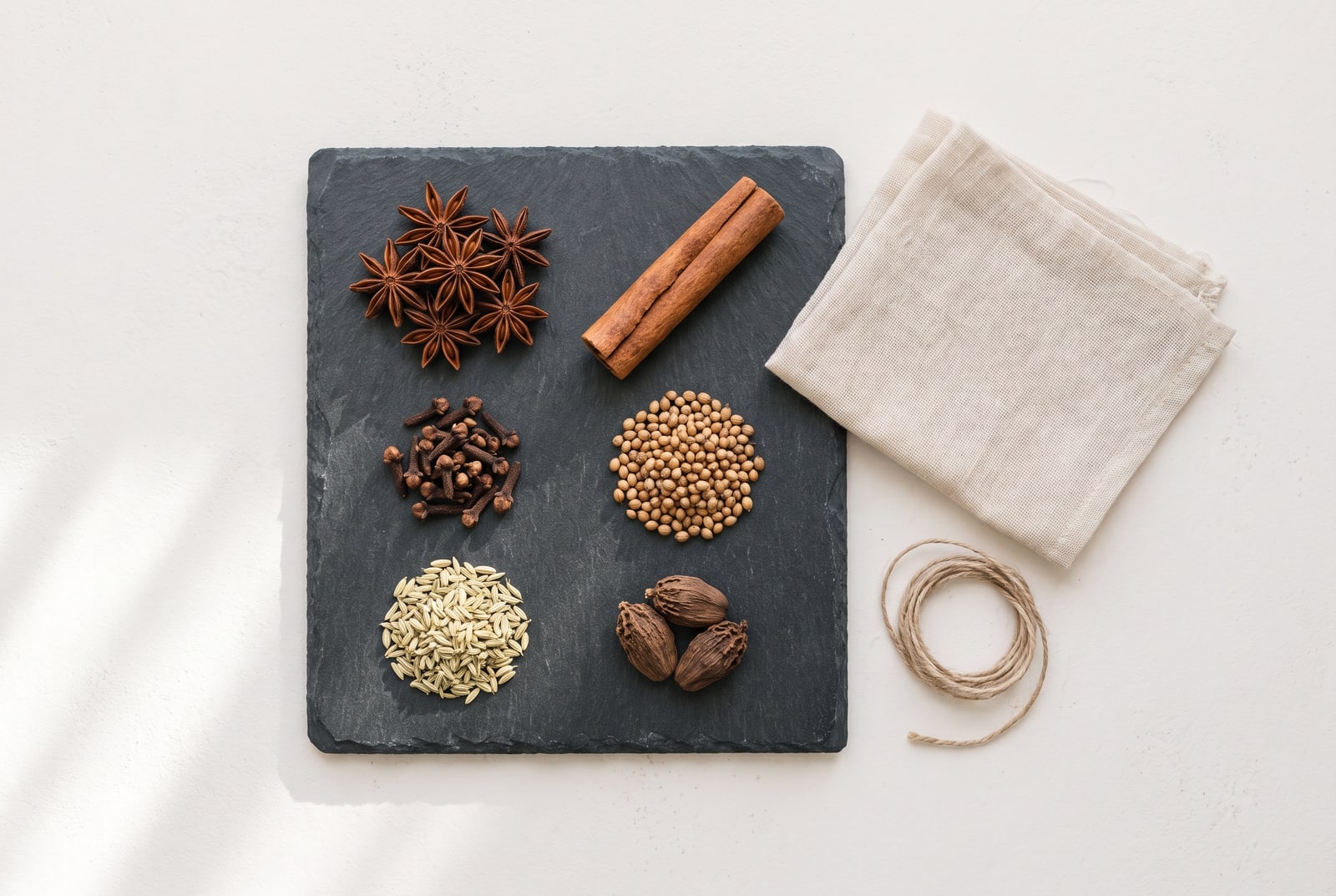
Star anise is one half of the smell you recognise as pho. Cinnamon is the other half. The remaining four spices — cloves, coriander seed, fennel seed and black cardamom — fill in underneath and are not individually identifiable in the finished bowl.
For a six-litre stockpot: three to five whole star anise pods, toasted dry for three to five minutes with the rest of the bundle, tied in muslin, and lifted out once the broth has taken enough.
This is a guide to the spices, not a broth recipe. There is no bone-roasting method here and no timing for the meat. What follows is what each spice is doing and how to handle it.
Ask people what pho tastes of and most say beef, noodles and herbs. Ask them what pho smells of and the answer is more specific and more consistent — a warm, sweet, faintly licorice smell that arrives before the bowl does.
That smell is mostly two spices, and star anise is the leading one.
What star anise is actually doing
Three things, and they are worth separating because they explain the amount.
It supplies the licorice note. That comes from anethole, the same compound that makes aniseed and fennel taste the way they do. In a pho broth it reads as sweetness rather than as licorice outright, because it is sitting in a salty, savoury liquid.
It supplies depth from the pod itself. The woody shell contributes a faintly bitter, slightly medicinal backbone that the seeds inside do not. This is the part no substitute reproduces, and the reason a long simmer suits star anise better than almost any other spice — it is a hard pod, and it gives up its flavour slowly.
It makes the beef taste more like beef. This is the least obvious job and arguably the most important. Warm spices in a meat broth push the savoury notes forward rather than masking them. A pho broth made without spices does not taste cleaner; it tastes thinner.
The proportion rule: the broth should smell of star anise and taste of beef. If it tastes of star anise, there was too much in it, and there is no way back.
How much, and why Western recipes overshoot
Three to five pods for a large stockpot is the working range. Vietnamese home cooks tend to sit at the low end of it.
English-language pho recipes routinely call for more — six, eight, occasionally ten pods — and the results are recognisably over-spiced. The likely reason is that a recipe writer tasting a broth at the two-hour mark wants to find the spice, so the amount creeps up. In a finished bowl with noodles, meat, herbs, lime and chilli, the broth is a background, and background is the point.
Start at three. Taste after an hour. You can always add.
The six spices, and what each one does
| Spice | Vietnamese | What it contributes | Amount, 6 L pot |
|---|---|---|---|
| Star anise | hoa hồi | Licorice sweetness, woody depth | 3–5 whole pods |
| Cassia cinnamon | quế | Warmth, sweetness, the other half of the smell | 1 stick, about 8 cm |
| Cloves | đinh hương | Sharpness, a medicinal edge | 4–6 whole |
| Coriander seed | hạt mùi | Citrus lift, keeps it from going heavy | 1 tbsp |
| Fennel seed | hạt thì là | Sweetness, rounds off the star anise | 1 tsp |
| Black cardamom | thảo quả | Smoke, and a savoury base note | 1 pod, cracked |
Cinnamon is a partner, not a supporting spice
Star anise gets the credit, but the pairing is what people actually recognise. Use cassia rather than Ceylon here. Cassia is the bolder, sweeter, more assertive bark, and it is what Vietnamese cooking uses — Vietnam is one of the world’s major cassia producers. Ceylon cinnamon is a finer and more delicate thing, and in a six-litre pot of beef broth it disappears.
Black cardamom is the one people skip
It is the least familiar of the six and the easiest to leave out, and leaving it out is the most noticeable single omission after star anise itself. Black cardamom is dried over fire, so it carries genuine smoke. In a broth that never touches a grill, that smoke is doing something nothing else in the pot can do.
One pod, cracked open. Two is too many.
Cloves are the easiest to overdo
Four to six for a large pot. Cloves are the most aggressive spice on the list by weight and the quickest to take a broth somewhere medicinal. If a pho broth ever tastes vaguely of dentistry, this is why.
Toasting: the step that is not optional
Put all six spices in a dry pan over medium heat. No oil. Move them around. In three to five minutes the kitchen will smell of them, and that is the signal — tip them straight out of the pan onto a plate.
Untoasted spices produce a broth that tastes flat and slightly raw, and the difference between the two versions is large enough that it is worth doing even when you are in a hurry.
Star anise burns before the others do. It is the biggest and most fragile piece in the pan, and burnt star anise is bitter in a way that does not cook out. If the pods start to darken past their normal red-brown, they have gone too far.
Bag them
Muslin, a tea ball, or a clean square of cheesecloth tied with kitchen string.
Two reasons. Small pieces — clove heads, coriander seeds — break up over a long simmer and end up in the bowl or in the strainer. And more usefully, a bag can be lifted out. That is the only real control you have over the strength of the finished broth. Once the spice is in the liquid loose, it keeps steeping until you strain the whole pot.
Most cooks pull the bundle after an hour to ninety minutes, then let the bones carry on for as long as they like.
Chicken pho is a lighter hand
Pho ga usually drops the black cardamom, halves the cloves, and reduces the star anise to two or three pods. Chicken broth is more delicate and the two smokiest, sharpest spices will run over it.
Star anise, cassia and coriander seed stay. The principle does not change: frame the broth, do not compete with it.
One buying note
Buy whole pods, from a seller who names the species on the label.
Whole star anise keeps its aroma for years, which matters for a spice most kitchens use a few times a season. Ground star anise is stale within months and is the wrong format for a broth anyway, since the whole point here is a pod you can lift back out.
The species matters more than it does for most spices. Illicium verum is the culinary star anise. A second species, Illicium anisatum, is a toxic ornamental that looks close enough to pass and has been found adulterating loose shipments. The defence is a label, not an inspection — and since a pound of pods makes broth many times over, this is a buy-once decision. Frontier Co-op’s organic whole star anise is the one-pound bag we use; Frontier lists it as Illicium verum from Vietnam. The full difference, and how the two are told apart →
Related guides
Frequently asked questions
What spices are in pho?+
Six, in most northern-style beef pho: star anise, cassia cinnamon, cloves, coriander seed, fennel seed and black cardamom. Star anise and cinnamon do most of the work and are what you recognise from the doorway. The other four fill in underneath — cloves for sharpness, coriander for a citrus lift, fennel for sweetness, black cardamom for smoke. Charred ginger and onion go in alongside them but are aromatics rather than spices.
How much star anise goes in a pot of pho?+
Most cooks use three to five whole pods for a large stockpot of around six litres, which is a batch for six to eight bowls. Vietnamese cooks generally use less than Western recipes suggest, because the aim is a broth that smells of star anise and tastes of beef, not the other way round. Start at three, taste the broth after an hour, and add a fourth if it is not there yet. Removing star anise once it has over-steeped is not possible.
Does pho contain anise?+
It contains star anise, which is not the same plant as aniseed. Star anise is the dried fruit of Illicium verum, an evergreen tree from southern China and Vietnam. Aniseed is the seed of a Mediterranean herb in the carrot family. They share the compound anethole, which is why both taste of licorice, and that is the whole of the relationship. Pho recipes calling for anise almost always mean the star.
Why do you toast the spices for pho?+
Because untoasted whole spices give a broth that tastes flat and faintly raw. A few minutes in a dry pan drives off surface moisture and starts the aromatic compounds moving, so they dissolve into the liquid instead of sitting in it. The difference is not subtle. Toast over medium heat until the kitchen smells of them, which is usually three to five minutes, and take them out of the pan the moment they smell right — star anise burns to bitterness quickly.
Can I make pho without star anise?+
You can make a good beef noodle soup, but most people will not read it as pho. Star anise and cinnamon together are the pair that carries the smell everyone recognises. If you have aniseed, half a teaspoon per missing pod is the nearest thing. The better answer, if an Asian grocer is reachable, is to buy a bag of pods — they cost little and keep their aroma for years.
Should the spices go in a bag or loose?+
A bag, or a tea ball, or a square of muslin tied with string. Loose spices break up over a long simmer, and small fragments of clove and coriander end up in the bowl or clog a strainer. Bagging them also means you can lift the whole bundle out when the broth has taken enough, which is the main lever you have over the strength of the finished pot.
Is chicken pho spiced the same way as beef pho?+
Lighter, and often with fewer spices. Pho ga usually drops the black cardamom and goes easy on the cloves, because chicken broth is more delicate and those two are the most assertive of the six. Star anise, cinnamon and coriander seed usually stay, in smaller amounts. The principle is the same: the spice should frame the broth rather than compete with it.
New: Google now lets you choose which sites it shows you first. One tap lifts our spice guides in your results — nobody else's — and you can undo it any time.
More on Star Anise
Star Anise in Hindi: Chakra Phool, Badiyan, and the Spice It Gets Confused With
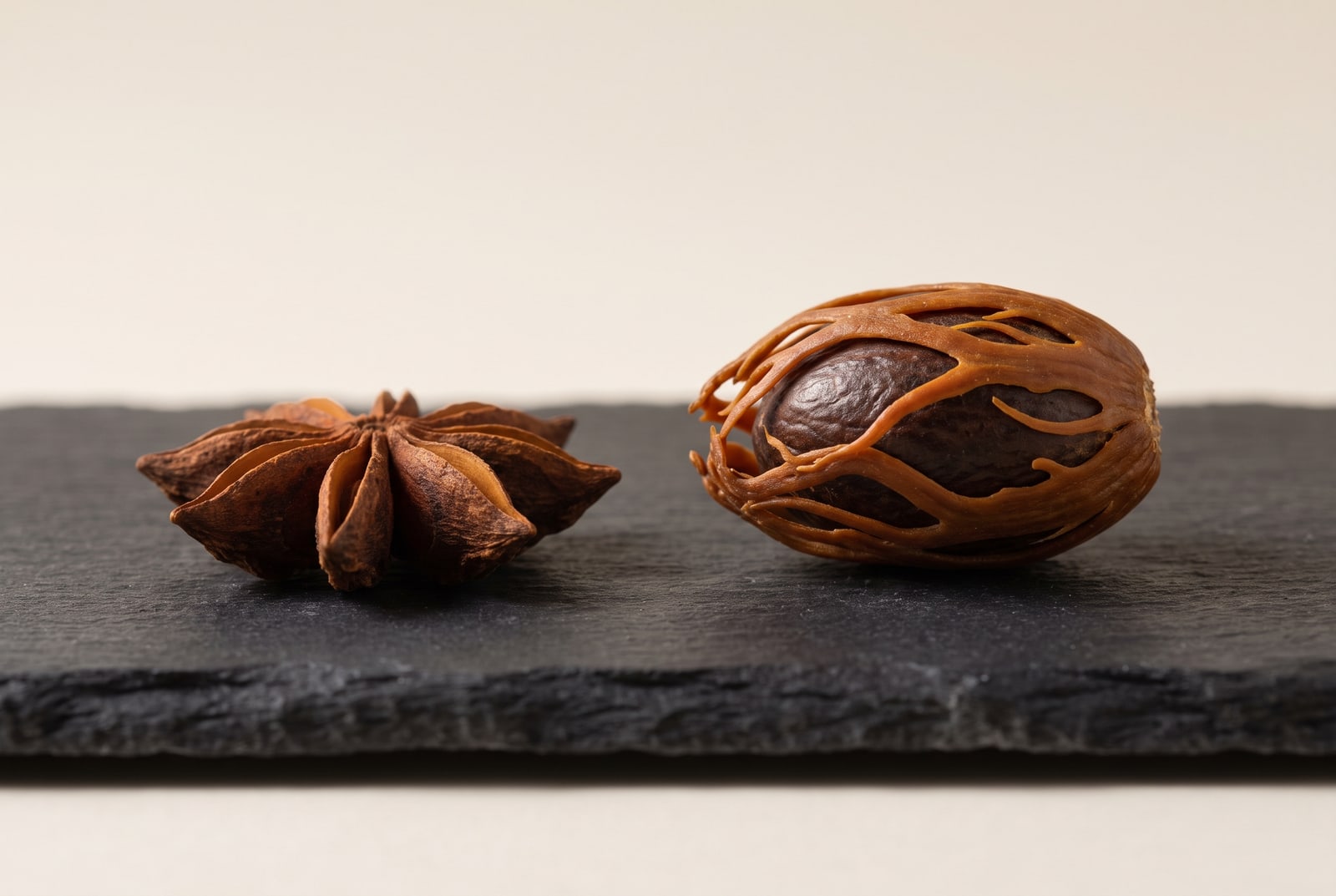
Star anise in Hindi is chakra phool. Also badiyan, anasphal and biryani flower — every Indian name for it, what it does in a biryani, and why it is not javitri.
Star Anise Substitute: What to Use, by Dish
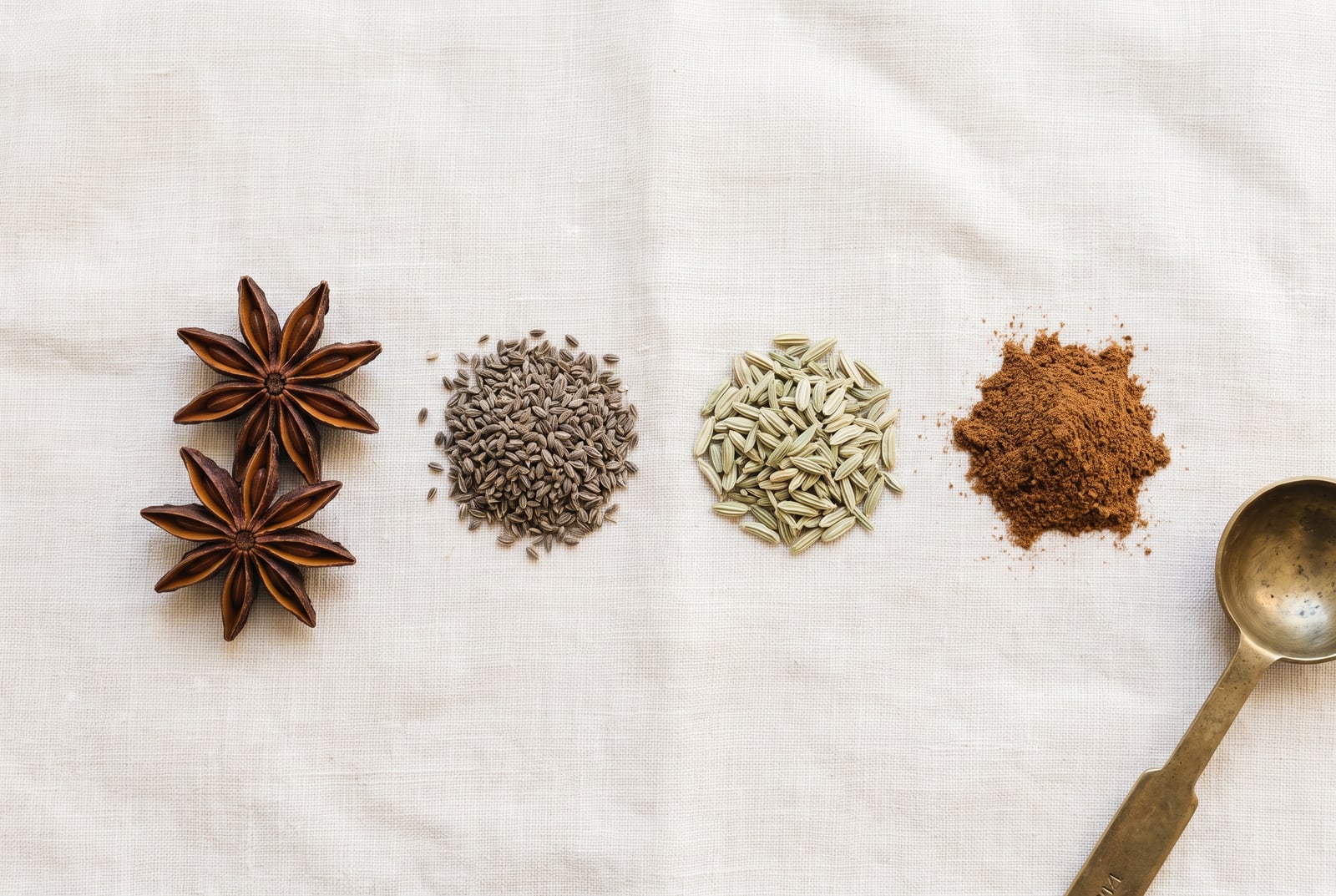
The best star anise substitutes with exact swap amounts — five-spice, aniseed, fennel, cloves and cinnamon — sorted by what you are cooking, plus the two dishes where leaving it out beats substituting.
Star Anise vs Anise: Two Different Plants, and One That Is Not Food
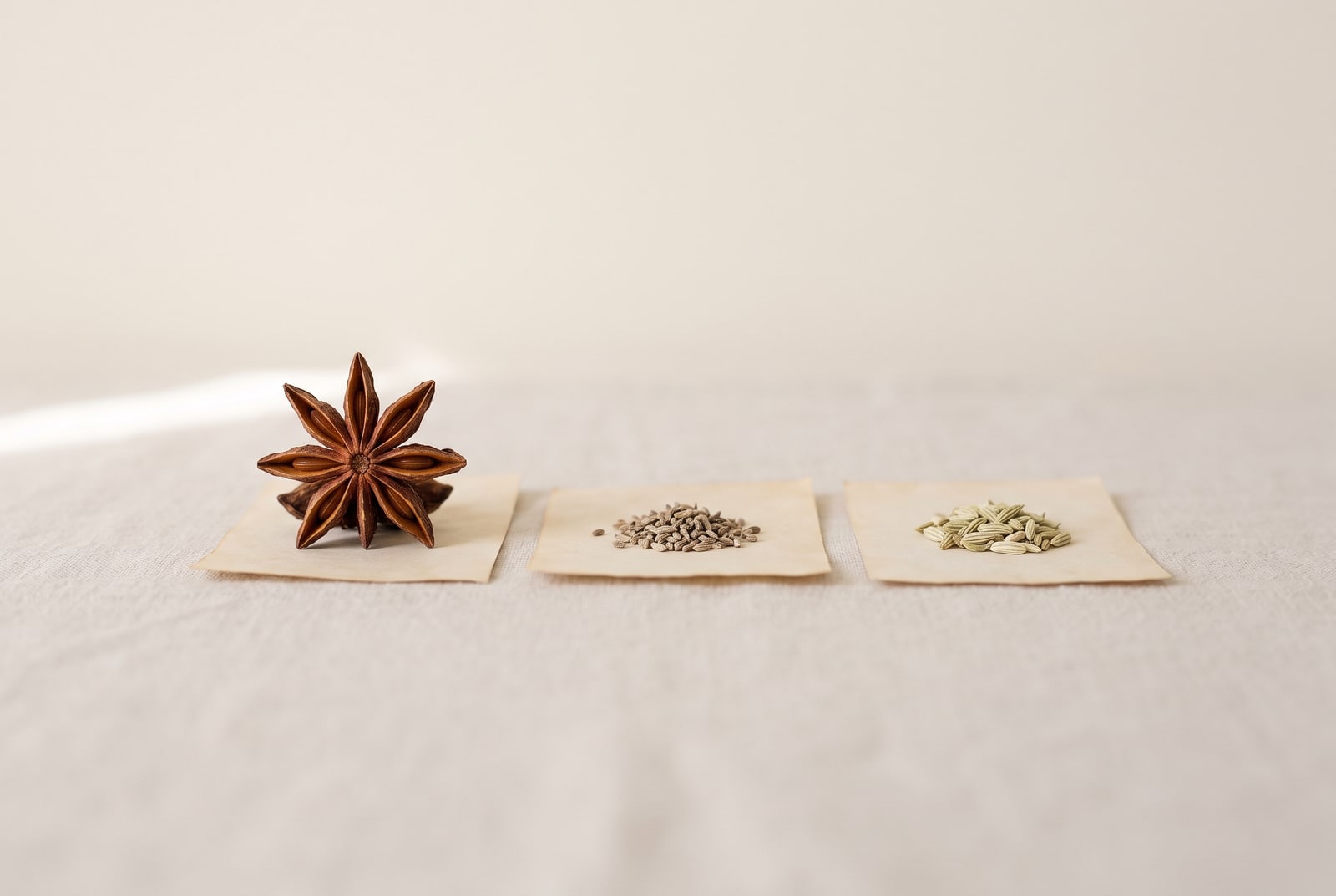
Star anise and aniseed are unrelated plants that taste alike, and fennel is a third. What separates them, when each belongs, and how to tell culinary star anise from the toxic species that looks almost identical.